

 Travel Essentials
 Travel Essentials

Explore Toronto's diverse artistic offerings, from major museums to street art installations. Find galleries, cultural institutions, and creative neighborhoods.
 Travel Essentials
Canada’s largest metropolitan area has emerged as a major creative hub, attracting artists, collectors, and cultural enthusiasts from around the world. The city’s commitment to artistic expression manifests across multiple venues and neighborhoods, each offering distinct perspectives on visual culture, heritage, and contemporary innovation. Whether you seek classical masterpieces, cutting-edge installations, or grassroots street art, Toronto provides an exceptionally rich environment for cultural exploration.
Toronto’s most prominent cultural venues serve as anchors for the city’s artistic identity, each contributing unique programming and collection strengths. These institutions attract millions of visitors annually and maintain international recognition for curatorial excellence.
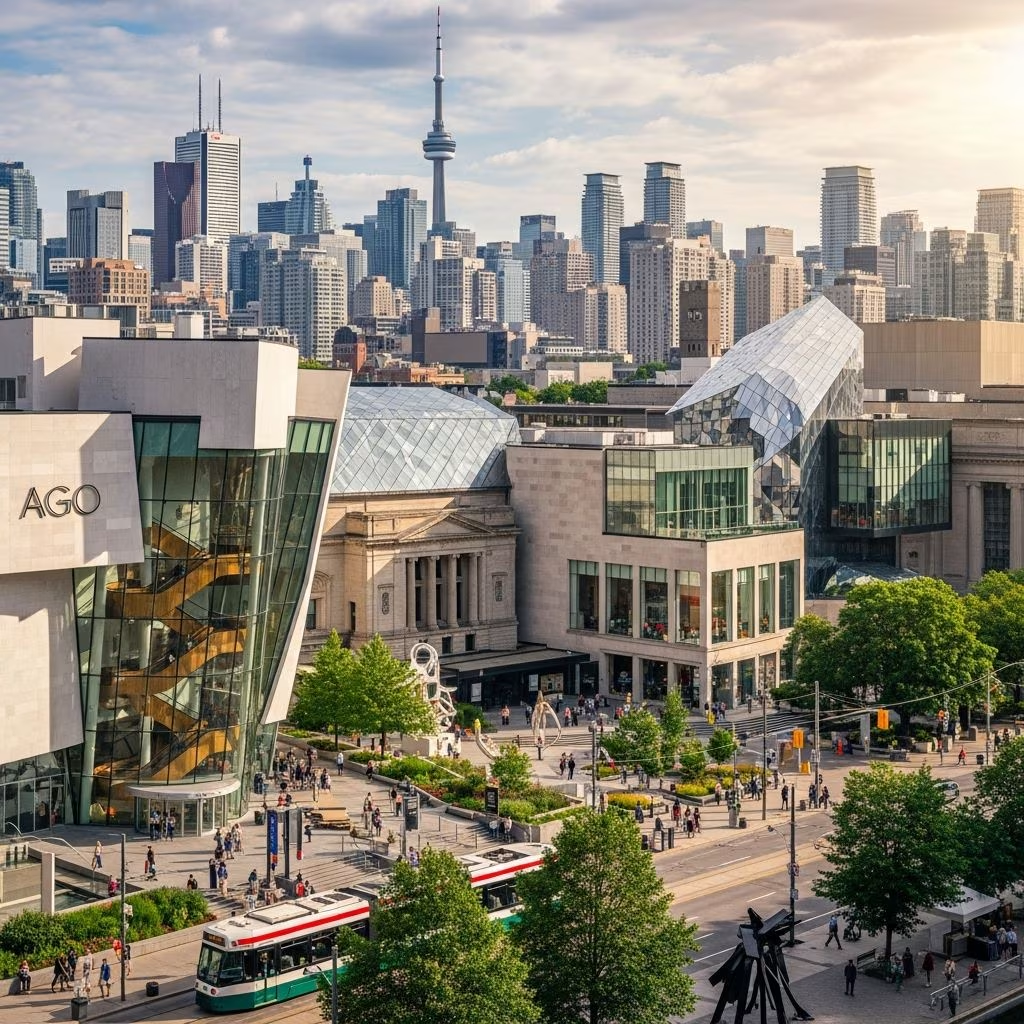
The Art Gallery of Ontario (AGO) stands as one of North America’s largest art museums, housing over 100,000 artworks spanning multiple centuries and geographical regions. The institution’s architectural presence is particularly noteworthy, featuring a distinctive design by renowned architect Frank Gehry that has become an iconic element of Toronto’s skyline. The gallery’s permanent collections encompass everything from European Renaissance paintings to contemporary Canadian works, making it a comprehensive survey of artistic achievement across time periods and mediums.
The AGO’s Thomson Collection represents the most significant privately assembled archive of Canadian art in the nation, offering visitors an opportunity to engage with work by domestic artists at the highest level of curatorial presentation. Additionally, the McLean Centre for Indigenous & Canadian Art provides dedicated exhibition space for First Nations artists and contemporary Indigenous practitioners, reflecting the institution’s commitment to representing diverse cultural perspectives. The gallery has also established itself as a social venue through its First Thursday programming, when the museum opens after standard hours on the first Thursday of each month to create an informal gathering space featuring live music, refreshments, and interactive creative activities.
The Royal Ontario Museum (ROM) functions as Canada’s largest institution dedicated to world culture, positioning itself at a downtown intersection with highly recognizable architecture. The building’s most distinctive feature is its modern crystalline structure that dramatically contrasts with the original historical architecture, creating a visual metaphor for the institution’s bridging of traditional and contemporary sensibilities. The ROM’s collections encompass First Nations materials, paleontological specimens, ancient Egyptian artifacts, Bronze Age objects, and extensive art historical holdings that collectively tell stories of human civilization across millennia.
While the ROM is frequently recognized for its natural history materials, its cultural artifact collections are equally substantial and carefully curated to provide interpretive context for understanding human development and artistic expression. This dual focus allows visitors to appreciate both scientific and artistic dimensions of material culture simultaneously.
The Museum of Contemporary Art Toronto (MOCA) occupies a specialized niche within the institutional landscape by focusing exclusively on contemporary artistic practice. The museum positions itself as an instrument for cultural dialogue, emphasizing inclusivity and social relevance in its curatorial decisions. MOCA’s programming intentionally privileges emerging and established artists who work in experimental media, creating a venue where conventional aesthetic assumptions are deliberately challenged and questioned.
The dynamic exhibition strategy ensures that visitors encountering contemporary installations confront pressing questions about society, culture, and human experience through artistic mediation. This approach distinguishes MOCA from institutions focused on historical or canonical artistic achievements.
Beyond the major institutions, Toronto hosts several specialized museums that explore particular cultural traditions, historical periods, or artistic practices with focused expertise.
The Aga Khan Museum functions as a cultural repository dedicated to Islamic art, heritage, and contemporary cultural expression. The institution houses an exceptional collection of artifacts spanning multiple centuries, showcasing the artistic and intellectual achievements of Islamic civilizations across geographical regions. The museum’s architecture itself represents a significant artistic achievement, designed to create contemplative spaces that complement the aesthetic qualities of displayed objects. The curatorial approach emphasizes the diversity within Islamic cultural traditions rather than presenting monolithic interpretations, allowing visitors to appreciate regional variations, technical innovations, and aesthetic principles developed across distinct historical periods and geographical contexts.
The Bata Shoe Museum presents an unconventional approach to material culture by examining footwear as a vehicle for understanding artistic achievement, fashion history, and cultural values. The collection comprises more than 13,000 objects spanning 4,500 years of footwear development, from ancient Egyptian sandals to contemporary designer shoes. Rather than treating shoes as purely utilitarian objects, the museum demonstrates how footwear embodies cultural aesthetics, social hierarchies, technological innovation, and personal identity expression across diverse societies. The four gallery spaces each explore distinct thematic territories, enabling visitors to trace how different cultures have approached the fundamental challenge of protecting and adorning the human foot.
Toronto’s waterfront has been strategically developed as a cultural destination, with contemporary art galleries positioned to take advantage of the distinctive architectural and natural environment.
Situated on Toronto’s picturesque waterfront, The Power Plant Contemporary Art Gallery functions as a venue for cutting-edge artistic experimentation. The gallery’s rotating exhibition schedule features both national and international artists working in contemporary media, positioning it as a hub for engaging with recent developments in artistic practice and critical discourse. The waterfront location provides a distinctive setting for encountering contemporary work, with the institutional architecture contrasting dramatically with the natural environment and creating productive tensions in visitor perception.
Occurring biennially, the Toronto Biennial of Art transforms multiple locations across the city into temporary exhibition spaces dedicated to site-specific installations, performances, and thematic exhibitions. This event-based programming model brings together artists, curators, and theorists to explore pressing contemporary issues through artistic mediation while generating new interpretations of familiar urban spaces. The biennial format allows participants to engage with the city’s landscapes anew, reconsidering ordinary locations as sites for aesthetic intervention and social dialogue.
Toronto’s commitment to artistic expression extends beyond institutional frameworks into public spaces and neighborhood-based initiatives, transforming the urban fabric into an open-air gallery.
Queen Street West’s Graffiti Alley represents one of Toronto’s most recognizable street art destinations, functioning as an ever-evolving collaborative canvas where artists continuously respond to previous work. The alley’s aesthetics celebrate the work of former garment district factory workers through symbolic imagery including the iconic Giant Thimble sculpture, creating a palimpsest of artistic contributions layered across urban surfaces. The visual dynamism of Graffiti Alley attracts photographers and art enthusiasts seeking to document temporary artistic expressions that exist in constant state of transformation.
Beyond Graffiti Alley, Toronto’s streets throughout neighborhoods including Kensington Market and broader Queen Street West areas feature murals and street art installations that function as alternative exhibition venues accessible to the general public without institutional gatekeeping. These distributed street artworks democratize aesthetic experience while contributing to neighborhood identity and commercial vitality.
Parkdale has developed deep artistic roots over multiple decades, establishing itself as a neighborhood with significant street art presence and informal creative culture. The district’s character reflects contributions from established and emerging artists who use public surfaces as vehicles for personal expression, community commentary, and aesthetic experimentation.
The Distillery District represents a distinctive model of heritage preservation where Victorian-era industrial architecture has been systematically repurposed to support contemporary creative enterprises. The cobblestone streets house multiple art galleries, boutiques, and artist studios alongside outdoor sculptures and installations, creating an immersive artistic environment that invites extended exploration. The district’s character blends historical preservation with contemporary creative practice, allowing visitors to appreciate both architectural heritage and ongoing artistic activity within integrated spatial experience.
Beyond designated cultural institutions and street art locations, Toronto’s creative neighborhoods contain galleries, performance spaces, and artist-run venues that collectively constitute the city’s vibrant cultural infrastructure.
Queen Street West functions as the epicenter of Toronto’s downtown art scene, combining commercial galleries, pop-up exhibition spaces, independent boutiques, and street art within a concentrated geographical area. Self-guided exploration of this neighborhood reveals the layered character of Toronto’s contemporary creative culture, where established institutions coexist with experimental venues and artist-initiated projects. The street’s commercial vitality depends partly on its reputation for artistic innovation and aesthetic experimentation, creating feedback loops between cultural production and commercial activity.
The Drake Hotel functions simultaneously as hospitality venue and cultural institution, hosting boundary-pushing exhibitions, live entertainment, and performance programming that attracts local creative professionals and visitors seeking immersive cultural experiences. The hotel’s rooftop venues accommodate DJs and musical performances, while Drake Underground functions as a dedicated performance and reading space for poetry, spoken word, and experimental audio work. This model demonstrates how commercial hospitality enterprises can integrate meaningful artistic programming into their operational framework, creating hybrid spaces that serve multiple constituencies.
Toronto’s cultural calendar extends throughout the year, with seasonal variations affecting both institutional programming and neighborhood-based activities. Summer months feature outdoor performance programming at Casa Loma and expanded street art activity. Fall typically introduces new institutional exhibitions and curatorial initiatives. Winter programming often emphasizes indoor institutional venues while street art documentation becomes challenging due to weather conditions.
AGO admission is approximately $22 USD equivalent for general access, while ROM admission costs approximately $19 USD equivalent. Specialized institutions like the Aga Khan Museum, Bata Shoe Museum, and MOCA maintain their own fee structures. First Thursday AGO programming often includes discounted or free admission during evening hours.
Yes, significant street art locations including Graffiti Alley, Kensington Market, Queen Street West, and Parkdale are freely accessible public spaces requiring no admission fees.
Toronto’s neighborhood-based creative culture includes multiple artist-run galleries, pop-up exhibition spaces, and performance venues concentrated particularly in Queen Street West and surrounding areas.
The Toronto Biennial operates on a two-year cycle, transforming various urban locations into temporary exhibition spaces for site-specific installations and performances.
