

 Travel Essentials
 Travel Essentials

Explore the best Asian countries for retirement in 2026, comparing cost of living, healthcare, lifestyle, and expat communities across Southeast Asia.
 Travel Essentials
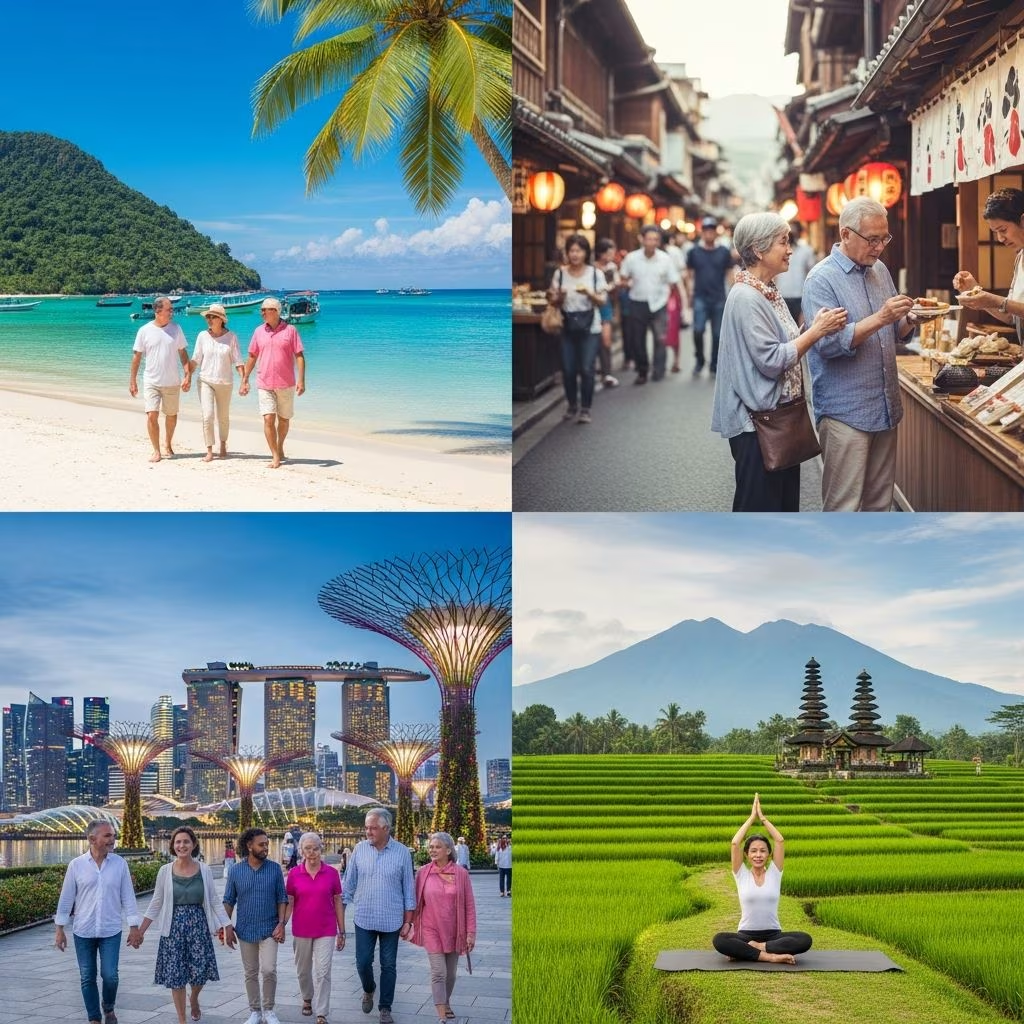
The decision to retire abroad represents one of life’s most significant transitions, requiring careful consideration of climate, cost of living, healthcare quality, and cultural fit. Asia has emerged as a premier destination for retirees seeking to stretch their retirement income while enjoying a rich tapestry of experiences and well-developed expat communities. With estimated global migration patterns showing substantial relocation to Asian countries, understanding which destinations align with your retirement goals becomes increasingly important.
Asia’s growing popularity among retirees stems from several interconnected factors that create compelling opportunities for those seeking their next chapter. The financial advantage remains paramount—retirees can typically maintain a substantially higher standard of living in Southeast Asia compared to Western countries, with estimates suggesting that living expenses range from one-third to one-quarter of costs in North America or Western Europe. This economic advantage translates directly into improved lifestyle quality, allowing retirees to afford premium accommodations, dining experiences, and leisure activities that might otherwise strain their budgets.
Beyond financial considerations, Asian countries offer distinctive cultural experiences, world-class medical facilities, and established infrastructure that caters to international residents. The combination of modernity and tradition, sophisticated healthcare systems, and welcoming attitudes toward expatriates has transformed the region into a genuine alternative to traditional Western retirement destinations.
Vietnam has positioned itself as an increasingly attractive option for retirees prioritizing both lifestyle excellence and financial prudence. The nation presents a unique proposition for those aged 30 to 50 seeking to optimize their financial future while enjoying present-day comfort. What distinguishes Vietnam from competing destinations is the strategic balance between affordability and quality of life—residents can enjoy contemporary amenities, diverse cuisine, and cultural engagement without excessive expenditure.
The Vietnamese retirement experience offers:
Retirees considering Vietnam should account for visa requirements, healthcare system navigation, and the gradual adaptation to local customs. The Vietnamese government has implemented various long-stay visa options facilitating extended residence for foreign nationals, making administrative processes more manageable than in previous years.
Thailand maintains its position as one of Asia’s most mature and accessible retirement destinations, offering a combination of reliability, infrastructure, and international recognition that appeals to cautious relocators. The nation boasts first-class medical and dental facilities, particularly in Bangkok and Chiang Mai, where hospitals maintain international accreditation and English-speaking staff. Thailand’s road networks, airport connectivity, and tourism infrastructure facilitate both daily life and international travel, reducing the adjustment period for newcomers.
Thailand’s retirement advantages include:
The Thai government’s familiarity with expat populations has resulted in streamlined administrative processes, including established banking systems for foreign residents and clear tax implications for international retirees. Long-stay visa options remain accessible for qualifying individuals, with costs approximately $150 for renewal every 90 days.
Malaysia represents a compelling choice for retirees seeking modern infrastructure combined with cultural immersion and affordability. The nation’s strategic positioning as a technological and economic hub has resulted in world-class utilities, connectivity, and public services that rival developed Western nations. Malaysia’s appeal extends beyond infrastructure to encompass its diverse population, multilingual environment, and welcoming stance toward international residents.
The Malaysian retirement profile includes:
Malaysia’s emphasis on leisure and social connection creates an environment conducive to active retirement, with numerous clubs, organizations, and events specifically designed for expatriate participation. The climate, while tropical, offers relief through hill stations like the Cameron Highlands, providing cooler temperatures and seasonal variety.
Cambodia emerges as the most budget-friendly option for retirees prioritizing minimal living costs and cultural authenticity. Phnom Penh has experienced significant development, attracting an international community interested in dining, arts, and urban exploration. The nation offers extraordinary affordability while providing reasonable infrastructure in its major cities.
Cambodia’s retirement characteristics:
Retirees should acknowledge that Cambodia’s infrastructure remains less developed than regional neighbors, and healthcare facilities outside major cities may be limited. However, for adventurous individuals prioritizing budget optimization above other factors, Cambodia presents genuine value.
Indonesia extends retirement opportunities beyond Bali’s well-known tourist centers to encompass diverse urban centers offering authentic cultural experiences. The archipelago’s varied geography provides options ranging from beach communities to mountain retreats, enabling retirees to select environments matching their preferences.
Indonesian retirement considerations:
While Indonesia offers tremendous potential, retirees should research specific cities carefully, as infrastructure and expat services vary significantly by location. Surabaya, Yogyakarta, and Jakarta offer more developed amenities, while smaller cities provide authentic experiences with trade-offs in convenience.
The Philippines distinguishes itself through widespread English language prevalence, reducing communication barriers for English-speaking retirees. The nation’s natural beauty—encompassing beaches, coral reefs, islands, and mountain ranges—provides diverse recreational opportunities. The established expat community, particularly among North Americans, creates familiar social infrastructure.
Philippine retirement highlights:
Retirees should evaluate specific regions carefully, as infrastructure and services vary considerably across the archipelago. Metro Manila offers metropolitan amenities, while provincial locations provide lower costs and relaxed atmospheres with corresponding infrastructure limitations.
| Destination | Cost of Living | Healthcare Quality | Expat Community | Visa Accessibility | Climate |
|---|---|---|---|---|---|
| Vietnam | Very Low | Developing | Emerging | Moderate | Tropical |
| Thailand | Low | Excellent | Well-Established | Easy | Tropical |
| Malaysia | Low | Good | Established | Easy | Tropical |
| Cambodia | Very Low | Basic | Emerging | Very Easy | Tropical |
| Indonesia | Very Low | Developing | Emerging | Moderate | Tropical |
| Philippines | Low | Good | Established | Moderate | Tropical |
Successful Asian retirement requires alignment between personal priorities and destination characteristics. Healthcare accessibility ranks paramount for retirees, particularly those managing chronic conditions or requiring specialized treatment. Nations like Thailand and Malaysia offer superior medical infrastructure with international-standard facilities, while Vietnam and Cambodia require more research into specific providers and treatment options.
Financial efficiency extends beyond basic cost calculations to encompass currency stability, tax implications, and long-term economic sustainability. Retirees maintaining income in major Western currencies benefit substantially from favorable exchange rates in Southeast Asia, though this advantage presupposes income sources outside the destination country.
Social infrastructure—including expat communities, recreational opportunities, and cultural activities—significantly impacts retirement satisfaction. Established destinations like Thailand offer mature networks facilitating friendship formation and activity participation, while emerging options like Vietnam provide adventure-oriented lifestyles with developing social structures.
Successful relocation encompasses more than destination selection; it requires systematic planning addressing visa requirements, healthcare registration, financial management, and social integration. Preliminary visits lasting several months enable realistic lifestyle assessment before committing to permanent relocation. Many retirees employ intermediate approaches—establishing residency in one country while maintaining second homes in others—creating geographic flexibility.
Essential preparation steps include:
Budget requirements vary significantly by destination and lifestyle preferences. Thailand and Malaysia support comfortable retirements on $1,200-$1,800 monthly, while Cambodia and Vietnam may require only $800-$1,200. Luxury lifestyles in any destination substantially exceed these figures.
Southeast Asian nations have developed retirement-specific visa programs. Thailand, Malaysia, and Cambodia offer relatively straightforward options with minimal financial thresholds. Vietnam requires more complex arrangements, though options exist for qualified applicants.
Thailand and Malaysia maintain international-standard facilities handling most medical conditions. Vietnam and Philippines offer developing systems adequate for routine care. Serious conditions may necessitate medical evacuation to Singapore or Bangkok.
Most retirement visas restrict employment. Business opportunities require specific visas and local partnerships. Retirees should clarify restrictions before committing to business ventures.
Asia’s retirement destinations offer distinct advantages appealing to different retiree profiles and priorities. Whether prioritizing budget optimization, infrastructure quality, medical excellence, or cultural immersion, Southeast Asia presents viable options enabling fulfilling retirements. Systematic evaluation of personal priorities, preliminary visitation, and comprehensive planning facilitate successful transitions, transforming retirement aspirations into sustainable realities across Asia’s diverse and dynamic landscape.
