

 Travel Essentials
 Travel Essentials

Discover what makes each of Berlin's neighborhoods unique, from historic centers to bohemian hotspots, and learn where to stay based on your travel style.
 Travel Essentials
Berlin is a city of contrasts, where every corner tells a different story. Rather than feeling like a single cohesive metropolis, the German capital reads more like a collection of distinct villages, each with its own personality, aesthetic, and appeal. Whether you’re drawn to cutting-edge art scenes, elegant shopping districts, family-friendly squares, or remnants of Cold War history, Berlin’s neighborhoods offer something for everyone. Understanding these diverse areas is essential for making the most of your visit and choosing where to base yourself during your stay.
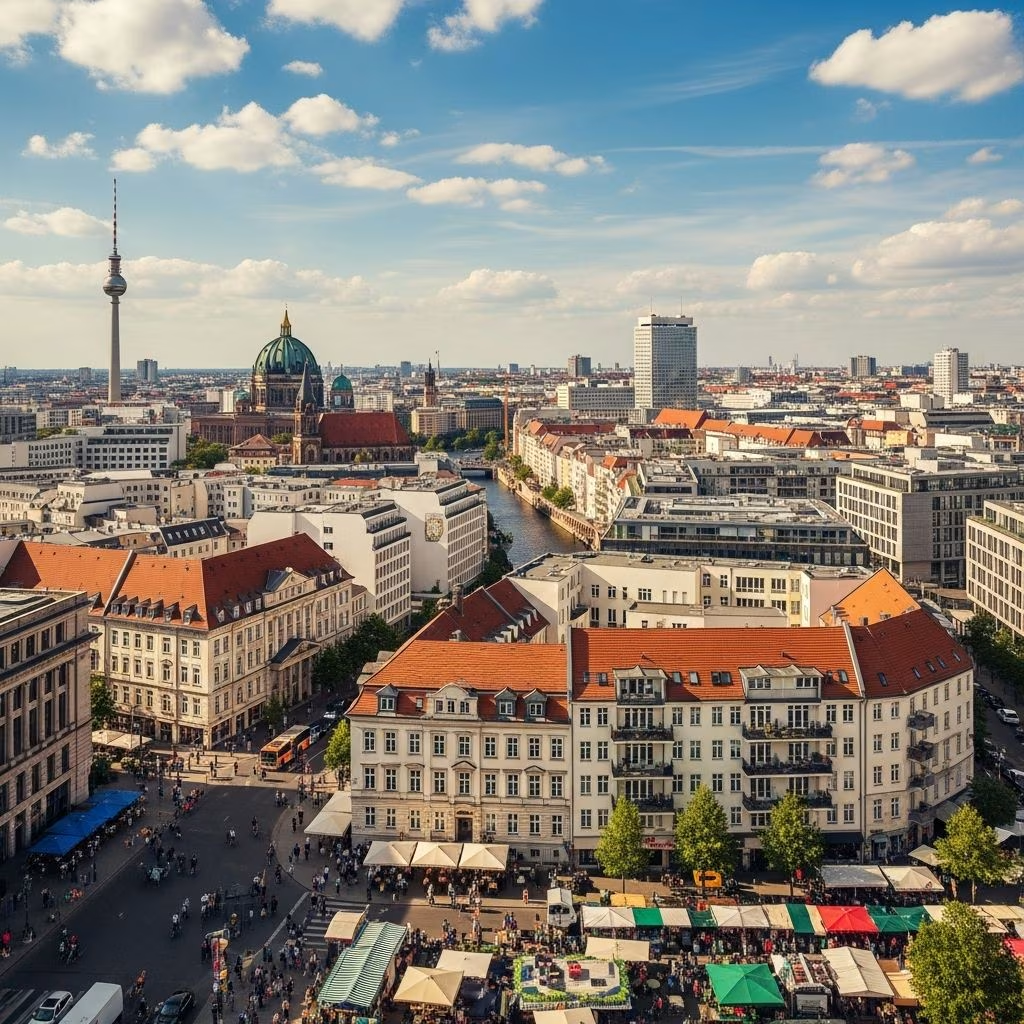
At the geographic and cultural epicenter of Berlin lies Mitte, a sprawling district that serves as the primary destination for first-time visitors to the city. This central borough functions as an open-air museum of 20th-century European history, containing most of Berlin’s most recognizable landmarks and attractions. The area encompasses everything from meticulously preserved medieval structures to Soviet-era architectural monuments, creating an unusual blend of historical periods and design movements.
Mitte’s significance stems from its role as the site of pivotal historical events. Walking through this district, visitors encounter Checkpoint Charlie, Museum Island’s collection of world-class institutions, the Brandenburg Gate, Alexanderplatz’s bustling commercial center, and the Memorial to Murdered Jews. These landmarks cluster within reasonable walking distance of one another, making Mitte ideal for those with limited time or those seeking to compress Berlin’s most essential experiences into a shorter visit.
The neighborhood’s complexity lies in its diversity. Medieval alleyways in Nikolaiviertel exist mere blocks from traffic-congested squares and imposing Soviet-era residential towers. This juxtaposition perfectly encapsulates Berlin’s turbulent past and its emergence as a modern European capital. First-time visitors often spend an entire day exploring Mitte’s concentrated offerings, emerging with a comprehensive understanding of Berlin’s historical trajectory.
North of Mitte, Prenzlauer Berg represents one of Berlin’s most successfully gentrified neighborhoods, though this transformation has reshaped its character significantly. Originally part of Soviet-controlled East Berlin, this wedge-shaped district maintains a distinctive grid-like street pattern that reflects its mid-nineteenth-century urban planning origins. Today, it stands as one of the city’s most pleasant residential areas, though perhaps less adventurous than it was during its bohemian heyday.
The neighborhood’s aesthetic charm remains undeniable. Wide cobblestone streets, carefully restored historic facades, and outdoor dining areas that spill onto pavements during warmer months create an inviting atmosphere. The district’s three main thoroughfares—Schönhauser Allee, Prenzlauer Allee, and Greifswalder Allee—anchor the neighborhood’s commercial activity, with numerous intersecting squares providing quieter gathering spaces.
Kollwitzplatz stands out as the neighborhood’s most celebrated square, surrounded by particularly handsome streets including Rykestraße, Husemannstraße, and Kollwitzstraße. These thoroughfares exemplify Prenzlauer Berg’s current character: upscale, family-oriented, and distinctly bourgeois compared to edgier districts. A significant demographic shift has occurred over recent decades—hipsters who claimed the neighborhood in the 1990s gradually matured into established professionals, married, and started families. Today’s Prenzlauer Berg reflects this evolution, featuring more baby strollers than rebellious artists, though pockets of cultural vitality persist through independent bookstores, vintage retailers, and weekend flea markets like Mauer Park’s famous Sunday gathering.
On the opposite end of Berlin’s personality spectrum lies the eastern bank of the Spree River, where Friedrichshain-Kreuzberg embodies alternative culture and multicultural expression. This district pulses with an unmistakable punk and counterculture spirit that traces its lineage back to the 1970s and 1980s, when West Berlin’s isolation fostered unique artistic movements and radical political expression.
The neighborhood’s visual identity announces itself immediately through its famous street art. Graffiti-covered walls, often considered illegal elsewhere, represent legitimate artistic expression here. The district’s edgy aesthetic, combined with vibrant bars and clubs concentrated along streets like Simon-Dach-Straße, creates an atmosphere that actively attracts artists, musicians, and those embracing alternative lifestyles. This isn’t a neighborhood designed to feel comfortable or welcoming to everyone—its appeal lies precisely in its refusal to conform to conventional expectations.
Across the river in Friedrichshain specifically, a different layer of Berlin’s past emerges. Located within the former East Berlin, this district preserves one of Europe’s most impressive collections of Stalinist monumental architecture. Karl Marx Allee presents a particularly striking example, with its wide boulevard flanked by imposing “wedding-cake” style buildings that testify to the German Democratic Republic’s architectural ambitions. For those interested in Cold War history or imposing socialist aesthetics, Friedrichshain offers both cultural exploration and contemporary nightlife—by day, visitors can contemplate the area’s historical significance; by night, they can participate in Berlin’s thriving club scene.
Neukölln presents perhaps Berlin’s most remarkable transformation narrative. What was once considered one of the city’s most dangerous neighborhoods has evolved into an essential, livable district that embodies modern Berlin’s regenerative capacity. This evolution didn’t happen through gentrification in the traditional sense, but rather through organic community development and genuine cultural exchange.
Today’s Neukölln functions as a microcosm of Berlin itself—diverse, energetic, and constantly evolving. The neighborhood encompasses distinct microdistricts with different characters. Rixdorf preserves charming cobblestone streets and attracts boutique shoppers seeking unique finds. Conversely, Weserstraße pulses with vibrant energy, particularly during evening and nighttime hours, as its bars, restaurants, and cultural venues activate the streetscape. This variety means Neukölln offers different experiences depending on which streets you explore and what times you visit.
The neighborhood appeals particularly to those seeking authentic Berlin experiences without the tourist infrastructure that defines Mitte or the family-oriented refinement of Prenzlauer Berg. Neukölln’s bohemian spirit remains more genuine and less calculated than carefully curated alternatives elsewhere in the city.
For visitors seeking respite from Berlin’s grittier aesthetic, Charlottenburg-Wilmersdorf offers a contrasting vision of urban living. Located west of the city center, this neighborhood doesn’t feel like Berlin in conventional ways, which explains precisely why it attracts those seeking elegant European sophistication. Here, graffiti-covered walls give way to refined architecture, and €5 street kebabs are replaced by upscale dining establishments.
Luxury boutiques, elegant baroque buildings overlooking quiet alleyways, and the visible presence of high-end automobiles signal Charlottenburg-Wilmersdorf’s status as Berlin’s most affluent residential area. Yet this prosperity doesn’t necessarily translate into coldness or inaccessibility. The neighborhood maintains genuine charm alongside its material elegance, with tree-lined streets and carefully maintained public spaces creating pleasant walking environments.
For art enthusiasts, Charlottenburg-Wilmersdorf houses exceptional cultural institutions. C/O Berlin and the Helmut Newton Foundation provide immersive creative experiences, offering alternatives to the crowded Museum Island institutions in Mitte. The neighborhood’s cultural offerings, combined with its refined atmosphere, make it appealing to visitors prioritizing comfort and sophistication over alternative aesthetics.
Kurfürstendamm, commonly abbreviated as Ku’Damm, functions as Berlin’s primary shopping destination. This long boulevard concentrates luxury retailers, international brands, and flagship stores that appeal to fashion-conscious travelers. The neighborhood’s major commercial thoroughfares become particularly crowded during weekends and holiday periods, making early morning visits advisable for those seeking less congested experiences.
Beyond shopping, Ku’Damm offers historical attractions that enhance its appeal. The Kaiser Wilhelm Memorial Church, an iconic structure whose damaged tower serves as a reminder of World War II destruction, anchors the district’s cultural significance. Immediately adjacent to Ku’Damm lies the Berlin Zoological Garden, one of Europe’s oldest and most comprehensive zoos. This concentration of attractions makes Ku’Damm convenient for visitors with limited time, though its crowded nature requires careful timing and patience.
| Neighborhood | Best For | Character | Crowding Level |
|---|---|---|---|
| Mitte | First-time visitors; historical attractions | Historic, touristic, diverse | Very High |
| Prenzlauer Berg | Families; charming cafes; upscale living | Gentrified, pleasant, bourgeois | Medium-High |
| Friedrichshain-Kreuzberg | Artists; nightlife; alternative culture | Edgy, rebellious, creative | Medium |
| Neukölln | Authentic experiences; bohemian culture | Diverse, energetic, transforming | Medium |
| Charlottenburg-Wilmersdorf | Upscale travelers; art institutions | Elegant, refined, sophisticated | Low-Medium |
| Ku’Damm | Shopping enthusiasts; convenient access | Commercial, touristy, cosmopolitan | Very High |
Mitte offers the most logical choice for initial visits, as it concentrates Berlin’s most significant historical and cultural attractions within walkable distances. While crowded and sometimes chaotic, this centrality allows visitors to efficiently experience Berlin’s essential character and historical narrative. Alternatively, Prenzlauer Berg provides a more pleasant residential experience while remaining close to central attractions.
Friedrichshain-Kreuzberg dominates Berlin’s contemporary nightlife scene, with clubs and bars that range from underground electronic music venues to eclectic artistic spaces. Neukölln offers additional nightlife options with a somewhat less intense atmosphere. Both neighborhoods remain active into early morning hours, particularly on weekends.
Prenzlauer Berg’s reputation as Berlin’s most family-friendly district stems from its abundant squares, independent bookstores, weekend markets, and residential calm. The neighborhood offers excellent playgrounds and provides a genuinely pleasant living environment without sacrificing access to cultural attractions.
Friedrichshain preserves East Berlin’s socialist architectural legacy more comprehensively than any other district, particularly along Karl Marx Allee. For those interested in understanding Cold War Berlin’s aesthetic and historical context, this neighborhood provides essential experiences.
Mitte’s Museum Island concentrates world-class institutions, though the area becomes extremely crowded. Charlottenburg-Wilmersdorf offers alternative art experiences through C/O Berlin and the Helmut Newton Foundation with significantly fewer visitors.
Budget-conscious travelers often find that Neukölln or Friedrichshain-Kreuzberg offer better value propositions than Mitte or Charlottenburg-Wilmersdorf, with accommodations and dining that don’t necessarily compromise on quality or experience. Luxury travelers typically prefer Charlottenburg-Wilmersdorf, where upscale hotels and fine dining align with refined aesthetic expectations.
Culturally motivated visitors benefit from divided stays across multiple neighborhoods—a few nights in Mitte for historical immersion, followed by time in alternative districts for contemporary art and nightlife perspectives. This approach provides more comprehensive understanding of Berlin’s multifaceted character than concentrating in a single neighborhood.
Extended visits of two weeks or longer merit slower exploration of individual neighborhoods, allowing time to discover hidden squares, neighborhood-specific cafes, and genuine local experiences that organized tourism misses. Each district reveals different dimensions of Berlin when experienced patiently and deeply rather than as a checklist of attractions.
Berlin’s neighborhoods continue transforming. Gentrification accelerates in previously affordable areas, cultural institutions relocate, and new venues constantly emerge. This dynamism means no snapshot remains permanently accurate—neighborhoods that appear stable today may change significantly within years. Travelers seeking the most current information benefit from consulting recent local sources and local residents alongside guidebooks.
This evolutionary quality represents Berlin’s essential character. The city refuses fixed identity, constantly negotiating between preservation and progress, history and modernity, respectability and rebellion. Each neighborhood embodies different resolutions to these tensions, making Berlin uniquely compelling for travelers seeking cities with genuine complexity and ongoing cultural vitality.
