

 Travel Essentials
 Travel Essentials

Discover the most cost-effective North American destinations for seeing the northern lights, from Canadian Yukon to Alaskan wilderness.
 Travel Essentials
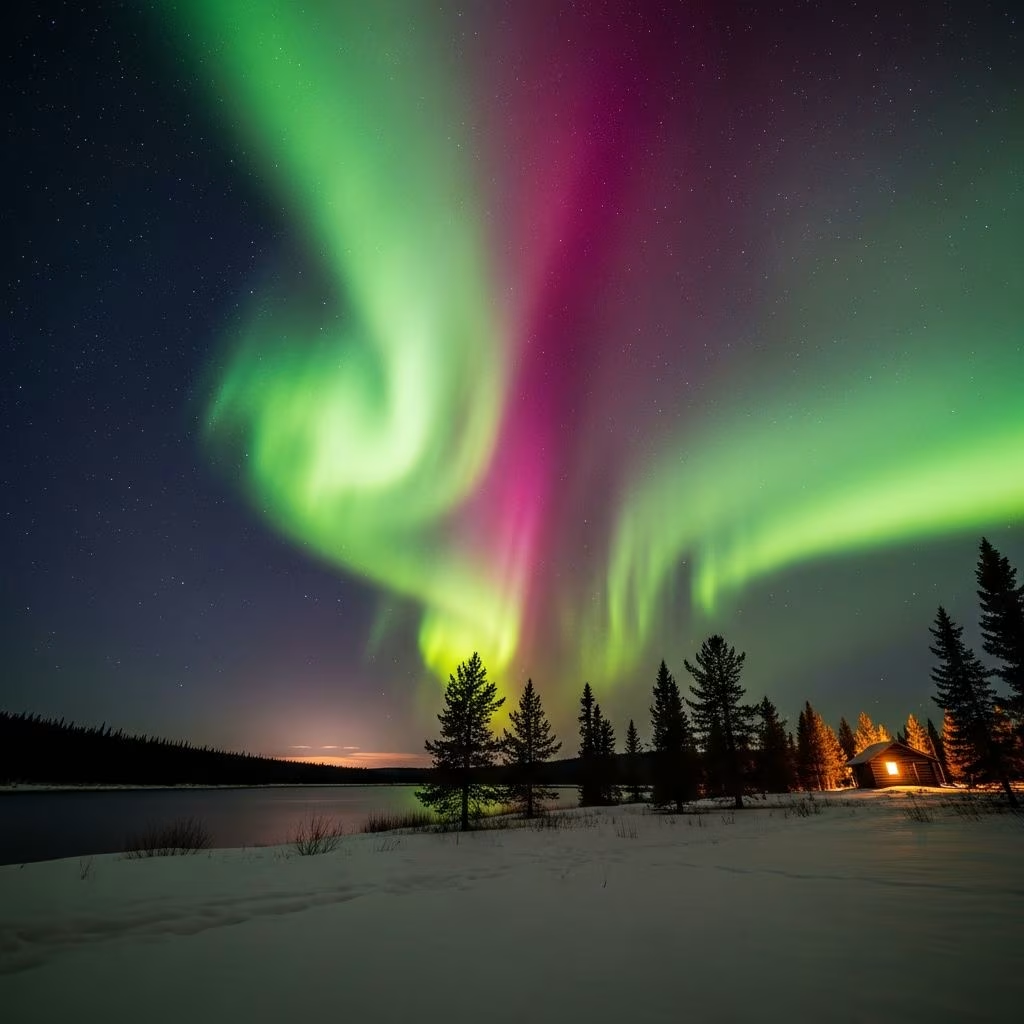
The northern lights represent one of Earth’s most captivating natural phenomena, drawing travelers from around the globe to witness the dancing green and purple ribbons across Arctic skies. However, many prospective visitors assume that experiencing the aurora borealis requires prohibitively expensive expeditions. In reality, numerous destinations throughout North America offer exceptional opportunities to observe this celestial display while maintaining reasonable budget constraints. By strategically selecting your destination, timing your visit appropriately, and leveraging cost-effective accommodations, witnessing the northern lights remains accessible to travelers with varying financial resources.
The aurora borealis occurs when charged particles from the sun collide with gases in Earth’s atmosphere, creating luminous displays visible primarily in high-latitude regions. Understanding both seasonal patterns and geographic positioning helps travelers maximize their viewing potential while minimizing unnecessary expenses. This comprehensive guide explores the most economical North American locations for aurora observation, providing practical insights into accommodations, optimal viewing windows, and strategies for experiencing this remarkable natural spectacle affordably.
Canada consistently offers some of North America’s most budget-conscious options for northern lights observation, combining affordability with exceptional viewing conditions and established tourism infrastructure.
Whitehorse, Yukon’s territorial capital, has emerged as the most economically accessible North American destination for aurora observation, with average nightly accommodation costs around $160.68. This location provides significant advantages for budget-conscious travelers seeking reliable aurora sightings. The city benefits from its position within the auroral oval, an oblong atmospheric band encircling the North Pole where auroras display with greatest frequency and intensity.
Multiple tourism companies operating from Whitehorse offer aurora-themed excursions and specialized tours. The Beez Kneez Backpackers Hostel provides economical lodging options starting at $35 nightly for individual beds or $105 for private rooms. Budget accommodations combined with accessible tour pricing make extended visits feasible for travelers with modest budgets. Additionally, the Takhini Hot Springs, located conveniently outside the city, offers entry for merely $9 on weekdays, allowing visitors to experience the aurora while soaking in naturally heated waters—a distinctive combination unavailable in most other viewing locations.
The Northern Lights Space and Science Centre provides educational context regarding the atmospheric science underpinning aurora formation, enriching visitors’ understanding of the phenomenon they observe. Peak aurora visibility in Whitehorse occurs between fall and spring, with September through April representing optimal viewing windows when magnetic activity typically peaks and nighttime skies extend sufficiently for observation.
Churchill, Manitoba, represents another compelling budget option despite its remote positioning on Hudson Bay’s western shore. This destination offers distinctive advantages beyond aurora viewing, as Churchill functions simultaneously as a premier polar bear observation site. Tour packages beginning at $678 USD accommodate four-day introductory experiences, while premium eight-day packages reach approximately $5,728 USD. The 4-day Yukon Deluxe Winter Northern Lights Tour, a popular mid-range option, costs approximately $1,688 USD.
Churchill’s geographic positioning ensures aurora visibility occurs on numerous nights throughout the extended winter season. The combination of accessible transportation, established hospitality infrastructure, and multi-purpose expedition appeal justifies the relatively modest tour pricing compared to other premium Arctic destinations.
Yellowknife, Northwest Territories, earned designation as the “Aurora Capital of North America” due to its exceptional frequency of northern lights displays, with aurora visibility possible on more than 240 nights annually. This remarkable statistic represents the highest occurrence rate among all North American viewing locations, significantly enhancing the probability of successful aurora observation during any winter visit.
The city maintains two distinct aurora seasons: early August through late September and mid-November through early April. While accessibility presents challenges—reaching Yellowknife requires either air travel or undertaking a grueling 19-hour highway drive from Edmonton—the exceptional viewing reliability justifies the travel complexity for dedicated aurora hunters. Accommodations range from budget hostels to moderate-priced hotels, with options generally remaining more economical than comparable facilities in major southern metropolitan areas.
American destinations provide alternatives for travelers preferring to remain within the United States while pursuing northern lights experiences. Several regions offer notable viewing opportunities combined with accessible amenities.
Fairbanks, Alaska, maintains position as the preeminent northern lights viewing location within the United States. The city’s geographic position within the auroral oval ensures consistent aurora visibility throughout the winter season, with peak conditions occurring from December through March. Ester Dome, an unlit mountain west of the city, provides sweeping sky vistas accessible without financial outlay, allowing visitors to experience northern lights displays without incurring additional viewing fees.
Late November through January represent optimal months for aurora hunting in the Fairbanks area, as daylight diminishes to approximately six hours daily, extending evening observation windows significantly. Accommodation options range from budget motels to full-service hotels, with various price points accommodating different financial parameters. The city’s established tourism infrastructure ensures visitors locate dining, transportation, and equipment rental services supporting multi-day aurora expeditions.
The Idaho Panhandle National Forests encompass more than three million acres distributed across three distinct forest regions—Coeur d’Alene, St. Joe, and Kaniksu—providing exceptional aurora viewing opportunities in genuine wilderness settings. This expansive protected area remains largely free from artificial light pollution, creating ideal conditions for aurora observation. Priest Lake, positioned less than twenty miles from the Canadian border, attracts photographers seeking to capture aurora reflections across still water surfaces.
Camping facilities operate year-round at select locations, with fees ranging from zero to $10 nightly, making extended stays economically feasible. The Blue Diamond Marina & Resort offers lakefront accommodations at $79 nightly, providing modest comfort enhancements without excessive expense. This location appeals particularly to photographers and nature enthusiasts seeking authentic wilderness experiences while observing northern lights displays.
The northern shore of Lake Superior, Earth’s largest freshwater lake by surface area, provides dark backdrops ideal for aurora observation during fall and winter months, particularly September and October. Silver Islet, a rugged peninsula community accessible via Highway 17, offers atmospheric viewing locations where auroras frequently reflect across the lake surface in virtually any direction.
Thunder Bay provides the most comprehensive accommodation selection, with standard motel rooms available from $56 nightly or single-occupancy rooms at the Sleeping Giant Guesthouse for approximately $35. This combination of dramatic natural scenery, established hospitality infrastructure, and moderate pricing makes Lake Superior’s northern shore accessible to budget-conscious travelers unfamiliar with extreme Arctic environments.
Cook County, Minnesota, occupying the state’s far northeastern corner along the United States-Canada border, comprises almost entirely wilderness terrain ideal for aurora viewing from late fall through early spring. Oberg Mountain, situated within Superior National Forest, offers panoramic perspectives encompassing Oberg Lake, Lake Superior, and numerous regional peaks. Hotels along Highway 61, the county’s principal thoroughfare, offer standard accommodations ranging from $61 to $110 nightly.
Successfully observing northern lights requires understanding seasonal patterns, solar activity cycles, and atmospheric conditions influencing aurora visibility.
| Location | Primary Season | Peak Months | Annual Visibility Nights |
|---|---|---|---|
| Yellowknife, NT | August-April | November-January | 240+ |
| Whitehorse, Yukon | September-April | December-February | Variable |
| Fairbanks, Alaska | August-April | December-March | Frequent |
| Lake Superior Shore | September-October, Winter | Fall/Winter | Seasonal |
The equinox periods—approximately March and September—coincide with heightened geomagnetic activity, increasing aurora visibility probability regardless of geographic location. Solar activity cycles influence aurora occurrence frequency, with increased solar particle output substantially improving viewing prospects. The year 2025 exhibits elevated solar activity, enhancing aurora observation opportunities across all North American locations.
Successful budget-conscious aurora expeditions require systematic financial planning addressing transportation, accommodation, meals, and activities.
Professional aurora tours provide expertise regarding optimal viewing locations, timing, and photography techniques. Tour pricing varies considerably based on duration, included amenities, and accommodation standards. Four-day introductory packages commence at approximately $678 USD, while comprehensive eight-day expeditions reach $5,728 USD. Premium mid-range options, such as the Yukon Deluxe Winter Northern Lights Tour, cost around $1,688 USD, balancing cost considerations with enhanced experiences.
Tours typically include transportation to optimal viewing locations, specialized expertise regarding aurora behavior and photography, and sometimes hot beverages or warming facilities. Independent travelers electing to explore without guided services encounter lower overall expenses but sacrifice professional guidance and potentially encounter reduced viewing success due to suboptimal location selection.
Several practical approaches enable travelers to experience northern lights while minimizing expenditures:
Whitehorse, Yukon, currently offers the most economical combination of reliable aurora viewing and accommodation costs, averaging $160.68 nightly with hostel options beginning at $35. This destination balances accessibility, affordability, and viewing probability exceptionally well for budget travelers.
December through February represent peak aurora viewing months across most North American locations, as extended darkness provides maximum observation windows and geomagnetic activity typically intensifies. However, September-October and March-April offer acceptable viewing prospects combined with reduced accommodation pricing.
Yes, independent aurora observation remains feasible at numerous locations. Ester Dome near Fairbanks and wilderness areas throughout the Idaho Panhandle and northern Minnesota enable cost-free viewing. However, professional guides substantially increase sighting probability through expertise regarding optimal locations, timing, and atmospheric conditions.
Backpacker hostels provide budget options ranging from $35-$45 nightly, representing the most economical conventional lodging. Campgrounds, where available, offer $0-$20 nightly options, though many close seasonally. Budget motels typically cost $56-$79 nightly.
Enhanced solar activity produces increased charged particle output, intensifying aurora displays and expanding geographic areas where visibility occurs. Periods of heightened solar activity, such as 2025, substantially improve viewing probability across all North American locations.
Beyond financial planning, successful aurora observation requires attention to practical travel elements. Winter travel to northern regions necessitates appropriate cold-weather clothing, including insulated layers, waterproof outer garments, thermal undergarments, and protection for extremities. Photography enthusiasts should anticipate that standard camera batteries perform poorly in extreme cold, requiring battery warming techniques or arctic-rated equipment.
Physical acclimatization to extreme temperatures and high-latitude locations supports overall expedition success. Most travelers experience acclimation within 48 hours, though individual responses vary. Altitude-related considerations remain minimal across most viewing locations, though some Alaskan destinations involve moderate elevation changes.
Weather patterns profoundly influence aurora observation success. Clear skies represent the limiting factor for most viewing attempts—even intense aurora displays remain invisible beneath cloud cover. Travelers should anticipate multiple-night visits to maximize sighting probability, as cloud conditions frequently disappoint during shorter expeditions.
The northern lights remain accessible to travelers with modest budgets through strategic destination selection, flexible timing, and practical planning. Canada’s Yukon and Northwest Territories, combined with selected United States locations, provide exceptional viewing opportunities without requiring extreme financial expenditure. By embracing budget accommodations, considering shoulder-season travel, and potentially combining aurora observation with additional regional attractions, travelers successfully experience this remarkable natural phenomenon while maintaining reasonable travel expenses. The combination of natural spectacle, established tourism infrastructure, and relatively affordable regional options ensures that aurora observation transitions from exclusive luxury experience to achievable adventure for travelers across economic spectrums.
