

 Travel Essentials
 Travel Essentials

Discover how to assemble a versatile camera kit optimized for road trips, featuring must-have bodies, lenses, stabilizers, and travel-friendly accessories for professional-quality shots on the go.
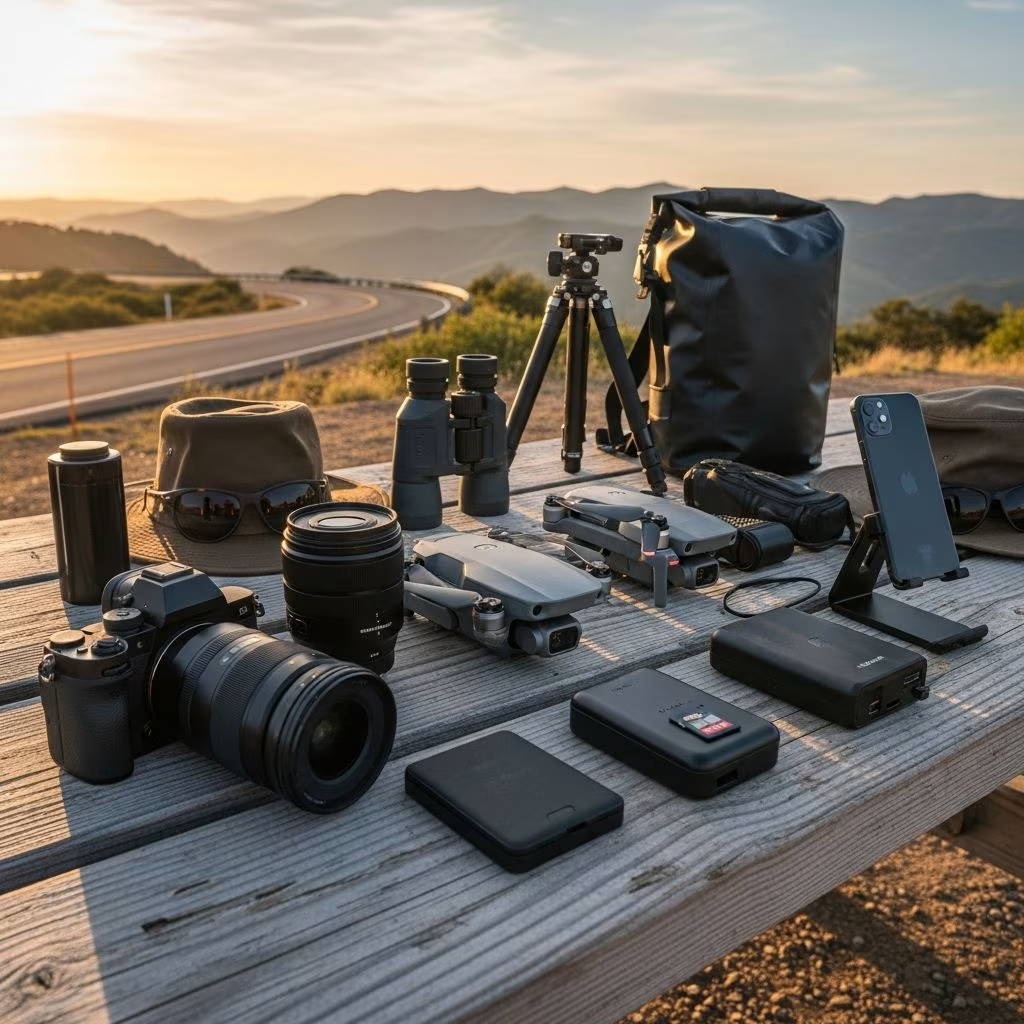 Travel Essentials
Assembling the right camera equipment for road trips transforms ordinary journeys into visual masterpieces. A well-thought-out kit balances portability, durability, and performance to handle diverse shooting scenarios from scenic highways to rugged trails.
The foundation of any mobile photography setup is a reliable camera body that withstands travel demands while delivering high-quality images and video. Prioritize models that are compact, weather-sealed, and equipped with advanced autofocus for quick captures during fleeting moments.
Full-frame mirrorless cameras like the Sony FX3 stand out for their versatility in both stills and cinema-quality video. These bodies offer internal stabilization, multiple shooting modes, and robust battery life, making them ideal for extended road sessions without constant recharging.
Budget-conscious travelers might opt for APS-C sensors, which provide excellent depth of field control in a smaller package. Pairing with fast lenses ensures low-light performance during dawn patrols or nighttime campsites.
No road trip kit is complete without lenses that cover wide vistas to distant peaks. A zoom lens with variable focal lengths offers flexibility without swapping glass mid-shoot.
Start with a 24-105mm f/4 zoom, which captures expansive landscapes at the wide end and compresses perspectives for telephoto effects. Its constant aperture maintains exposure consistency while driving. For landscapes, prioritize sharpness edge-to-edge and minimal distortion.
| Lens Type | Focal Range | Ideal Use | Weight (lbs) |
|---|---|---|---|
| Wide-Angle Zoom | 16-35mm | Scenic overlooks, interiors | 1.8 |
| Standard Zoom | 24-105mm | All-purpose road shots | 1.5 |
| Telephoto | 70-200mm f/2.8 | Wildlife, compression | 3.1 |
Telephoto options at 200mm or longer excel for isolating subjects like roadside wildlife or mountain details. Ensure filter thread compatibility (77mm or smaller) for ND filters that tame bright sunlight.
Bumpy roads demand stabilization to eliminate shake. Gimbals like the DJI RS3 Pro or RS2 provide three-axis balancing for buttery-smooth pans and follows.
Mount these on vehicle rigs using speedrail pipes (1-5 feet lengths) clamped to roof racks or hitch adapters. Hollaender fittings and baby grid clamps secure setups firmly, with ratchet straps as backups for safety.
For static shots, a lightweight carbon fiber tripod with a fluid head supports low-light exposures up to 30 seconds. Look for models under 3 pounds with 60-inch max height and twist locks for quick setup.
Great visuals pair with immersive audio. Wireless lavalier mics like DJI Mic 2 offer 250m range, windshields for outdoor noise reduction, and 14-hour battery life.
Mount externally on vehicles or clip to clothing for vlogs. Dual-channel recording syncs easily in post-production, ensuring clear narration over engine hum or wind.
ND filters (3-10 stops) are crucial for long exposures in daylight, creating silky water flows or motion blur on passing traffic. Circular polarizers cut glare from roads and water surfaces.
Power remains a road trip challenge. V-mount batteries (98Wh) power cameras for 4-6 hours, charged via car inverters. Include USB-C power banks with PD 65W output for multi-device charging.
A 30-40L backpack with hip belt, padded straps, and rear access keeps gear organized. Internal camera cubes prevent lens shifts during drives.
Use padded dividers for lenses, a rain cover for sudden showers, and MOLLE webbing for tripods. Weight distribution: keep heavy items low and centered for balance on hikes.
Transform your car into a mobile studio with DIY rigs. Thule wingbars or trailer hitches serve as bases for speedrail frames. Gutter hooks and padding protect paint.
For POV angles, magnetic mounts or suction cups (ratchet-strapped) hold compact cameras. Measure positions precisely: lens distance from vehicle side, height from ground.
Safety first: test rigs at low speeds, use redundant ties, and avoid obstructing driver views.
Travel with a rugged tablet or laptop for quick culls. Apps like Lightroom Mobile sync via cloud for instant backups to SD cards formatted in-camera.
Organize by date/location folders. Portable SSDs (1TB) store raw files, with dupe backups on another drive.
| Component | Budget Option | Price Range | Pro Option |
|---|---|---|---|
| Camera | Sony A6400 | $900 | Sony FX3 |
| Lens | 24-70mm f/4 | $500 | 24-105mm f/4 |
| Gimbal | DJI RS3 Mini | $300 | RS3 Pro |
| Bag | 30L Backpack | $150 | 40L with Cube |
| Total | – | $2,500 | – |
Scale up with rentals for specialized shoots, keeping core kit under 20 pounds total.
Mirrorless bodies like Sony FX3 for video/stills hybrid use, prioritizing compactness and stabilization.
Use speedrail rigs with clamps and straps tied to frame points.
24-105mm zoom covers 80% of shots; add wide/tele as needed.
30L+ backpacks with hip belts and camera inserts for comfort.
V-mounts and car chargers; avoid draining vehicle battery.
