

 Travel Essentials
 Travel Essentials

Explore Cape Town's diverse neighborhoods from beachfront enclaves to cultural hubs, with insights for travelers and relocators seeking the perfect fit.
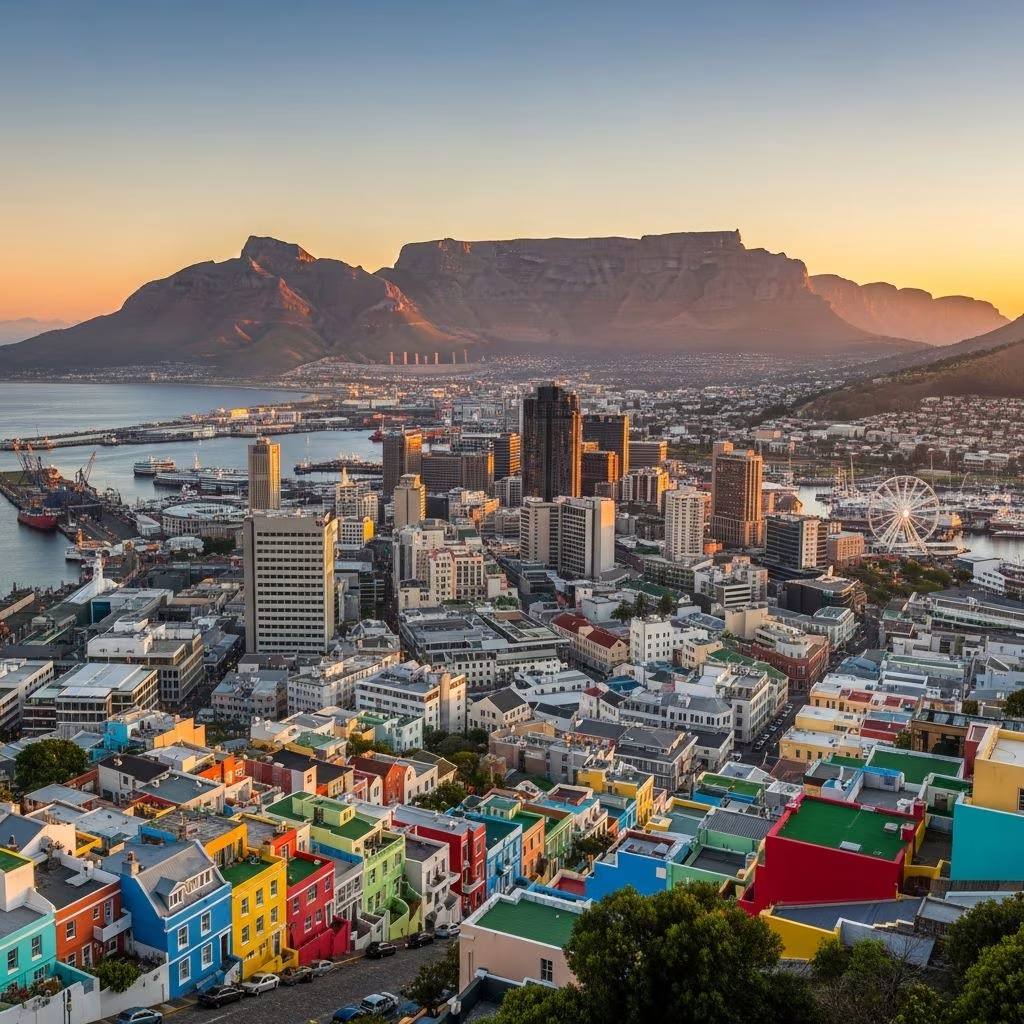 Travel Essentials
Cape Town offers an exceptionally diverse range of neighborhoods, each with its own distinct character, advantages, and appeal. Whether you’re considering a temporary visit or a permanent relocation, understanding the unique qualities of each district is essential for making an informed decision. This comprehensive guide examines the city’s most compelling neighborhoods, offering detailed insights into what makes each area special.
The Mother City stretches across diverse topographies, from mountainous terrain to pristine coastlines, creating natural neighborhoods with distinct identities. The Atlantic Seaboard, which runs along the western coast, includes some of the city’s most prestigious and expensive areas. Inland neighborhoods offer a more authentically local experience with lower costs and stronger community connections. Each district presents different advantages depending on whether you prioritize lifestyle, budget, safety, convenience, or cultural immersion.
The Atlantic Seaboard represents Cape Town’s most exclusive coastal corridor, stretching from the city center toward the Twelve Apostles mountain range. These neighborhoods attract affluent residents and visitors seeking direct access to dramatic coastlines and upscale amenities. The seaboard communities combine natural splendor with cosmopolitan infrastructure, creating an environment where outdoor recreation meets urban sophistication.
Residents of these areas enjoy unparalleled access to pristine beaches, hiking trails, and sunset vistas. The promenade infrastructure along much of the seaboard provides safe, scenic spaces for evening walks, jogging, and social gathering. However, this desirability comes with significantly elevated property prices and rental costs, making seaboard neighborhoods accessible primarily to those with substantial financial resources.
During Southern Hemisphere summer months, the Atlantic Seaboard experiences substantial tourism influxes, resulting in congestion and crowded public spaces. Popular restaurants and entertainment venues fill to capacity, creating a vibrant but sometimes overwhelming atmosphere. Those seeking tranquility may prefer visiting during shoulder seasons or choosing neighborhoods slightly removed from the primary tourist corridors.
Camps Bay stands as Cape Town’s most recognizable neighborhood internationally, renowned for its sweeping sandy beach backed by the imposing Twelve Apostles peaks. The main thoroughfare features an impressive concentration of restaurants, cafes, and cocktail bars with ocean views, creating a playground atmosphere for the wealthy and fashionable. The beach culture here emphasizes social connection and conspicuous leisure, with the waterfront serving as the neighborhood’s heart and social focal point.
The trade-offs for living in Camps Bay are substantial: accommodation prices rank among the city’s highest, and summer traffic congestion can make simple journeys time-consuming. The neighborhood attracts international visitors and celebrities, resulting in an international rather than authentically local atmosphere. Despite these drawbacks, Camps Bay remains irresistible to those prioritizing beach access and cosmopolitan lifestyle above financial considerations.
Positioned between Green Point and Bantry Bay, Sea Point offers a compelling balance between accessibility and prestige. The neighborhood’s defining feature is its extensive seafront promenade, a multi-kilometer ribbon of pedestrian and cycling infrastructure that parallels the coastline. This promenade has become essential to local life, hosting joggers, dog walkers, cyclists, and casual strollers throughout the day and into evening hours.
The neighborhood maintains strong appeal for active individuals and families, with the surrounding Signal Hill offering hiking and running opportunities. The cafe culture along the main commercial streets provides excellent coffee and diverse dining options, including substantial vegan and health-conscious establishments. While still expensive compared to inland neighborhoods, Sea Point offers somewhat more reasonable pricing than Camps Bay, making it accessible to a broader demographic of affluent residents.
Beyond the prestige coastal corridor, Cape Town’s central neighborhoods offer compelling alternatives emphasizing authentic urban living and cultural diversity. These areas provide closer access to museums, galleries, theaters, and historical sites while maintaining more manageable costs. Central neighborhoods attract artists, young professionals, and cultural enthusiasts seeking engagement with the city’s intellectual and creative communities.
Directly adjacent to Sea Point, Green Point shares many of the same beachfront advantages while offering a somewhat more residential and polished atmosphere. The neighborhood extends further from the immediate ocean, yet remains close enough for regular beach visits and promenade walks. Green Point Park serves as a vital recreational hub, providing open space for running, picnicking, and dog-walking activities that strengthen community connections.
The area features a newer aesthetic than some neighboring districts, with modern developments complementing historical properties. Main Road concentrates the neighborhood’s dining and entertainment options, hosting an evolving array of restaurants and bars that reflect contemporary culinary trends. While still expensive, Green Point offers slightly lower prices than the most exclusive coastal neighborhoods, attracting young professionals and established families seeking contemporary urban living.
Positioned strategically between Green Point and the central business district, De Waterkant represents one of Cape Town’s most distinctive and welcoming neighborhoods. The district’s defining characteristic is its concentration of colorful Victorian and contemporary townhouses creating a rainbow of architectural personalities. The intimate cobbled streets evoke a distinctly European ambiance, contrasting sharply with typical South African urban environments.
De Waterkant has emerged as Cape Town’s primary LGBTQ+-friendly neighborhood, known for its inclusive atmosphere and vibrant social scene. The area benefits from 24-hour security infrastructure and notably, several streets avoid the regular electricity-supply disruptions affecting other neighborhoods during load-shedding periods—a significant practical advantage in contemporary Cape Town. This combination of safety, reliability, and inclusive community makes De Waterkant increasingly attractive to diverse populations seeking both security and social acceptance.
Nestled on the slopes of Lion’s Head and Signal Hill, Tamboerskloof offers a distinctly bohemian atmosphere with Victorian architecture providing historical character. Many residences feature spectacular views across Table Bay toward the CBD, offering residents stunning vistas from their homes. The neighborhood appeals strongly to outdoor enthusiasts, as major hiking trailheads for Lion’s Head, the Table Mountain Pipe Track, and Kloof Corner originate within the district.
Despite its residential character, Tamboerskloof maintains a lively entertainment scene concentrated around specific street intersections. Venues like Power and the Glory and the Moveable Feast attract crowds seeking alternative music and creative expression. The neighborhood’s proximity to Kloof Street in neighboring Gardens creates a broader nightlife corridor, allowing residents easy access to Cape Town’s most popular entertainment venues. This combination of natural beauty, hiking access, and cultural energy attracts creative professionals and outdoor-oriented individuals.
Elevated above the central business district in the direction of Table Mountain and Lion’s Head, Gardens functions as a hub for Cape Town’s cultural, dining, and entertainment sectors. Kloof Street, the neighborhood’s spine, concentrates the city’s most popular and fashionable bars and restaurants, with venues like Blondies and Van Hunks serving as social magnets for young professionals and visitors.
The neighborhood maintains an upper-middle-class residential character while functioning as a major entertainment destination. This dual nature means that Gardens residents enjoy walking access to sophisticated dining and nightlife without experiencing the cost premiums associated with beachfront neighborhoods. The area attracts young professionals, students, and established families seeking urban engagement without oceanfront expense.
Cape Town’s central business district offers significant practical advantages for those prioritizing convenience and budget consciousness over prestige. The CBD functions as the geographic and transportation hub connecting all major neighborhoods—Gardens and Camps Bay to the south, the Waterfront to the north, Woodstock and Observatory to the east, and the Atlantic Seaboard to the west.
Staying or living in the CBD maximizes time efficiency and reduces travel costs, allowing visitors and residents to access more attractions with less expenditure on transportation. The neighborhood hosts most of the city’s museums, theaters, and cultural institutions alongside a diverse array of restaurants ranging from street food to fine dining. However, the CBD maintains less residential character than other neighborhoods and reflects economic inequality more starkly than affluent coastal areas.
For those seeking urban convenience without the intensity of the CBD proper, De Waterkant functions as an upscale, quieter alternative immediately adjacent to the city center. The neighborhood provides a peaceful enclave while remaining walking distance or a brief transport ride from all central attractions. This positioning makes De Waterkant particularly appealing to those seeking a balanced urban experience.
The V&A Waterfront exists as a uniquely constructed neighborhood, created during the 1990s through commercial redevelopment of the historic port area. The district has transformed into a sprawling entertainment and tourism hub featuring expensive hotels, restaurants, museums, a large shopping mall, and a Ferris wheel, all arranged on a mostly-pedestrian wharf environment.
The Waterfront attracts extraordinary demographic diversity, drawing residents and visitors from throughout South Africa and globally. While offering convenient access to entertainment and dining, the neighborhood maintains an artificial, commercialized atmosphere rather than authentic local character. The area prioritizes visitors and consumption over community, making it less suitable for those seeking immersive local living experiences.
For those seeking beach neighborhood character at substantially lower costs, Muizenberg on the False Bay coast offers compelling advantages. As Cape Town’s main beach neighborhood on the eastern coast, Muizenberg attracts surfing enthusiasts with its long beach and established surfing schools.
The neighborhood maintains a relaxed, laid-back atmosphere with numerous cafes and restaurants supporting a casual lifestyle. Muizenberg offers solid availability of affordable housing including apartments, shared rooms, and individual houses—making it accessible to those on more modest budgets. This combination of beach access, affordability, and authentic local atmosphere attracts budget-conscious travelers and those seeking respite from premium coastal neighborhoods.
For expats and relocators prioritizing family life and peaceful environments over urban nightlife, neighborhoods like Noordhoek and Kalk Bay offer advantages further removed from central bustle. These areas provide stronger community atmospheres, better schools, and more spacious housing at more reasonable prices than central neighborhoods.
These quieter districts represent conscious trade-offs: residents sacrifice convenient access to nightlife and cultural institutions in exchange for family-friendly communities, natural surroundings, and more affordable costs. They appeal strongly to established families and those seeking respite from urban intensity.
Safety remains a legitimate consideration when selecting neighborhoods. De Waterkant distinguishes itself through 24-hour security infrastructure, while neighborhoods like Green Point and Sea Point maintain general reputations for relative safety through community presence and commercial activity.
Beyond security, practical considerations including load-shedding patterns, public transportation access, and commercial amenities should influence neighborhood selection. Those dependent on reliable electricity should specifically investigate load-shedding schedules, as certain areas like De Waterkant avoid disruptions affecting other districts.
| Neighborhood | Primary Appeal | Cost Level | Lifestyle Match |
|---|---|---|---|
| Camps Bay | Beach prestige and nightlife | Very High | Luxury seekers, young social professionals |
| Sea Point | Active lifestyle and promenade | High | Fitness enthusiasts, outdoor lovers |
| Green Point | Modern residential with beach access | High | Young professionals, contemporary living |
| De Waterkant | Artistic character and inclusivity | Mid-High | Creative professionals, LGBTQ+ community |
| Gardens | Nightlife and cultural hub | Mid-High | Young professionals, entertainment seekers |
| Tamboerskloof | Mountain access and arts scene | Mid | Outdoor enthusiasts, creative types |
| Muizenberg | Beach affordability and relaxation | Low-Mid | Budget travelers, surfers, laid-back lifestyle |
| CBD | Central convenience and affordability | Low-Mid | Budget travelers, practical relocators |
Tamboerskloof, Gardens, and Muizenberg offer reasonable pricing while maintaining vibrant communities and good amenities. Sea Point provides moderate pricing with excellent lifestyle amenities compared to premium coastal neighborhoods.
Gardens, Green Point, and Tamboerskloof concentrate nightlife, dining, and professional communities while maintaining reasonable residential character. De Waterkant offers an upscale alternative emphasizing artistic and creative scenes.
Noordhoek, Kalk Bay, and outer areas offer family-friendly environments with schools and space. For those preferring central locations, Green Point and Tamboerskloof balance family amenities with urban access.
De Waterkant uniquely emphasizes LGBTQ+ inclusion, artistic character through colorful architecture, and practical benefits including 24-hour security and load-shedding-free zones.
Cape Town’s neighborhoods offer remarkable diversity accommodating virtually any lifestyle preference and budget level. The Atlantic Seaboard delivers uncompromising luxury and beach lifestyle for those with substantial resources. Central neighborhoods like Gardens and Tamboerskloof balance urban engagement with more accessible pricing. Alternative options like Muizenberg and quieter family areas provide escape from premium pricing while sacrificing central convenience. Understanding these distinctions enables informed decisions matching personal priorities with appropriate neighborhoods, ensuring your Cape Town experience aligns with genuine preferences rather than generic tourist suggestions.
