

 Travel Essentials
 Travel Essentials

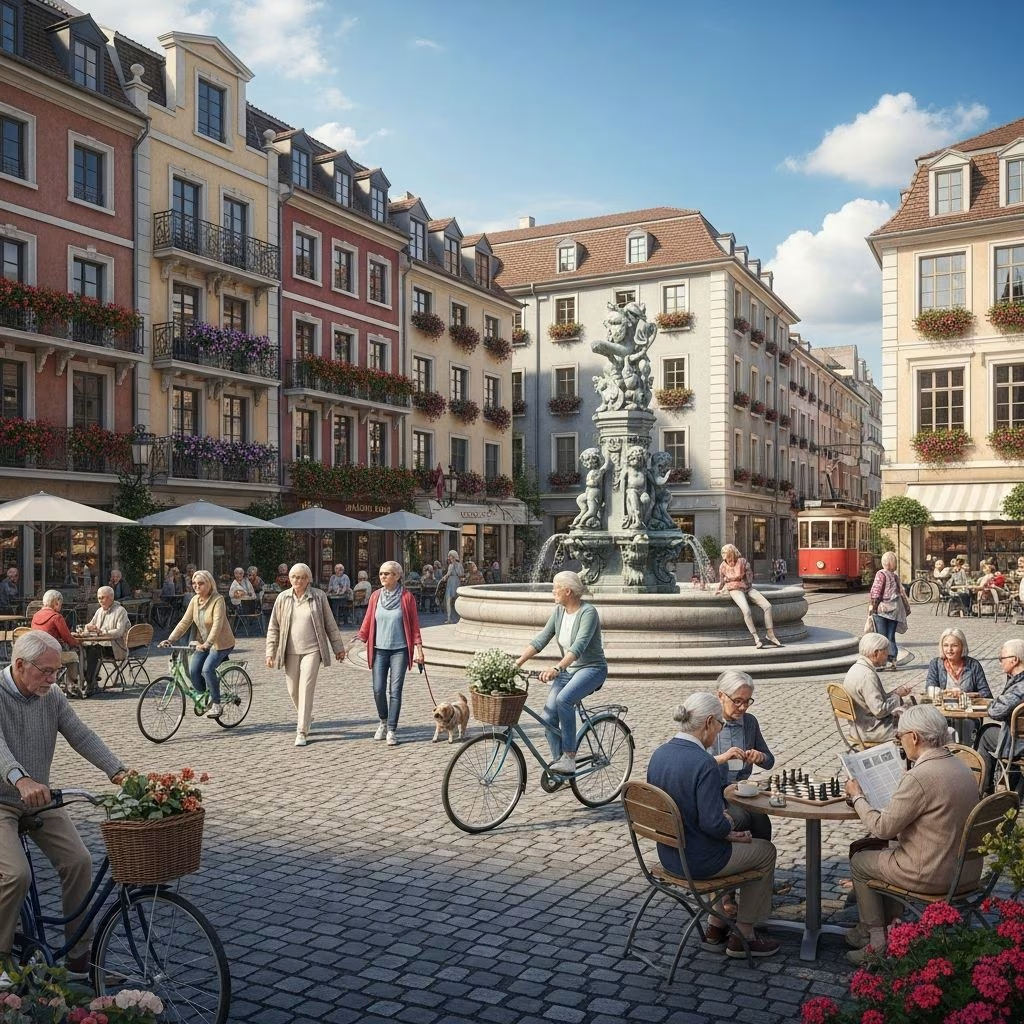
Explore top car-free cities perfect for retirees seeking walkable neighborhoods, reliable transit, and vibrant community life without vehicle ownership.
 Travel Essentials
Retirement planning extends far beyond financial considerations. For many retirees, the choice of where to settle represents a pivotal life decision that encompasses lifestyle quality, community engagement, and practical accessibility. An emerging trend in retirement relocation involves choosing cities designed around walking and public transportation rather than automobile dependency. This shift reflects changing priorities among older adults who seek vibrant urban environments, reduced stress from driving, lower transportation costs, and the ability to remain active and connected within their communities. Understanding which cities offer the infrastructure and amenities necessary for car-free living can significantly enhance retirement quality.
The concept of retiring to a car-free city represents a fundamental departure from traditional retirement planning. Rather than seeking quiet suburban developments or sprawling resort communities, many retirees now prioritize walkability, reliable public transit systems, and vibrant street-level activity. This preference reflects multiple converging factors: declining driving comfort and confidence with age, the financial burden of vehicle ownership and maintenance, environmental consciousness, and the desire for active, socially engaged lifestyles.
Cities with robust transit infrastructure, pedestrian-friendly design, and mixed-use neighborhoods enable retirees to accomplish daily tasks—shopping, dining, socializing, and accessing healthcare—without depending on personal vehicles. This autonomy proves particularly valuable for retirees experiencing vision changes, mobility challenges, or simply preferring to eliminate driving responsibilities. Furthermore, car-free cities typically feature compact urban cores where essential services cluster within walking distance, reducing reliance on any transportation mode.
Not all cities lacking car dependency suit retirement populations equally. The most attractive destinations for retiring adults combine specific urban design elements and service infrastructure:
New York City stands as America’s ultimate car-free urban center, offering unparalleled transit coverage and walkability. The city’s extensive subway, bus, and commuter rail networks connect every neighborhood, making car ownership unnecessary for daily living. While housing costs challenge many retirees, certain neighborhoods and outer boroughs offer more reasonable options without sacrificing transit access. The city’s cultural institutions, restaurants, entertainment venues, and pedestrian culture create an intellectually and socially stimulating environment ideal for active retirees seeking urban engagement.
The San Francisco Bay Area combines walkable urban cores with comprehensive rail systems and ferry services that knit together multiple cities. San Francisco’s downtown and surrounding neighborhoods feature high walkability scores and excellent pedestrian infrastructure. Beyond the city center, Oakland and Berkeley offer strong bus and rail connections supporting car-free commuting patterns. This regional approach provides retirees flexibility—living in different communities while maintaining transit-based mobility across the entire metropolitan area. The Bay Area’s mild climate supports year-round outdoor activity and walking.
Boston represents one of America’s most convening car-free cities, particularly for retirees valuing short commutes, predictable transit service, and neighborhoods featuring active street-level life. Cambridge’s academic atmosphere, cultural resources, and compact walkable neighborhoods appeal to intellectually-oriented retirees. The region’s history, museums, educational institutions, and established neighborhoods provide deep community roots and cultural engagement opportunities.
Chicago’s logical grid layout and elevated/subway system (the ‘L’) provide reliable transit infrastructure supporting car-free living across the city and into inner suburbs. The grid design simplifies navigation and makes neighborhoods highly walkable. Multiple neighborhood centers offer local retail, dining, and services. Chicago’s lakefront access, museums, cultural events, and affordability compared to coastal cities make it attractive for retirees seeking vibrant urban living at reasonable costs.
For retirees prioritizing street-level community connection and short commutes, Philadelphia offers compelling advantages. The city’s transit network, combined with its compact core and numerous distinct neighborhoods, enables car-free living with rich local character. Philadelphia’s historic significance, cultural institutions, and reasonable housing costs relative to other major East Coast cities provide good value for retirement resources.
Portland’s distinctive combination of neighborhood retail, transit access, and growing bike infrastructure allows many households to reduce or eliminate car dependency. The city’s progressive planning emphasizes walkable neighborhoods and active transportation. Transit-oriented development ensures residential areas connect efficiently to employment, shopping, and recreation. Portland’s environmental consciousness aligns well with many retirees’ values regarding sustainability and quality-of-life priorities.
Minneapolis and St. Paul blend lakeside neighborhoods, compact downtowns, and a growing transit backbone featuring light rail and expanding bus rapid transit corridors. Light rail lines connect key employment areas to dense residential neighborhoods, providing multiple pathways for car-free living. The Twin Cities demonstrate municipal commitment to making everyday errands feasible without personal vehicles through decent transit, walkable neighborhoods, and city-scale infrastructure investment.
Beyond traditional cities, some specialized retirement communities offer car-free or car-reduced living environments. The Villages in Florida represents an innovative model featuring multi-mode trail systems, electric vehicles and golf carts for local mobility, shuttles to airports and medical facilities, and businesses accommodating non-drivers. This approach combines retirement community predictability with reduced automobile dependency, though within a planned development rather than established urban neighborhoods.
| City | Transit System | Walkability | Climate | Housing Cost | Healthcare Access |
|---|---|---|---|---|---|
| New York City | Excellent | Excellent | Moderate | Very High | Excellent |
| San Francisco | Good | Very Good | Excellent | Very High | Excellent |
| Boston | Very Good | Very Good | Moderate | High | Excellent |
| Chicago | Very Good | Very Good | Moderate | Moderate-High | Excellent |
| Philadelphia | Good | Very Good | Moderate | Moderate | Excellent |
| Portland | Good | Excellent | Moderate | Moderate-High | Good |
| Minneapolis | Good | Very Good | Cold | Moderate | Excellent |
Successfully transitioning to car-free retirement requires thoughtful planning beyond simply choosing a city. Consider these essential factors:
Ensure your chosen city’s transit system efficiently connects your residence to preferred healthcare providers, specialists, and emergency facilities. Understand how appointments requiring early arrivals or specific timing integrate with public transportation schedules. Investigate whether the city offers paratransit or specialized services for retirees with mobility limitations.
Even within car-free cities, significant variation exists between neighborhoods. Prioritize areas with high walkability scores, proximity to transit stops, concentration of retail and services, and active street-level community life. Visiting potential neighborhoods during different times and seasons reveals actual walkability comfort and pedestrian activity levels.
Calculate comprehensive retirement budget implications beyond housing costs. Car-free cities eliminate vehicle purchases, insurance, maintenance, and fuel expenses—typically substantial in retirement budgets. However, transit costs, though lower than car ownership, remain recurring expenses. Evaluate how transit subsidies for seniors might apply to your situation.
Successful car-free retirement depends heavily on social connections and community engagement. Research each city’s retirement-focused organizations, lifelong learning institutions, volunteer opportunities, and cultural activities that facilitate community integration and prevent isolation.
Choosing a car-free city for retirement requires aligning personal preferences with practical logistics. Visit potential cities during different seasons, spend time in various neighborhoods, use public transit extensively, and speak with current retirees about their experiences. Consider trial periods before making permanent moves—some cities offer extended stay options allowing thorough evaluation before commitment.
Car-free retirement living appeals to retirees seeking vibrant urban environments, active aging, reduced transportation stress, and financial efficiency. The growing availability of walkable, transit-rich cities provides genuine alternatives to traditional retirement destinations. By carefully evaluating your priorities and matching them to cities offering appropriate infrastructure and amenities, you can design a retirement lifestyle that maximizes independence, community connection, and quality of life without depending on automobile ownership.
