

 Travel Essentials
 Travel Essentials

Explore the top 10 countries for expatriates in 2025, featuring Panama, Colombia, and Mexico leading the rankings with excellent quality of life and career prospects.
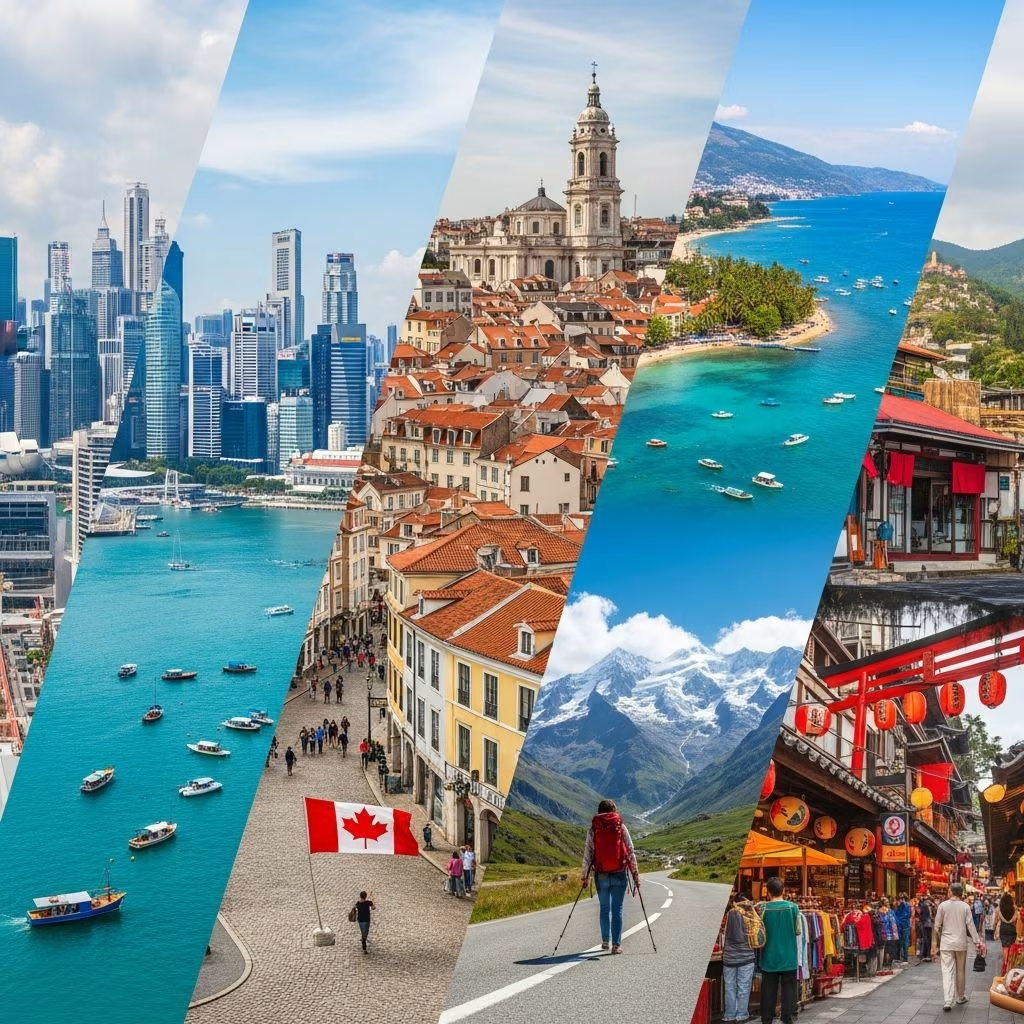 Travel Essentials
The decision to relocate internationally represents one of life’s most significant undertakings, requiring careful consideration of employment opportunities, cultural integration, financial stability, and personal wellbeing. For individuals contemplating a move abroad, understanding which destinations offer the most favorable conditions can transform the expatriate experience from stressful to rewarding. Recent comprehensive surveys examining expatriate satisfaction reveal a clear hierarchy of nations that have distinguished themselves as premier destinations for those seeking to establish lives beyond their native countries.
The evaluation of expatriate-friendly destinations extends far beyond picturesque landscapes or favorable weather patterns. Comprehensive analyses of expatriate communities assess multiple dimensions that collectively determine whether a nation truly serves the needs of international residents. These evaluative frameworks examine critical factors including healthcare system quality and accessibility, personal safety and crime rates, employment landscape and career development opportunities, cost of living sustainability, housing market conditions and rental availability, linguistic compatibility for non-native speakers, and the welcoming nature of local communities toward foreign residents.
The methodology employed by leading expatriate research organizations involves surveying thousands of individuals currently living abroad, gathering firsthand insights into their daily experiences and overall contentment with their chosen destinations. This data-driven approach provides authentic perspectives that transcend superficial characterizations, offering genuine assessments of what expatriate life actually entails in various nations across the globe.
A striking pattern emerges when examining contemporary expatriate satisfaction metrics: Latin American nations have claimed three of the top five positions for international residents. This regional prominence reflects fundamental shifts in how expats evaluate potential destinations, with these countries offering compelling combinations of economic accessibility, cultural vibrancy, and increasingly robust professional infrastructure.
Panama maintains its position as the world’s premier destination for expatriates, a distinction it has held for consecutive years. This Central American nation demonstrates remarkable strength across all evaluation categories, with exceptional performance in quality of life indicators, ease of cultural integration, professional advancement prospects, essential services accessibility, and practical considerations such as housing and language barriers.
The compelling statistics underscore Panama’s appeal: ninety-four percent of expatriate residents report satisfaction with their lives abroad, a figure substantially exceeding global averages. Among this satisfied population, thirty-five percent express intentions to establish permanent residency, demonstrating long-term commitment rates that significantly surpass the worldwide twenty-four percent baseline. These metrics indicate that Panama does not merely attract expatriates but successfully retains them through superior quality of life outcomes.
Panama’s attractiveness stems from multiple converging factors. The nation maintains a remarkably affordable cost of living compared to expatriates’ countries of origin, enabling residents to stretch resources substantially further than in developed economies. The natural environment, characterized by tropical landscapes, biodiversity, and accessibility to both Pacific and Caribbean coastlines, appeals to those prioritizing outdoor recreation and environmental aesthetics. Beyond environmental appeal, the country has cultivated institutional frameworks facilitating expatriate integration, recognizing economic benefits of foreign residents and implementing policies accordingly.
Colombia has ascended dramatically in expatriate preference rankings, reflecting transformation in international perceptions and genuine improvements in security, economic opportunity, and cultural offerings. The nation attracts expatriates particularly through exceptional financial value, with living costs allowing comfortable existences on moderate budgets. Colombia’s major urban centers offer sophisticated cultural scenes, excellent culinary traditions, and increasingly vibrant professional ecosystems spanning technology, creative industries, and international business sectors.
Mexico continues consolidating its position as a stable, accessible expatriate destination with long-established infrastructure supporting foreign residents. Eighty-nine percent of Mexican expatriates report satisfaction with their lives abroad, reflecting the nation’s proven track record in delivering quality of life outcomes. Mexico’s proximity to North America, extensive community of established expats, diverse regional characteristics ranging from coastal retirement destinations to vibrant urban centers, and cultural richness create conditions supporting expatriates across various life stages and professional backgrounds.
The contemporary expatriate landscape demonstrates Asia’s increasing prominence as a destination region, with multiple nations claiming significant positions in global rankings. This Asian expansion represents a notable trend shift, reflecting changing expatriate demographics, evolving career opportunities in Asian economies, and growing cultural openness to international residents in previously less-accessible nations.
Thailand, Vietnam, and Indonesia have established themselves as attractive hubs for expatriates seeking lower costs of living combined with rich cultural experiences and developing professional opportunities. Thailand particularly appeals to those prioritizing affordability without sacrificing quality of life, with its well-established expatriate infrastructure including English-language services, international healthcare facilities, and established international communities facilitating cultural transitions.
Vietnam increasingly attracts younger expatriates and digital professionals, offering remarkably affordable living combined with dynamic economic growth and technology sector expansion. Indonesia’s inclusion in top ten rankings reflects the nation’s improving expatriate services infrastructure, natural beauty, and emerging professional opportunities in Southeast Asia’s largest economy.
China’s presence in contemporary expatriate rankings reflects the continued appeal of professional opportunities in the world’s second-largest economy, particularly for those working in international business, education, and technology sectors. The nation’s economic dynamism attracts ambitious professionals seeking career advancement in high-growth industries, despite considerations regarding visa complexity and language barriers that characterize expatriate experiences in China.
The United Arab Emirates maintains consistent appeal for expatriates seeking tax advantages, high salaries, and modern infrastructure. The nation’s deliberate cultivation of expatriate-friendly policies, diverse international communities, and professional opportunities in finance, real estate, and energy sectors continue attracting international talent.
Spain’s presence in top ten rankings reflects European advantages including healthcare quality, educational institutions, cultural richness, and increasingly accessible professional environments for English-speaking expatriates. Malaysian inclusion represents Southeast Asian economic maturity, with developed infrastructure, political stability, and cost efficiency combining to attract international residents seeking balanced relocation experiences.
| Factor Category | Key Considerations | Assessment Approach |
|---|---|---|
| Professional Environment | Career advancement, job market accessibility, visa sponsorship | Research industry presence and visa requirements |
| Financial Sustainability | Cost of living, salary expectations, tax implications | Calculate monthly expenses and income requirements |
| Healthcare Access | Medical facilities, insurance coverage, emergency services | Consult international health insurance providers |
| Cultural Integration | Language requirements, social communities, cultural openness | Connect with existing expatriate groups |
| Logistical Factors | Housing availability, transportation, visa processing | Review relocation service resources and forums |
Prospective expatriates must thoroughly evaluate employment prospects before committing to relocation. This assessment extends beyond initial job offers to encompass industry presence, career trajectory possibilities within specific nations, and visa sponsorship availability. Financial planning requires calculating realistic monthly expenses accounting for housing, utilities, transportation, dining, and discretionary spending while comparing these figures against anticipated income or available resources. Tax implications merit careful consideration, as many nations implement different taxation schemes for international residents.
The quality and accessibility of healthcare systems directly impacts expatriate wellbeing and represents a critical evaluation criterion. Prospective residents should research medical facility standards, international health insurance options, and emergency service capabilities. Safety considerations, encompassing both violent crime rates and petty theft prevalence, should be researched through current resident networks and official crime statistics rather than relying on dated perceptions or media sensationalism.
Realistic language capability assessment prevents subsequent frustration and social isolation. While English prevalence varies significantly across destinations, most expatriates benefit from basic proficiency in local languages, facilitating daily interactions and cultural participation. Connecting with established expatriate communities through social networks and professional organizations provides invaluable insights into practical challenges and cultural adjustments specific to particular destinations.
Contemporary expatriate patterns reflect broader global shifts. Remote work normalization has expanded destination possibilities for knowledge workers, enabling relocation to countries previously inaccessible to those requiring traditional office arrangements. Digital nomad visa programs proliferate internationally, recognizing and formalizing the growing category of location-independent professionals. Rising interest in lifestyle relocation—prioritizing quality of life and cultural experience over maximum earnings—increasingly influences destination selection among affluent retirees and semi-retired professionals.
Climate considerations increasingly factor into expatriate decision-making, with environmental sustainability and climate stability becoming explicit selection criteria. Political stability and governance quality have risen in importance following global uncertainties, with expatriates increasingly prioritizing transparent institutional frameworks and predictable regulatory environments.
Research indicates that healthcare quality, personal safety, cost of living affordability, employment opportunities, and community friendliness toward foreigners represent the most significant satisfaction determinants. These factors collectively enable expatriates to establish stable, fulfilling lives rather than merely surviving abroad.
Most relocation experts recommend extended visits lasting several weeks to several months when feasible, enabling realistic assessment of daily life conditions, community integration possibilities, and personal compatibility with destination environments. Seasonal considerations merit attention, as annual climate variations can substantially impact lifestyle quality.
Countries including Panama, Mexico, and Thailand have implemented relatively accessible visa programs specifically designed for foreign residents, offering options based on income, retirement status, investment, or employment. Consulting immigration attorneys familiar with specific nations’ requirements provides guidance appropriate to individual circumstances.
While integration difficulty varies by destination and individual circumstance, contemporary expatriate experiences demonstrate that meaningful cultural participation and local friendships develop through intentional effort, language study, community involvement, and respectful cultural engagement. Pre-existing expatriate communities can facilitate transitions while local connections provide deeper integration.
Progressive nations increasingly implement frameworks facilitating expatriate integration, including accessible healthcare systems accepting international insurance, English-language government services, international school networks, and expatriate-specific visa programs. Policy sophistication generally correlates with established expatriate populations and recognition of economic benefits.
