

 Travel Essentials
 Travel Essentials

Guide to America's certified dark sky parks offering unobstructed celestial viewing experiences across diverse landscapes and regions.
 Travel Essentials
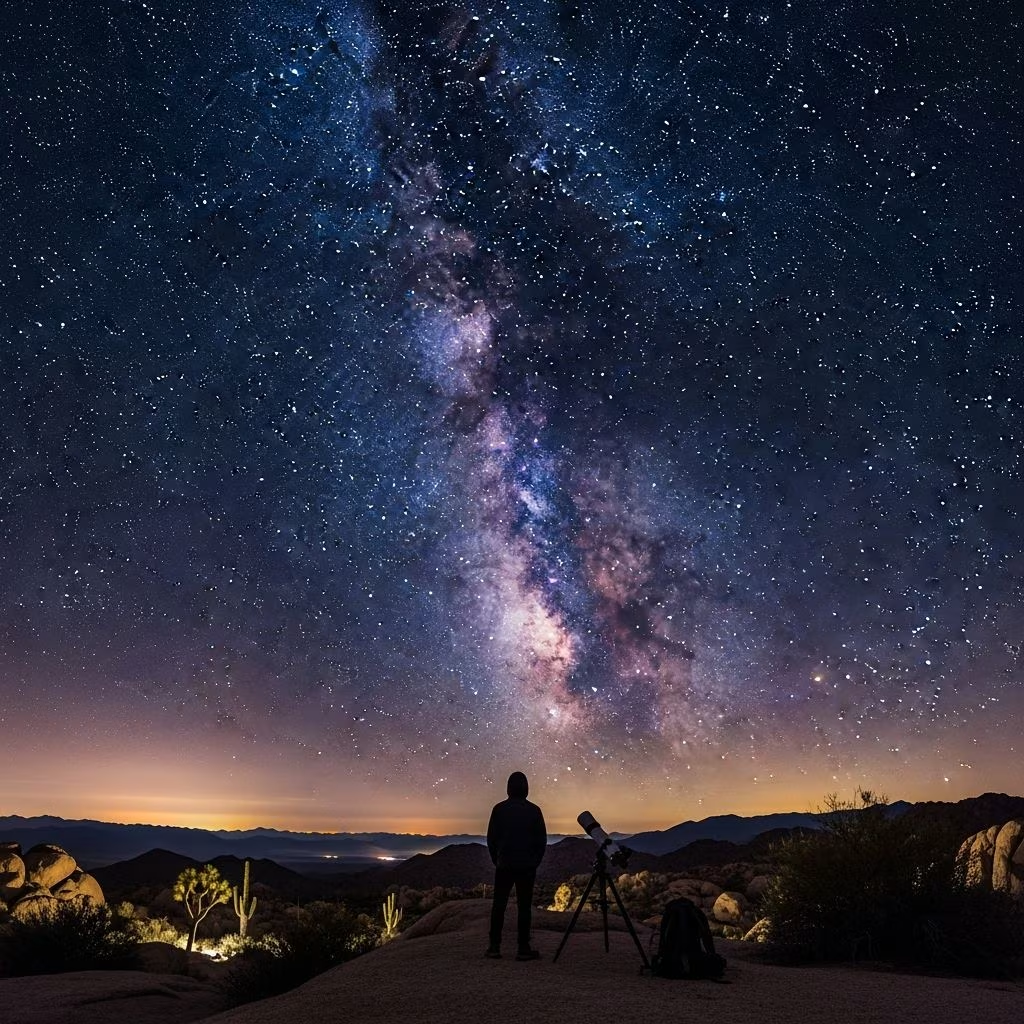
The night sky has captivated human imagination for millennia, yet increasingly, light pollution obscures our view of the cosmos. Fortunately, across the United States, numerous protected areas preserve patches of pristine darkness where visitors can experience the celestial wonders largely unchanged from how our ancestors observed them. The National Park Service maintains over forty International Dark Sky Places that offer exceptional opportunities for stargazing and astronomical observation.
Dark Sky International, an organization dedicated to combating light pollution, certifies parks and protected areas that meet rigorous standards for nighttime darkness and environmental commitment. These designated areas represent some of the last remaining havens where natural night skies remain largely untouched by urban illumination. Protected lands within the National Park System benefit from deliberate management practices that minimize artificial lighting, including the installation of motion-sensor lights and low-wattage bulbs in park facilities.
The significance of preserving dark skies extends beyond recreational stargazing. Natural darkness supports ecosystem health, influences wildlife behavior patterns, and maintains our connection to astronomical heritage. Parks certified at the gold tier demonstrate exceptional dedication to both darkness preservation and public education about light pollution’s consequences.
The southwestern United States offers arguably the most exceptional stargazing opportunities in the nation. The arid desert climate, combined with vast protected federal lands, creates ideal conditions for celestial observation. Multiple factors contribute to this region’s superiority: limited cloud cover, sparse population density, and extensive park systems that restrict development.
Utah hosts some of North America’s most celebrated dark sky destinations. Capitol Reef National Park, situated in remote southern Utah, delivers some of the world’s most pristine stargazing experiences. The park’s unique geography allows observers to witness the Milky Way arching across both eastern and western horizons simultaneously. Autumn and winter months prove particularly rewarding, when the region’s characteristically dry atmosphere enhances star clarity and brilliance.
Arches National Park has maintained official International Dark Sky status since 2019, offering visitors millions of visible stars, planets, and galaxies on clear evenings. The park’s management implements comprehensive light pollution reduction strategies, earning recognition as an IDA Gold-Tier designation. Travelers seeking optimal viewing should venture north away from Moab’s ambient lighting, where progressively darker skies reward exploration.
Additional Utah destinations deserving attention include Bryce Canyon, celebrated for towering hoodoo rock formations that create dramatic foreground elements for astrophotography. Canyonlands, Zion, and Natural Bridges National Monument round out Utah’s extraordinary collection of dark sky parks.
Arizona presents varied stargazing environments across distinct landscapes. The Grand Canyon, designated as an International Dark Sky Park, offers unparalleled viewing from the canyon rim and interior. Northern Arizona’s Chiricahua National Monument provides darker skies across a landscape of distinctive rock formations and wilderness.
Recently, Saguaro National Park earned certification as an Urban Night Sky Place, a distinction held by only nine locations worldwide. This recognition acknowledges parks demonstrating authentic nighttime experiences despite proximity to metropolitan areas, representing innovation in dark sky preservation within developed regions.
Death Valley National Park represents one of California’s darkest locations, offering exceptional contrast between daytime heat and nighttime stellar brilliance. Joshua Tree National Park, though experiencing greater light pollution than remote desert parks due to proximity to Los Angeles, remains accessible for Southern California residents seeking impressive stargazing within a two-hour drive.
Stargazing opportunities extend well beyond the Southwest. Acadia National Park in Maine demonstrates that exceptional night skies can persist near major population centers including Portland, Boston, and New York. The park’s location on coastal Maine provides atmospheric conditions that, combined with careful light management, preserve remarkable darkness.
The Southeast harbors exceptional locations as well. Big Cypress National Preserve in Florida earned distinction as the first International Dark Sky Place east of Colorado, expanding the geography of certified dark sky parks. Obed Wild & Scenic River in Tennessee received International Dark Sky Place designation, providing stargazing access in Appalachian landscapes.
Black Canyon of the Gunnison National Park in Colorado showcase dramatic geological formations alongside pristine night skies, while Great Sand Dunes National Park offers dune landscapes beneath clear Colorado stars.
Beyond major national parks, numerous smaller protected areas offer distinctive stargazing experiences. Dinosaur National Monument spans Colorado and Utah, providing access to startlingly clear Milky Way views. Glacier National Park in Montana combines alpine wilderness with celestial observation opportunities, offering ranger-led astronomy programs during summer months.
Hawaii Volcanoes National Park presents tropical stargazing contrasts, while Timpanogos Cave National Monument in Utah holds recognition as an Urban Night Sky Place, demonstrating successful dark sky preservation near populated areas.
Timing significantly impacts stargazing success. Autumn and winter months typically offer the clearest skies across most regions, particularly in the Southwest where dry conditions prevail. However, summer months often provide comfortable temperatures for extended observation periods. Moon phases dramatically influence visibility; new moon periods offer optimal stargazing as moonlight doesn’t compete with stellar brightness.
Visitors need not bring sophisticated equipment for rewarding stargazing experiences. A blanket or reclining chair, appropriate clothing for nighttime temperatures, and perhaps binoculars suffice for profound celestial observation. Those interested in astrophotography should research specific park locations offering dramatic foreground elements, with Utah’s hoodoos and Arizona’s canyon landscapes particularly suited for compositional impact.
Most dark sky parks accommodate various visitor capabilities, though remote locations may require additional travel time. Accessibility features vary by park; checking National Park Service resources ensures appropriate planning for individual needs and mobility considerations.
| Location | Region | Notable Features | Best Season |
|---|---|---|---|
| Capitol Reef National Park | Utah | Milky Way visible from east and west horizons | Fall/Winter |
| Arches National Park | Utah | Gold-Tier IDA designation, dramatic rock formations | Fall/Spring |
| Bryce Canyon National Park | Utah | Hoodoo formations ideal for astrophotography | Summer/Fall |
| Death Valley National Park | California | Extreme darkness, desert landscape contrast | Fall/Winter/Spring |
| Grand Canyon National Park | Arizona | Rim and interior viewing opportunities | Year-round |
| Acadia National Park | Maine | Remarkable darkness near major cities | Summer/Fall |
The National Park Service actively works to minimize artificial illumination’s ecological and astronomical effects. Light pollution disrupts circadian rhythms for nocturnal wildlife, confuses migratory birds, and obscures celestial observation for human visitors. Parks implementing comprehensive darkness preservation policies install wildlife-friendly lighting, minimize parking area illumination, and educate visitors about light pollution’s broader environmental consequences.
Visitor participation in these conservation efforts proves crucial. Respecting park lighting guidelines, avoiding flashlights with unfiltered beams, and reducing light sources during observation periods directly support preservation initiatives.
Q: Do I need reservations to visit dark sky parks?
A: Reservation requirements vary by specific park. Many accept visitors without advance notice, though backcountry areas may require permits. Checking individual park websites provides accurate current information regarding access policies.
Q: What constellation viewing opportunities exist throughout the year?
A: Different constellations become visible during various seasons. Summer months showcase Sagittarius and the galactic center, autumn brings prominent star patterns, winter offers Orion and brilliant stellar clusters, and spring presents unique configurations. Stargazing guides specific to your observation date enhance identification success.
Q: Are telescope observations restricted in dark sky parks?
A: Restrictions vary by location. Most parks welcome telescopes in designated areas during non-crowded periods. Contacting individual parks clarifies specific telescope use policies and optimal observation locations.
Q: How does light pollution affect stargazing capabilities?
A: Even distant artificial lighting degrades night sky visibility. Remote park locations minimize this effect, enabling observation of faint celestial objects invisible from urban areas. Traveling away from populated regions maximizes stargazing potential dramatically.
America’s network of certified dark sky parks represents a commitment to preserving humanity’s astronomical heritage amid advancing urbanization and technological development. From Utah’s iconic red rock formations to Maine’s coastal wilderness, these destinations offer transformative experiences reconnecting visitors with the cosmos. Whether seeking solitude beneath infinite stars, pursuing astrophotography excellence, or simply escaping light pollution’s constraints, these parks provide accessible sanctuaries for celestial wonder. Planning a stargazing expedition to any of these exceptional locations promises unforgettable nights beneath pristine, brilliant skies.
