

 Travel Essentials
 Travel Essentials

Explore exceptional dark sky locations across North America and beyond, from national parks to remote reserves, ideal for Milky Way views, meteor showers, and celestial wonders.
 Travel Essentials
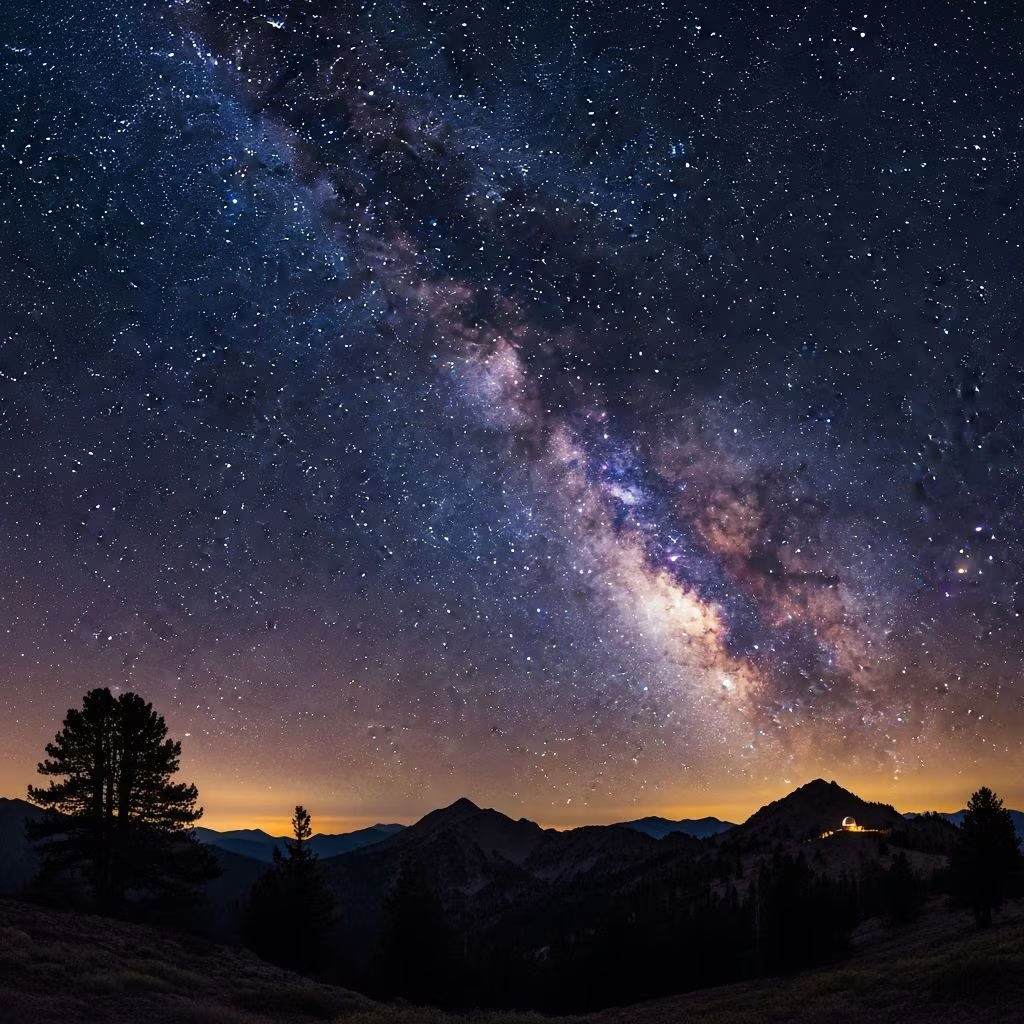
Light pollution from cities obscures the night sky for billions, but designated dark sky sites preserve pristine views of stars, planets, and galaxies. These locations, often certified by DarkSky International, span parks, reserves, and communities committed to minimizing artificial light. With over 160,000 square kilometers protected across 22 countries and six continents, opportunities for immersive stargazing abound. This guide highlights premier North American spots, drawing from official certifications and expert recommendations, to help you plan escapes where the cosmos shines brightest.
DarkSky International’s International Dark Sky Places (IDSP) program recognizes sites that implement policies to protect nocturnal environments. Certifications range from parks and reserves to urban night sky places, ensuring high-quality starry nights for education, science, and enjoyment. The Bortle Scale measures sky darkness, with Class 1 being the darkest—ideal for spotting faint celestial objects. National parks lead in preservation, as the U.S. National Park Service actively combats light pollution.
Visiting these sites reveals the Milky Way’s full glory, meteor showers like the Perseids, and even auroras in northern latitudes. Beyond astronomy, they foster biodiversity by maintaining natural light cycles for wildlife.
U.S. national parks host many certified dark sky areas, offering rugged beauty by day and stellar spectacles by night. Here’s a curated selection of top performers.
Other standouts include Arches, Bryce Canyon, and Saguaro National Parks (the latter an Urban Night Sky Place near Tucson).
Texas excels with multiple certified sites, from West Texas deserts to Hill Country hills. The Texas Parks and Wildlife Department supports dark skies at parks like Big Bend Ranch, Caprock Canyons, Copper Breaks, Enchanted Rock, and South Llano River—all International Dark Sky Parks.
| Texas Dark Sky Site | Location | Highlights |
|---|---|---|
| Enchanted Rock State Natural Area | Hill Country, near Fredericksburg | Star parties with telescopes; dark central Texas skies. |
| South Llano River State Park | Junction | Nighttime passes for after-hours stargazing. |
| Hill Country State Natural Area | Near Bandera | Cowboy-era skies in rolling terrain. |
| Lakewood Village | North Texas, Lewisville Lake | Metro oasis certified as a dark sky community. |
West Texas dominates with Big Bend’s reserve, attracting global astronomers.
Canada’s vast prairies and parks rival U.S. sites. Jasper National Park in Alberta offers alpine dark skies amid wildlife. Saskatchewan’s Grasslands National Park, a Dark Sky Preserve since 2009, spans 729 square km of badlands with near-Bortle 1 conditions and an annual dark sky festival.
Internationally, IDSP covers 22 countries, from NamibRand Nature Reserve in Namibia to Aoraki Mackenzie in New Zealand.
To maximize your experience:
Beyond headliners, explore Black Mesa State Park, Oklahoma (1,600 acres of lava rock, eagle habitat); Black Canyon of the Gunnison, Colorado; or Valles Caldera, New Mexico. Florida’s Big Cypress National Preserve surprises with southern dark skies.
Light pollution grows 10% annually, erasing stars for 80% of humanity. Certified places counter this, preserving cultural heritage—like Chaco’s solstice markers—and science, aiding exoplanet research. They boost eco-tourism, benefiting local economies.
Big Bend National Park holds Bortle Class 1, the least polluted national park.
Use DarkSky International’s All Places finder by country/region.
Cherry Springs State Park in Pennsylvania is the top option.
Perseid showers at Black Mesa or Grasslands Dark Sky Festival.
Yes, like Saguaro National Park’s Urban Night Sky certification.
