

Food & Culture Stays Travel Essentials Travel Guides Trip Ideas
Categories
From the Blog
Remy’s Ratatouille Adventure at EPCOT: Ride Review, Tips & 2D Update
Travel Essentials

Best Dark Sky Places in the US for Stargazing

Explore top US locations for dark sky viewing, including national parks and certified sites, with tips on planning your stargazing adventure amid minimal light pollution.
Travel Essentials

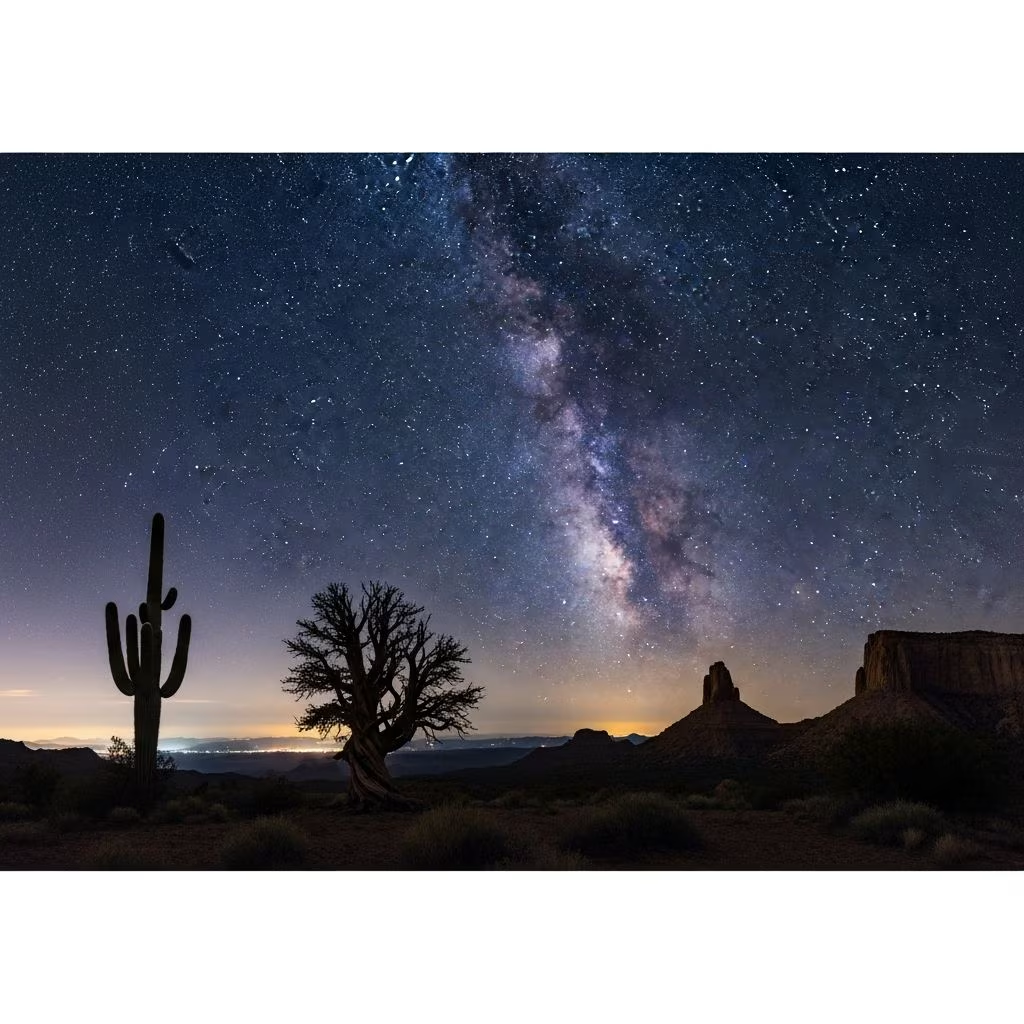
Across the United States, designated dark sky locations offer unparalleled opportunities to gaze at the stars, Milky Way, and celestial wonders free from urban glow. These sites, certified by DarkSky International, span national parks, monuments, and reserves, protecting over 62,000 square miles of pristine night skies.

Understanding Dark Skies and Their Importance

Dark skies refer to areas with minimal artificial light pollution, allowing natural starlight to dominate the night. Light pollution from cities obscures up to 80% of stars visible to the naked eye in urban areas, but dark sky sites restore this visibility. The Bortle scale measures sky darkness from 1 (pristine, black skies) to 9 (inner-city brightness); ideal stargazing occurs at Bortle 1-4.

Preserving these skies benefits wildlife, human health, and astronomy. Migratory birds rely on star cues, and reduced light aids sleep cycles. DarkSky International’s program certifies places implementing lighting policies to combat pollution.

Top Western US Dark Sky Destinations

The West hosts many premier sites due to vast open spaces and low population density.

  • Natural Bridges National Monument, Utah: The first International Dark Sky Park (2007), this site features Bortle 1-2 skies perfect for astrophotography amid stunning rock bridges.
  • Big Bend National Park, Texas: Boasts the least light-polluted national park skies (Bortle 1), part of the cross-border Greater Big Bend International Dark Sky Reserve.
  • Jasper National Park areas (inspiration from North America): Though Canadian, US analogs like Death Valley National Park, California, offer similar remote darkness.
LocationStateBortle ClassKey Feature
Arches National ParkUtah2Geological arches under Milky Way
Joshua Tree National ParkCalifornia2-3Desert oasis from SoCal lights
Great Basin National ParkNevada1-2High-elevation pristine views

Eastern and Southern Gems for Stargazing

Fewer options exist east of the Mississippi due to denser populations, but standout sites shine.

  • Cherry Springs State Park, Pennsylvania: East Coast’s best at 2,300 feet elevation with 360-degree observatory fields and annual star parties.
  • Cape Lookout National Seashore, North Carolina: Rare East Coast dark skies near the lighthouse, certified for stellar displays.
  • Big Cypress National Preserve, Florida: First east-of-Colorado NPS dark sky site, ideal for southern stargazers.

These locations prove quality dark skies accessible without cross-country travel.

Midwest and Northern Highlights

Northern parks leverage clear, cold nights for sharp viewing.

  • Glacier National Park, Montana: Summer astronomy programs enhance self-guided stargazing.
  • Voyageurs National Park, Minnesota: Water-reflected stars in a certified haven.
  • Mammoth Cave National Park, Kentucky: Underground tours by day, dark skies by night.

How Certifications Work and Finding Sites

DarkSky International certifies Parks, Reserves, Sanctuaries, and Communities after rigorous audits of lighting ordinances and public education. Over 160 Dark Sky Places exist worldwide, with dozens in the US. Use tools like Dark Site Finder maps for real-time light pollution data (updated to 2022).

National Park Service lists 20+ certified units, from Acadia (Maine) to Zion proxies. Comprehensive state lists reveal hidden gems like Craters of the Moon (Idaho).

Planning Your Stargazing Trip: Essential Tips

Maximize your experience with preparation.

  • Timing: New moon phases avoid lunar interference; check weather for clear skies.
  • Gear: Red flashlights preserve night vision; binoculars or telescopes for details; warm layers for high-desert chills.
  • Accessibility: Prioritize car-accessible sites with parking; note ranger-led programs at parks like McDonald Observatory near Big Bend.

Use light pollution maps to scout: aim for yellow-to-black zones on DarkSkyMap.

Preserving Dark Skies for Future Generations

Visitors play a key role: shield lights, visit during off-peak, support local policies. Parks like Obed Wild & Scenic River (Tennessee) exemplify community efforts. Advocating against light pollution ensures these skies endure.

FAQs

What is the darkest sky in the US?

Big Bend National Park holds Bortle 1 skies, the least polluted among national parks.

How do I find dark sky parks near me?

Search DarkSky.org’s place finder or NPS dark sky tour page.

Best time for Milky Way viewing?

May-October in the Northern Hemisphere, under new moon skies.

Are reservations needed?

Many parks require them for camping; check recreation.gov.

Can I stargaze year-round?

Yes, but winter offers clearer air in southern sites; avoid summer monsoons.

References

  1. 10 of the best stargazing locations in North America — Space.com. 2023. https://www.space.com/stargazing/10-of-the-best-stargazing-locations-in-north-america
  2. DARK SKY PARKS & PLACES | Bortle & Light Pollution Maps — Go-Astronomy.com. Accessed 2026. https://www.go-astronomy.com/dark-sky-sites.php
  3. Dark Sky Place finder | DarkSky International — DarkSky.org. Accessed 2026. https://darksky.org/what-we-do/international-dark-sky-places/all-places/
  4. Visit Parks with Dark Night Skies (U.S. National Park Service) — NPS.gov. Accessed 2026. https://www.nps.gov/articles/000/dark-sky-parks-tour.htm
  5. International Dark Sky Places — DarkSky.org. Accessed 2026. https://darksky.org/what-we-do/international-dark-sky-places/
  6. Map – Dark Site Finder — Darksitefinder.com. 2022. https://darksitefinder.com/map/
ME
medha deb
Medha Deb is an editor with…

Medha Deb is an editor with a master's degree in Applied Linguistics from the University of Hyderabad. She believes that her qualification has helped her develop a deep understanding of language and its application in various contexts. Medha specializes in the areas of beauty, health, sports, and wellness and is committed to ensuring that the content on the website is of the highest quality.Medha's passion for writing and editing began early in life when she joined a book writer's club with her mother. It was there that she discovered her love for the written word and the power it holds to inform, inspire, and transform lives. Since then, she has honed her skills as a writer and editor, working with a variety of clients and publications to produce compelling and informative content. Currently, she writes and edits for CultureTreker.She is also an ardent animal lover and dedicates her time and resources to the foster care of neonatal kittens, providing them with the love and attention they need to thrive. Her commitment to animal welfare is a testament to her compassion and empathy, and it underscores her belief in the importance of caring for the most vulnerable members of our society.

← Previous
Ultimate Malawi Road Trip Guide: Routes, Parks & Lake Malawi
‹›
