

 Travel Essentials
 Travel Essentials

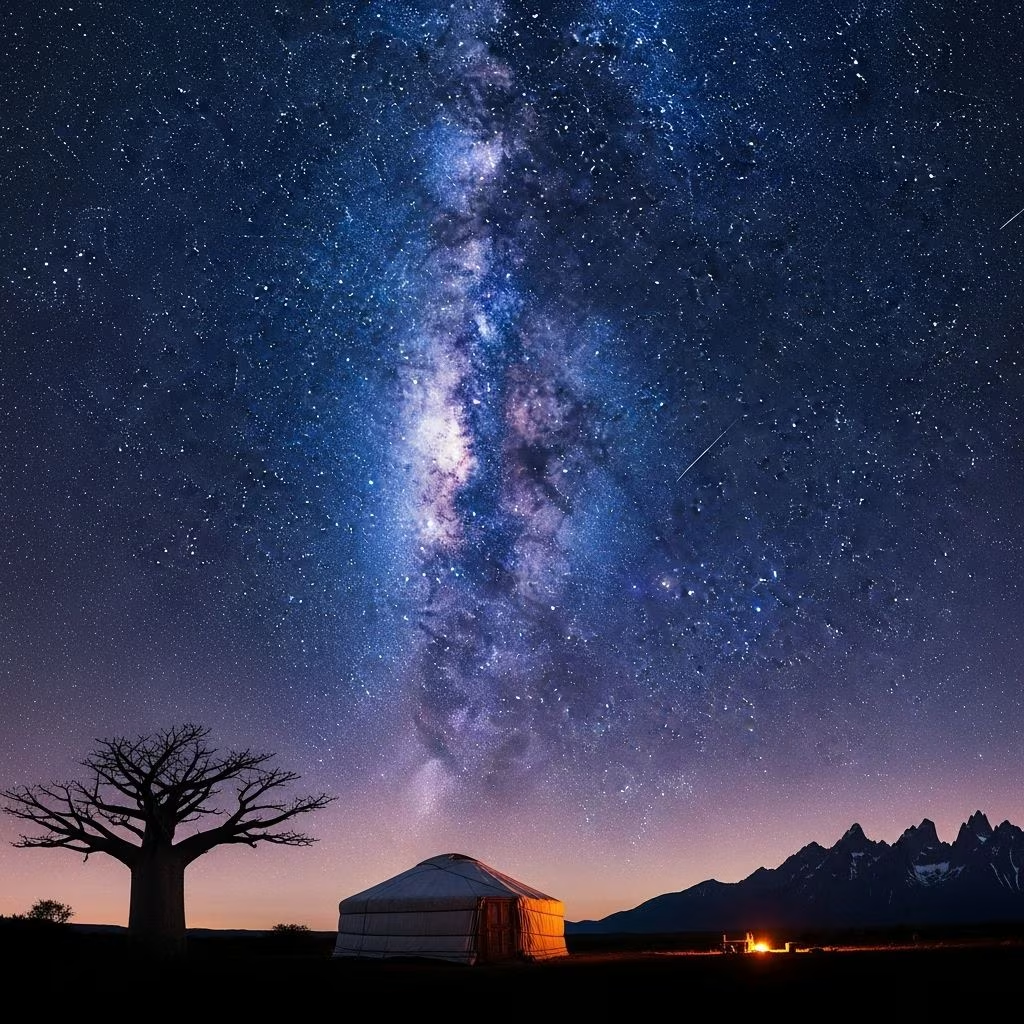
Explore top global destinations renowned for minimal light pollution and exceptional stargazing opportunities, from deserts to mountains.
 Travel Essentials
Stargazing offers a profound connection to the universe, revealing constellations, galaxies, and celestial events invisible in urban areas. Locations with certified dark skies provide the clearest views due to low light pollution, high altitudes, and dry atmospheres. This guide highlights exceptional sites across continents, drawing from authoritative sources on astronomy tourism.
Light pollution from cities obscures up to 80% of stars visible to the naked eye in populated regions. International Dark Sky Places, certified by the Dark Sky International organization, enforce strict lighting policies to preserve pristine night skies. These areas often feature observatories, guided tours, and festivals that enhance the experience for visitors.
Ideal conditions include elevations above 2,000 meters, minimal humidity, and remoteness from artificial lights. Travelers should prepare with binoculars, star charts, or apps like Stellarium, and check weather forecasts for clear nights.
The Atacama Desert in northern Chile stands out for its extreme dryness—the driest non-polar region on Earth—and altitudes exceeding 5,000 meters. This combination yields over 300 clear nights annually, hosting the ALMA Observatory with 66 radio antennas probing deep space.
Visitors access public observatories in the Elqui Valley for telescope sessions viewing nebulae and planets. Astro-tourism thrives with luxury camps offering rooftop stargazing. Nearby, the Greater Big Bend International Dark Sky Reserve in Texas-Mexico spans 15,000 square miles, ideal for hiking and star parties at McDonald Observatory.
Tenerife, largest of Spain’s Canary Islands, benefits from equatorial proximity, high peaks like Teide at 3,718 meters, and regulated flight paths to minimize light. The Teide Observatory hosts the Starmus Festival, blending science and arts under star-filled skies.
Hawaii’s Mauna Kea rises 4,207 meters above sea level (13,803 feet summit), home to the world’s largest optical telescopes. Visitor centers at 9,200 feet offer free telescope views and lectures until 10 p.m., though summit access closes at night to protect equipment. Polynesian navigators used these skies for voyages, mapping constellations like Scorpius.
New Zealand’s Aoraki Mackenzie International Dark Sky Reserve around Lake Tekapo features the Mt. John Observatory with night tours revealing the Southern Cross and Milky Way. The area’s isolation and clear air make it a top Southern Hemisphere spot.
In the U.S., Great Basin National Park in Nevada offers remote Wheeler Peak views with minimal light interference. Jasper National Park in Canada’s Rockies hosts the Dark Sky Festival with solar viewings and workshops amid pine forests.
NamibRand Nature Reserve in Namibia earned the first Gold Tier Dark Sky status in 1988. Located 60 miles from villages in the Namib Desert, it provides dune camps and Wolwedans suites with star beds on verandas.
Boundary Waters Canoe Area Wilderness in Minnesota, a 2020 Dark Sky Sanctuary, spans a million acres for canoe-based stargazing. Winter visits maximize darkness hours, with free rustic campsites like Baker Lake.
| Destination | Key Features | Best Activities | Bortle Scale (Darker=Lower) |
|---|---|---|---|
| Atacama Desert, Chile | High altitude, dry air | Observatory tours | 1-2 |
| Mauna Kea, Hawaii | 13,800 ft summit | Visitor center lectures | 1 |
| Aoraki Mackenzie, NZ | Lake Tekapo reserve | Night sky tours | 2 |
| NamibRand, Namibia | Gold Tier reserve | Dune camping | 1 |
| Jasper NP, Canada | Rockies dark skies | Star festivals | 2 |
Cherry Springs State Park in Pennsylvania, a Gold Tier park, hosted northern lights sightings in 2014 and annual Black Forest Star Parties drawing hundreds. Central Idaho’s Dark Sky Reserve provides pristine wilderness for backpacking under stars.
Nova Scotia’s Kejimkujik National Park and Trout Point Lodge offer Mi’kmaq-guided star walks, connecting indigenous lore to constellations like the Pleiades. Grand Canyon National Park enhanced lighting in 2016 to become the world’s largest Dark Sky Park.
Brecon Beacons in Wales and Galloway in Scotland boast certified dark skies with observatories. Pic du Midi in France’s Pyrenees offers high-altitude cable car access to telescopes. Kerry, Ireland, provides coastal stargazing with minimal pollution.
Zion National Park in Utah frames the Milky Way above red rocks, protected by Native American sacred site status. Joshua Tree, California, combines desert solitude with ranger-led programs.
Best seasons vary: Southern Hemisphere summers (Dec-Feb) for Australia/NZ, dry winters for deserts. Pack layers for high altitudes, red flashlights to preserve night vision, and dew heaters for telescopes. Apps like Dark Sky Finder locate nearby sites; join star parties for communal viewing.
Accommodations range from glamping to lodges like Wolwedans or Trout Point. Book tours in advance, especially at observatories. Respect Leave No Trace principles to protect these fragile ecosystems.
The Bortle Scale rates sky darkness from 1 (pristine) to 9 (inner city). Most featured spots score 1-3, ideal for naked-eye Milky Way views.
No—many sites offer rentals—but binoculars enhance details. Guided tours provide telescopes.
Most yes, but check weather; winter in north offers longer nights, deserts avoid monsoons.
Visit darksky.org for maps and reserves like those in Idaho, Namibia, and Jasper.
Absolutely—festivals like Jasper’s include kid-friendly rocket launches and workshops.
Efforts like Namibia’s pioneering certification and Chile’s observatory expansions underscore global commitment. Travelers play a role by supporting eco-friendly operators and advocating for dark sky policies.
