


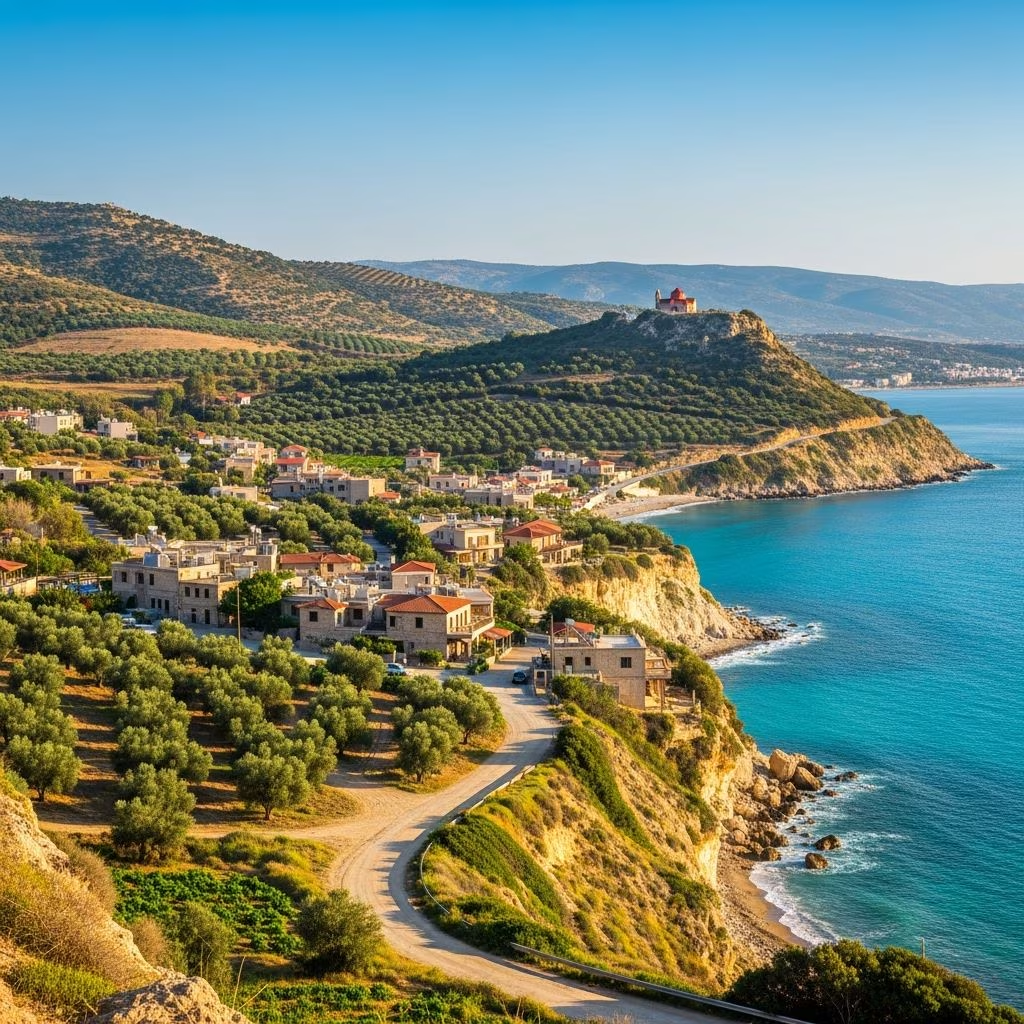
Nicosia, the capital of Cyprus, serves as an excellent base for exploring the diverse attractions scattered across the island. While the city itself offers cultural and historical experiences, the real magic of Cyprus lies in the surrounding regions accessible by short drives. Whether you’re interested in archaeological treasures, Mediterranean beaches, mountainous terrain, or charming villages frozen in time, day trips from Nicosia provide varied and enriching experiences without requiring extensive travel time.
Coastal Destinations: Beach Getaways and Seaside Adventures
The coastline surrounding Nicosia offers several compelling destinations perfect for a single day’s exploration. These coastal areas combine relaxation with cultural significance, making them ideal for travelers seeking both leisure and discovery.
Larnaka: Where Ancient History Meets Modern Coastal Life
Located approximately 45 kilometers south of Nicosia, Larnaka represents one of the most accessible and rewarding coastal destinations. This city seamlessly blends archaeological importance with contemporary beach culture, offering visitors multiple reasons to extend their stay throughout the day.
The Pierides Archaeological Foundation stands as a testament to centuries of careful preservation and curation of Cyprus’s ancient heritage. The collection housed within this institution showcases remarkable artifacts spanning millennia of human habitation on the island. Among the most distinctive pieces is the Neolithic ceramic howling man sculpture, dating back approximately 7,500 years to around 5500 BCE. This primitive yet expressive artwork demonstrates the sophistication of early Cypriot artistic traditions and provides fascinating insights into prehistoric religious or social practices.
Beyond the museums, Larnaka’s beaches provide perfect venues for sunbathing and swimming. Makenzy Beach, positioned about two kilometers south of the city center, serves as the primary recreational hub. The extensive promenade features numerous cafes and restaurants, creating an atmosphere that balances natural beauty with modern amenities. The beach’s gentle sloping shoreline and reliable summer weather make it particularly welcoming for families and those seeking straightforward beach relaxation.
Kourion: Windsurfing Paradise and Unspoiled Coastal Beauty
Moving westward along the southern coast, Kourion Beach emerges as a distinctly different coastal experience. This crescent-shaped sandy beach attracts active water sports enthusiasts, particularly those engaged in windsurfing and kiteboarding. The consistent wind patterns and shallow approach waters create ideal conditions for these athletic pursuits.
For visitors preferring dining and beverages with exceptional views, Chris Blue Beach Club operates as the primary destination along Kourion’s compact culinary strip. The establishment offers both casual refreshment options and more substantial meal selections, all positioned to take advantage of the panoramic seascape. The beach’s relative absence of commercial development preserves a sense of natural authenticity that increasingly characterizes Cypriot coastal areas.
Natural Parks and Hiking Adventures: Exploring Cyprus’s Wild Landscapes
Beyond the developed coastal zones lies a network of protected natural areas offering dramatic scenery, walking opportunities, and intimate encounters with Mediterranean flora and fauna.
Cape Greco National Park: Coastal Cliffs and Marine Exploration
Situated on the eastern tip of the island, Cape Greco National Park encompasses roughly 14 square kilometers of protected terrain featuring sweeping ocean vistas and distinctive geological formations. The park’s accessibility combines the convenience of vehicular access along established roads with opportunities for more engaged exploration through nature trails.
The park maintains approximately 14 kilometers of designated walking paths that wind through vegetation characteristic of eastern Mediterranean environments. These routes guide visitors past notable natural features, including sea caves accessible by descending stone staircases and elevated rock platforms ideal for swimming and snorkeling. The combination of coastal and terrestrial features creates diverse experiences within a single location.
Konnos Beach, positioned at the park’s northern section, provides a particularly appealing swimming venue. The beach’s natural amphitheater of high cliffs offers both visual drama and wind protection. Konnos Bay Bar, situated on elevated terrain above the sand, supplies refreshment and sustenance while providing unobstructed water views and the cooling shade of mature pine trees. This positioning allows visitors to simultaneously enjoy meal service, natural aesthetics, and recreational opportunities.
Northern Cyprus: Cross-Border Expeditions and Historical Treasures
The island’s partition has created a distinct travel dynamic for day visitors from Nicosia. With appropriate documentation, the border crossing opens access to northern regions featuring exceptional historical sites and picturesque harbor towns. These destinations require valid identification and represent unique cross-cultural experiences.
Kyrenia: Picturesque Harbors and Medieval Fortifications
Positioned approximately 30 to 40 kilometers north of Nicosia, Kyrenia represents one of the Mediterranean’s most visually striking coastal towns. The journey requires border crossing procedures, though the experience justifies this additional logistical consideration.
Kyrenia’s charm centers on its historic harbor, where fishing boats and pleasure vessels create an animated waterfront scene. Medieval fortifications overlook this maritime activity, with Kyrenia Castle standing as the primary architectural monument. The castle’s construction dates to the Venetian period, though earlier Byzantine structures underlie the visible fortifications. Contemporary visitors can explore interior chambers, garrison areas, and ramparts while absorbing centuries of military and commercial maritime history.
Beyond the harbor’s immediate vicinity, Bellapais Abbey sits in the hills above Kyrenia. This Gothic ecclesiastical structure, dating from the 13th century, represents one of the Mediterranean’s most complete surviving monastic complexes from the crusader period. The abbey’s architectural details, including soaring stone arches and intricate carved ornamentation, demonstrate the sophisticated building techniques of medieval Cypriot craftspeople.
Famagusta and Salamis: Where Roman Grandeur Meets Medieval Walled Cities
The Famagusta region combines multiple historical periods within a concentrated geographical area, making it exceptionally valuable for history-focused day trips. The journey from Nicosia requires approximately one hour and ten minutes, placing it comfortably within day-trip distance parameters.
Salamis ranks among the eastern Mediterranean’s most significant Roman archaeological sites. The city served as a major commercial and administrative center during classical antiquity, with harbor facilities supporting extensive maritime trade networks. Excavated remains include remarkably preserved stone structures, notably the gymnasium complex and theater. Walking among these ruins provides tangible connections to daily life across two millennia, from Roman administrative practices through Byzantine religious transformations.
Adjacent to the archaeological site stands Othello Castle, a Venetian fortification occupying strategic coastal terrain. The fortress’s functional design prioritized defensive capability over aesthetic embellishment, reflecting military architectural preferences of the 15th century. The castle’s interior passages and observation points offer glimpses into historical military operations and daily garrison existence.
Varosha, positioned near Famagusta’s modern developments, presents a haunting contrast to these historical monuments. This former resort district, developed during the mid-20th century as a modern Mediterranean vacation destination, was abandoned following political upheavals in 1974. The frozen tableau of deteriorating hotels, shops, and residential buildings creates an eerie time capsule of interrupted mid-century tourism development. While access restrictions apply to certain areas, the perimeter provides sufficient perspective to grasp the historical circumstances and architectural ambitions that characterized this now-abandoned neighborhood.
Mountain Retreats: Escaping Heat and Crowds in the Interior
The Troodos Mountain range rises from Cyprus’s center, creating a dramatically different landscape from coastal and urban areas. The elevation gain produces measurable temperature reductions, making mountain villages especially appealing during summer months. The drive from Nicosia requires approximately 75 minutes, positioning these destinations at the outer boundary of convenient day-trip range.
Kakopetria and Mountain Villages: Traditional Architecture and Byzantine Heritage
The Solea Valley, encompassing several picturesque villages, preserves traditional Cypriot mountain culture despite modernization pressures. Kakopetria, the region’s primary settlement, maintains authentic architectural character through preserved stone buildings featuring traditional design elements.
The village’s cobblestone streets encourage leisurely pedestrian exploration, with residential courtyards and community spaces revealing details of historical settlement patterns. Historical water mills, no longer functional but architecturally intact, remind visitors of pre-industrial economic activities centered on mountain streams. Several establishments within the village provide traditional Cypriot cuisine, allowing visitors to experience regional culinary traditions in culturally authentic settings.
Byzantine ecclesiastical structures dot the surrounding landscape, representing centuries of Christian religious expression. Small monastery chapels, often containing remarkable frescoed interior decoration, reveal the artistic sophistication that characterized medieval mountain communities. Many of these structures remain accessible to visitors, though some require inquiries about access procedures from local residents.
Mount Olympus: Alpine Terrain and Panoramic Perspectives
Cyprus’s highest peak, Mount Olympus, reaches approximately 1,952 meters and provides commanding vistas across the entire island during clear weather. A motor road ascends to near the summit, minimizing exertion while maximizing scenic reward. The temperature differential compared to coastal regions becomes immediately apparent upon arrival at elevation.
Beyond the summit’s mechanical convenience, walking trails radiating from the peak provide varied difficulty levels suitable for different fitness capabilities. The surrounding vegetation transitions through distinct ecological zones as elevation increases, demonstrating Mediterranean botanical diversity. Late afternoon visits position visitors for sunset observations from the mountain’s elevated perspective, creating photographic opportunities and atmospheric experiences distinct from sea-level vantage points.
Kykkos Monastery: Spiritual Architecture and Mountain Seclusion
Positioned within the Troodos range at considerable elevation, Kykkos Monastery represents one of Cyprus’s most significant Orthodox ecclesiastical establishments. The monastery’s origins trace to the 11th century, though successive reconstructions reflect different historical periods and architectural philosophies. The current structure incorporates Byzantine, Venetian, and Ottoman architectural influences, creating a visually complex ensemble reflecting centuries of cultural layering.
The monastery functions as an active religious community, with specific visitation protocols and dress codes observed by contemporary visitors. The interior decoration, including elaborate mosaics and iconographic representations, demonstrates the continuation of Orthodox artistic traditions across centuries. A museum within the complex displays historical artifacts, ecclesiastical vestments, and manuscript materials relating to the monastery’s functional and spiritual history.
Village Experiences: Artisanal Traditions and Authentic Community Life
Beyond major historical sites, various villages throughout Cyprus’s interior preserve traditional crafts, local agricultural practices, and community structures that provide insights into pre-modern Cypriot existence. These settlements offer more intimate cultural exposure than large tourist destinations.
Lefkara: Lacemaking Heritage and Mountain Aesthetics
This hilltop village, positioned south of Nicosia, maintains international recognition for traditional lacemaking traditions. The settlement’s architecture features characteristic whitewashed buildings and narrow streets designed to provide shade and facilitate movement through steep topography. Numerous workshops and retail establishments display lacework ranging from utilitarian kitchen linens to elaborate decorative pieces representing hundreds of hours of artisanal labor.
Visitors can observe lacemakers at work, gaining appreciation for the technical complexity and patience required for traditional production. The village also provides dining establishments serving traditional Cypriot cuisine, often prepared using locally sourced ingredients. The relatively short drive from Nicosia, approximately one hour, makes Lefkara accessible for shorter day trips than mountain destinations requiring extended driving.
Practical Logistics and Travel Considerations
Successfully executing day trips from Nicosia requires attention to several logistical factors that enhance enjoyment and prevent complications.
Transportation Methods
- Private vehicle rental provides maximum flexibility for multi-destination itineraries and independent scheduling decisions
- Guided tour services manage transportation logistics while providing historical context and narrative frameworks
- Public transportation networks connect Nicosia to major coastal and mountain destinations, though schedules may reflect reduced frequency during off-season periods
- Combination approaches, such as renting vehicles for specific segments or utilizing tours for complex destinations, balance convenience and cost considerations
Documentation and Border Requirements
Visits to northern Cyprus require valid passport or national identification documents. Border procedures typically involve minimal delays during standard daytime hours, though processing times may extend during peak tourist seasons. Visitors should verify current political and administrative requirements before planning cross-border excursions, as conditions may change based on diplomatic developments.
Seasonal Considerations
Summer months (June through September) offer reliable weather but attract substantial tourist volumes to popular destinations. Shoulder seasons (April-May and September-October) balance pleasant temperatures with reduced crowding. Winter visits (November through March) encounter cooler temperatures and occasional precipitation, though beach areas generally remain accessible and mountain regions provide distinctive seasonal atmospheres.
Frequently Asked Questions About Nicosia Day Trips
How Much Time Should I Allocate for Various Destinations?
Coastal destinations like Larnaka require 6 to 8 hours including travel time, beach time, and museum exploration. Northern destinations like Kyrenia need 7 to 9 hours accounting for border procedures. Mountain villages like Kakopetria require 7 to 8 hours including driving and walking time. Single-destination beach days might utilize only 4 to 6 hours if time is limited.
What Documentation Do I Need for Border Crossings?
Valid passport, national identity card, or equivalent travel documents are required for border crossings into northern Cyprus. Some nationalities may require advance documentation or permits; verification with current authorities before travel is advisable. Vehicle documentation should include rental agreements, insurance papers, and registration information.
Are Day Trips Suitable for All Fitness Levels?
Many destinations offer accessibility for varying fitness capabilities. Coastal areas feature flat terrain suitable for elderly visitors and those with mobility limitations. Mountain monasteries and archaeological sites involve some walking but generally accommodate moderate fitness levels. Specific trails and elevated locations require greater physical capability; detailed research about specific sites assists in matching activities to individual capabilities.
What Is the Best Time of Year for Day Trips?
Late spring (April-May) and early autumn (September-October) provide optimal conditions combining pleasant temperatures with manageable tourist numbers. Summer offers the most reliable weather but brings crowds and higher temperatures. Winter destination choices depend on specific preferences for cooler mountain environments versus reliable coastal accessibility.
References
- Lonely Planet – Best Day Trips from Nicosia — Lonely Planet Publications. 2026. https://www.lonelyplanet.com/articles/best-day-trips-from-nicosia
- GetYourGuide – Day Trips from Nicosia — GetYourGuide GmbH. 2026. https://www.getyourguide.com/nicosia-l415/day-trips-tc172/
- TripAdvisor – Best Day Trips from Nicosia (Updated 2026) — TripAdvisor LLC. 2026. https://www.tripadvisor.com/Attractions-g190383-Activities-c63-Nicosia_Nicosia_District.html
- Denis Hotel Cyprus – Day Trips from Nicosia: Discover Cyprus Beyond the Capital — Denis Hotel Cyprus. 2026. https://denishotelcy.com/day-trips-from-nicosia-discover-cyprus-beyond-the-capital/
- Viator – The Top 10 Nicosia Day Trips — Viator (TripAdvisor Company). 2026. https://www.viator.com/Nicosia-tours/Day-Trips-and-Excursions/d26434-g5

