

 Travel Essentials
 Travel Essentials

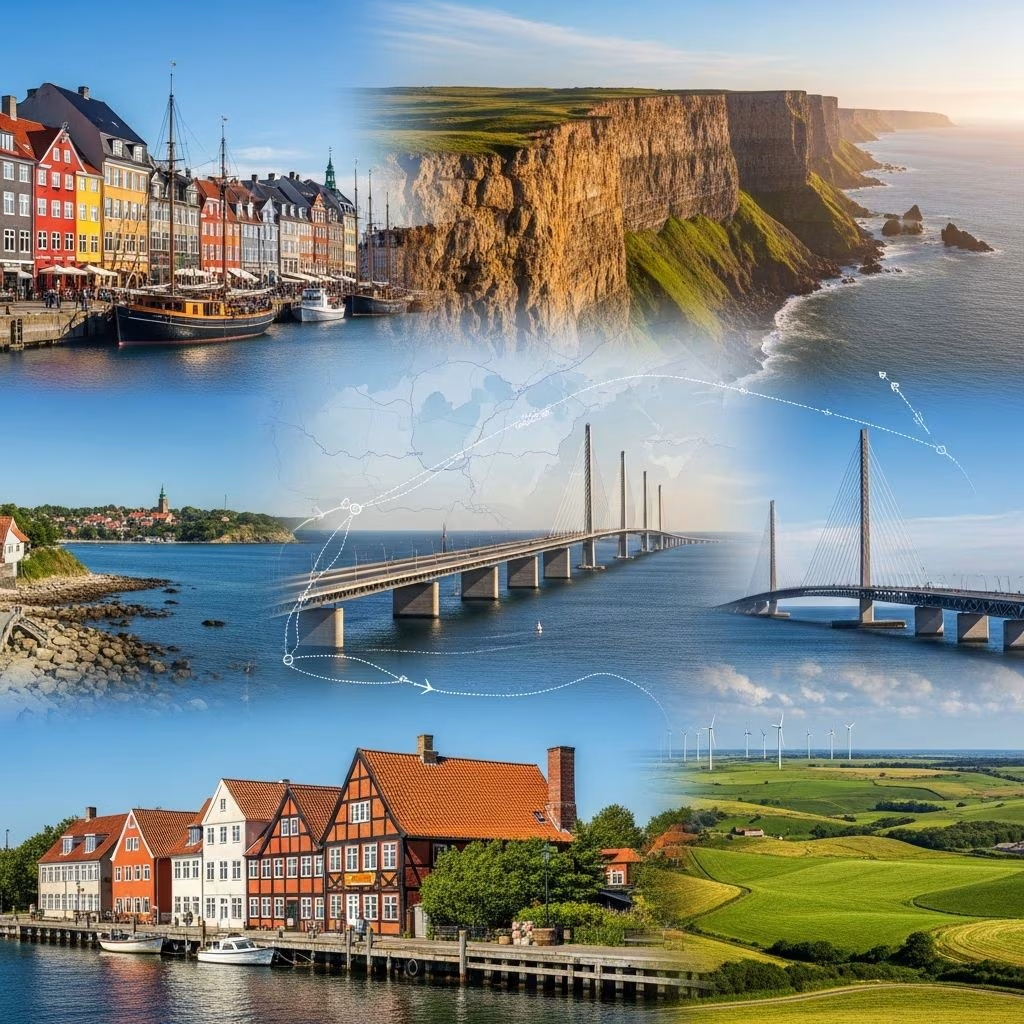
Explore Denmark through diverse travel routes combining Copenhagen's urban charm, Viking heritage sites, medieval castles, and picturesque island communities.
 Travel Essentials
Denmark offers travelers a compelling blend of contemporary urban culture, historical significance, and natural beauty. Whether you have a week or longer to explore this Nordic nation, multiple travel routes can guide you through its most rewarding destinations. From the vibrant streets of Copenhagen to remote Viking archaeological sites, Denmark accommodates various travel styles and interests.
Denmark comprises the Jutland Peninsula and numerous islands, including Zealand, Funen, and Bornholm. The capital, Copenhagen, sits on Zealand’s eastern coast and serves as the natural gateway for most international visitors. Understanding Denmark’s geography helps travelers plan efficient routes that minimize backtracking and maximize regional exploration.
The country’s compact size makes it remarkably accessible by train and car. Most destinations lie within two to three hours of each other, allowing travelers to experience significant geographical and cultural variety without exhausting travel days.
This route prioritizes Copenhagen as a home base while incorporating nearby coastal and historical attractions. Travelers spend four to five days exploring Copenhagen’s neighborhoods, museums, and dining scene before taking day trips to surrounding regions.
Medieval cathedral cities within 30 minutes of Copenhagen offer cultural depth. A prominent Norse maritime museum houses reconstructed Viking vessels and explains seafaring traditions spanning centuries. Royal palaces showcase Renaissance architecture and royal family heritage, while charming historic neighborhoods preserve medieval street patterns and traditional Danish architecture.
The Øresund Bridge connects Copenhagen to Swedish territories, enabling cross-border day trips for travelers interested in comparing Nordic cultures and experiencing Scandinavian diversity within a single journey.
Denmark’s Viking past defines much of its cultural identity. This specialized route connects major archaeological sites, museums, and reconstructed Viking settlements that illuminate this transformative historical period.
| Location | Primary Attraction | Travel Time from Copenhagen |
|---|---|---|
| Roskilde | Viking Ship Museum and cathedral | 30 minutes |
| Slagelse | Viking fortress archaeological site | 1 hour |
| Kerteminde | Viking ship burial site museum | 2.5 hours |
| Ribe | Medieval town with Viking history | 4 hours |
The National Museum of Denmark in Copenhagen houses the largest Viking ship on display anywhere globally, accompanied by artifact collections that contextualize Viking maritime prowess and trading networks.
Beyond traditional museums, this route includes reconstructed Viking settlements and open-air museums that demonstrate daily life, craftsmanship, and social structures. Visitors participate in historical cooking, craft demonstrations, and interactive exhibits that transform abstract historical knowledge into tangible understanding.
Medieval towns like Ribe preserve street layouts and architecture from Viking settlements, allowing travelers to walk through genuine historical environments rather than purpose-built tourist attractions.
Denmark’s castles represent centuries of royal power, architectural evolution, and artistic patronage. This route connects major fortifications and royal residences that showcase different architectural periods and design philosophies.
Renaissance-era fortifications near Copenhagen feature distinctive red brick construction and defensive innovations reflecting 16th-century military architecture. These compounds served dual purposes as defensive structures and royal residences, incorporating gardens, administrative facilities, and entertainment spaces.
Grand island palaces demonstrate Baroque and Rococo influences imported from continental Europe. These sprawling compounds feature elaborate gardens, ornamental water features, and richly decorated interior spaces reflecting royal aspirations and cultural refinement.
Smaller rural castles showcase how regional nobility expressed power through architecture, often featuring moats, crenellated walls, and strategic positioning relative to medieval transportation networks.
Denmark’s island communities offer distinctly different experiences from urban Copenhagen. This route navigates multiple islands, each with unique character and attractions.
The smallest islands preserve 18th-century village architecture largely unchanged by modern development. These communities maintain traditional crafts, local cuisine, and cultural practices that visitors experience through artisan workshops, local restaurants, and family-operated guesthouses.
Cycling represents the preferred transportation method on islands, allowing travelers to navigate at reduced speeds through agricultural landscapes and village streets. Rental facilities are widely available, and dedicated cycling routes connect major destinations.
Jutland, Denmark’s largest landmass, offers dramatic landscapes, industrial heritage, and contemporary cultural institutions. This longer route explores varied terrain and communities often overlooked by Copenhagen-focused visitors.
Odense, located on the peninsula’s eastern coast, combines medieval architecture with museums dedicated to Denmark’s most famous literary figure. The city’s pedestrian zones feature independent shops, traditional restaurants, and cultural venues that reflect contemporary Danish lifestyle preferences.
Aarhus, a major port city on Jutland’s east coast, showcases ambitious contemporary architecture alongside historical preservation. The city’s old town district preserves timber-frame buildings from multiple centuries, creating atmospheric pedestrian zones that contrast with modern institutional buildings.
The peninsula’s northern regions feature dramatic coastal landscapes where the North Sea meets Danish territory. Small fishing communities maintain traditional industries alongside emerging tourism infrastructure, offering authentic experiences less mediated by commercial tourism development.
This route emphasizes Danish design traditions, culinary innovation, and contemporary artistic expression rather than historical sites or natural attractions.
Copenhagen hosts numerous design museums and galleries showcasing Danish contributions to product design, furniture design, and architectural innovation. The city’s neighborhoods feature independent design studios where visitors observe artisans at work and purchase directly from creators.
Contemporary restaurant scenes in major cities emphasize seasonal ingredients, traditional techniques reimagined through modern sensibilities, and presentations that reflect Scandinavian aesthetic principles. Food tourism combines cultural education with sensory experience, offering insights into Danish values and lifestyle priorities.
Independent cultural spaces—galleries, performance venues, and alternative communities—demonstrate how Danes balance progressive values with cultural traditions, environmental sustainability, and social equity.
Train networks connect all major destinations with frequent service, comfortable seating, and dining facilities. Regional rail passes offer unlimited travel within specified periods, reducing per-journey costs for multi-destination itineraries.
Car rentals provide flexibility for exploring rural areas and island communities less served by public transportation. However, Copenhagen’s traffic congestion and limited parking make cars unnecessary and burdensome within the capital.
Ferry services connect islands and coastal communities, functioning as both practical transportation and recreational experiences. Many ferries offer dining and entertainment, transforming travel time into activity time.
Summer months (June through August) bring extended daylight enabling full-day exploration and outdoor activities. However, temperatures remain moderate (15-20°C), requiring layered clothing despite extended sunshine.
Winter months feature limited daylight and cold temperatures but reduced tourist crowds and lower accommodation prices. Christmas markets and seasonal traditions create distinctive winter experiences unavailable during other seasons.
Copenhagen offers accommodations ranging from luxury hotels to budget hostels and vacation rentals. Proximity to public transportation matters more than geographic centrality, as transit systems efficiently connect peripheral neighborhoods to tourist attractions.
Outside Copenhagen, smaller cities offer family-operated hotels, countryside inns, and self-catering apartments that provide authentic environments and local knowledge unavailable in standardized hotel chains.
Travelers with two weeks or longer can combine multiple routes, spending three to four days on each thematic focus. This extended timeline enables deeper regional engagement and reduced travel fatigue.
A comprehensive two-week itinerary might progress from Copenhagen’s urban immersion to Viking heritage sites, castle exploration, island communities, and Jutland Peninsula communities before returning to Copenhagen for final cultural experiences.
One week accommodates Copenhagen exploration plus selective regional visits. Ten days enables comprehensive national coverage including multiple islands and Jutland communities. Two weeks permits unhurried exploration with meaningful cultural engagement and repeated visits to preferred destinations.
Copenhagen offers remarkable depth with museums, neighborhoods, food scenes, and day trip options justifying 5-7 days. However, regional destinations offer distinctly different experiences that enhance overall Danish understanding.
Major museums and castle tours accept walk-up visitors but can reach capacity during peak season. Advance booking guarantees entry and sometimes provides discounted rates.
Trains offer comfort, frequency, and cost-effectiveness for most journeys. Cars provide flexibility for rural exploration but prove unnecessary and problematic in urban areas.
All routes are customizable. Travelers can emphasize historical sites, natural environments, culinary experiences, design culture, or specific geographic regions based on personal preferences.
