

 Travel Essentials
 Travel Essentials

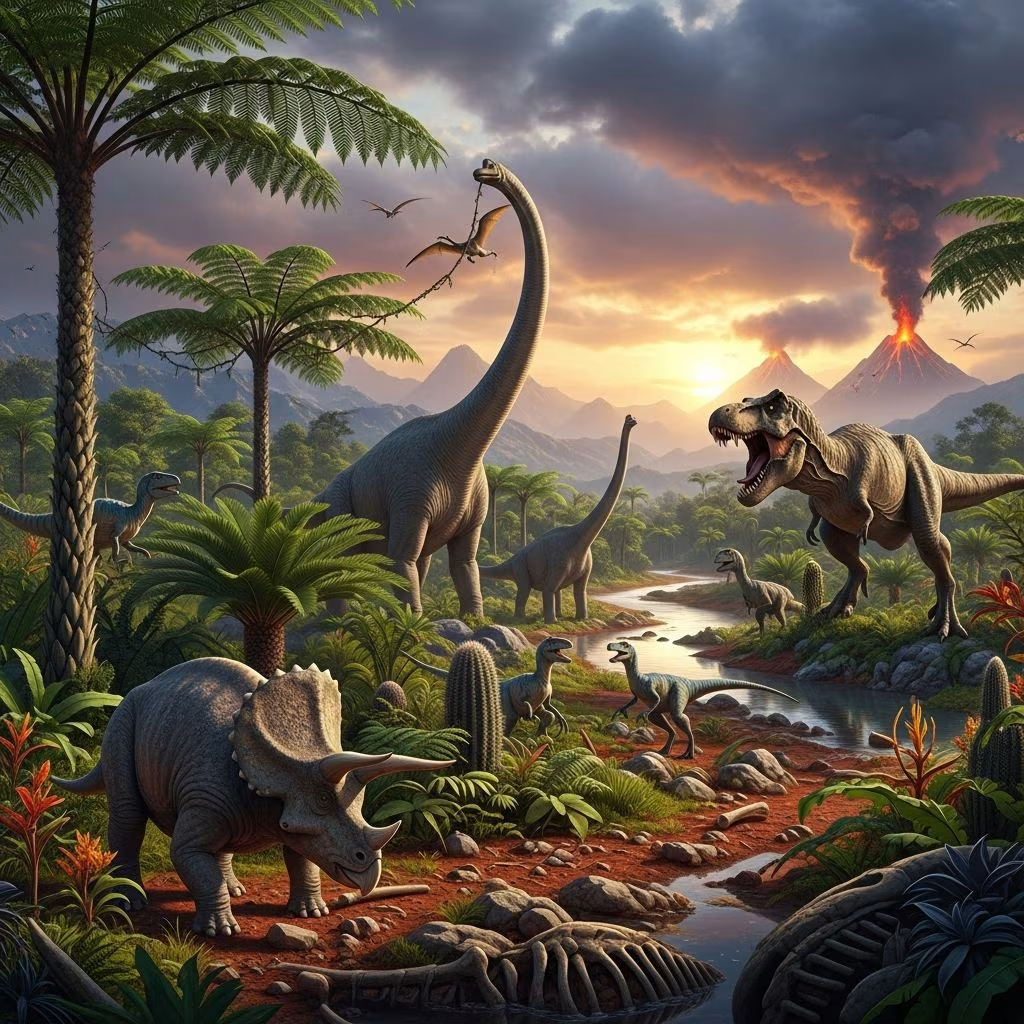
Explore North America's premier dinosaur destinations, from exposed bone walls to fossilized footprints across scenic landscapes and protected monuments.
 Travel Essentials
The United States contains some of the world’s most significant paleontological treasures, offering visitors the rare opportunity to connect with Earth’s prehistoric past. From ancient rock formations preserving million-year-old remains to interactive museums showcasing complete skeletal systems, America’s dinosaur destinations provide educational and adventurous experiences for travelers of all ages. These locations reveal the geological history written in stone, where careful excavation and study continue to unlock secrets of extinct species that once dominated the landscape.
The region spanning northwestern Colorado through Utah and into Wyoming represents one of North America’s most concentrated paleontological zones. This corridor, situated conveniently between two major tourism destinations, attracts visitors seeking authentic geological experiences away from crowded tourist centers. The landscape here tells a narrative spanning hundreds of millions of years, with rock formations representing multiple geological periods and diverse ancient ecosystems.
This geographic area benefits from its relative isolation compared to mainstream travel routes, creating a more authentic and less congested exploration experience. The combination of natural beauty and scientific significance makes the tri-state region an ideal destination for both casual tourists and serious fossil enthusiasts.
Straddling the Colorado-Utah border, Dinosaur National Monument encompasses 210,000 acres of protected land that represents one of North America’s most important paleontological resources. The monument’s centerpiece is an extraordinary cliff face containing approximately 1,500 exposed dinosaur bones, representing species including Stegosaurus, Allosaurus, and Apatosaurus. This remarkable concentration of fossils results from the area’s position within the Morrison Formation, a sedimentary rock unit recognized as North America’s most productive source of nearly complete dinosaur skeletons.
The Quarry Exhibit Hall provides visitors with direct viewing access to an enclosed wall displaying hundreds of fossils in their original stone matrix, offering a glimpse into an active paleontological site without requiring extensive hiking or technical equipment. The monument protects not only dinosaur remains but also 1,000-year-old petroglyphs and pictographs created by the Fremont people, demonstrating human occupation spanning from prehistoric times through more recent centuries.
Beyond fossil attractions, the monument offers 220,000 acres of recreational opportunities, including established trails, campgrounds, and scenic drives suitable for various fitness levels and interests. Visitors can experience the landscape that shaped these discoveries while contemplating the geological timescales involved in fossil formation and preservation.
Located between Dinosaur National Monument and Flaming Gorge, Red Fleet State Park provides an accessible outdoor experience for visitors seeking direct interaction with prehistoric evidence. The park features a hiking trail leading to fossilized dinosaur footprints preserved in Nugget Sandstone, with individual tracks measuring up to 17 inches in length and dating back more than 200 million years. These natural impressions offer tangible connection to creatures that once walked across what is now solid rock.
The geological formations visible throughout the park demonstrate how sedimentation, mineral replacement, and time combine to preserve traces of ancient life. The reddish coloration characteristic of the region results from hematite-stained minerals within the sandstone, creating visually distinctive landscapes while providing ideal preservation conditions for fossilized materials.
Approximately one hour north of Dinosaur National Monument, Flaming Gorge National Recreation Area showcases geological formations carved through millennia of erosion and tectonic activity. This section of the Ashley National Forest impresses visitors with dramatic canyon walls, colorful rock layers, and expansive vistas revealing Earth’s structural complexity. While paleontologists have discovered dinosaur tracks and petroglyphs within Flaming Gorge, these sensitive resources remain restricted from public access to ensure their preservation.
The recreational area appeals to visitors seeking geological education through landscape observation, photography, and contemplation of natural processes spanning millions of years. Hiking trails and scenic overlooks provide multiple perspectives on the canyon’s formation and the rock layers representing different geological epochs.
Approximately 90 minutes west of Flaming Gorge, Fossil Butte National Monument transitions the paleontological narrative toward aquatic environments. Designated as “America’s Aquarium in Stone,” this monument preserves exceptionally well-preserved remains of fish, insects, reptiles, birds, plants, and mammals from approximately 50 million years ago during the Eocene epoch. The site represents a completely different ecological system compared to the dinosaur-dominated formations of the eastern portion of this travel corridor.
The on-site museum displays approximately 2,000 fossils organized by taxonomic classification in educational display cases, providing context for understanding ancient aquatic food webs and ecosystem dynamics. Visitors can create fossil rubbings as take-home keepsakes, transforming scientific observation into tangible memories. The monument demonstrates how paleontological sites preserve not only skeletal remains but also evidence of insects, plant material, and smaller organisms rarely preserved in other locations.
Dinosaur Valley State Park near Glen Rose, Texas occupies 1,524 acres surrounding the Paluxy River in Somervell County. The park preserves extensive fossilized footprints left by Cretaceous-era dinosaurs in ancient mudflats that have transformed into solid stone over millions of years. These trackways provide three-dimensional evidence of dinosaur locomotion, size, and behavior patterns that skeletal remains cannot reveal.
Big Bend National Park, spanning 800,000 acres of Chihuahuan Desert along the Mexican border, contains fossils from the late Cretaceous and early Tertiary periods, representing the final era of dinosaur existence. The park’s diverse geological formations preserve evidence of ancient marine environments, desert ecosystems, and transitional periods in Earth’s climate history.
Dinosaur Ridge near Morrison, Colorado, recognized as a National Natural Landmark, contains Cretaceous and Jurassic Period fossils initially studied during the famous Bone Wars of 1877. Paleontologists consider this location the premier dinosaur track site in the United States and among the world’s most significant. The site combines museum exhibitions with outdoor fossil displays, allowing visitors to examine specimens while understanding their geological and historical context.
The Aurora Fossil Museum in North Carolina invites visitors to excavate their own fossils from the “Pit of the Pungo,” containing abundant remains from Pliocene and Miocene marine environments. This hands-on approach transforms passive museum visits into active paleontological engagement, appealing particularly to younger visitors interested in field science experiences.
Badlands National Park in South Dakota provides opportunities to observe active paleontological fieldwork, including the ongoing “Big Pig Dig” project, where scientists continue extracting mammal fossils from exposed rock layers. Seasonal erosion continuously reveals new fossil deposits, maintaining the site’s scientific productivity and visitor interest.
John Day Fossil Beds National Monument in Oregon preserves colorful rock formations containing exceptional Cenozoic-era mammal fossils, including rhinoceros, horse, and beaver ancestors, plus proto-saber-tooth cats known as “John Day tigers.” The Paleontology Center allows visitors to observe active research while examining one of North America’s most complete mammalian evolution sequences.
Most fossil destinations remain accessible year-round, though winter weather in elevated areas may necessitate modified planning. Summer months typically offer optimal conditions for hiking and outdoor observation, while spring and fall provide cooler temperatures and reduced crowds. High-elevation sites may experience seasonal closures or limited access during severe weather periods.
Fossil sites vary significantly in physical demands, from accessible museum exhibitions requiring minimal walking to challenging backcountry hikes spanning multiple miles across uneven terrain. Visitors should research specific site requirements and select destinations matching their fitness levels and experience. Many locations offer multiple trail options accommodating various abilities, from family-friendly paved paths to technical scrambles.
Sturdy hiking boots, sun protection, and adequate water represent essential items for outdoor paleontological exploration. Cameras and field guides enable visitors to document discoveries and identify specimens independently. Some locations permit fossil rubbings or limited collecting, while others restrict all material removal to ensure preservation.
These paleontological destinations provide unparalleled educational opportunities beyond traditional classroom instruction. Visitors encounter Earth’s chronological history written in rock strata, understanding how geological processes preserve biological information across millions of years. Museums provide expert interpretation connecting fossil evidence to evolutionary theory, ecological relationships, and extinction mechanisms.
Modern paleontological research continues at many sites, allowing visitors to observe active science and appreciate contemporary methodologies for fossil extraction, preparation, and analysis. Understanding how paleontologists reconstruct ancient ecosystems from fragmentary remains develops critical thinking about scientific inference and evidence evaluation.
| Destination | Primary Attractions | Best Season | Notable Features |
|---|---|---|---|
| Dinosaur National Monument | Quarry Exhibit Hall, 1,500 exposed bones | May-September | Multi-species fossils, petroglyphs, 220,000 acres |
| Red Fleet State Park | Fossilized dinosaur footprints | April-October | 200+ million year old tracks, hiking access |
| Flaming Gorge Recreation Area | Geological formations, scenic views | May-September | Canyon geology, color formations |
| Fossil Butte National Monument | Aquatic fossils, 2,000-specimen museum | June-September | Eocene ecosystem, fossil rubbings |
| Dinosaur Valley State Park | Cretaceous footprints, river terrain | October-April | 1,524 acres, giant statues |
| Dinosaur Ridge | Trackways, interactive museum | Year-round | Free hiking, touchable fossils |
Seasonal conditions vary by location, but generally May through September offers optimal weather for outdoor exploration. However, spring and fall provide fewer crowds and moderate temperatures. Winter access depends on elevation and specific site conditions.
Most destinations welcome children, with many offering interactive experiences, museums, and family-friendly trails. Some locations permit supervised fossil excavation or rubbings. Physical demands vary significantly between sites, allowing selection based on age and ability.
Regulations vary considerably between federal monuments, state parks, and private property. Generally, protected lands prohibit fossil removal without permits or professional authorization. Always verify specific regulations before visiting.
Museum visits typically require 2-4 hours, while outdoor sites range from 2 hours for shorter trails to full-day explorations. Multi-day visits allow deeper engagement with larger monuments and surrounding attractions.
Comfortable hiking boots, sun and weather protection, adequate water, and a camera constitute basic necessities. Specialized tools remain restricted in protected areas; verify regulations before bringing equipment.
America’s paleontological destinations offer transformative experiences connecting visitors with Earth’s ancient past. From preserved skeletal remains to three-dimensional footprints, these sites provide tangible evidence of life forms that dominated the planet for hundreds of millions of years. Whether pursuing serious scientific interests or family adventures, fossil destinations reveal the dynamic processes that create and preserve biological information in stone. These remarkable locations remind us of geological timescales that dwarf human existence and demonstrate nature’s capacity to preserve evidence across incomprehensible durations. Planning visits to multiple sites across different regions creates comprehensive understanding of prehistoric North America’s diverse ecosystems, evolutionary patterns, and paleontological significance.
