

 Travel Essentials
 Travel Essentials

Explore the best Etruscan sites across Italy, including UNESCO-listed necropolises in Cerveteri and Tarquinia, Tuscan tombs, and museums showcasing artifacts from this enigmatic pre-Roman culture.
 Travel Essentials
The Etruscans, a sophisticated civilization that thrived in central Italy from around the 8th century BCE until Roman conquest, left behind a legacy of architectural marvels, intricate art, and mysterious burial practices. Before Rome rose to dominance, these people engineered urban centers, mastered metalworking, and created vivid frescoes depicting daily life and the afterlife. Today, their remnants dot the landscapes of Lazio and Tuscany, offering travelers a glimpse into a world of seafaring traders, skilled artisans, and spiritual innovators. This guide highlights the most compelling sites, drawing from archaeological treasures that span necropolises, temples, and museums.
Etruscans were not native Italians but likely migrants from the eastern Mediterranean, influencing Roman culture profoundly—from togas and gladiatorial games to engineering feats. Their cities featured grid-like planning on hilltop plateaus, with advanced drainage systems and temples adorned in terracotta sculptures. What survives most vividly are their tombs, mimicking houses to ensure comfort in the afterlife, often filled with banquets, dancers, and demons in frescoes. UNESCO recognizes key necropolises for exemplifying Etruscan urbanism and funerary art, preserving structures from the 9th to 2nd centuries BCE.
Lazio hosts some of Italy’s most accessible and dramatic Etruscan sites, just north of Rome, where vast cemeteries mirror ancient cities.
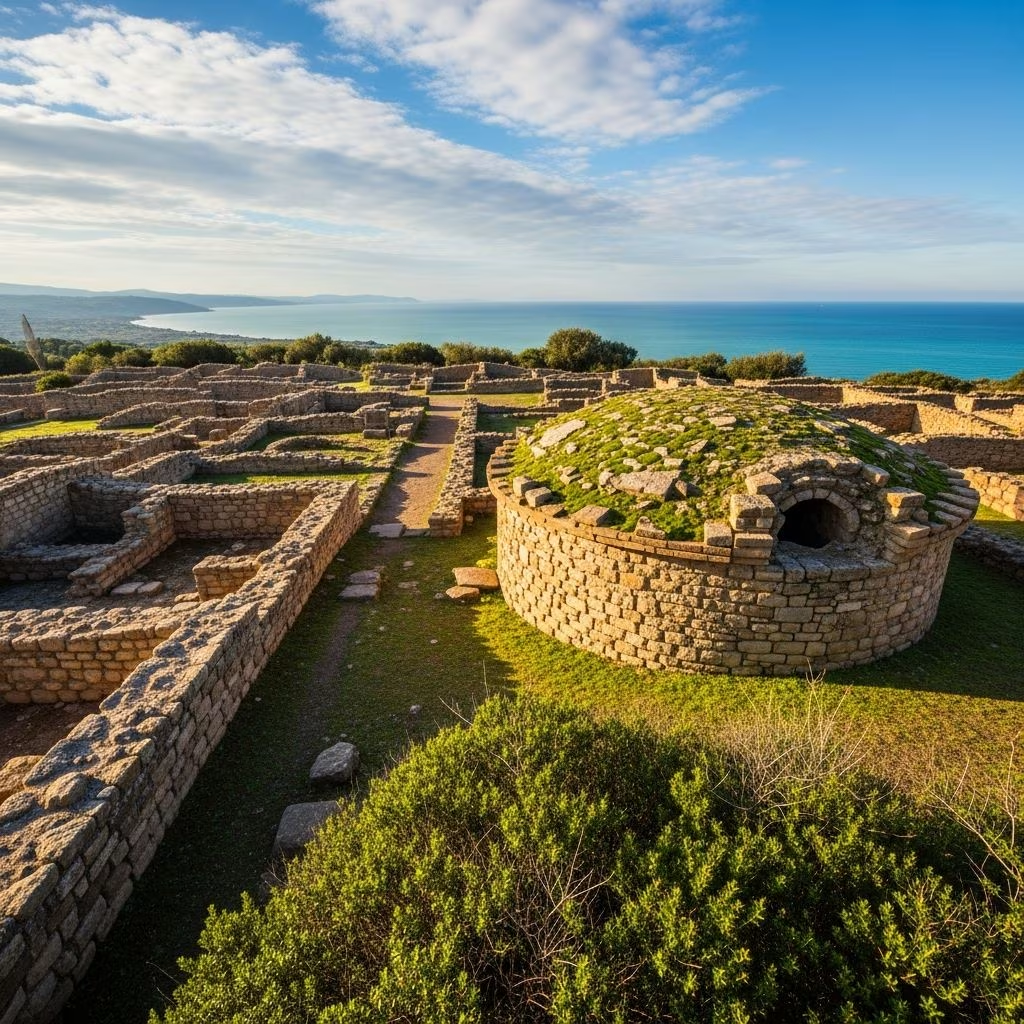
Nestled 40km northwest of Rome, Cerveteri’s Necropoli della Banditaccia is a UNESCO World Heritage site spanning 400 hectares with over 1,000 tumuli—mounded tombs resembling villages from afar. Dating to the 9th-6th centuries BCE, these ‘city of the dead’ structures feature streets, squares, and multi-room interiors carved from tuff rock. Walk paths reveal the Tomba dei Capitelli with Doric columns and the Tomba delle Cornici et Relievi, showcasing sculpted friezes of processions and myths. Nearby, the Museo Nazionale Cerite displays urns, sarcophagi, and jewelry evoking elite Etruscan lives.
Visitors praise its open-air exploration, allowing descent into cool chambers where echoes amplify the site’s eerie allure. Pair with Cerveteri’s medieval core for a full day.
Tarquinia, 90km from Rome, rivals Cerveteri with its Necropoli di Monterozzi, another UNESCO gem holding 6,000+ tombs from the 7th century BCE. About 20 are open, but stars like the Tomb of the Leopards depict banqueting scenes with leopards, musicians, and servants in vibrant reds and blues—rare survivals of Etruscan painting mastery. The site’s museum, Museo Archeologico Nazionale Tarquiniense, houses winged horses, sarcophagi, and the Tarquinia Dancer bronze. The medieval town’s walls and palaces add charm.
| Site Feature | Cerveteri | Tarquinia |
|---|---|---|
| UNESCO Status | Yes (Banditaccia) | Yes (Monterozzi) |
| Main Attraction | Tumuli & tumulus tombs | Frescoed chamber tombs |
| Artifacts Nearby | Museo Nazionale Cerite | Museo Tarquiniense |
| Distance from Rome | 40km | 90km |
Tuscany, the Etruscan core, boasts inland necropolises and hilltop sanctuaries amid olive groves and vineyards.
In southern Tuscany’s Maremma, Sovana’s Necropoli di Sovana, part of the Parco Archeologico del Tufo, features tombs hewn from tuff dating to the 3rd century BCE. The Tomba Ildebranda stands out—a facade with Ionic columns, steps, and pediment evoking a temple, leading to pillared chambers possibly once painted. Nearby, Tomba dei Demoni Alati holds a terracotta demon, Tomba del Tifone evokes storms, and Tomba della Sirena features a mermaid-like figure. Sovana’s medieval village enhances the visit with its duomo and alleys.
Perched on a plateau, Volterra (Velathri to Etruscans) retains 4th-century BCE Porta all’Arco, its three weathered heads guarding the ancient entry. The Museo Etrusco Guarnacci displays 600+ urns with vivid reliefs of myths, daily life, and the journey to Hades, plus the Ombra della Sera bronze shadow-figure. Explore the Acropoli for temple foundations and the city’s alabaster workshops, linking to Etruscan trade.
On the Gulf of Baratti, Populonia’s Parco Archeologico di Baratti e Populonia reveals Etruria’s only coastal city (6th-2nd centuries BCE), famed for iron smelting. Trails lead to Necropoli di San Cerbone’s massive Tomba dei Cari (28m wide) and elite tumuli amid pines. Overlook slag heaps from ancient forges; the museum exhibits gold jewelry and bucchero ware. Sunset views over the Tyrrhenian Sea make it magical.
Beyond majors, lesser-known spots offer intimate encounters.
In Siena province, Necropoli delle Pianacce hides chamber tombs, highlighted by the 2003-discovered Tomba della Quadriglia Infernale, with chariot scenes possibly linked to underworld rites. Excavated since 1954, it’s a peaceful hike revealing Etruscan funerary evolution.
In Casentino National Park, Lago degli Idoli yielded thousands of bronze votives—warriors, gods, anatomics—tossed as offerings from the 8th-1st centuries BCE. Discovered in 1838, the site mystifies with its sacred waters opposite Frascole.
Mugello’s hilltop Frascole preserves a rectangular temple-fortress ruin with thick walls, inscribed Velasna family pottery suggesting elite ownership. Views to Mount Falterona tie it to regional cults.
Chiusi’s Museo Archeologico Etrusco houses 9th-2nd century BCE urns, jewelry, and Attic imports. Chianciano Terme’s museum reconstructs tombs with black bucchero, bronzes, and canopies, immersing visitors in burial rituals.
Cluster visits: Rome-Villa Giulia intro, then Cerveteri-Tarquinia loop; Tuscany via train/bus from Florence to Volterra-Sovana-Populonia. Entry fees €6-12; audio guides enhance. Wear sturdy shoes for uneven terrain. Ethical note: No touching frescoes; support conservation.
Cerveteri and Tarquinia’s UNESCO sites top lists for scale and frescoes.
Yes, open spaces and stories engage kids; avoid deep tombs.
March-May or September-November for mild weather.
Recommended for context; apps or official tours available.
Etruscans shaped Roman religion, architecture, and early kings.
Climate change and tourism threaten these sites; ongoing digs reveal more. Support via ethical visits fuels research into Etruscan script and DNA.
