


 Food & Culture
Food & Culture
Best European Christmas Markets to Visit in 2026
Explore Europe's premier Christmas markets featuring traditional crafts, authentic cuisine, and festive atmospheres across diverse cultural destinations.
 Food & Culture
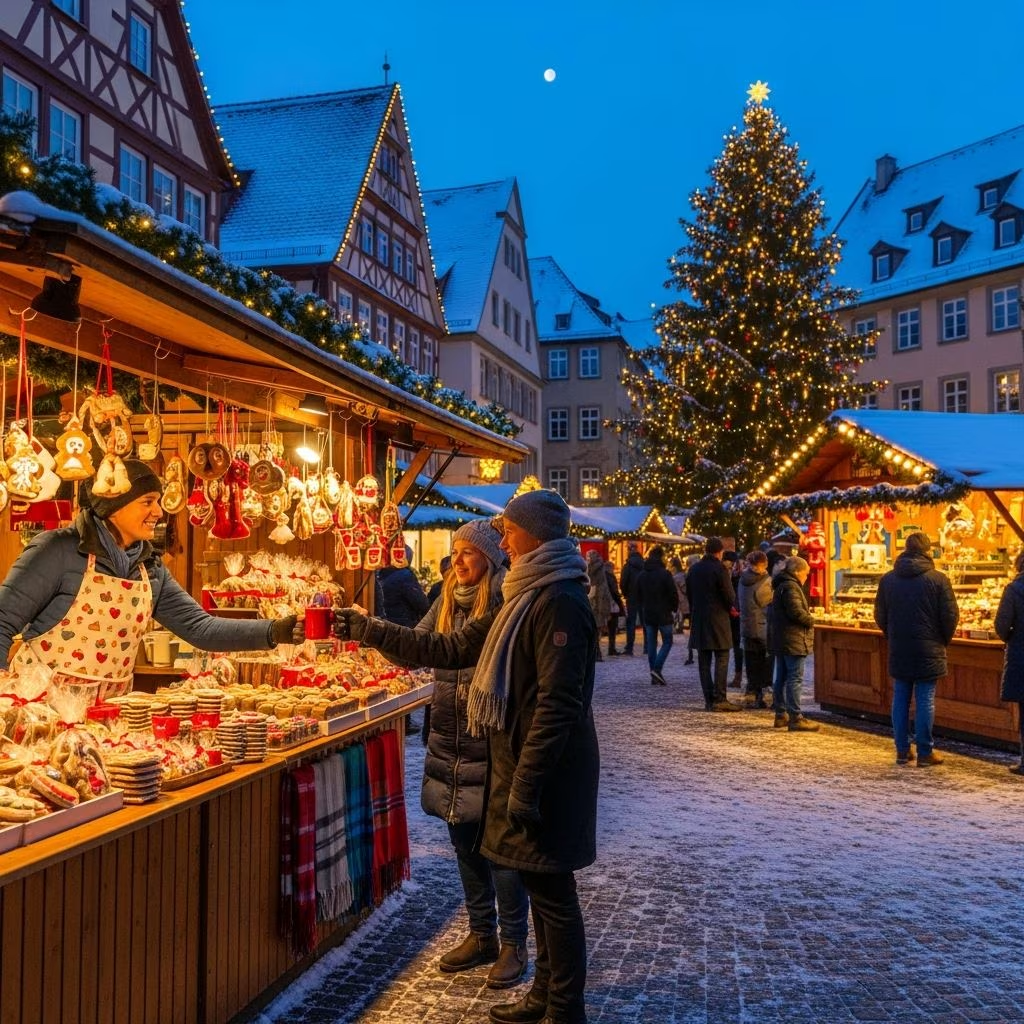
Europe transforms into a magical winter wonderland during the festive season, with hundreds of Christmas markets springing to life across the continent. These markets represent more than just shopping destinations—they embody centuries of cultural traditions, culinary excellence, and communal celebration. From the Alpine peaks to the Baltic coastlines, each market offers a distinctive interpretation of holiday spirit shaped by local customs and regional character.
The tradition of Christmas markets in Europe dates back centuries, particularly within Germanic and Central European cultures. Today, these seasonal gatherings have evolved into major tourist attractions while maintaining their authentic roots in local communities. Whether you’re seeking handcrafted ornaments, warming spiced beverages, or simply the ambiance of twinkling lights reflected on historic architecture, European Christmas markets deliver unforgettable experiences.
Understanding Europe’s Christmas Market Landscape
The European Christmas market phenomenon extends far beyond a single region or nation. Major markets operate across dozens of countries, each bringing unique architectural backdrops, regional products, and cultural nuances to their celebrations. The diversity of offerings reflects Europe’s rich tapestry of traditions—from Austrian Christkindlmärkte to Spanish noches navideñas, each market maintains distinctive characteristics.
Timing is essential for planning your market visits. Most major European Christmas markets operate between late November and December 23rd, with opening dates typically coordinated with the Advent season. The busiest periods fall during weekends and the final two weeks before Christmas, when crowds surge and atmosphere intensifies. Early December visits often provide an ideal balance between festive ambiance and manageable visitor numbers.
What Defines an Authentic European Christmas Market
- Historic town centers or cathedral squares serving as natural gathering spaces
- Local artisans showcasing handmade crafts, decorations, and wooden toys
- Regional culinary specialties including mulled wine, roasted chestnuts, and traditional pastries
- Architectural heritage creating photogenic backdrops for festive celebrations
- Community participation and cultural performances reflecting local traditions
- Accessibility by public transportation or walkable city centers
Alpine and Central European Markets: Tradition Meets Grandeur
The Austrian and Bavarian regions represent the epicenter of European Christmas market culture. Vienna’s markets exemplify sophisticated festive celebrations in grand settings, with multiple seasonal markets distributed throughout the city. The Rathausplatz Christmas market, positioned near Vienna’s iconic opera house and city hall, creates an atmosphere of elegance combined with accessibility. These markets showcase Austrian craftsmanship, from handblown glass ornaments to intricately carved wooden figurines.
Salzburg builds upon its classical music heritage with markets that incorporate cultural performances alongside traditional commerce. The juxtaposition of Mozart’s birthplace with festive market energy creates a uniquely Austrian experience. Visitors encounter authentic regional products—including schnapps, strudel varieties, and lederhosen-themed souvenirs—within carefully preserved medieval streets.
Southern Bavaria presents smaller, more intimate market experiences. Towns within wine regions maintain markets that emphasize local production, featuring wines alongside holiday specialties. These markets attract visitors seeking authentic Germanic traditions without overwhelming crowds, offering glimpses into how locals celebrate before international tourism peaks.
Germany’s Market Diversity: From Monumental to Intimate
Germany operates the continent’s most extensive Christmas market network, ranging from massive urban celebrations to quaint village gatherings. Major German markets function as significant cultural events, drawing hundreds of thousands of visitors annually and generating substantial economic impact for host communities.
Munich’s Christkindlmarkt on Marienplatz holds distinction as potentially the oldest continuously operating Christmas market in Europe, with origins potentially tracing to the 14th century. The market’s setting—surrounded by Gothic architecture and the iconic Marienkirche—creates an instantly recognizable holiday tableau. The scale is considerable, with hundreds of vendors occupying the expansive town square, creating an immersive commercial and cultural experience.
Cologne’s cathedral-square market combines architectural majesty with festive commerce. The proximity of vendor stalls to the UNESCO World Heritage Kölner Dom creates photographic opportunities and spiritual atmosphere simultaneously. The market balances traditional craft vendors with modern entertainment, appealing to diverse visitor demographics.
Smaller German towns offer contrasting experiences worth seeking out. Erfurt showcases architectural distinction through its 12-meter-high Christmas pyramid featuring historical figures and regional significance. Lübeck claims distinction as the “Christmas City of the North,” operating 11 separate markets throughout its UNESCO-protected medieval quarter. The Niederegger establishment within Lübeck offers marzipan specialties that local legend attributes with centuries of perfection—the confection has become synonymous with Lübeck’s festive identity.
Notable German Market Destinations
| City | Market Characteristic | Primary Appeal |
|---|---|---|
| Nuremberg | Historic city center location | Traditional craftsmanship, gingerbread |
| Dresden | Multiple market locations | Architectural heritage, regional products |
| Leipzig | Central square positioning | Local artisan goods, community atmosphere |
| Hanover | 15+ market locations | Scale and variety, festive experiences |
Franco-Swiss Alpine Markets: Elegance and Sophistication
Strasbourg claims reputation as the “Capital of Christmas,” hosting one of Europe’s oldest and most comprehensive market experiences. The market’s positioning within France’s easternmost major city reflects historical crossroads between French and Germanic traditions. Multiple market areas throughout Strasbourg’s ancient center provide diverse experiences—from intimate cathedral-adjacent stalls to expansive town-square celebrations.
The architecture surrounding Strasbourg’s markets exemplifies Alsatian design, blending French and German architectural traditions. Half-timbered buildings and medieval street patterns create authentically historical settings that enhance visitor immersion. The markets themselves emphasize regional specialties—Alsatian wines, handcrafted decorations, and culinary traditions unique to France’s northeastern region.
Swiss markets introduce refined sensibilities to festive celebrations. Geneva and Zurich host markets that emphasize artisanal quality and cultural programming. Basel’s market incorporates theatrical performances alongside traditional commerce, creating multidimensional entertainment. The Swiss approach often emphasizes craft excellence and aesthetic refinement, resulting in markets that appeal to visitors seeking upscale festive experiences.
Montreux’s Noël market occupies a lakeside setting combining Alpine scenery with festive commerce. The market’s positioning on Lake Geneva’s shores creates romantic atmospheres, particularly during evening visits when lights reflect across water.
Northern European Markets: Medieval Authenticity
Baltic and Northern European markets maintain distinctive characteristics reflecting their geographic and cultural positioning. Tallinn’s market operates within Estonia’s UNESCO-protected medieval old town, creating historically authentic backdrops. The architectural preservation means visitors experience Christmas celebrations within settings that genuinely predate modern urban development.
Vilnius provides Lithuanian festive culture alongside architectural majesty. The markets emphasize local craftsmanship and traditional foods, offering visitors exposure to Baltic cultural expressions often underrepresented in Western European tourism.
Copenhagen’s Tivoli Gardens transformation creates experiential markets distinct from traditional town-center celebrations. The amusement park environment combines classic holiday market elements with entertainment infrastructure, appealing to families and visitors seeking extended festive experiences.
Western European Celebrations: Charm and Commerce
British Christmas markets, particularly in Edinburgh and London, blend Scottish and English traditions with continental European market sensibilities. Edinburgh’s castle-adjacent market positions itself within historically significant military architecture, creating dramatic scenic backdrops. The market incorporates Scottish cultural elements—bagpipe performances, local distillery products, and traditional Scottish festive foods.
Bruges, Belgium represents quintessential Western European charm. The Flemish town’s canal systems, cobblestone streets, and medieval architecture create naturally photogenic market settings. Belgian market specialties—chocolate, waffles, and local beers—complement traditional market commerce. The intimate scale maintains authenticity despite significant tourist popularity.
Brussels offers metropolitan-scale celebrations with sophisticated European flair. The city’s multiple market locations attract diverse visitor demographics while maintaining cultural coherence through Belgian holiday traditions.
Southeastern European Markets: Cultural Crossroads
Zagreb has emerged as a significant Christmas market destination, repeatedly earning recognition among Europe’s premier festive celebrations. The Croatian capital’s markets emphasize local artisans and musical performances, creating community-oriented celebrations alongside tourist attractions. The markets showcase Balkan cultural influences, distinguishing them from Western European counterparts.
Budapest brings Hungarian traditions and thermal culture to festive celebrations. The market atmosphere combines European Christmas conventions with distinctly Hungarian cultural expressions, creating experiences distinct from Germanic or Western European markets.
Planning Your Christmas Market Journey
Timing Considerations
- Most markets operate from late November through December 23rd
- Opening weekends (late November) offer optimal balance of ambiance and crowd management
- Mid-December periods experience significant crowding during weekends
- Final week before Christmas combines peak festiveness with extreme congestion
- Weekday visits generally provide superior experiences than weekend visits
Practical Guidance
European public transportation networks facilitate market visits with efficient train and tram systems connecting major market destinations. Many markets cluster regionally—Austrian markets coordinate timing, allowing efficient multi-market itineraries. Rhine River cruises incorporate Christmas markets in Germany, France, and Switzerland, providing transportation alongside accommodation.
Accommodation booking requires early planning during peak festive season, with holiday rentals and smaller hotels filling quickly. Larger cities maintain adequate capacity when booking in advance. Consider base-city strategies, using comprehensive market networks (Hanover, Munich, Vienna) rather than constantly relocating.
Budget planning should account for regional price variations. Alpine markets and major tourist destinations command premium prices for food and beverages. Northern European markets often offer superior value. Handcraft purchases vary substantially by market—smaller regional markets frequently provide better pricing than tourist-focused urban centers.
Culinary Traditions Across Markets
Christmas markets function as significant culinary experiences beyond decorative commerce. Mulled wine (Glühwein or vin chaud) maintains consistency across markets while incorporating regional spice variations. German markets emphasize schnapps varieties, while French markets highlight wine-based preparations. Austrian and Swiss markets incorporate unique spice combinations reflecting Alpine traditions.
Roasted chestnuts, often considered quintessential Christmas market foods, appear throughout European celebrations. German markets feature elaborate sausage varieties, while Belgian locations emphasize chocolate preparations. Alsatian markets showcase regional pastries and breads, particularly Kugelhopf variations. Scandinavian markets incorporate glogg (Swedish mulled wine) and traditional holiday baked goods.
Frequently Asked Questions
When do European Christmas markets typically open?
Most major markets open in late November, coordinating with Advent season celebrations. Many launch the Friday before the first Sunday of Advent. In 2026, this corresponds to late November openings, with markets generally running through December 23rd. Some smaller markets maintain limited weekend-only schedules, while major urban markets operate daily.
Which European Christmas markets are least crowded?
Regional markets in smaller towns like Ahrweiler (Germany) and Tallinn (Estonia) experience significantly lower crowding than Munich, Vienna, or Cologne. Weekday visits to any market substantially reduce congestion. Early December periods (particularly November 27-December 5) provide optimal balance. Visiting markets on Tuesday through Thursday typically results in manageable crowds.
Are European Christmas markets suitable for families with children?
Most European Christmas markets actively welcome families, offering children’s entertainment, carousel rides, and simplified culinary options. Copenhagen’s Tivoli Gardens and Hanover’s markets specifically cater to family experiences. Markets emphasize community atmosphere, making them generally family-friendly. Exercise caution with very young children during peak weekend periods when congestion intensifies.
What is appropriate budget allocation for Christmas market visits?
Daily budgets vary substantially by location. Alpine and major urban markets average 40-80 euros per person (food, beverages, modest purchases). Smaller regional markets reduce costs 30-40%. Handcraft purchases range from 5 euros (simple decorations) to 100+ euros (quality artwork). Transport passes and accommodation constitute primary expenses beyond daily market spending.
Can visitors purchase and transport market goods internationally?
Most handcrafted items qualify as personal purchases under customs regulations. Breakable goods require careful packing; many vendors provide protective packaging for additional fees. Perishable items (foods, beverages) face restrictions depending on destination country—research specific regulations before purchasing. Airlines typically accommodate packed Christmas market purchases as checked luggage.
Conclusion: Creating Your Perfect Market Experience
European Christmas markets represent irreplaceable cultural and experiential treasures. Whether prioritizing architectural heritage, culinary traditions, artisanal craftsmanship, or community atmosphere, Europe’s markets offer diverse expressions of festive celebration. Strategic planning combining timing awareness, regional knowledge, and realistic expectations enables visitors to access authentic holiday magic while avoiding common tourist pitfalls.
The markets collectively preserve and celebrate traditions spanning centuries while adapting to contemporary tourism. Approaching these celebrations with cultural respect and openness to local customs enriches visitor experiences substantially. European Christmas markets ultimately transcend commercial transactions, functioning as living expressions of continental cultural identity and seasonal tradition.
References
- Best Christmas Markets in Germany 2026 • Dates • Map • Tips — Archaeology Travel. Accessed April 2026. https://archaeology-travel.com/thematic-guides/christmas-markets-in-germany/
- My Favourite European Christmas Market Destinations — My Vegan Travels. Accessed April 2026. https://myvegantravels.com/destinations/european-christmas-markets/
- 20+ Best European Christmas Markets To Visit In 2026 — Travel Books Food. Accessed April 2026. https://travelbooksfood.com/best-european-christmas-markets
- Best Christmas Market Tours, Trips & Cruises 2026-2027 — Adventure Life. Accessed April 2026. https://www.adventure-life.com/activity/christmas-market-visits
- European Christmas Markets – Prelude Tours — Prelude Tours. Accessed April 2026. https://www.preludetours.com/european-christmas-markets-2026/
On This Page
Understanding Europe's Christmas Market Landscape Alpine and Central European Markets: Tradition Meets Grandeur Germany's Market Diversity: From Monumental to Intimate Franco-Swiss Alpine Markets: Elegance and Sophistication Northern European Markets: Medieval Authenticity Western European Celebrations: Charm and Commerce Southeastern European Markets: Cultural Crossroads Planning Your Christmas Market Journey Culinary Traditions Across Markets Frequently Asked Questions Conclusion: Creating Your Perfect Market Experience← Previous
Best Beaches in Auckland: Surf, Swim & Family Spots
Next →
Best Day Trips from Auckland: Islands, Beaches, Caves and More
Related Reading
More in Food & Culture
Food & Culture Food & Culture
 Food & Culture
Best Places to Eat in Rome: Neighborhood Dining Guide
 Food & Culture
 Food & Culture