

 Travel Essentials
 Travel Essentials

A comprehensive guide to planning museum visits with children in Europe, featuring interactive exhibits, practical tips, and destination highlights.
 Travel Essentials
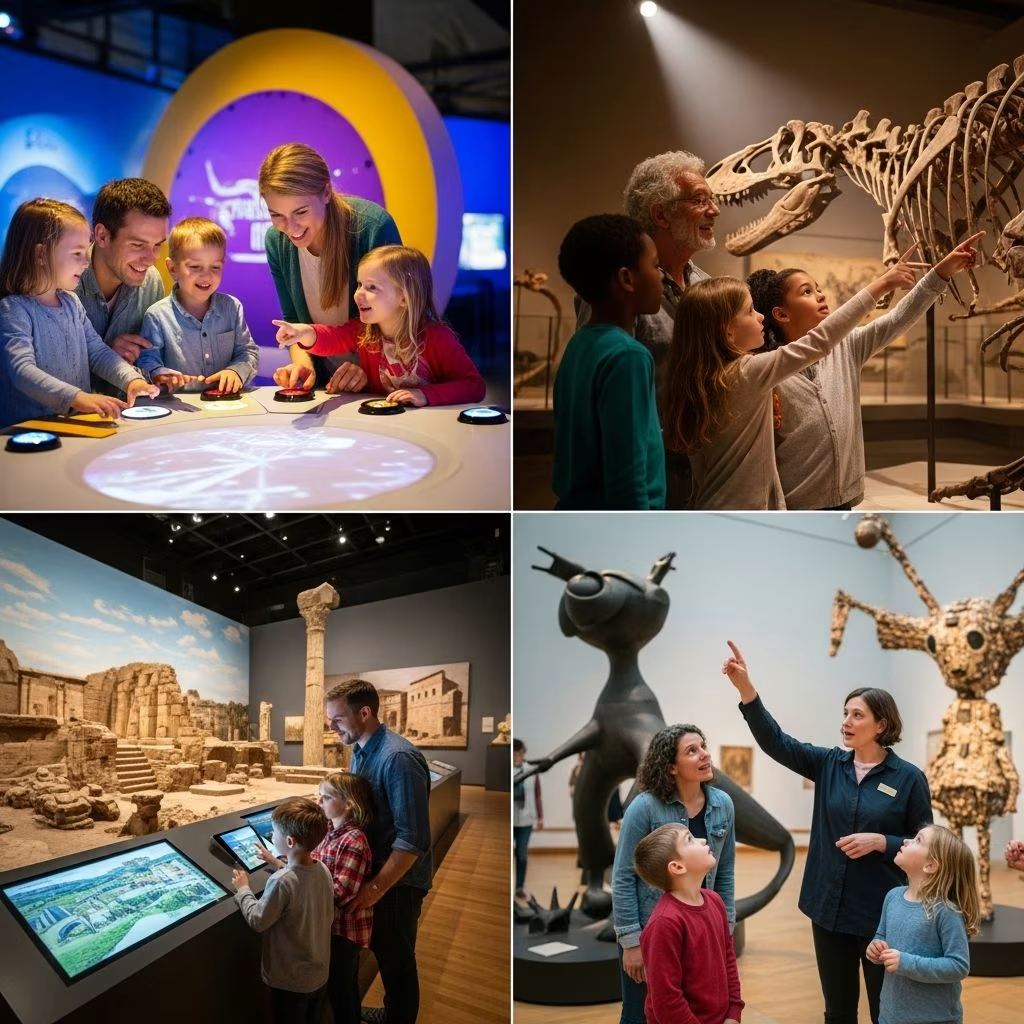
Cultural exploration doesn’t have to be a challenge when traveling with children. Museums across Europe have evolved significantly, moving beyond passive observation to create dynamic environments where young visitors can actively participate, learn, and have fun simultaneously. This comprehensive guide explores how families can maximize their museum experiences while visiting Europe’s most vibrant cities.
Contemporary museums in Europe have undergone a transformation in how they approach family engagement. Rather than expecting children to stand quietly while parents read placards, innovative institutions have embraced interactive design principles that cater to different learning styles and age groups. Interactive exhibits now form the backbone of many European museums, allowing children to touch, manipulate, and experiment with displays rather than simply observe them from a distance.
The shift toward hands-on learning reflects broader educational research demonstrating that children retain information more effectively when they engage multiple senses. Museums have responded by creating separate children’s galleries, establishing museum-wide trails, and designing workshops that run concurrently with exhibitions. These additions transform museum visits from potentially boring obligations into memorable adventures that spark curiosity about history, science, art, and culture.
Selecting appropriate museums begins long before arriving at your European destination. Different institutions cater to varying age ranges, with some specifically designed for toddlers and early elementary-aged children, while others engage adolescents through more sophisticated exhibitions.
Consider these factors when choosing museums:
Planning museum visits strategically ensures that children remain engaged rather than overwhelmed. Arriving early in the day typically results in smaller crowds, allowing families to move through galleries at a comfortable pace without navigating congested spaces. Many European museums now offer timed entry slots, reducing the stress of long queues and providing predictable visit windows.
The timing of museum visits significantly impacts the overall experience for families with children. Peak hours, typically midday and late afternoon, often coincide with school group visits and tourist rushes. Savvy family travelers plan visits during opening hours, immediately after lunch periods, or during late-evening sessions when available.
Weekdays generally offer quieter experiences than weekends, though this varies by season and location. Summer months bring larger crowds, while shoulder seasons provide better balance between pleasant weather and manageable visitor volumes. Some cities implement specific family hours or quiet times, which museums actively promote to attract parents seeking less chaotic environments.
The physical layout of popular museums deserves careful consideration. Larger institutions may require multiple visits to explore thoroughly without exhaustion. Breaking visits into focused explorations—perhaps dedicating one visit to Egyptian antiquities and another to impressionist paintings—maintains engagement better than attempting comprehensive coverage in single sessions.
European museums increasingly offer structured resources designed specifically for younger visitors. Many provide activity backpacks containing worksheets, maps, and drawing materials that guide children through exhibits using creative prompts rather than traditional descriptions. These resources transform passive observation into active discovery, encouraging children to examine details they might otherwise overlook.
Museums also integrate technology thoughtfully, with digital apps, interactive screens, and augmented reality experiences that enhance rather than replace physical exploration. Children aged 5-12 particularly benefit from these tools, which can translate complex historical or scientific concepts into engaging visual formats.
Workshop programs deserve particular attention. Many European museums host craft sessions, performance events, and hands-on activities scheduled during school holidays and weekends. These programs, often conducted in English or multiple languages, provide structured learning opportunities while giving parents brief respite. Booking workshops in advance ensures participation, as popular sessions fill quickly.
Amsterdam establishes itself as a premier family destination with museums catering specifically to young audiences. The city’s famous canal system provides cultural exploration opportunities beyond traditional museum walls, allowing children to experience the city’s character while parents plan strategic museum visits. The Anne Frank House offers emotional connections to history, while art-focused institutions present works in accessible formats designed to engage children’s natural curiosity about creativity and expression.
Vienna combines imperial history with musical heritage, creating unique museum experiences. The Schönbrunn Palace incorporates children’s museums that transport young visitors into historical contexts, allowing them to imagine aristocratic life while exploring stunning architecture. The city’s commitment to family programming ensures that both cultural education and entertainment receive equal weight.
Berlin presents a compelling contrast of historical significance and contemporary innovation. The German Technology Museum engages children through hands-on science and engineering exhibits, while the city’s historical sites provide context for understanding recent European history. Family-friendly institutions like the Labyrinth Kindermuseum spark imagination through experiential learning rather than traditional exhibitions.
Budapest offers the Palace of Wonders science museum alongside historical attractions. Castle Hill provides fairy-tale aesthetics that capture children’s imaginations, while museums interpret both ancient history and more recent cultural developments in formats accessible to younger audiences.
| Museum Category | Best For Ages | Key Family Features | European Examples |
|---|---|---|---|
| Science Museums | 4-16 | Hands-on experiments, play areas, interactive displays | CosmoCaixa (Barcelona), NEMO (Amsterdam) |
| Natural History Museums | 5-14 | Dinosaur exhibits, animal displays, discovery zones | Brussels Natural Sciences Museum |
| Art Museums | 6-15 | Children’s galleries, workshops, creative activities | Pompidou Center (Paris), National Gallery (Finland) |
| Children’s-Only Museums | 2-12 | Age-specific exhibits, role-play areas, sensory spaces | Tropenmuseum Junior (Amsterdam), Belgium’s Children’s Museum |
| Technology/Innovation Museums | 7-16 | Building activities, engineering challenges, digital elements | German Technology Museum (Berlin), LEGO House |
| Historical Sites | 8-16 | Accessible ruins, interpretive materials, outdoor exploration | Paestum (Italy), Acropolis Museum (Athens) |
Establishing routines helps children navigate museum visits more successfully. Many family travel experts recommend discussing what your family will see before arrival, setting realistic expectations about duration, and identifying specific highlights children can anticipate. This preparation creates engagement rather than aimless wandering.
Physical comfort directly impacts museum enjoyment. Comfortable shoes become essential for lengthy visits, while lightweight layers accommodate varying museum temperatures. Many institutions provide benches and rest areas, though discovering these spaces beforehand enables strategic breaks. Snacks and water bottles sustained energy levels, though checking individual museum policies regarding outside food prevents complications.
Photography policies vary across European museums. Understanding restrictions in advance prevents disappointment and allows families to decide whether images or detailed note-taking serves their learning goals. Some museums actively encourage photography of specific exhibits while prohibiting camera use in others.
European museums increasingly prioritize accessibility for families with diverse needs. Many institutions provide stroller storage, accessible restrooms, and nursing facilities. Elevator availability, ramp access, and level flooring receive attention for families with mobility considerations or younger children in strollers.
Museums also recognize that some children have sensory sensitivities or developmental needs requiring accommodation. Advanced communication with institutions about specific requirements often results in tailored arrangements. Quiet zones, reduced-stimulation hours, or specialized tours address diverse family needs.
Museum pricing structures often favor families, with children under specific ages receiving free admission. Paris art museums exemplify this approach, with free entry for visitors under 18, making multiple museum visits financially accessible. Family passes bundling multiple museums at discounted rates represent another cost-saving opportunity.
City tourism cards combining museum admission with public transportation discounts provide excellent value for families planning comprehensive cultural exploration. Researching these options before arrival often reduces overall vacation costs while increasing access to institutions.
Children as young as 3-4 can enjoy museums with appropriate preparation and duration limits. Specialized children’s museums specifically accommodate younger visitors, while general museums work better for children 5 and older with longer attention spans.
Duration varies by age and museum type. Younger children typically engage effectively for 45-90 minutes, while older children may explore for 2-3 hours. Breaking visits into focused sections on different days often works better than attempting comprehensive coverage.
Most major European museums meet accessibility standards with elevators, ramps, and accessible restrooms. However, specific accessibility features vary, making advance inquiry worthwhile for families with mobility considerations.
Policies vary significantly. Many museums prohibit outside food but provide cafés with family-friendly options. Clarifying policies in advance prevents disappointment or rule conflicts.
Yes, most European museums feature family programs, workshops, and guided tours designed specifically for children. These programs often require advance booking and run during school holidays and weekends.
The ultimate goal of museum visits extends beyond educational content to creating positive associations with cultural exploration. Children who experience well-planned, age-appropriate museum visits develop lifelong appreciation for art, history, science, and cultural diversity. European museums’ commitment to family programming reflects recognition that early cultural engagement influences future learning patterns and travel interests.
Families leaving Europe with memories of interactive discoveries, personal connections to historical sites, and genuine curiosity satisfied through exploration carry these experiences forward. Museum visits become stories shared, artwork remembered, and inspiration for future learning—transforming what might seem like obligatory cultural tourism into meaningful family bonding experiences.
