

 Travel Essentials
 Travel Essentials

Uncover Rajasthan's iconic forts like Chittorgarh, Amer, and Mehrangarh. Learn their histories, must-see features, and travel tips for an unforgettable journey through India's royal past.
 Travel Essentials
Rajasthan, the land of kings, boasts some of the world’s most impressive fortifications, perched on hilltops and woven into the fabric of Rajput valor and architectural genius. These forts, many recognized as UNESCO World Heritage Sites, offer a window into centuries of royal intrigue, battles, and cultural splendor. From the vast expanses of Chittorgarh to the golden sands enclosing Jaisalmer, each structure tells a unique story of resilience and beauty.
The forts of Rajasthan stand as testaments to the Rajput clan’s unyielding spirit, built between the 7th and 18th centuries amid the arid Thar Desert and rugged Aravalli Hills. Six of these hill forts—Chittorgarh, Kumbhalgarh, Ranthambore, Gagron, Amer, and Jaisalmer—were inscribed on the UNESCO World Heritage List in 2013 for their eclectic architecture and historical significance. Spanning up to 20 kilometers in circumference, they showcase defensive ingenuity with towering walls, strategic gateways, and intricate palaces.
Beyond their military prowess, these sites house temples, reservoirs, and royal residences that reflect a blend of Hindu, Mughal, and indigenous styles. Visiting them provides not just scenic vistas but immersive experiences in India’s royal heritage, often enhanced by light shows, elephant rides, and cultural performances.
Dominating a 180-meter hill over the Berach River, Chittorgarh Fort sprawls across 700 acres, making it India’s largest fort. Constructed in the 7th century by the Mauryan rulers and later fortified by the Sisodia Rajputs, it endured three major sieges symbolizing Rajput bravery. A UNESCO site, it features towering gates like Ram Pol and Vijay Pol, over 65 historic structures including palaces, towers, and 19 temples.
Key highlights include the Victory Tower (Vijay Stambh), a 37-meter-high monument celebrating a 15th-century triumph, adorned with intricate carvings of deities and dancers. The Fateh Prakash Palace now serves as an archaeological museum displaying artifacts from its turbulent past. As evening falls, a mesmerizing sound-and-light show narrates tales of queens like Rani Padmini. Entry for foreigners is around INR 200; open 9 AM to 5 PM.
Nestled 11 km from Jaipur on a hill overlooking Maota Lake, Amer Fort (also Amber) is a UNESCO gem built in the 16th century by Raja Man Singh. Crafted from red sandstone and white marble, its four levels boast serpentine staircases, mirror-encrusted halls like Sheesh Mahal, and Diwan-i-Aam audience chambers. Elephants once ferried royals through the grand Jaleb Chowk entrance; today, jeeps offer a similar thrill.
The fort’s fusion of Rajput-Mughal architecture shines in the Sukh Niwas with its enchanting fountain and the Ganesh Pol gateway. Part of Jaipur’s defensive triad with Jaigarh and Nahargarh, it draws millions annually for its panoramic views and cultural depth. Timings: 8 AM to 5:30 PM; combined ticket with other Jaipur sites recommended.
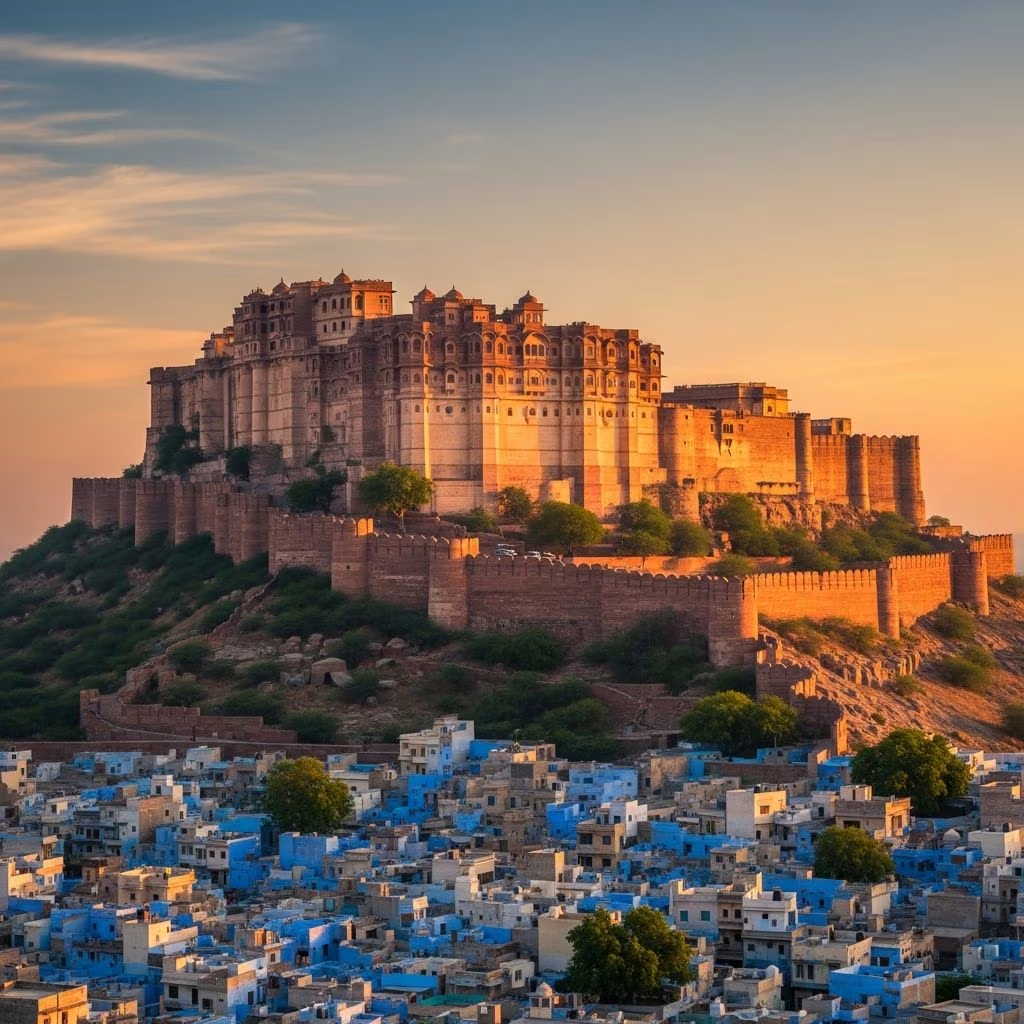
Perched 125 meters above Jodhpur, Mehrangarh Fort is among India’s largest, founded in 1459 by Rao Jodha and expanded over centuries. Its massive 5-km walls encircle palaces, museums, and temples, accessed via seven gates like Jayapol, commemorating victories over rival kingdoms. Inside, the Mehrangarh Museum showcases palanquins, miniature paintings, and royal turbans.
Highlights include the Phool Mahal (Flower Palace) with its gilded opulence and the Chamunda Mata Temple, the royal deity. Ziplining across ramparts adds adventure. Open 9 AM to 5 PM; audio guides enhance the experience of its Rathore clan legacy.
In the Aravalli Hills near Udaipur, Kumbhalgarh’s 36-km wall—second only to China’s Great Wall—encircles a 15th-century marvel built by Maharana Kumbha. Birthplace of Maharana Pratap, it shelters over 300 temples and palaces. The zigzag wall, visible from space, snakes through forests, protecting seven massive gates.
Climb to the Badal Mahal (Palace of Clouds) for vistas, or explore the Vedi Temple where Pratap was born. Nightly light shows illuminate its grandeur. Entry: INR 200 for foreigners; 9 AM to 6 PM.
Unique as a living fort, Jaisalmer rises from the Thar Desert like a sandstone mirage, built in 1156 by Rawal Jaisal. Its honey-hued walls house 4,000 residents, bazaars, havelis, and Jain temples. Reached via 99 bastions, it offers rooftop cafes with desert sunsets.
Patwon Ki Haveli and Salim Singh Ki Haveli nearby showcase carved facades. Canon-scarred from 18th-century battles, it blends daily life with history. Open daily; explore via camel safari.
Overlooking Amer, Jaigarh—built in 1726 by Jai Singh II—guards with the world’s largest wheeled cannon, Jaivana. Its robust fortifications never fell, offering superior views from Cheel Ka Teela hill. The armory museum displays Mughal weaponry.
Combined with Nahargarh, it formed Jaipur’s defense line. Timings: 9 AM to 4:30 PM.
Rajasthan’s forts cluster around the Golden Triangle (Jaipur-Delhi-Agra) and Mewar circuit. Best visited October-March to avoid heat. Use trains/buses; RTDC guides available. Dress modestly for temples; carry water.
| Fort | Location | Key Feature | UNESCO? |
|---|---|---|---|
| Chittorgarh | Chittorgarh | Largest in India | Yes |
| Amer | Jaipur | Elephant rides | Yes |
| Mehrangarh | Jodhpur | Museum riches | No |
| Kumbhalgarh | Rajsamand | 36km wall | Yes |
| Jaisalmer | Jaisalmer | Living fort | Yes |
Chittorgarh Fort, covering 700 acres.
Absolutely, for their history, views, and architecture.
Winter (Oct-Mar) for pleasant weather.
11km from Jaipur by bus/taxi; elephant/jeep ascent.
Yes, but still photography fees may apply in palaces.
