

 Travel Essentials
 Travel Essentials

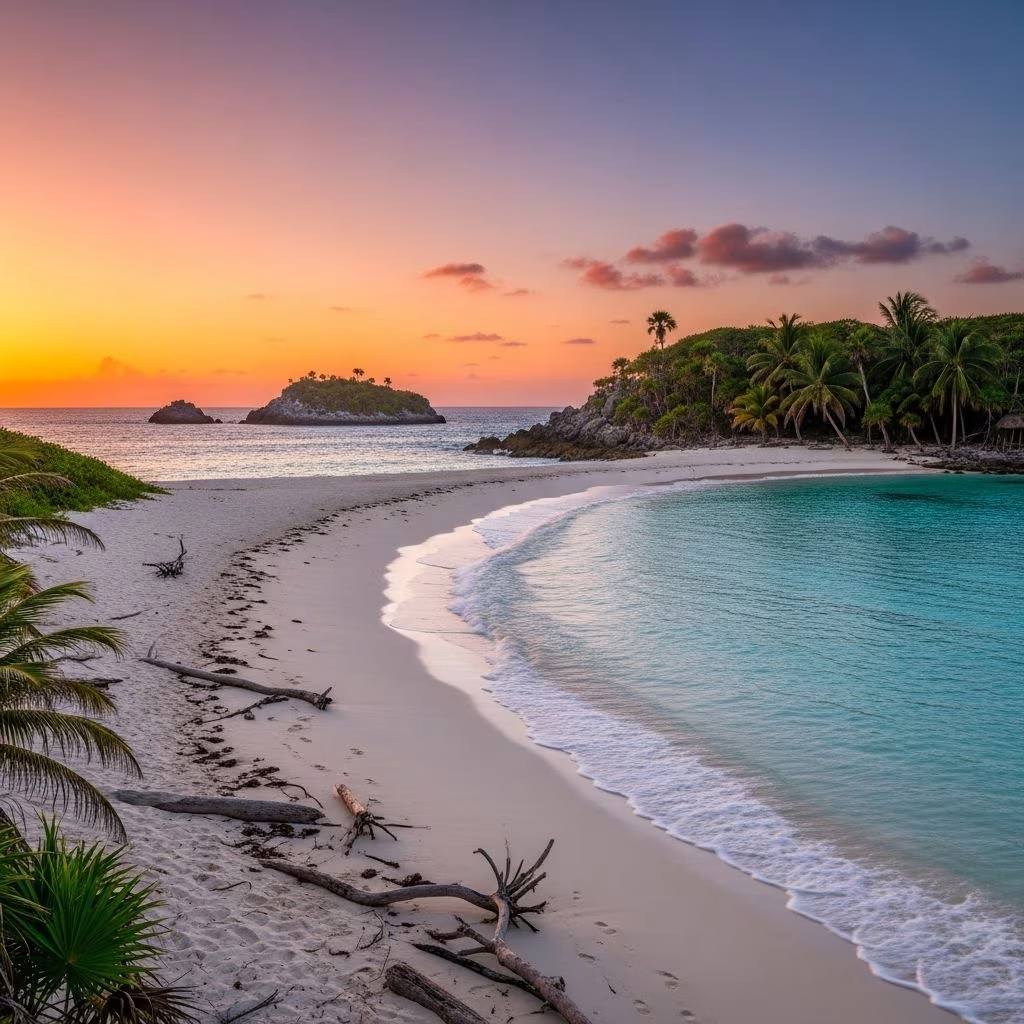
Explore Mexico's most isolated and tranquil beaches, from Pacific coves to Caribbean shores, ideal for travelers seeking solitude and authentic coastal experiences.
 Travel Essentials
Mexico’s coastline stretches across thousands of kilometers, yet many travelers congregate in the same handful of well-known destinations. While places like Cancun and Puerto Vallarta offer their own appeal, a parallel network of remote, undeveloped beaches exists for those willing to venture beyond the conventional tourist infrastructure. These hidden coastal treasures provide opportunities for genuine cultural immersion, environmental appreciation, and the kind of restorative silence that modern life rarely permits.
The allure of remote beaches extends beyond mere aesthetics. Isolated coastal areas preserve ecosystems that have remained largely undisturbed by commercial development, supporting diverse marine and terrestrial wildlife. These destinations attract visitors specifically seeking respite from digital connectivity and urban intensity. The absence of resort infrastructure means visitors encounter local communities in their authentic state, sharing meals and stories rather than transactional interactions.
Remote beaches also offer practical advantages for budget-conscious travelers. Accommodations typically consist of family-run guesthouses, vacation rentals, and modest beachfront cabins rather than high-rise hotels. This affordability stems directly from lower development costs and reduced commercial competition. Visitors often find themselves investing in memorable experiences—boat rentals, local guides, fresh seafood—rather than inflated room rates.
Along Mexico’s western Pacific coastline, accessible from Puerto Vallarta but worlds away from its commercial center, lies Playa Colomitos. This diminutive beach remains intentionally isolated, reachable only by boat or through a challenging hike originating from Boca de Tomatlan. Towering jungle vegetation surrounds the cove, creating a natural amphitheater of emerald foliage that descends directly to the water’s edge. The beach itself occupies merely a sliver of sand, sufficient for swimming and snorkeling but insufficient to accommodate crowds.
The turquoise waters surrounding Playa Colomitos contain healthy coral populations and abundant tropical fish species. Snorkeling opportunities abound within meters of shore, eliminating the need for boat excursions. Nearby Boca de Tomatlan offers modest vacation rentals providing necessary creature comforts while maintaining the area’s bohemian character.
Oaxaca’s southern Pacific coastline hosts multiple pristine beaches that remain largely unknown to international travelers. Playa Carrizalillo, situated near Puerto Escondido’s center, exemplifies this phenomenon—a small, crescent-shaped cove with crystal-clear waters ideal for swimming and snorkeling. Despite proximity to a well-known town, the beach itself maintains a distinctly local character, with calm, gentle waves making it particularly suitable for families.
Further south, Huatulco represents an entirely different category of coastal destination. Rather than a single beach, Huatulco encompasses nine distinct bays containing thirty-six individual beaches, with many remaining undeveloped and inaccessible except through hiking or water taxi. This geographic abundance essentially guarantees visitor solitude—even during peak seasons, finding an empty beach remains achievable. The lush rainforest environment surrounding Huatulco’s beaches supports an exceptional variety of bird species, making the destination equally appealing to nature photographers and ornithologists.
Within Huatulco’s constellation of beaches, Playa Tejon stands apart as particularly remote. Accessible via a steep but brief trail, this small, quiet beach is surrounded by breathtaking scenery and vibrant coral reefs. The area’s name derives from the coati, a raccoon-like native species frequently observed in nearby trees.
Baja California’s eastern coast features some of Mexico’s clearest and most colorful waters. Playa Balandra and its surrounding beaches present paradoxical characteristics—while individually popular, they collectively occupy a region spacious enough to distribute visitors across multiple distinct environments. The lagoon waters display extraordinary turquoise coloration, resulting from mineral content and shallow depths that allow light penetration to sandy bottoms.
Bahia Concepcion offers comparable aesthetic qualities with substantially fewer visitors. The water’s clarity permits visibility of sea flora and fauna at remarkable depths, while the bay’s geography creates naturally protected swimming areas. Visitors frequently report the experience of having entire beaches to themselves, an increasingly rare phenomenon in contemporary travel.
The Riviera Maya’s fame has rendered most of its beaches congested during high seasons. However, specific locations successfully maintain low visitor density despite geographic proximity to major tourist infrastructure. Xpu-ha, located within Quintana Roo, represents the Riviera Maya’s best-kept secret, remaining largely undiscovered despite its stunning natural characteristics. The beach features powdery, soft sand and cyan-colored water ideal for swimming, snorkeling, and diving.
The atmosphere at Xpu-ha reflects its relatively unknown status—on typical days during any season, locals outnumber tourists, creating an authentically Mexican beach experience rather than a commercialized resort environment. Fresh fish tacos and cold beverages complete the uncomplicated beach afternoon, stripped of pretension.
Soliman Bay, positioned as the most exclusive beach north of Tulum, offers an entirely different model for remote coastal experiences. Functioning as a private, gated community, Soliman Bay maintains controlled access while providing spacious villa accommodations. Calm, shallow waters prove ideal for snorkeling, kayaking, and paddleboarding, while the serene atmosphere and stunning scenery create an excellent escape from coastal commercialization.
Within the Playa del Carmen area—globally recognized as one of the world’s most popular destinations—Playa 88 offers a compelling counterpoint. While surrounding beaches experience constant congestion, Playa 88 maintains a noticeably laid-back vibe with soft white sands and clear turquoise water. The beach provides ideal conditions for quiet strolls, swimming, and peaceful contemplation, complemented by free palapas offering natural shade without rental charges.
Mexico’s remote beaches frequently serve as critical habitats for endangered species. Boca del Cielo presents a distinctive geographic feature—the beach occupies an isthmus separating a massive saltwater lagoon from open ocean. This configuration creates dual environments: the lagoon supports kayaking, stand-up paddleboarding, and calm swimming, while the ocean side provides gentle waves. Remarkably, sea turtles are regularly released into the ocean at this location, offering visitors opportunities to witness marine conservation efforts firsthand.
Huatulco’s rainforest environment supports Costa Rican-influenced fauna despite Mexico’s geographic location. Coatis, howler monkeys, and numerous bird species inhabit the area surrounding beaches, enriching the visitor experience beyond water-based activities. Guided hiking excursions frequently combine beach access with forest exploration, creating comprehensive natural history experiences.
Puerto Escondido earned recognition as a premier surfing destination due to its exceptional wave characteristics. However, beyond the crowded central beaches where international surf competitions occur, quieter beaches within the same geographic area offer similar conditions with dramatically fewer surfers. Playa Carrizalillo exemplifies this phenomenon—waves remain suitable for surfing while simultaneously permitting swimming and snorkeling, creating multi-purpose recreational environments.
Remote beaches, by definition, lack extensive commercial transportation infrastructure. Most require either private vehicle access, boat rentals, or hiking. Playa Colomitos necessitates either boat charter or a challenging hike through jungle terrain. This accessibility barrier, while inconvenient, paradoxically contributes to the beach’s continued seclusion. Visitors must consciously plan their visits rather than impulsively arriving via resort shuttle.
Water taxis provide cost-effective transportation to many Huatulco beaches, requiring modest financial investment but enabling access without vehicle ownership. Local communities typically arrange these services, ensuring that visitor presence directly benefits local economies.
Remote beach areas rarely offer franchise hotel chains or standardized resort experiences. Instead, accommodations consist of family-operated guesthouses, vacation rental properties managed by local owners, and modest beachfront structures. These establishments frequently lack amenities associated with commercial tourism—air conditioning may be absent, internet connections unreliable, and room amenities minimal.
This apparent deprivation often constitutes the experience’s fundamental appeal. Visitors seeking digital detoxification encounter genuine opportunities for disconnection rather than simulated retreats marketed as such. The necessity of adaptation—accepting inconsistent electricity, reading books rather than streaming content, engaging in conversations rather than social media scrolling—facilitates the transformative potential these destinations offer.
Mexico’s coastal regions experience distinct seasonal patterns affecting accessibility and comfort. Pacific coast locations experience hurricane season from June through November, with September and October representing peak risk periods. Caribbean beaches face similar seasonal patterns, though storm frequency varies by specific latitude.
Conversely, peak tourist season—December through March—transforms many remote beaches by bringing significantly increased visitor populations. Strategic planning around shoulder seasons (April-May and September-October, excluding hurricane-prone months) often yields optimal combinations of favorable weather and low visitor density.
Remote beaches’ appeal derives substantially from their undeveloped, pristine condition. Maintaining these characteristics requires visitor commitment to environmental stewardship. Unlike commercialized beaches with established waste management systems, isolated coastal areas depend entirely on visitor conduct for preservation.
Responsible practices include removing all trash, avoiding sunscreen products containing reef-damaging chemicals, respecting wildlife boundaries, and limiting environmental footprint. Choosing local guides rather than independent exploration protects fragile ecosystems while channeling economic benefits to communities that depend upon sustainable tourism.
Safety varies by specific location and current conditions. Generally, well-established remote beach communities welcome tourists, though solo travelers should exercise standard precautions: avoiding isolated areas at night, informing others of planned activities, and maintaining awareness of surroundings. Many remote beaches host established expat communities and tourism infrastructure, creating relatively secure environments.
Remote beach destinations often lack pharmacies, specialized retail, and commercial conveniences. Essential items include comprehensive first-aid supplies, prescription medications, reef-safe sunscreen, insect repellent, water purification tablets, and entertainment (books, journals). Accommodation uncertainty requires flexible clothing accommodations and personal hygiene products.
Absolutely. Beaches like Playa Carrizalillo feature calm, gentle waves specifically suitable for children, while Soliman Bay’s shallow waters eliminate rip current hazards. However, parents should verify accommodation suitability, water access security, and available medical services before traveling with young children.
Local tourism offices, community-operated websites, and established travel blogs offer dependable information about remote destinations. Engaging directly with local communities through social media or email frequently yields current, accurate details about accessibility, conditions, and seasonal variations.
Shoulder seasons (April-May and early November) offer optimal combinations of favorable weather and minimal crowds. December through March attracts increased visitors but provides reliable sunshine. Hurricane season (June-November) presents weather unpredictability, though September-October offers exceptional solitude for risk-tolerant travelers.
Mexico’s most rewarding coastal experiences often remain invisible to mainstream tourism infrastructure. Seeking out remote, undeveloped beaches requires deliberate planning, flexible expectations, and genuine appreciation for simplicity. The reward—genuine solitude, authentic cultural encounters, pristine natural environments, and meaningful disconnection from contemporary life’s constant stimulation—justifies the additional effort required to reach these destinations.
Whether through Puerto Vallarta’s jungle-surrounded coves, Oaxaca’s rainforest-backed bays, Baja’s crystalline lagoons, or the Riviera Maya’s hidden Caribbean stretches, Mexico offers abundant opportunities for those seeking authentic beach experiences beyond commercial tourism’s reach.
