

 Travel Essentials
 Travel Essentials

Explore Europe's best-kept skiing secrets, from remote Alpine valleys to hidden Nordic peaks, offering solitude and authentic mountain experiences.
 Travel Essentials
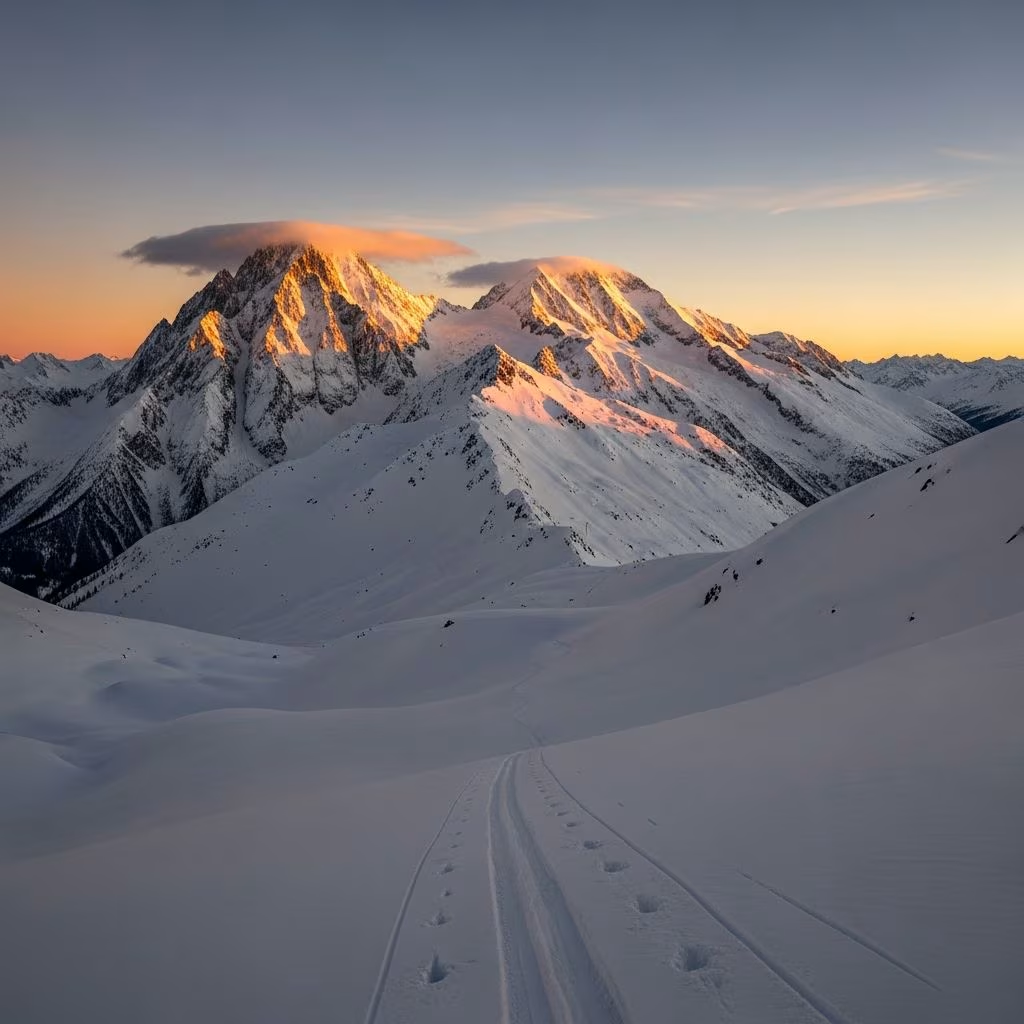
While famous Alpine resorts attract thousands of visitors annually, a different breed of skier seeks something more intimate—places where pristine snow meets solitude, and mountain villages retain their authentic character. Europe harbors numerous lesser-known skiing destinations that deliver world-class terrain, reliable snowfall, and the kind of peaceful experience that makes winter sports truly magical. These hidden sanctuaries offer everything from challenging backcountry adventures to family-friendly slopes, all without the lift lines and crowded après-ski scenes that define mainstream resort culture.
The proliferation of mega-resorts has fundamentally altered how many people experience mountain skiing. Overcrowding transforms what should be exhilarating descents into frustrating queues and congested slopes. Remote ski areas represent an antidote to this phenomenon, preserving the essence of what makes alpine skiing special. Beyond the practical advantages of shorter waits and fewer skiers per run, these destinations provide genuine connections with local communities and landscapes that remain largely untouched by commercialization.
These secluded areas typically offer several distinct advantages: more accessible terrain for intermediate skiers, personalized instruction from smaller ski schools, and accommodation options that reflect regional character rather than international chain uniformity. The economic benefits flow directly to local businesses rather than distant corporate headquarters, supporting sustainable tourism models that preserve mountain communities.
Spain’s mountainous border regions contain skiing opportunities that perplex many European winter sports enthusiasts who assume Alpine France or Switzerland represent the continent’s only serious options. The Spanish Pyrenees, particularly in Catalonia, host sophisticated ski areas that combine reliable snow with distinctly Iberian hospitality.
Baqueira-Beret represents Spain’s most comprehensive skiing destination, nestled high in the Pyrenees with elevations exceeding 2,500 meters. The resort operates across multiple linked sectors, offering terrain for all proficiency levels while maintaining a refreshingly relaxed atmosphere compared to crowded French counterparts. Winter conditions here benefit from consistent Atlantic precipitation patterns, ensuring deep snowbases throughout extended seasons. The surrounding villages retain authentic Catalan character, with regional cuisine emphasizing local traditions rather than international standardization.
Val d’Aran, positioned in a high-altitude valley separated from mainstream traffic patterns, attracts skiers seeking challenging terrain and pristine powder fields. The valley’s geography creates microclimates that capture moisture from Atlantic systems, resulting in notably higher snowfall than surrounding regions. Villages within the valley maintain centuries-old traditions, offering cultural experiences alongside skiing.
While Chamonix and Val d’Isère attract international attention, France shelters numerous alternatives offering superior skiing experiences for those prioritizing solitude and authentic mountain life.
Sainte-Foy exemplifies the boutique ski village model perfectly executed. This intimate community preserves alpine traditions through careful development restrictions and community-focused management. The resort’s compact scale creates immediate accessibility—accommodations cluster closely enough to eliminate vehicle dependency. Slopes here cater particularly to intermediate and advanced skiers seeking varied terrain without commercial pressure.
Les Sybelles comprises a cooperative network of smaller resorts linked through a unified pass system, creating the practical benefits of larger ski areas while preserving individual village identities. This arrangement appeals to skiers who desire exploration across diverse terrain without experiencing the impersonal scale of mega-resorts. The linked area encompasses approximately 250 kilometers of skiable terrain spread across charming settlements.
The French Pyrenees region receives disproportionately little attention despite offering reliable snow, distinctive Mediterranean-mountain blend cultures, and substantially fewer international visitors than Alpine destinations. Smaller resorts throughout this region provide quality skiing with parking lots that rarely fill completely.
Austria, Switzerland, and Italy each host exceptional skiing destinations that international marketing campaigns systematically underrepresent.
East Tyrol, separated from mainstream Austrian ski zones by the Central Alps, delivers remarkable skiing with surprisingly minimal crowding. This geographic isolation paradoxically creates advantages—fewer major roads mean fewer day-trippers, and the limited resort infrastructure maintains authentic mountain community atmospheres. The region’s sparse development preserves natural landscapes that commercialized areas have substantially altered.
Großglockner area offers skiing within sight of Austria’s highest peak, providing spectacular natural backdrops alongside quality terrain. The dramatic mountain scenery alone justifies visiting, but skiing conditions here meet professional standards while maintaining relaxed local atmospheres.
Aletsch Arena combines skiing with UNESCO World Heritage site status, positioned near Switzerland’s most impressive glacier system. The ski area spans 103 kilometers of slopes positioned between 1,845 and 2,896 meters elevation, with most accommodations offering ski-in, ski-out convenience. The stunning natural setting—surrounded by the Aletsch Glacier and surrounding peaks—creates skiing experiences that transcend typical resort activities.
Saas-Fee maintains its position as a sophisticated high-altitude destination without succumbing to overdevelopment pressures. The resort’s car-free village design enhances both environmental sustainability and visitor experience quality. Reliable snowfall and extensive terrain parks serve both traditional skiers and freestyle enthusiasts.
Cortina d’Ampezzo balances sophisticated infrastructure with authentic Dolomite character. The resort seamlessly blends skiing excellence with cultural richness, offering visitors both excellent runs and exposure to distinctive regional traditions. Nearby villages preserve architectural styles and local economies that remain fundamentally unchanged despite international attention.
Abetone, positioned in Tuscany’s Apennine Mountains just 55 miles from Florence, surprises many visitors with quality skiing at surprisingly modest elevations. The resort caters particularly to intermediate skiers and families, with most slopes designed for accessible progression. On clear days, views extend toward coastal regions, creating distinctive Italian mountain experiences unavailable elsewhere.
Livigno, tucked within the Italian Alps yet enjoying special tax status, maintains distinctive character while offering comprehensive skiing facilities. The remote valley location limits casual tourist visits, preserving community atmosphere while accommodating serious skiers.
Skiing extends far beyond the Alps, with exceptional destinations across northern and southeastern Europe offering completely different experiences.
Ruka, Finland serves Nordic skiers seeking reliable conditions and distinctive northern landscapes. The subarctic location ensures consistent snow quality and creates ethereal nighttime skiing opportunities beneath winter skies. Indigenous Sámi cultural elements permeate the region, offering cultural immersion alongside outdoor activities.
Pamporovo, Bulgaria represents an exceptionally economical option, positioned 150 miles from Sofia and featuring 120 days of annual sunshine. The enchanting village setting combines affordable pricing with reliable skiing conditions through December-April seasons. Recent linkages to neighboring resorts have expanded available terrain substantially.
The Sella Nevea–Kanin area, straddling Italy-Slovenia borders, offers skiing with extremely extended seasons—typically November through June—thanks to high-altitude positioning and favorable atmospheric patterns. The remote mountain valley location creates spectacular natural backdrops alongside excellent backcountry skiing opportunities for adventurous visitors.
Many travelers assume remote ski destinations require extensive car rental periods or complicated logistics. Strategic resort selection reveals numerous villages with excellent public transportation connections and walkable infrastructures.
Courmayeur, Italy, accessible via regular bus service from Aosta (approximately 7 euros roundtrip), demonstrates how properly positioned villages eliminate vehicle dependencies. The famous Mont Blanc proximity creates iconic skiing experiences, with intermediate terrain suiting most skill levels.
Aosta Valley villages generally maintain strong transit connections through major Italian cities, with ski buses supplementing train services. This infrastructure allows visitors to experience authentic alpine living without automobile requirements.
Off-piste and backcountry skiing attracts experienced adventurers seeking untracked powder and technical challenges. Resorts including Chamonix, Verbier, Cortina, and Sölden operate professional guide services and ski schools specializing in backcountry techniques and avalanche safety training. The combination of expert instruction and pristine terrain creates opportunities for powder enthusiasts to maximize season value.
Glacier skiing extends seasons considerably, with destinations like Hintertux offering year-round skiing on Europe’s highest glaciers—featuring over 300 kilometers of pistes across one terrain system. This specialized option appeals to competitive athletes and training enthusiasts requiring extended season access.
Different European locations experience distinct seasonal advantages influencing optimal visit timing. High-altitude regions and northern destinations enjoy extended seasons, while lower-elevation Mediterranean locations concentrate skiing into specific winter months. Understanding these patterns allows strategic trip planning that optimizes snow conditions, crowd levels, and personal scheduling preferences.
Extended season destinations like Sella Nevea–Kanin permit November-June skiing, accommodating early-season and late-season preferences that align poorly with February-March peak periods characterizing most major resorts. This flexibility advantages both families coordinating school schedules and professionals seeking off-season travel opportunities.
| Destination | Country | Specialty | Best For | Season Length |
|---|---|---|---|---|
| Baqueira-Beret | Spain | Reliable snow, intermediate terrain | Family skiing, uncrowded slopes | December-April |
| Aletsch Arena | Switzerland | UNESCO site, high elevation | Scenic skiing, scenic beauty | December-April |
| Sella Nevea–Kanin | Italy/Slovenia | Extended season, backcountry | Off-piste exploration, powder skiing | November-June |
| East Tyrol | Austria | Natural scenery, isolation | Peaceful skiing, dramatic landscapes | December-April |
| Sainte-Foy | France | Boutique village, varied terrain | Intermediate/advanced skiers | December-April |
Yes, many remote resorts provide modern infrastructure including high-speed lifts, groomed runs, and professional instruction services. The primary difference involves scale rather than quality—smaller resorts emphasize specialized terrain and personalized service rather than attempting comprehensive offerings for every possible skier type.
High-altitude locations and positions benefiting from specific precipitation patterns typically experience reliable snow. Sella Nevea–Kanin’s extended season exemplifies how favorable geographic positioning and elevation combine to ensure consistent conditions. Supplementary snowmaking provides additional security in lower-elevation Mediterranean resorts.
Often yes—reduced international marketing expenses and smaller operational scales frequently translate to lower lift ticket prices, accommodation costs, and dining expenses. Pamporovo, Bulgaria particularly exemplifies this advantage, with comprehensive skiing access at substantially reduced pricing compared to Alpine destinations.
Absolutely. Well-designed remote resorts typically encompass terrain for beginners, intermediates, and advanced skiers. Smaller class sizes from specialized ski schools often improve instruction quality for families combining multiple proficiency levels.
Most established remote resorts maintain bus services, train connections, or both. Courmayeur connects to Aosta via regular buses, while Alpine regions typically feature coordinated transit systems serving valley communities.
Selecting appropriate remote destinations requires balancing personal skiing preferences, desired experience qualities, and practical considerations including budget, travel dates, and transportation requirements. Research specific resort terrain maps, review current snow reports, and consult regional tourism authorities for accurate facility assessments and accessibility information.
Booking accommodations directly through village tourism offices or smaller family-run establishments often yields superior experiences compared to international booking platforms, while supporting local economies more directly. These connections frequently provide insider knowledge regarding optimal skiing timing, lesser-known runs, and authentic dining experiences reflecting regional culinary traditions.
Remote ski destinations ultimately represent something increasingly rare in contemporary tourism—places where commercialization has not completely transformed authentic mountain life. These locations offer not merely different skiing experiences, but fundamentally different relationship possibilities with both mountain environments and communities that call them home.
