

 Travel Essentials
 Travel Essentials

Explore Austria's premier hiking destinations featuring alpine lakes, mountain peaks, gorges, and waterfalls across multiple regions with trails for all skill levels.
 Travel Essentials
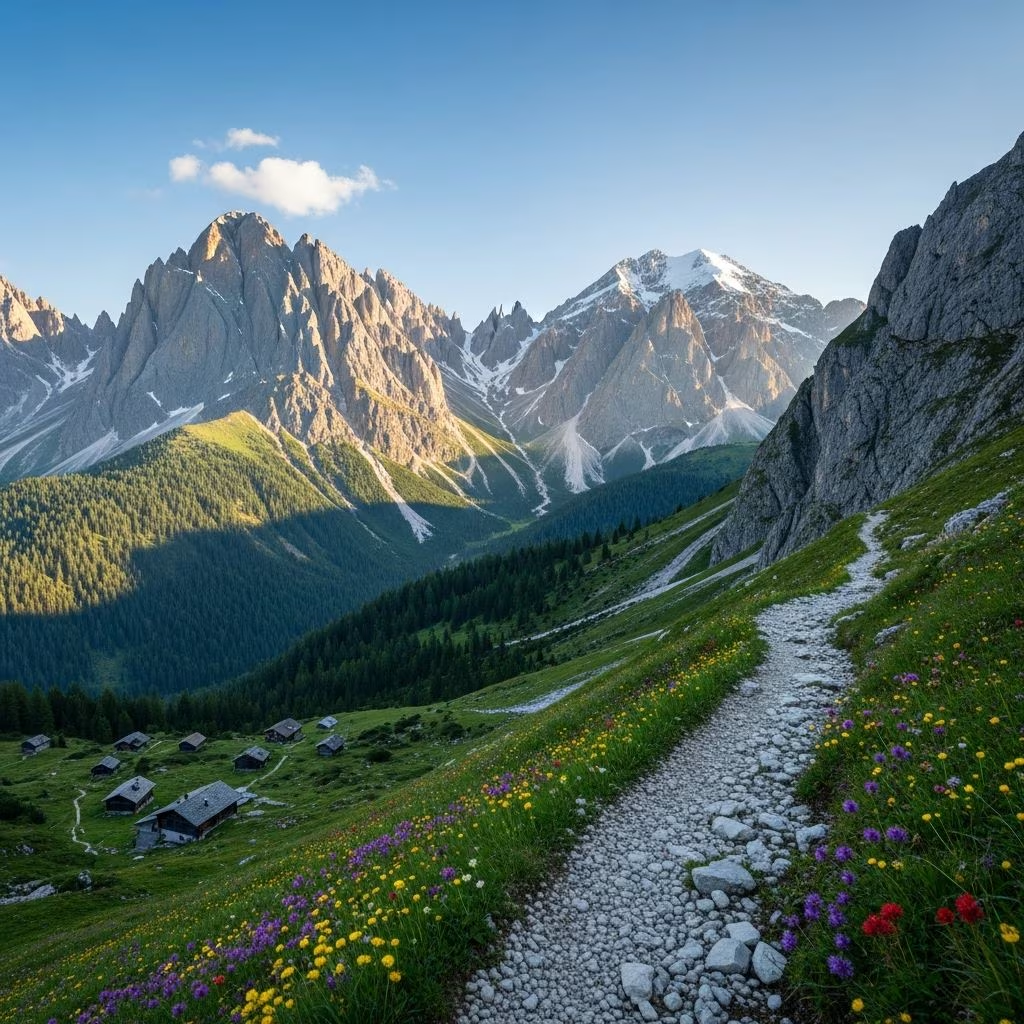
Austria stands as one of Europe’s premier destinations for mountaineers and casual hikers alike, offering an extraordinary diversity of trails that traverse dramatic alpine terrain, serene valleys, and crystalline mountain lakes. From the towering peaks of the Hohe Tauern to intimate gorge walks and pastoral meadow routes, Austria’s hiking landscape presents opportunities for adventurers of every experience level. The country’s well-maintained trail system, combined with its rich tradition of alpine hospitality through mountain huts and refuges, makes extended hiking expeditions as accessible as day excursions.
The Austrian Alps constitute the northwestern section of the Eastern Alps, creating a dramatic backdrop for outdoor pursuits. The mountain ranges are characterized by steep valleys, pristine lakes fed by glacial melt, and extensive meadowlands that burst with wildflowers during summer months. Austria’s hiking infrastructure represents decades of development, with clearly marked trails, professional mountain guides, and a culture deeply rooted in alpine traditions. The hiking season typically extends from June through September, though lower elevation routes remain accessible into autumn.
The country’s geographic position creates distinct regional hiking characteristics. Western regions near Tyrol showcase higher peaks and more challenging alpine terrain, while eastern areas offer gentler rolling landscapes suitable for family groups. Central regions feature a balanced mix of accessibility and dramatic scenery, making them ideal bases for varied hiking itineraries.
Reaching Austria’s most spectacular high-altitude destinations requires either serious mountaineering credentials or strategic planning through well-established trail networks. These premium alpine experiences reveal landscapes shaped by glaciation, with boulder fields, permanent snowfields, and summit vistas extending across multiple countries.
The Grossglockner Region encompasses Austria’s highest peak and surrounding trails offering extraordinary mountain drama. Routes in this area combine steep ascents with stunning panoramic views, though they demand proper preparation and typically require guides for complex sections. The approaches wind through varied terrain, from gentle forest paths transitioning abruptly into exposed alpine rock and scree fields.
Hohe Tauern National Park protects vast stretches of pristine alpine environment featuring multiple summits exceeding 3,000 meters. The park maintains an extensive network of interconnected trails ranging from straightforward lakeside walks to serious mountaineering objectives. Hikers can structure multi-day expeditions utilizing the park’s network of mountain refuges, enabling access to remote terrain without requiring complete self-sufficiency.
Austria’s mountain lakes represent some of the continent’s most photographed natural features, combining crystalline waters with dramatic peak backdrops. These routes appeal broadly because they deliver spectacular scenery while accommodating varied fitness levels through strategically positioned access points.
Lünersee in the Rätikon Alps presents an ideal introduction to alpine lake hiking. The circuit trail circumnavigating the lake accommodates hikers of diverse abilities, with manageable grades and stunning views throughout. This destination works particularly well for families and those newer to mountain trekking, as the route maintains consistent quality views without demanding technical skills or extreme exposure.
Formarinsee offers a rewarding day hike combining alpine lake scenery with accessible trail conditions. The route passes through varied ecosystems, from forest environments to alpine meadows before reaching the pristine lake nestled beneath surrounding peaks. This destination has become increasingly popular due to its combination of accessibility and photographic appeal.
Vilsalpsee in Tyrol delivers a more secluded alpine lake experience with excellent trail maintenance and minimal crowds outside peak vacation periods. The route traverses pastoral meadowlands before reaching the lake, offering genuine mountain immersion without extreme technical difficulty.
Austria’s spectacular waterfalls and narrow gorges create unique hiking experiences combining water features with dramatic geology. These routes typically demand less elevation gain than high-altitude trails while delivering memorable natural drama.
Krimml Waterfalls represent Europe’s tallest multi-tiered waterfall system, attracting hikers through a combination of natural drama and accessibility. The main route follows a well-developed path ascending alongside the cascading waters, with multiple viewing platforms at strategic points. Despite its popularity, the sheer scale of the falls and surrounding landscape justify inclusion in any comprehensive Austrian hiking itinerary.
Liechtensteinklamm creates an entirely different waterfall experience through a narrow limestone gorge featuring wooden walkways spiraling through the chasm. The route incorporates impressive stair sequences and walkways built directly into cliff faces, generating genuine excitement despite moderate overall difficulty. This destination’s compact scale and technical interest make it memorable even for experienced mountain trekkers.
Sigmund Thun Gorge combines gorge hiking with waterfall features through a relatively compact route suitable for those with limited time or energy reserves. The wooden walkways and viewing platforms position hikers intimately within the gorge environment, creating dramatic perspectives on surrounding rock formations and water features.
Wolfsklamm near St. Georgenburg Monastery offers gorge hiking with cultural historical context. The walk through this narrow canyon features dramatic natural features combined with medieval monastery ruins, creating a multifaceted hiking experience beyond simple nature appreciation.
Austria’s geography creates natural hiking clusters accessible from established towns and villages. These regional bases provide accommodation, supplies, transportation, and extensive local trail networks suitable for multi-day exploration.
Seefeld in Tirol functions as a premier hiking base at approximately 4,000 feet elevation, hosting more than 100 established hiking routes of varying difficulty. This altitude positions hikers in the alpine environment while providing multiple descent options for flexible day planning. The area accommodates everything from gentle valley walks to serious alpine mountaineering, making it an exceptional choice for mixed-ability groups.
Lechtaler Alps near these western bases feature extensive alpine lakes, pristine meadowlands, and significant wildlife viewing opportunities. The region’s numerous trails range from established routes to more adventurous off-trail possibilities for experienced hikers seeking solitude.
Zillertal and Ötztal regions provide exceptional bases for extended alpine exploration, with valley villages serving as trailheads for varied daily objectives. These areas blend accessibility with genuine alpine challenge, accommodating diverse hiking ambitions.
Zell am See provides access to multiple distinct hiking zones within reasonable distances, from glacier approaches to pastoral valley routes. This central location enables varied daily objectives without requiring camp relocation.
Innsbruck Area combines urban amenities with direct access to serious alpine terrain, hosting trails ranging from beginner-appropriate meadow walks to expert mountaineering objectives. The Wilder Kaiser mountain range near Innsbruck features the Ellmauer Halt, a dramatic rock formation that anchors several compelling hiking routes.
Austria’s network of mountain refuges enables multi-day expeditions without carrying full camping equipment. These hut-to-hut treks combine daily hiking challenges with mountain hospitality, comfortable accommodation, and prepared meals.
Adlerweg (Eagle’s Way) represents Austria’s signature long-distance hiking trail, a multi-day expedition offering eagle-perspective views of Austrian alpine scenery. Completing sections of this 65-kilometer traditional route provides genuine immersion in alpine culture and landscapes. The trail connects established mountain refuges, enabling hikers to experience extended alpine exploration while maintaining basic comfort levels.
Schlegeis-Stausee to Olpererhütte constitutes a spectacular multi-day route combining high-altitude terrain with mountain refuge hospitality. This route showcases dramatic alpine scenery and traditional Austrian mountain hut culture, delivering memorable experiences for those with moderate-to-good fitness levels.
Rätikon Alps Circuit through the Lünersee region provides excellent multi-day trekking combining scenic lake environments with established refuge accommodations. This route proves ideal for those beginning hut-to-hut hiking, as trail conditions remain consistently good and refuge spacing accommodates manageable daily distances.
Austrian hiking seasons divide distinctly based on elevation and geographic location. Lower elevation routes at 2,000-3,000 feet accommodate hiking from late spring through autumn, while truly high-altitude routes above 4,000 feet require late June through September access windows. Weather patterns shift dramatically with elevation and season, potentially creating dangerous conditions on exposed terrain during transitional periods.
Spring brings impressive wildflower displays across alpine meadows, though remaining snow at higher elevations can obscure trail markers and create navigation challenges. Summer months deliver optimal conditions with long daylight hours and established trails entirely clear of snow, though popular routes attract significant crowds during peak vacation periods. Autumn offers excellent hiking weather with fewer crowds, though shortened daylight hours and potential early snow at high elevations require schedule flexibility.
Austria’s hiking culture emphasizes inclusion across ability levels, with trail networks accommodating everything from leisurely family strolls to expert mountaineering challenges. Paved paths through valleys and forest routes provide genuinely easy options requiring minimal fitness, while numerous trails incorporate manageable elevation gain with rewarding views, making them accessible to active individuals without serious climbing experience.
Many popular routes include alternative access points, enabling flexible itineraries where less experienced hikers can reach certain destinations while others continue to more demanding objectives. This flexibility makes Austria exceptional for multi-generational groups combining diverse abilities.
Trail Conditions and Maps: Austria maintains exceptional hiking infrastructure with clearly marked trails and reliable topographic maps available both physically and digitally. Official regional tourism offices provide detailed route information including elevation profiles, estimated times, and difficulty ratings.
Mountain Hut Culture: Austria’s extensive network of mountain refuges requires advance reservations during peak season but typically offers comfortable accommodation, prepared meals, and safe storage for excess equipment. This infrastructure fundamentally changes multi-day hiking from camping-based expeditions to structured valley-to-valley journeys.
Transportation Access: Established towns have direct train and bus connections to Vienna, Innsbruck, and Salzburg, enabling visitors to access hiking regions without personal vehicles. Regional transit networks then connect valley towns to trailheads, though vehicles provide greater scheduling flexibility.
Guide Services: Professional mountain guides assist with route selection, technical instruction, and navigation of complex terrain. These guides prove particularly valuable for serious alpine mountaineering or during transitional seasons when weather and snow conditions create navigation challenges.
Austria’s hiking culture extends beyond simple recreation, reflecting deep historical connections between mountain communities and their alpine environments. This heritage manifests through trail maintenance traditions, mountain hut hospitality, and widespread participation across age groups and ability levels. Whether pursuing gentle lakeside strolls, challenging high-altitude mountaineering, or extended multi-day expeditions, Austria’s diverse hiking landscape rewards careful planning and flexible itineraries with unforgettable alpine experiences.
