

 Travel Essentials
 Travel Essentials

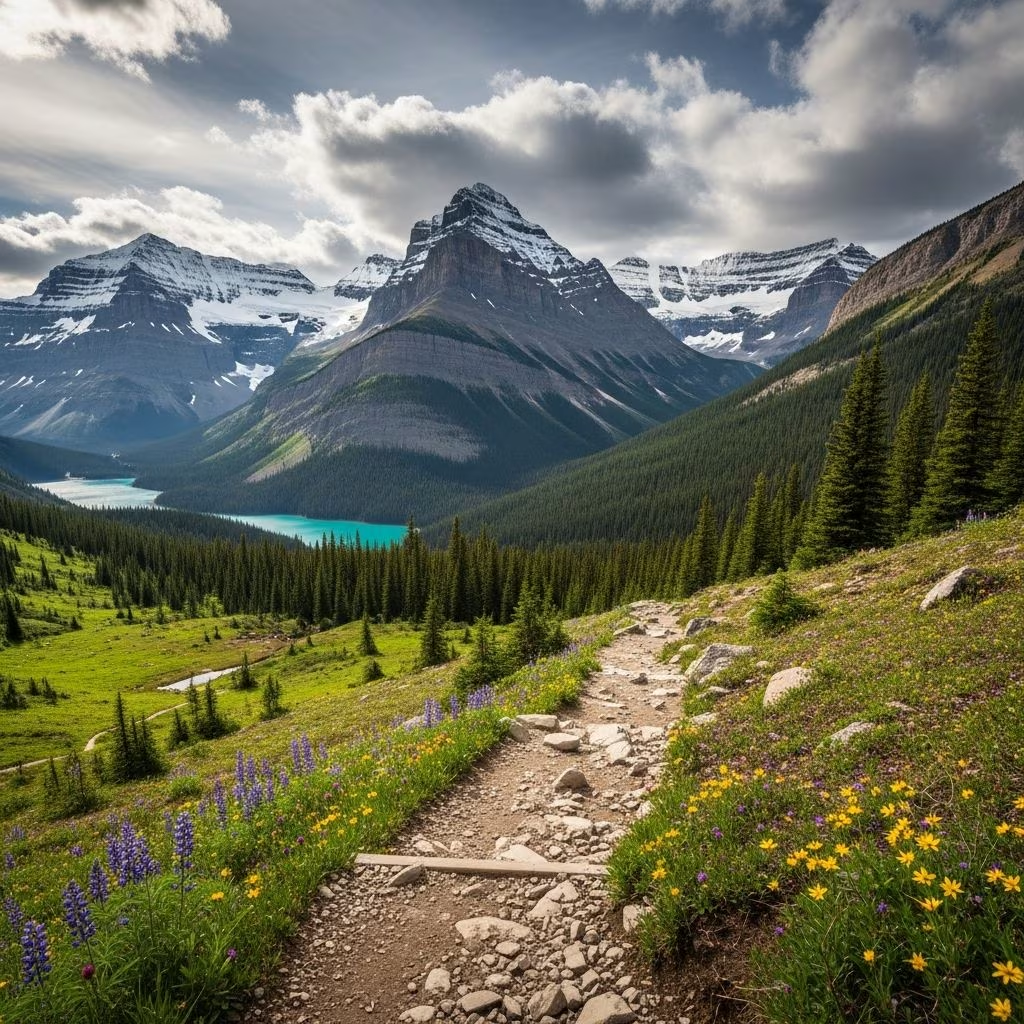
Explore Banff's diverse hiking trails from alpine meadows to glacial vistas. Find detailed guides for all skill levels.
 Travel Essentials
Banff National Park stands as one of North America’s most treasured wilderness destinations, drawing millions of visitors annually who seek to experience the majesty of the Canadian Rockies. The park’s extensive network of trails offers opportunities for hikers of every ability level, from leisurely walks along pristine shorelines to challenging alpine expeditions that test endurance and reward adventurers with breathtaking vistas. Whether you’re planning your first visit or returning for another adventure, understanding the diverse trail options available ensures you’ll find paths perfectly suited to your fitness level and interests.
The trails throughout Banff showcase the region’s geological diversity, from turquoise glacier-fed lakes to dense coniferous forests and dramatic rocky peaks. Each season transforms the landscape, presenting unique opportunities for exploration and photography. Before embarking on any hiking adventure, consulting Parks Canada for current trail conditions remains essential, as weather and seasonal factors significantly impact accessibility and safety.
For those seeking a balance between accessibility and accomplishment, Banff offers several outstanding moderate-difficulty options that showcase the park’s natural beauty without requiring extreme physical conditioning.
Johnston Canyon represents one of Banff’s most versatile hiking experiences, accommodating various fitness levels while offering distinct destinations along the same general route. The lower and upper waterfall sections provide accessible options for families and casual hikers, featuring well-maintained trails that wind through a scenic canyon with the soothing sounds of rushing water as your constant companion.
For those desiring additional challenge, the Ink Pots extension transforms the experience entirely. Beyond the upper falls, the trail ascends through forest terrain toward a series of naturally occurring mineral pools that display striking colors ranging from deep blue to turquoise. The complete journey to the Ink Pots covers approximately 5.4 kilometers from the parking area with 330 meters of elevation gain, requiring around four hours for a round trip. This extended route demands more physical effort than the waterfall sections but remains achievable for moderately fit hikers.
Larch Valley offers a hiking experience uniquely tied to seasonal timing, making it particularly spectacular during autumn months. The trail climbs 535 meters over 4.3 kilometers, presenting moderate difficulty suitable for hikers with reasonable fitness. What distinguishes this hike is the dramatic transformation of the larch trees, which shift from green to brilliant golden hues each September.
The stunning visual display during this narrow seasonal window makes Larch Valley a priority destination for fall hiking. The luminous colors create exceptional photography opportunities and provide a sense of visiting an enchanted landscape. Hikers should note that trail availability varies by season, and early planning helps ensure successful visits during the optimal window.
Located in the Icefields Parkway region, Chephren Lake provides moderate hiking with outstanding visual rewards. The trail gains elevation gradually, making it accessible to a broad range of hikers while still offering a meaningful physical challenge. The destination lake, framed by dramatic mountain peaks, provides an excellent location for rest and photography.
Banff’s most demanding trails test physical endurance while delivering some of the park’s most spectacular alpine experiences. These routes require solid fitness levels, proper preparation, and careful attention to changing mountain weather conditions.
The Cory Pass Circuit stands among Banff’s most challenging day hikes, presenting a 13-kilometer loop with 915 meters of elevation gain that demands 5-6 hours to complete. Located at the Fireside Day Use Area on the Bow Valley Parkway, this trail ascends steeply through forests of lodgepole and spruce before breaking into alpine terrain.
The reward for the considerable physical effort comes at the pass itself, where panoramic views of the surrounding peaks justify the exhausting climb. Experienced hikers describe this route as simultaneously grueling and deeply satisfying, offering a genuine sense of accomplishment upon completion. The trail’s difficulty stems not merely from elevation gain but from relentless steepness throughout significant portions of the ascent.
Devil’s Thumb represents another challenging option featuring 2,900 feet of elevation gain across 7.4 miles. This route combines the appeal of visiting the charming Lake Agnes Teahouse with spectacular views of Lake Louise seen from above. The changing scenery throughout the hike maintains interest during the sustained climb, while the summit views provide dramatic vistas worthy of the effort expended.
The moderate-to-difficult classification reflects both the distance and elevation challenge, making this hike suitable for hikers with solid mountain experience and reasonable conditioning. The teahouse stop offers a welcome psychological boost midway through the journey.
Combining these two destinations creates a full-day adventure requiring commitment and fitness. The trail climbs steeply through forest before emerging into meadows surrounding Bourgeau Lake. From this scenic destination, continuing 2.2 kilometers further and gaining 310 meters in elevation leads to Harvey Pass, where views of Mt. Assiniboine—known as “The Matterhorn of the Rockies”—reward the additional effort.
This route deserves a complete day dedicated to its exploration, allowing time for photography and rest stops while absorbing the spectacular alpine environment. The progression from dense forest to open meadows to high alpine terrain showcases Banff’s ecological diversity.
Not every hiking experience requires extreme physical challenge. Banff offers several accessible routes that deliver scenic satisfaction for visitors with limited time, varying fitness levels, or those new to mountain hiking.
Helen Lake provides accessible alpine hiking with rewards comparable to more difficult routes. The steady climb through forest terrain emerges into alpine meadows that remain above tree line, creating a dramatic transition in the landscape. The lake itself offers one of Banff’s premier lunch destinations, featuring exceptional views while consuming food with alpine scenery as your backdrop.
For those desiring additional distance, the trail continues beyond Helen Lake toward Dolomite Pass and Katherine Lake, where backcountry vistas extend across the expansive Banff wilderness.
The Plain of Six Glaciers trail represents a classic Banff experience accessible to hikers with moderate ability. This route begins at Lake Louise, one of the park’s most iconic locations, and extends to a teahouse destination offering both refreshment and outstanding mountain views. The 9.1-mile round trip with 1,929 feet of elevation gain classifies as moderate, suitable for hikers comfortable with sustained climbing over several hours.
Starting at Mount Norquay, Cascade Amphitheatre provides hiking through diverse terrain that showcases the region’s natural variety. The trail moves through forested sections before opening into alpine meadows framed by dramatic rocky peaks.
When time constraints limit extended hiking opportunities, several shorter routes deliver disproportionate scenic value, enabling visitors to experience Banff’s highlights efficiently.
Parker Ridge proves deceptively rewarding, appearing modest from the roadside yet delivering unexpected alpine experiences. The moderate difficulty classification proves accurate, with the trail ascending and crossing over the ridge’s far side to reveal views of Saskatchewan Glacier—a perspective unavailable from roadside locations. Multiple scenic perching spots along the ridge crest provide excellent photography and rest opportunities.
Bow Glacier Falls presents nature’s raw power through the dynamic interaction of flowing water and glacial ice. This trail offers impressive visual drama within a relatively accessible package, making it appealing to hikers seeking impact without extreme physical demands.
For visitors seeking solitude amid spectacular scenery, Healy Pass ranks among Banff’s quietest significant hiking destinations. The reduced crowds compared to more famous trails allow for peaceful alpine exploration and wildlife observation opportunities unavailable on busier routes.
| Season | Best Features | Challenges |
|---|---|---|
| Summer (June-September) | Maximum trail accessibility, warm weather, long daylight hours, wildflower blooms | Peak crowds, afternoon thunderstorm potential, mosquitoes in lower elevations |
| Fall (September-October) | Larch Valley color display, crisp air, fewer crowds than summer, brilliant light quality | Early snow at higher elevations, shorter daylight hours, unpredictable weather |
| Spring (April-May) | Awakening landscape, wildlife activity increases, moderate crowds | Unpredictable weather, many higher trails still snow-covered, mud at lower elevations |
| Winter (November-March) | Solitude, unique snow-covered vistas, quiet wilderness experience | Most trails closed or dangerous, extreme cold, reduced daylight, requires specialized gear |
Each season transforms Banff’s appearance and hiking possibilities. Summer offers the greatest trail accessibility and most predictable weather, though crowds peak during this period. Fall provides exceptional visual drama, particularly in valleys where larch trees display their golden transformation, while cooler temperatures reduce mosquito activity and enhance physical comfort during climbs. Spring presents emerging landscapes and increasing wildlife activity, though many higher-elevation trails remain snow-covered. Winter hiking demands specialized equipment and experience but rewards adventurers with profound solitude and unique alpine perspectives.
Mountain hiking demands respect for natural forces and careful preparation. Current trail conditions should always be confirmed with Parks Canada before departure, as snow, washouts, and closures significantly impact hiking safety and feasibility. Adequate water, weather-appropriate clothing, sun protection, and emergency supplies should accompany every hiker regardless of route difficulty or planned duration.
Weather in the mountains changes rapidly and unpredictably. Sunny conditions can transition to thunderstorms within minutes, creating dangerous situations on exposed ridges and peaks. Hikers should plan to begin descents by mid-afternoon, particularly during summer months when afternoon thunderstorms frequently develop. Proper footwear with good ankle support and traction proves essential given terrain variability and loose rock hazards.
Wildlife encounters, while generally non-threatening with appropriate precautions, require knowledge of safe practices. Bear bells or regular vocalizing alert animals to human presence, allowing them to avoid confrontation. Proper food storage and waste disposal protect both wildlife and human safety.
Summer (July-August) offers maximum trail accessibility and most predictable weather, while September provides excellent conditions with fewer crowds. Fall also features the spectacular larch tree color change in Larch Valley. Each season offers distinct advantages depending on your priorities regarding crowds, weather predictability, and scenic conditions.
Day hiking throughout Banff National Park requires only a valid park entrance pass. Backcountry camping requires obtaining wilderness passes through Parks Canada. Most day hikes accessible to casual hikers do not require special permits beyond the standard park entrance fee.
Yes, numerous family-friendly options exist throughout the park. Johnston Canyon’s waterfall sections, Helen Lake’s accessible alpine meadows, and various shorter routes offer opportunities for families. Trail selection should match children’s ages, fitness levels, and interests. Many families break hikes into segments with rest stops rather than completing full routes without interruption.
Essential items include adequate water (at least 2 liters), high-energy snacks, map and navigation tools, weather-appropriate clothing in layers, sun protection (sunscreen and hat), first aid supplies, and emergency communication device if available. Weather conditions change rapidly in mountains, making layered clothing essential regardless of starting conditions.
Famous trails like Lake Agnes and Plain of Six Glaciers experience significant crowds, particularly during peak summer months and weekends. Starting hikes very early in the morning helps visitors experience trails with smaller crowds. Less famous alternatives like Healy Pass and Waterfowl Lakes offer comparable scenic quality with substantially fewer people.
Banff National Park’s extraordinary trail network accommodates hikers with varying abilities, time constraints, and scenic interests. Whether pursuing challenging alpine expeditions, enjoying moderate-difficulty day hikes, or seeking accessible routes delivering disproportionate visual rewards, the park offers compelling options. Careful planning that considers your fitness level, available time, seasonal conditions, and weather forecasts ensures memorable experiences while maintaining safety. The Canadian Rockies await exploration—prepare thoroughly, respect the mountain environment, and discover why Banff remains one of the world’s premier hiking destinations.
