

 Travel Essentials
 Travel Essentials

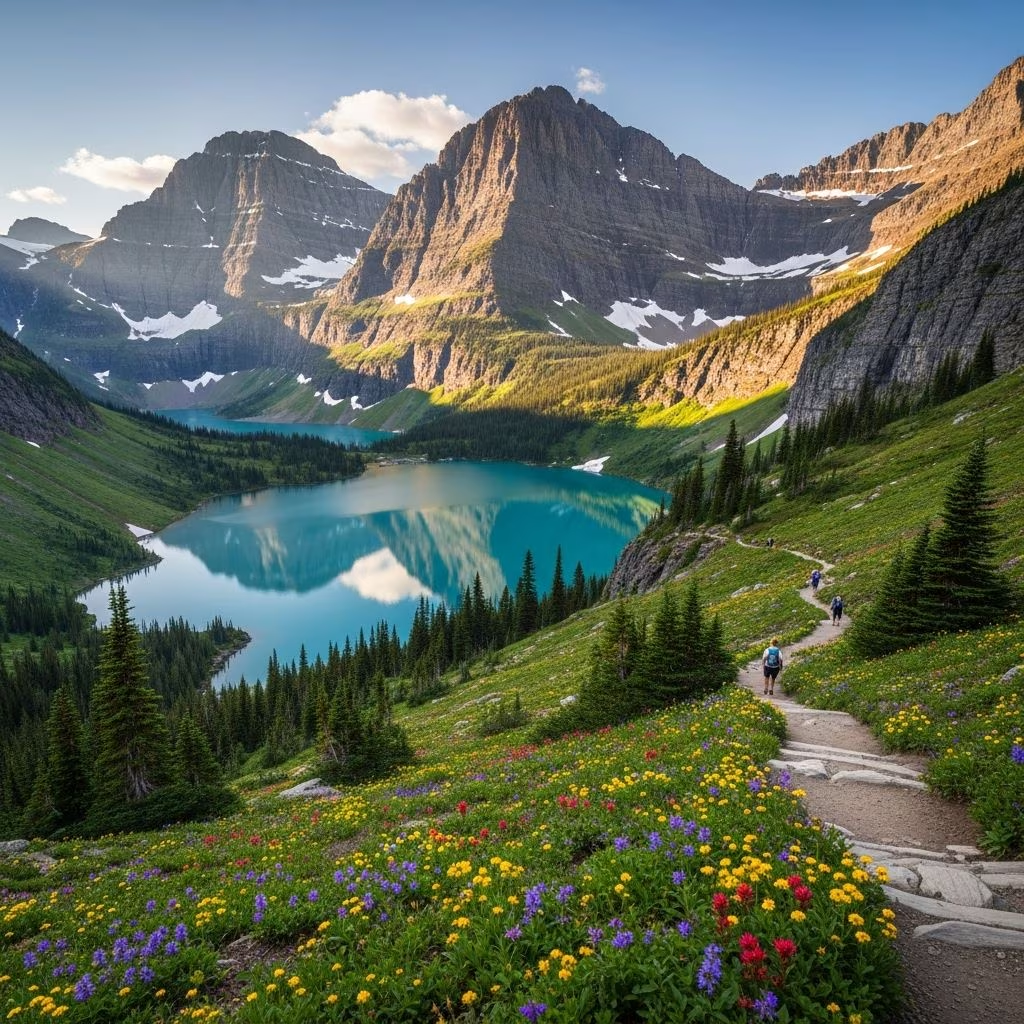
Find the best Glacier National Park hikes for every skill level, from family-friendly trails to challenging alpine routes and backpacking loops.
 Travel Essentials
Glacier National Park stands as one of North America’s most spectacular mountain destinations, offering an extensive network of trails that traverse alpine meadows, pristine lakes, and dramatic mountain peaks. With over 700 miles of maintained pathways, the park accommodates everyone from casual walkers seeking gentle nature strolls to experienced mountaineers pursuing challenging summit ascents. Understanding what each trail offers allows visitors to select routes that match their fitness levels and time constraints while maximizing their Glacier experience.
The hiking infrastructure at Glacier National Park reflects decades of thoughtful trail development and maintenance. The park’s geography creates distinct regions, each with its own character and appeal. Going-to-the-Sun Road, the iconic highway traversing the park’s heart, provides access to numerous trailheads and serves as the primary visitor corridor. The Many Glacier area concentrates some of the park’s most celebrated routes, while the Two Medicine region offers quieter alternatives with equally stunning scenery. Eastern approaches provide access to distinctive high-country experiences, and the western slopes feature dense forests and cascading waterways.
Before embarking on any hike, visitors should verify current trail conditions through official park sources, as seasonal closures and temporary restrictions due to wildlife activity or maintenance work frequently affect accessibility. Spring and early summer typically see some trails still under snow, while bear activity may necessitate temporary pathway restrictions during certain seasons.
Not every visitor arrives with extensive hiking experience or the stamina for all-day mountain adventures. Glacier National Park provides several excellent options for families and individuals seeking accessible outdoor experiences without compromising on scenic beauty.
Trail of the Cedars exemplifies the park’s commitment to accessibility while maintaining environmental beauty. This 0.9-mile circuit features a wheelchair-accessible boardwalk that winds through ancient cedar and hemlock groves, some among the oldest trees in the park. The trail crosses Avalanche Creek, where visitors observe the dramatic rushing water through a narrow gorge carved from rock. The short distance and minimal elevation gain make this suitable for very young children and those with mobility limitations.
Hidden Lake Overlook offers a moderate challenge with substantial rewards. This 3-mile roundtrip ascends 750 feet through subalpine terrain, culminating at a viewpoint overlooking the pristine waters below. Early morning visits maximize the likelihood of observing mountain goats on adjacent slopes. The trail’s moderate difficulty places it within reach of reasonably fit families, though altitude may present challenges for those unaccustomed to elevation.
Johns Lake Loop provides another family-appropriate option, delivering lake views and forest scenery without excessive elevation demands. This route works well as a secondary hike when combined with nearby attractions along major park corridors.
Visitors with moderate fitness and some hiking experience gain access to Glacier’s most iconic landscapes through intermediate-difficulty routes. These trails typically range from 8-12 miles roundtrip with elevation gains between 1,000-2,000 feet, achievable within a single day for reasonably fit individuals.
Avalanche Lake represents the quintessential Glacier experience for intermediate adventurers. The 4.5-mile roundtrip features only modest elevation gain while delivering dramatic alpine lake scenery surrounded by cascading waterfall runoff. The trail traverses a coniferous forest before opening into meadows that explode with wildflower color during mid-summer. Avalanche Lake tends toward crowding during peak season, particularly from late May through September, making early morning arrivals advisable for parking and solitude. Despite heavy use, the trail’s accessibility and stunning terminus reward the effort.
Iceberg Lake claims status as one of the park’s most iconic destinations. The 9.6-mile roundtrip winds through mixed forest and open meadows adorned with vibrant wildflowers, ascending 1,459 feet to reach a glacially-fed alpine lake dotted with floating ice fragments even into mid-summer. This region constitutes prime bear habitat; visitors frequently observe these magnificent animals on surrounding hillsides, necessitating heightened awareness and proper safety protocols. The relatively flat terrain through the approach section makes the cumulative elevation gain feel less daunting than the raw numbers suggest.
Grinnell Glacier justifies its status as the park’s most celebrated glacier destination. The approximately 10.5-mile roundtrip ascends steadily through increasingly spectacular terrain. The route incorporates passage along multiple alpine lakes, each more striking than the last, before reaching the glacier itself. This hike represents a comprehensive Glacier Park experience, combining forest walking, meadow traversal, lake views, and ultimate arrival at actual glacial ice. The full elevation gain of approximately 1,600 feet distributes across the gradual uphill gradient, making it achievable for most intermediate hikers with reasonable conditioning.
Experienced mountaineers and fit hikers seeking substantial challenges discover multiple options throughout Glacier. These routes demand physical endurance, route-finding skills, and tolerance for potentially exposed or rocky terrain.
Mount Siyeh stands among the park’s most demanding and rewarding summits. The approximately 10-mile roundtrip involves roughly 3,800 feet of elevation gain along steep, often rocky terrain. Much of the route requires scrambling up loose rock (scree) and boulder fields, with sections of actual rock climbing for those seeking maximum difficulty. The rewards justify the effort: the summit viewpoint drops 4,000 feet above Cracker Lake, one of the park’s most dramatic vertical perspectives. This hike demands rock scrambling experience and excellent physical conditioning; casual hikers should avoid this route.
Ptarmigan Tunnel combines moderate-to-difficult hiking with genuinely unique features. The 10.7-mile roundtrip includes a 240-foot tunnel excavated through solid rock, constructed during the 1930s as part of the Civilian Conservation Corps initiatives. The route traverses gorgeous subalpine meadows and runs along cliff edges before reaching the tunnel entrance. This combination of natural beauty and historical engineering creates a distinctive experience unavailable on most park trails.
Highline Trail delivers one of the park’s most celebrated alpine experiences. The 11.8-mile route doesn’t form a true loop despite its name, instead following a one-way trajectory above portions of the Going-to-the-Sun Road. The path runs through continuous alpine territory with expansive views across Logan Pass and surrounding valleys. This hike’s popularity reflects both its accessibility and the genuinely outstanding scenery it provides, particularly the seemingly unobstructed panoramic vistas available throughout most of the journey.
Beyond day-hiking options, Glacier National Park offers multi-day backpacking opportunities for those willing to carry overnight gear. The Pitamakan-Dawson Loop ranks among the entire national park system’s most sought-after backpacking circuits. This demanding loop combines nonstop alpine scenery, remote high-country terrain, and significant elevation changes requiring strong fitness and backpacking experience. The route typically requires multiple days to complete and necessitates careful preparation and adequate conditioning.
Piegan Pass offers another alpine-focused experience with nonstop high-country views. These elevated terrain routes provide different perspectives than lower forest-based pathways, with expansive vistas and abundant wildflower displays during mid-summer months.
Different park regions emphasize distinct environmental features and experiences:
Mountain environments demand appropriate preparation and awareness. The park’s elevation creates rapidly changing weather conditions; sudden temperature drops, afternoon thunderstorms, and unpredictable wind gusts occur regularly even during summer months. Hikers should carry adequate layers, rain protection, and sun defense regardless of morning conditions.
Wildlife encounters represent another significant consideration. Bears inhabit all park regions; visitors must maintain heightened awareness, carry bear bells or make noise periodically, and understand proper response protocols. Mountain goats, marmots, ground squirrels, and numerous bird species provide wonderful viewing opportunities without requiring the caution demanded by bear encounters.
Temporary trail closures frequently occur due to bear activity, particularly as cubs emerge and establish feeding territories. Checking current conditions before arrival prevents disappointment. Water crossings, especially early in the season when snowmelt increases stream volume and velocity, may necessitate route alternatives or postponement of specific hikes.
Trail conditions and accessibility vary significantly throughout the year. Spring transitions typically see lower-elevation routes clearing by May, while high-country paths remain snow-covered into July. Summer provides the most favorable conditions, though afternoon thunderstorms occur regularly. Fall offers cooling temperatures and fewer crowds, though some higher routes may have early snow by September. Winter effectively closes most park trails except for specific routes managed for winter recreation.
