

 Travel Essentials
 Travel Essentials

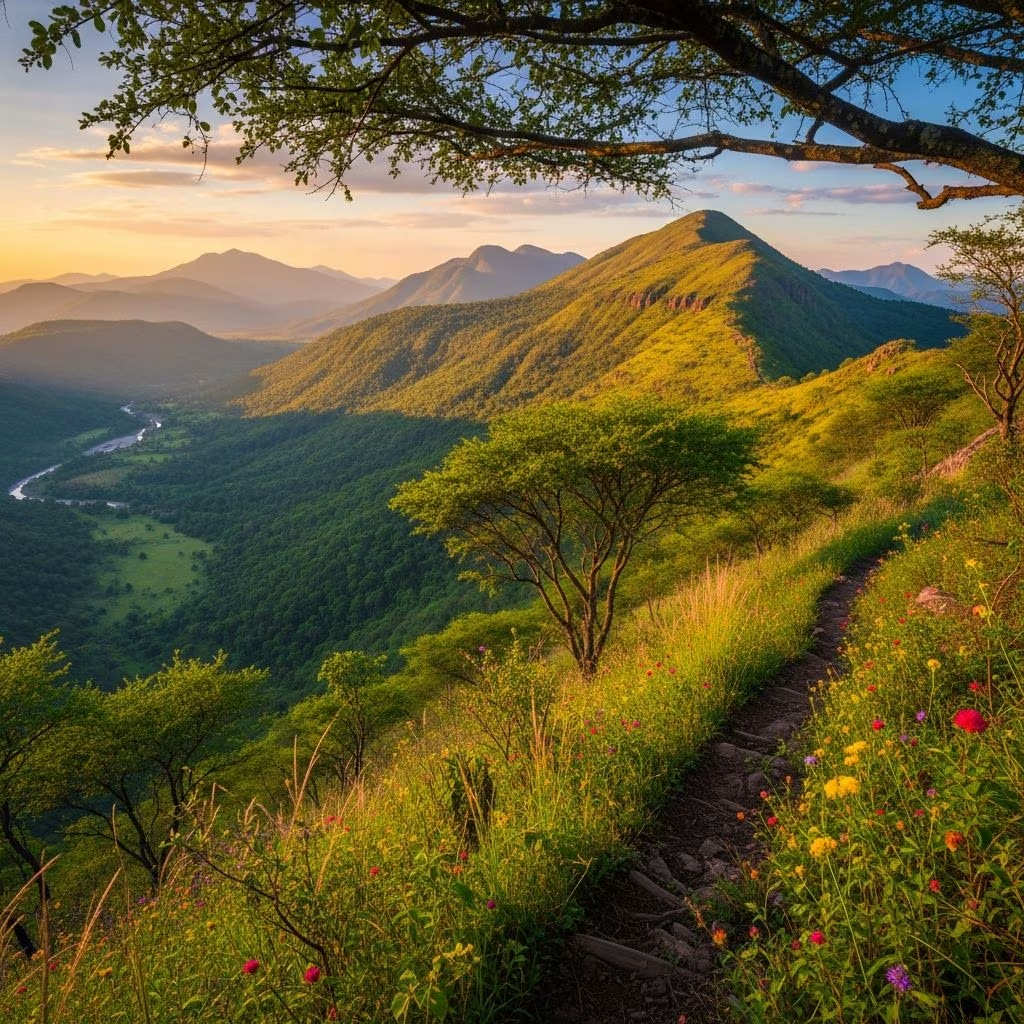
Discover the best hiking routes in Malawi, featuring Mount Mulanje, Nyika Plateau, Zomba, and more for unforgettable outdoor adventures amid wildlife and stunning vistas.
 Travel Essentials
Malawi, often called the Warm Heart of Africa, offers some of the continent’s most rewarding hiking experiences. Nestled between Lake Malawi and dramatic highlands, the country boasts diverse landscapes from granite massifs to rolling plateaus teeming with wildlife. Whether you’re scaling peaks or strolling through misty forests, these trails provide immersion in pristine nature, cultural encounters, and physical challenges suitable for various skill levels.
Hiking here stands out for its accessibility and variety. Unlike overcrowded sites like Kilimanjaro, Malawi’s trails see fewer visitors, ensuring a more intimate connection with the environment. Expect encounters with unique flora, such as ancient cedars on Mulanje, and fauna including zebras on Nyika or birds in Zomba. Trails cater to day-trippers and multi-day trekkers, with lodges and campsites enhancing comfort. Always hire local guides for safety, navigation, and insights into rural life.
Mount Mulanje, Malawi’s highest range at 3,002 meters, is an isolated granite inselberg rising sharply from tea plantations. Known locally as the ‘Island in the Sky,’ it features sheer cliffs, river valleys, and plateau views that rival world-class destinations. Trails range from gentle walks to epic traverses, drawing climbers and hikers alike.
The Chambe Basin route, a moderate 12km (7.5-mile) path taking 5-6 hours, starts at Likhubula Forestry Office. Wind through forests along rushing streams to a rocky basin overlooking the plateau. Detour to Likhubula Falls for a refreshing swim in its natural pool. For summit seekers, extend to Chambe Peak or tackle the 3-day Chaguru Peak hike via gullies and caves.
| Trail | Distance | Duration | Difficulty |
|---|---|---|---|
| Chambe Basin | 12km | 5-6 hours | Moderate |
| Porter’s Race Loop | ~20km | 8 hours | Challenging |
| Grand Traverse | Full massif | 5 days | Expert |
Stay in mountain huts managed by the Mountain Club of Malawi. Pack layers for sudden weather shifts; mist can envelop the plateau quickly.
In northern Malawi, Nyika National Park’s plateau at 2,600 meters offers vast grasslands, rolling hills, and herd sightings. Nicknamed for its ‘nyika’ (wilderness), this area feels otherworldly with crystal air and panoramic vistas. Hiking here combines scenery with safari-like wildlife viewing.
The star trek is the 40km (25-mile), 3-day Nyika-Livingstonia Trail, linking Chelinda Camp to Livingstonia town. Ascend from savanna to escarpment edges, camping amid wildflowers. Guides from lodges handle logistics, including porters. Day hikes around Nyika explore pine forests and rocky outcrops, ideal for birders spotting rare species.
Zomba Plateau, at 2,080 meters, crowns a lush escarpment south of Blantyre. Cool climate, cedar groves, and waterfalls make it a hiker’s haven. Trails circle the plateau, passing dams, viewpoints, and the Emperor’s View—once a colonial overlook.
Popular options include the 11.8km loop from Ku Chawe Inn to Williams Falls and Mulunguzi Dam (3-4 hours, moderate). Steeper paths lead to Mulumbe Peak or Chingwe’s Hole, offering Shire Valley panoramas. Guided walks from Luwawa Forest Lodge feature marked paths and birdwatching hotspots with 280+ species.
For variety, combine with plateau drives then hike to hidden pools. Monkeys and antelope frequent the area; stick to paths to minimize impact.
Near Livingstonia, the Rift Valley Escarpment drops dramatically to Lake Malawi. The 6km (3.7-mile) Manchewe Waterfalls hike (3 hours, moderate) starts from eco-lodges like Mushroom Farm. Follow trails through forests to cascading falls, with vertigo-inducing valley drops.
This route blends nature and history; nearby Livingstonia mission offers context on missionary past. Arrange guides on-site for safety on slippery sections. Extend to plateau walks for full-day immersion.
Just 35 miles from Lilongwe, this 1,650m reserve has seven well-signposted trails from easy ambles to strenuous climbs. Base at Dzalanyama Forest Lodge for day trips or overnights. Ideal for beginners or urban escapees, with biking options too.
Near Blantyre, Mount Soche’s evergreen forests host blue monkeys and birds. Nkhoma, an hour from Lilongwe, peaks at 1,743m with steep finales rewarding hikers with capital views. Less crowded than majors, perfect for training.
Preparation ensures enjoyment. Dry season (May-Oct) avoids rains; permits needed for parks via Malawi Department of National Parks. Hire certified guides through lodges or clubs—mandatory in wildlife areas. Pack: sturdy boots, rain gear, water filter, insect repellent, first-aid, and high-energy snacks.
| Item | Why Essential |
|---|---|
| Hiking poles | Steep, uneven terrain |
| Malaria prophylaxis | Tsetse flies in lowlands |
| Headlamp | Early starts/late finishes |
| Cash (MWK) | Remote areas, no cards |
Altitude sickness rare but monitor on Mulanje. Support Leave No Trace: bury waste, avoid shortcuts. Communities benefit from guided treks funding conservation.
May to October offers dry trails and clear views; avoid wet season floods.
Yes in national parks for wildlife safety; recommended everywhere for navigation and local knowledge.
Mulanje has huts; Nyika/Zomba offer campsites/lodges. Book ahead.
Short falls trails yes; peaks require experience.
Zebras, monkeys, birds; elephants rare but possible—guides essential.
Beyond basics, try Viphya Forest’s 3-day Kawandama to Kande Beach route: forests to lake shores. Sapitwa Peak (Mulanje’s roof) demands 3 days full-board. These build endurance amid isolation.
