

 Travel Essentials
 Travel Essentials

Explore San Francisco's exceptional hiking opportunities, from iconic coastal trails to mountain peaks, offering diverse terrain within minutes of the city.
 Travel Essentials
The San Francisco Bay Area has established itself as one of North America’s most compelling destinations for hiking enthusiasts. What distinguishes this region from other outdoor recreation hubs is its remarkable ability to merge vibrant urban culture with pristine natural landscapes. Within a single geographic zone, visitors and residents can experience everything from dramatic coastal vistas to ancient redwood groves, alpine meadows, and densely forested canyons—often within an hour of downtown San Francisco.
The city’s hiking appeal extends far beyond mere proximity to nature. San Francisco’s consistently mild climate allows year-round trail exploration, while its diverse topography ensures that hikers of all ability levels can find suitable routes. Whether you’re seeking an urban escape through hidden gorges or planning a challenging ascent to mountain summits, the region delivers opportunities that few American cities can match.
San Francisco’s location on a peninsula jutting into the Pacific Ocean creates distinctive geographical features that make hiking particularly rewarding. The Bay Area’s natural architecture includes volcanic peaks, coastal bluffs, protected valleys, and dense forest corridors that have remained relatively undisturbed. This diversity means that consecutive hikes can offer completely different ecosystems and visual experiences.
From the city’s urban boundaries, hikers can venture south toward Big Sur, home to some of California’s most photographed coastline, or head north across the Golden Gate Bridge into the Marin Headlands. The eastern direction leads to the Berkeley Hills and Mount Diablo region, while inland routes access redwood forests and mountain ranges. This multi-directional access to varied terrain is relatively uncommon among major U.S. cities.
The San Francisco Bay shoreline offers some of the most photographed hiking experiences in the world. The Lands End Trail, beginning at Ocean Beach near the iconic Sutro Baths, provides one of the region’s most recognizable routes. This coastal path traces the northwestern edge of San Francisco, offering progressively better views of the Golden Gate Bridge as hikers move eastward. The trail’s relatively accessible difficulty makes it suitable for families and casual walkers while still delivering the dramatic scenery that defines San Francisco’s outdoor reputation.
Beyond Lands End, the Coastal Trail system extends for miles along the bay’s perimeter. These routes combine urban park amenities with genuine wilderness feelings, creating an unusual hybrid experience where hikers may encounter sea cliffs, tide pools, and wind-sculpted cypress trees while remaining within city limits. Many coastal routes are relatively flat, making them accessible to those with limited mountaineering experience while still providing authentic outdoor recreation.
For hikers seeking elevation gain and summit experiences, the region provides multiple options. Mount Tamalpais State Park, located in Marin County just across the Golden Gate Bridge, stands as the dominant peak in the region’s consciousness. The mountain’s prominence, accessibility, and trail network make it a destination that can occupy hikers for multiple visits. Routes vary from gentle ridge walks to steep, challenging ascents, accommodating different fitness levels and time commitments.
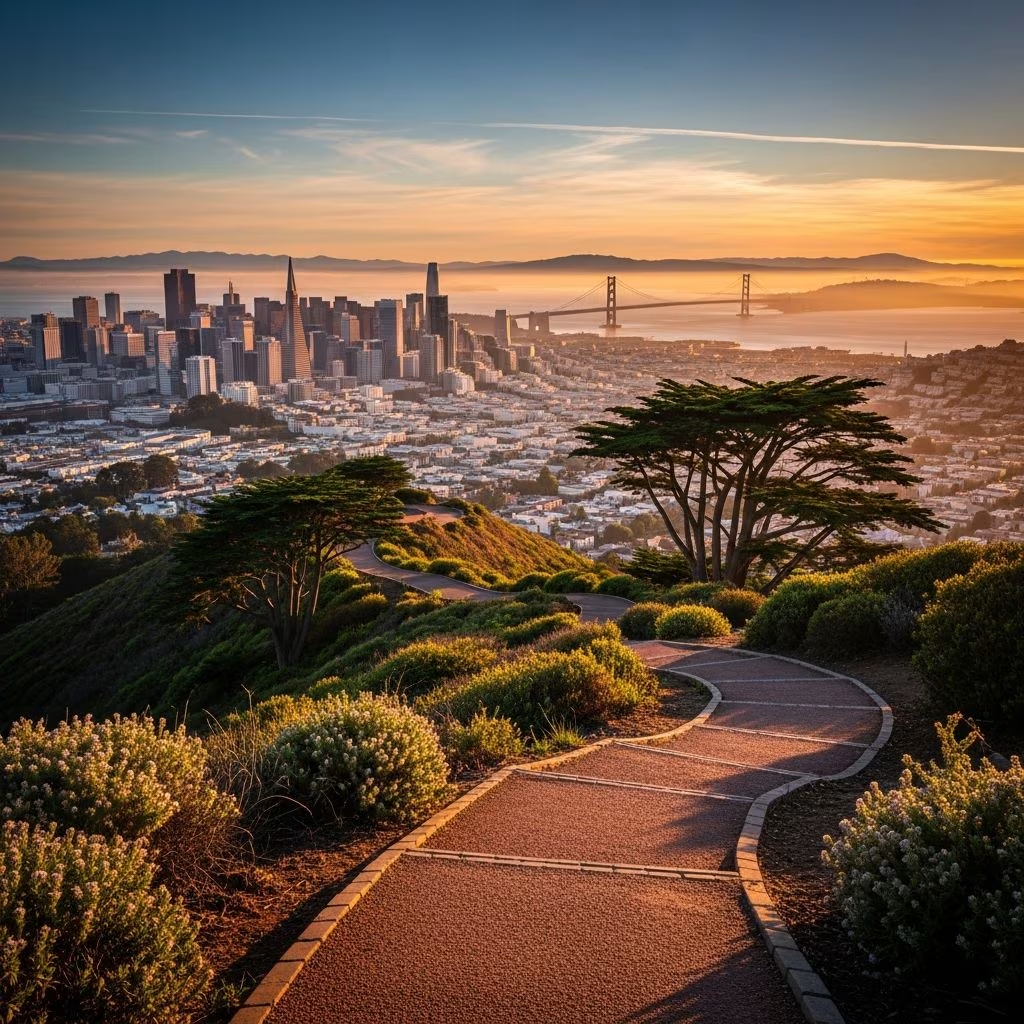
Within San Francisco itself, Twin Peaks offers an urban summit experience. Rising several hundred feet above the surrounding cityscape, Twin Peaks can be accessed through quiet canyon corridors that barely suggest the city’s presence until hikers emerge above street level. The summit provides 360-degree views encompassing the Golden Gate Bridge, downtown skyline, and the surrounding bay geography.
The Berkeley Hills and Mount Diablo region, accessible within 45 minutes to an hour from downtown San Francisco, provide additional high-elevation options. Panoramic Hill, located in the Berkeley Hills, offers views of both San Francisco and Oakland, creating a geographical perspective that demonstrates the extent of the region’s urban development.
Redwood forests, once dominant across Northern California’s landscape, survive in protected groves throughout the Bay Area. These trails provide an entirely different hiking experience compared to coastal or alpine routes. Walking through ancient redwood stands creates an almost cathedral-like atmosphere, with towering trees that predate the American founding era. The Sutro Forests within San Francisco provide native redwood habitat within the city itself, while more extensive groves exist throughout Marin and Sonoma counties.
Canyon-bottom trails offer another distinct experience. The San Francisco Parks and Recreation trail, despite its short length, descends into a gorge where the surrounding city completely disappears from view and sound. These immersive forest and canyon routes provide psychological restoration that many hikers seek from outdoor recreation, despite being geographically close to urban centers.
A defining characteristic of San Francisco’s hiking ecosystem is that virtually all major trails can be completed in single-day excursions. This accessibility means that local residents can regularly engage in hiking without requiring overnight trips or extensive time commitments. The region’s public transportation infrastructure, while centered on urban transit, does connect to many trailheads, though personal vehicles remain the most convenient access method for most hikes.
The following table presents popular day-hike options organized by characteristics:
| Trail Name | Location | Difficulty Level | Key Features |
|---|---|---|---|
| Lands End | Western San Francisco | Easy to Moderate | Coastal views, Golden Gate Bridge perspective |
| Mount Tamalpais Summit | Marin Headlands | Moderate to Strenuous | Bay views, alpine meadows |
| Tennessee Valley Trail | Mill Valley | Easy to Moderate | Redwoods, creek access |
| Twin Peaks | Central San Francisco | Easy to Moderate | City panorama, urban proximity |
| Panoramic Hill | Berkeley Hills | Moderate | Dual-city views, oak woodland |
San Francisco’s famous microclimate, characterized by cool temperatures and occasional fog even during summer months, creates distinct hiking conditions. The Bay Area’s consistently mild temperatures mean that hiking remains comfortable throughout the year, unlike regions where winter conditions render trails impassable or summer heat becomes oppressive. Spring and fall offer particularly pleasant hiking weather, though crowds may be lighter during winter months when trails remain accessible and weather patterns remain generally favorable.
Coastal trails can be windier and cooler than inland routes, particularly where exposed ridgelines face the Pacific. Inland forest trails typically remain warmer and offer protection from wind. Understanding these microclimatic variations helps hikers select appropriate routes based on seasonal conditions and personal preferences.
Unlike wilderness areas requiring extensive preparation, San Francisco’s hiking destinations typically include developed trailheads with parking, restroom facilities, and visitor information. Many trails connect to established neighborhoods with restaurants, cafes, and retail establishments, making before-and-after meal experiences part of the hiking outing.
Golden Gate Park, encompassing 1,017 acres within the city, serves as an urban recreation hub with multiple trail options, museums, gardens, and picnic facilities. The park’s infrastructure supports both serious hikers and casual walkers, making it accessible to diverse visitor populations.
Spring (March-May) and fall (September-November) offer optimal conditions with pleasant temperatures and lower fog cover. However, the Bay Area’s mild climate makes hiking accessible year-round.
Most major hiking destinations are within 30 minutes to one hour from downtown San Francisco, making them ideal for day trips without requiring extensive travel time.
Yes. Routes like Lands End, Twin Peaks, and portions of the Coastal Trail offer easy to moderate difficulty levels suitable for beginners, while experienced hikers can find challenging options throughout the region.
Some trailheads are accessible via Bay Area public transit, though personal vehicles provide more convenient access to most hiking destinations.
The region supports deer, coyotes, birds of prey, and various smaller mammals. Most wildlife avoids human contact, but hikers should maintain awareness and follow safety guidelines.
San Francisco’s emergence as a premier hiking destination reflects more than simply the proximity of trails to urban areas. The region’s combination of diverse terrain, accessible trail systems, favorable climate, and integrated outdoor culture creates an environment where hiking becomes a natural urban lifestyle component rather than a specialized recreational pursuit. Hikers can experience genuine wilderness encounters—encountering ancient redwoods, dramatic coastal cliffs, and panoramic mountain views—while remaining close to world-class restaurants, cultural institutions, and urban amenities. This integration of nature and culture distinguishes San Francisco’s hiking scene and explains its appeal to both local residents and visiting outdoor enthusiasts seeking comprehensive recreation experiences.
