

 Travel Essentials
 Travel Essentials

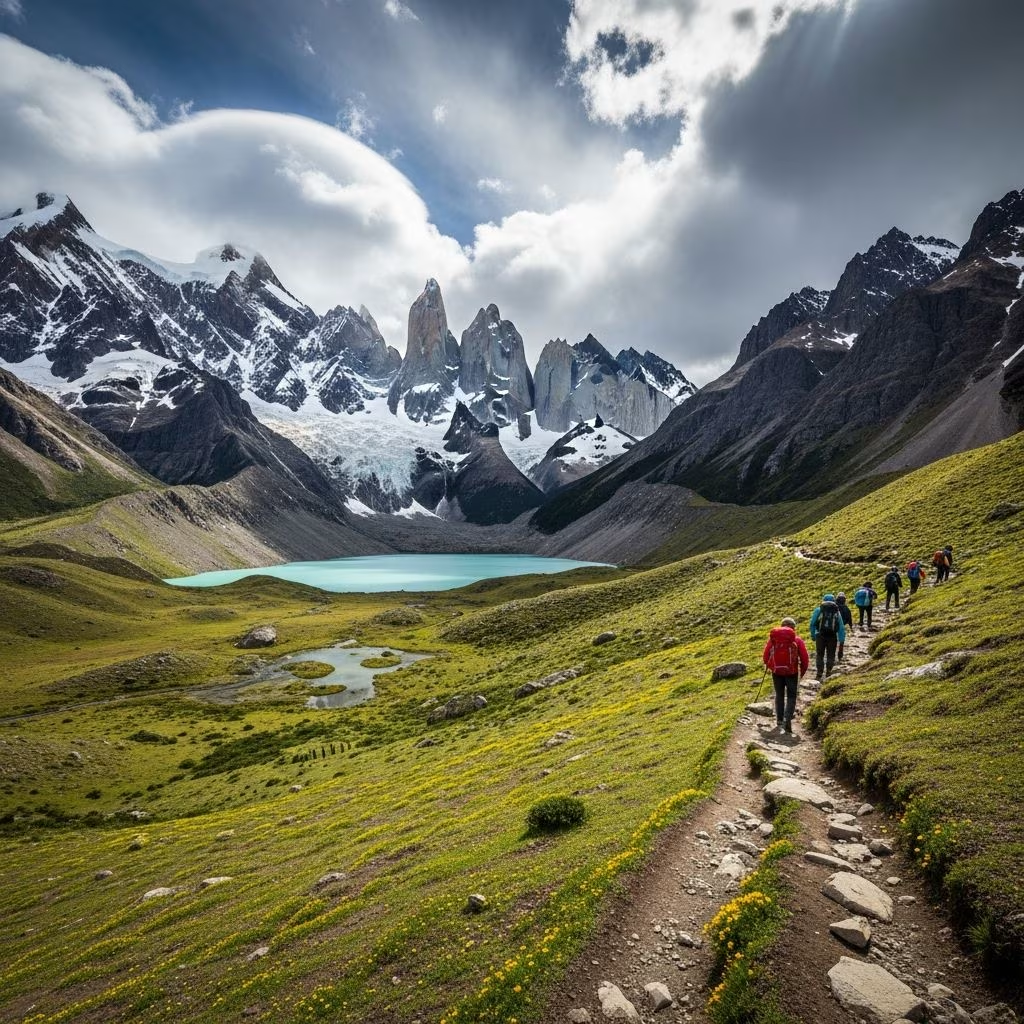
Discover Argentina's top trekking destinations spanning Patagonia's granite peaks, the Lake District's alpine scenery, and Tierra del Fuego's windswept wilderness.
 Travel Essentials
Argentina presents hikers with an extraordinary range of trekking opportunities that span multiple ecosystems and challenge levels. From towering Andean peaks to windswept southern landscapes, the country offers adventures suitable for both casual day-trippers and experienced mountaineers. The diversity of terrain across Argentina’s regions means that trekkers can experience dramatically different environments within a single country, making it an ideal destination for those seeking varied outdoor experiences.
Argentina’s trekking landscape divides into several distinct regions, each offering unique characteristics and attractions. The northwestern region features dramatic mountain ranges and deep canyons carved by centuries of geological activity. Central areas showcase the country’s famous Lake District, where alpine scenery combines with accessible infrastructure. The southern reaches present the wild, untamed landscapes of Patagonia and Tierra del Fuego, where visitors encounter some of South America’s most iconic peaks and pristine wilderness.
The seasonal timing of hikes varies significantly across these regions. Most trekking in Patagonia occurs from November through March, when weather patterns stabilize and snow retreats to higher elevations. This geographical and seasonal diversity requires careful planning to match personal fitness levels, available time, and desired experiences with appropriate trails.
The El Chaltén region has established itself as Argentina’s premier hiking destination, anchored by the distinctive silhouette of Mount Fitz Roy. The town of El Chaltén serves as the logistical hub for numerous trekking opportunities, ranging from moderate day hikes to challenging multi-day expeditions. The region’s popularity stems from the concentration of world-class trails within close proximity and the stunning granite peaks that dominate the landscape.
Several signature routes in this area showcase different aspects of Patagonian scenery. Trails leading to the Laguna de Los Tres provide intimate views of the iconic Fitz Roy peak, with most of the elevation gain concentrated toward the hike’s conclusion. The journey involves passage through beech forests and across open plateaus, offering varied terrain throughout. The Laguna Torre trail presents an alternative perspective on the region’s dramatic geography, winding through dense vegetation before opening onto views of glacial-fed waters and towering granite formations.
For those seeking a less crowded experience, the Piedras Blancas route offers a gentler introduction to the region’s scenery. This trail provides glacier views and opportunities for wildlife observation, including sightings of Andean condors soaring above the valley. The moderate difficulty rating makes it accessible to hikers with varying fitness levels while maintaining the visual grandeur that defines the area.
El Calafate, situated near the Perito Moreno Glacier, represents another crucial Patagonian trekking destination. Beyond the glacier viewing platforms that attract most visitors, the surrounding region offers trekking opportunities that combine mountain scenery with the rare spectacle of an active, advancing glacier. The contrast between mountainous terrain and glacial features creates a landscape unlike most other trekking destinations.
The Lake District’s Parque Nacional Nahuel Huapi accommodates trekkers seeking multi-day expeditions with established support systems. The park features numerous campsites and staffed mountain refuges known as *refugios*, which distinguish this region from more remote trekking areas. This infrastructure allows visitors to experience wilderness conditions while maintaining access to meals, shelter, and guidance.
Treks within Nahuel Huapi typically span one to three days, accommodating various time constraints and fitness levels. The terrain combines dense beech forests with alpine meadows and crystalline lakes. Water sources are reliable throughout the park, and trail marking provides clear navigation. The established infrastructure makes this region particularly suitable for international visitors unfamiliar with Argentine trekking conditions.
The region’s popularity among visitors to Argentina’s Lake District means trails experience moderate foot traffic during peak seasons. Despite increased usage, the park’s size ensures that solitude remains achievable for those willing to venture beyond the most famous routes. The combination of accessibility and wilderness character makes Nahuel Huapi an excellent compromise for trekkers seeking structured experiences without excessive crowding.
Parque Nacional Tierra del Fuego, situated near the city of Ushuaia at South America’s southern tip, offers distinctly different trekking from other Argentine regions. The park’s ecosystem features windswept tundra, thick beech forests, pristine lakes, and pebble beaches—an environment shaped by extreme southern latitudes and Atlantic and Pacific Ocean influences.
Unlike most Argentine trekking destinations requiring multi-day commitments, Tierra del Fuego emphasizes day hikes accessible from Ushuaia. The Senda Hito XXIV route provides a short, internationally significant experience by reaching the Argentina-Chile border. The Cerro Guanaco peak hike offers elevated perspectives over the surrounding landscape, including views of Lago Roca and distant mountain ranges. For those seeking longer day excursions, the Senda Costera traces shorelines where terrestrial and marine landscapes merge.
The park’s accessibility from Ushuaia makes it suitable for visitors with limited time or those whose primary travel focus involves other aspects of the region. However, the unique ecosystem and extreme latitude make it compelling for experienced hikers seeking landscapes fundamentally different from more famous destinations. The challenging weather conditions—particularly strong winds and rapidly changing conditions—demand appropriate preparation despite the relatively short distances involved.
Cerro Aconcagua stands as the tallest mountain in the Western Hemisphere, yet its accessibility to non-technical mountaineers distinguishes it among extreme altitude treks. Located northwest of Mendoza in Argentina’s central region, Aconcagua attracts climbers worldwide despite its elevation exceeding 6,900 meters.
The Normal Route ascending Aconcagua requires 13 to 15 days and demands genuine mountaineering fitness rather than technical climbing expertise. The extended timeframe reflects the climb’s altitude demands—the slow pace allows physiological acclimatization to extremely thin air. Most participants experience altitude effects significantly during the expedition’s final stages.
This expedition represents the most challenging option among Argentina’s premier treks. Participants typically train for months beforehand, and many engage professional guiding services. The extraordinary altitude and multi-week commitment place Aconcagua in a different category from day hikes or moderate multi-day treks. Successfully reaching the summit provides an experience of genuine mountaineering achievement that justifies the substantial preparation required.
Argentina’s northwestern regions present trekking opportunities centered on geological formations and cultural heritage sites rather than prominent peaks. Quebrada de Humahuaca, a UNESCO World Heritage site, combines dramatic mountain scenery with archaeological significance and indigenous cultural presence. The region’s gorges, canyons, and high-altitude plateaus create landscapes that appear almost otherworldly.
Trekking in this region often involves lower-altitude routes compared to Patagonian or Andean expeditions, yet the terrain can prove challenging due to exposed conditions and limited infrastructure. The cultural dimension distinguishes northwestern Argentina from purely wilderness-focused destinations—hikers encounter indigenous communities, pre-Columbian ruins, and colonial architecture woven into the landscape.
The region’s geology reflects extraordinary mountain-building processes visible in exposed rock strata and dramatic formations. Canyons and gorges reveal millions of years of geological history, with Las Conchas Gorge and similar formations showcasing nature’s sculptural power. These geological features attract trekkers interested in landscape formation and Earth science alongside traditional mountain scenery.
Successful Argentine trekking requires matching trips to seasonal windows. Patagonian trekking typically concentrates between November and March, when southern summer conditions provide the most reliable weather. Winter conditions in Patagonia involve significant snowfall and extreme weather, making most trails hazardous for non-specialist trekkers. The Lake District experiences longer trekking seasons due to lower elevations, though some passes remain snow-covered into November.
Northwestern Argentina’s trekking season differs from southern regions, with autumn and spring offering ideal conditions. Summer heat in these lower-altitude zones can prove challenging, while winter brings temperature extremes unsuitable for extended wilderness travel. Understanding regional climate patterns prevents mismatched expectations and dangerous conditions.
Argentine trekking routes span an enormous range of difficulty. Day hikes in Tierra del Fuego require basic fitness and hiking experience. Multi-day treks in Nahuel Huapi demand moderate cardiovascular fitness and backpacking experience. Aconcagua requires mountaineering-level conditioning and acclimatization capability. Honest self-assessment of fitness prevents overcommitting to inappropriate routes.
Elevation significantly impacts difficulty independent of distance. Low-elevation coastal routes feel dramatically easier than high-altitude mountain trails covering identical distances. Previous experience at elevation provides valuable perspective for predicting personal performance.
Argentine trekking destinations vary tremendously in available support. El Chaltén provides the most extensive tourist infrastructure with numerous accommodations, restaurants, and outfitter services. Professional guides are readily available for most popular routes. Conversely, remote northwestern and southern destinations offer minimal infrastructure, requiring self-sufficiency and thorough preparation.
Refugios throughout the Lake District and some Patagonian routes provide meals and shelter, eliminating needs for camping equipment on certain treks. This distinction dramatically simplifies logistics for those lacking camping experience or equipment. Understanding what services exist at specific destinations prevents arriving unprepared for actual conditions.
Argentina’s trekking regions support diverse wildlife from Andean condors soaring above Patagonian valleys to pumas inhabiting remote mountain areas. Responsible hiking practices minimize environmental impacts and maximize chances of meaningful wildlife observation without disruption. Numerous hikers moving through habitats require collective consciousness about environmental stewardship.
Flora varies dramatically across regions, from dense temperate rainforests to sparse high-altitude vegetation. Understanding these ecosystems enriches trekking experiences while fostering appreciation for conservation needs. Many routes traverse ecologically sensitive areas where access management protects vulnerable habitats.
Argentina’s trekking opportunities span an unprecedented range of environments, difficulties, and experiences. Whether seeking brief encounters with world-famous peaks, extended wilderness immersion, or high-altitude mountaineering achievement, Argentina delivers exceptional trekking suited to virtually any preference and fitness level. The combination of natural grandeur, established infrastructure in key areas, and increasingly professional guiding services positions Argentina among the world’s premier trekking destinations. Matching personal capabilities and objectives with appropriate routes ensures transformative mountain experiences in one of South America’s most diverse natural settings.
