

 Travel Essentials
 Travel Essentials

A comprehensive guide to South Korea's premier hiking destinations, from coastal peaks to alpine ridges, with practical tips for all skill levels.
 Travel Essentials
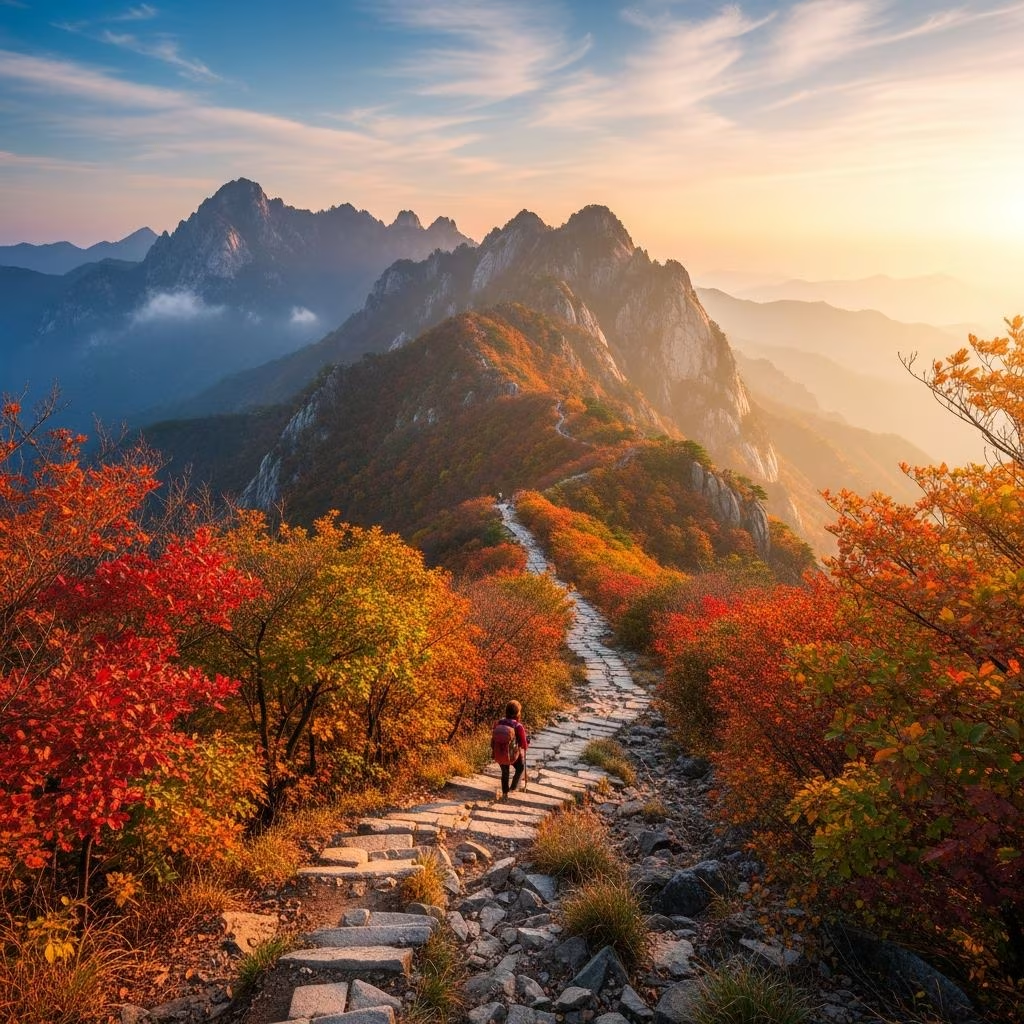
South Korea’s mountainous terrain presents an extraordinary array of hiking opportunities that range from accessible day trips near urban centers to demanding multi-day expeditions across remote wilderness areas. The country’s well-maintained trail systems, spiritual mountain temples, and dramatic geological formations make it an increasingly popular destination for trekkers of all abilities. Whether you’re seeking sunrise vistas from alpine peaks or peaceful forest walks through ancient Buddhist sanctuaries, South Korea’s mountain regions deliver unforgettable experiences that blend natural beauty with cultural significance.
Hallasan stands as South Korea’s highest mountain at 6,398 feet (1,950 meters) and holds profound cultural significance for the nation. Located on Jeju Island, ascending this iconic peak represents a rite of passage for many Korean hikers and visitors alike. The mountain’s accessibility combined with its elevation gain creates a satisfying challenge that rewards preparation and determination.
Two primary routes lead to the summit crater: the Seongpanak Trail and the Gwaneumsa Trail. The Seongpanak route stretches approximately 9.6 kilometers one-way and presents a more gradual ascent, making it the preferred path for most hikers. This well-marked trail passes through diverse ecosystems and offers numerous rest stations where hikers can recover and hydrate. The Gwaneumsa Trail provides a steeper alternative and is typically used for descent, creating an excellent loop experience when combining both routes.
Visitors must secure advance reservations through the official website before attempting the summit, as daily quotas limit climbing numbers to manage environmental impact and safety. The trail rewards early starters with spectacular sunrise views illuminating the crater lake below. Those preparing for this hike should expect 6-8 hours of continuous walking with significant elevation gain requiring adequate cardiovascular fitness.
Seoraksan National Park near the coastal city of Sokcho encompasses some of Korea’s most visually striking terrain, featuring steep granite cliffs, rushing waterfalls, and dense forest ecosystems. The park’s numerous trails accommodate various fitness levels, yet maintains a reputation as a serious hiking destination with technically challenging sections that demand respect and preparation.
The iconic Daechongbong Peak stands as the destination for many experienced hikers visiting Seoraksan. This challenging route exceeds 10 kilometers in length and features a severe elevation gain of 4,700 feet, establishing it as one of Korea’s most demanding day hikes. The trail passes through alpine meadows and rocky scrambles that provide both physical challenge and visual reward. Overnight hiking expeditions through Seoraksan further expand possibilities for those seeking immersive mountain experiences.
Spring and autumn represent optimal seasons for Seoraksan exploration, with autumn foliage drawing particularly large crowds. Early morning starts prove essential to navigate the popular trails before peak traffic and to secure shelter space if planning overnight stays at mountain lodges.
Daedunsan offers hikers dramatic scenery without requiring extreme technical skill, making it suitable for intermediate-level adventurers. Standing at 2,880 feet (877 meters), this mountain is renowned for thousands of distinctive rock formations that create a landscape unlike anywhere else in the region. The famous Cloud Bridge represents the trail’s signature feature—a suspended walkway hanging 432 feet above rocky terrain that provides an adrenaline rush and extraordinary photographs.
A cable car system allows hikers to ascend partway up the mountain in approximately five minutes, effectively reducing overall hiking duration and providing a rest opportunity midway through the journey. This infrastructure democratizes access to Daedunsan’s upper reaches, enabling those with limited endurance or time constraints to experience the mountain’s spectacular views and unique geological formations.
Gyeryongsan mountain presents an excellent moderate hiking option that combines natural beauty with profound cultural and spiritual significance. The park’s best trail ascends to Gwaneumbong Peak and continues along a rugged ridgeline toward Sambulbong Peak, offering hikers constant visual interest and elevation variety. This route allows hikers to experience dramatic ridge walking without demanding the extreme technical skills required by Korea’s most challenging peaks.
Ancient temples dot Gyeryongsan’s slopes, serving as pilgrimage sites and rest stations throughout the hiking experience. These spiritual sanctuaries provide cultural context that enriches the mountain journey beyond mere physical exercise, connecting hikers to centuries of Korean monastic tradition and meditation practices.
For those based in Seoul, Bukhansan National Park offers serious mountain hiking mere kilometers from the capital city. Known as the “Guardian of Seoul,” Bukhansan represents the highest mountain within the metropolitan area and features magnificent granite peaks alongside historic Buddhist temples and a Joseon-era fortress completed in 1711.
The Bukhansanseong-Daenammun Trail stretches 10.2 kilometers and provides challenging hiking with comprehensive access to the park’s primary attractions. This well-established route allows day hikers to experience legitimate mountain challenge without requiring extensive travel from urban areas. The combination of fortress history, temple visits, and challenging terrain creates a uniquely Korean hiking experience accessible to Seoul residents and tourists alike.
| Season | Advantages | Disadvantages | Best Mountains |
|---|---|---|---|
| Spring | Mild temperatures, wildflower blooms, moderate crowds | Unpredictable weather, muddy trails | Gayasan, Geumosan |
| Summer | Longest daylight, lush foliage | Extreme heat, afternoon thunderstorms, heaviest crowds | High-altitude trails only |
| Autumn | Perfect temperatures, spectacular foliage, clear skies | Peak crowds, trails at capacity | All mountains |
| Winter | Solitude, snow-covered vistas | Icy conditions, short daylight, dangerous terrain | Bukhansan only |
Many South Korean mountains demand genuine physical conditioning before attempting significant peaks. Hallasan and Seoraksan in particular require cardiovascular endurance developed through regular aerobic training. Prospective hikers should engage in routine cardio exercise for 4-6 weeks prior to attempting challenging summits, gradually increasing intensity to build adaptability to sustained elevation gain.
Strength training targeting legs, core, and stabilizer muscles prevents injury on technical terrain and reduces muscle soreness following multi-hour hiking efforts. Practicing on progressively difficult local trails provides practical conditioning while building confidence on uneven terrain and steep descents.
South Korea’s Buddhist heritage manifests throughout mountain regions, with ancient temples serving as both spiritual destinations and practical waypoints. Beopjusa Temple, one of the country’s most beloved monasteries, anchors hiking experiences in Gayasan region. This sacred site provides cultural context connecting physical exertion to spiritual practice, allowing hikers to understand mountains as places of meditation and enlightenment within Korean Buddhist tradition.
Many temples welcome respectful visitors and occasionally offer simple accommodations for those undertaking multi-day mountain pilgrimages. The peaceful atmosphere surrounding these spiritual centers contrasts dramatically with the physical challenge of mountain terrain, creating balanced experiences that engage both body and mind.
| Mountain | Height (ft) | Trail Length (km) | Difficulty | Best Feature | Access Point |
|---|---|---|---|---|---|
| Hallasan | 6,398 | 19.2 | Challenging | Crater lake | Jeju Island |
| Seoraksan | 5,603+ | 10+ | Very Challenging | Granite cliffs | Sokcho |
| Bukhansan | 3,084 | 10.2 | Moderate-Challenging | Fortress ruins | Seoul |
| Daedunsan | 2,880 | Variable | Moderate | Cloud Bridge | Central Korea |
| Gyeryongsan | 3,224 | 8+ | Moderate | Ridge walk | Central Korea |
Autumn from September through November offers optimal conditions with mild temperatures, spectacular foliage, and stable weather patterns. Spring from April through May presents excellent conditions with lower crowds than autumn, though weather remains less predictable. Summer experiences extreme heat and thunderstorm frequency, making it unsuitable for most mountain hiking. Winter requires advanced skills and is only recommended for experienced winter mountaineers.
Most mountains allow free access, though some popular peaks like Hallasan require advance reservations to manage daily visitor numbers. Always check specific mountain regulations before planning trips, as policies vary by location and may change seasonally. Some mountains with Buddhist temples may request small donations at spiritual sites.
Yes, South Korea’s hiking infrastructure is well-developed and popular mountains welcome solo hikers of all genders. Trails are generally well-marked with emergency call stations at regular intervals. However, solo hiking on remote trails or during late hours warrants additional precautions including notification of itinerary to someone not hiking, carrying personal safety devices, and maintaining awareness of surroundings.
Most popular trails feature English signage and international hiking guides. Downloading offline maps and mountain-specific applications on mobile devices provides navigation support. Many established trails follow clear paths with minimal route-finding required, making navigation relatively straightforward despite language differences.
Bring high-energy trail foods including nuts, energy bars, dried fruit, and protein-rich snacks that sustain effort without requiring cooking. Many mountain lodges and temples offer simple meals, but do not depend on these if hiking day routes. Carry more water than seems necessary, as mountain water sources may be unreliable or contaminated.
