

 Travel Essentials
 Travel Essentials

Discover Croatia's most spectacular hiking destinations from lakeside boardwalks to alpine ridges, featuring trails for all fitness levels across national parks and island peaks.
 Travel Essentials
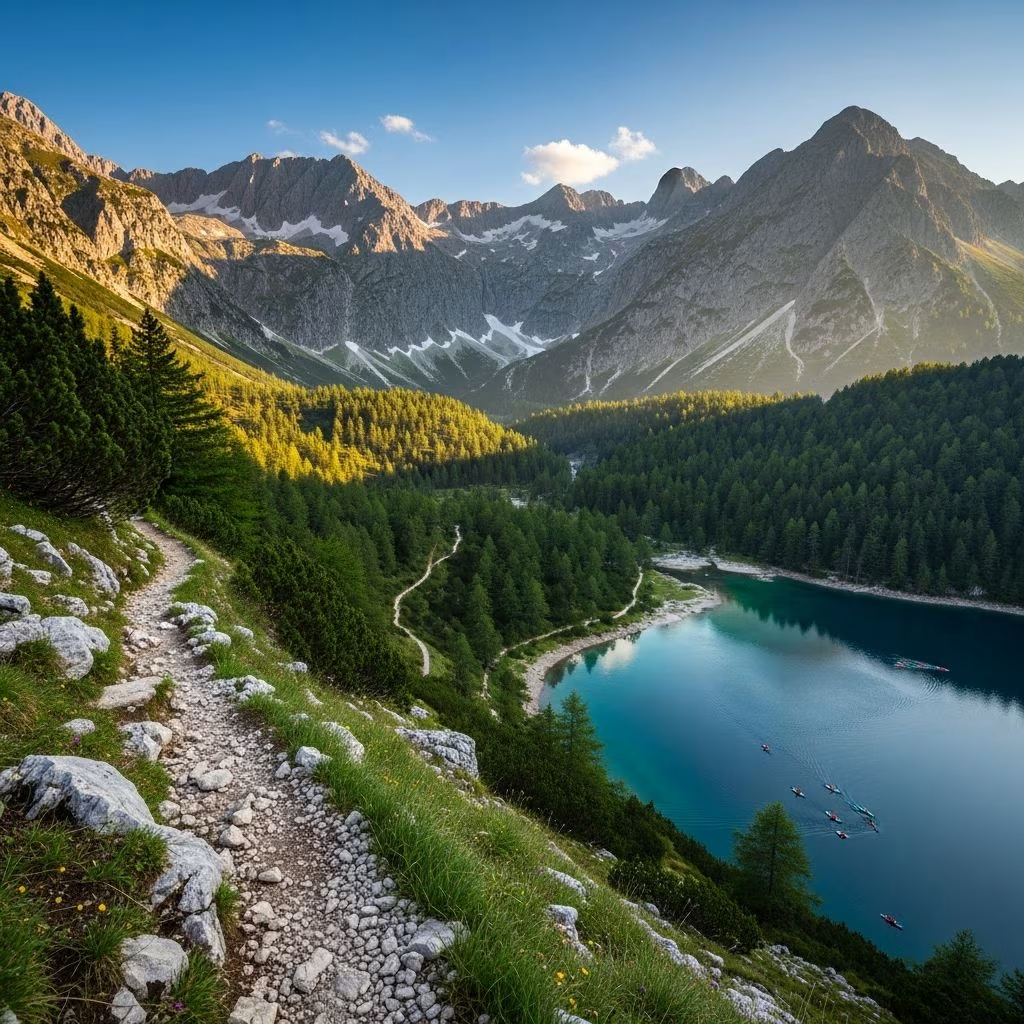
Croatia has emerged as one of Europe’s most compelling hiking destinations, offering an extraordinary diversity of landscapes compressed into a relatively compact geographic region. From crystalline freshwater lakes surrounded by verdant forests to rugged limestone mountains plunging toward the azure Adriatic Sea, the country presents an unparalleled range of trekking opportunities. Whether you’re seeking a leisurely afternoon stroll, a challenging day expedition, or a multi-day mountain adventure, Croatia’s network of marked trails accommodates every experience level and preference.
Croatia’s freshwater lake systems represent some of the most visually stunning natural attractions in Southeast Europe. These geologically significant formations have shaped the country’s identity and continue to draw outdoor enthusiasts from across the globe. The combination of travertine deposits, underground springs, and limestone geology creates otherworldly landscapes that seem almost fantastical in their beauty.
The primary waterfalls and lake clusters occupy distinct regions, each offering unique characteristics and varying levels of accessibility. These destinations showcase the full spectrum of Croatian geography—from pastoral lowland reserves to dramatic karst formations.
In the heart of continental Croatia lies a series of interconnected lakes that constitute the nation’s oldest and most extensive protected wilderness area. This UNESCO-recognized site encompasses sixteen distinct lakes separated by natural barriers of limestone and travertine, creating a mesmerizing landscape of cascading water features. The pathway network combines paved boardwalks suspended above the water surface with forest trails that wind through dense deciduous and coniferous woodland.
This particular destination accommodates approximately 8 kilometers of walking, typically requiring four to five hours for most visitors to experience the complete circuit. The terrain classification ranges from accessible to moderately challenging, making it suitable for families with older children as well as fitness enthusiasts. The boardwalk sections provide straightforward footing, while certain forest passages involve modest elevation changes and occasional steps carved into natural terrain.
The visual appeal intensifies throughout the day as sunlight angles shift, illuminating the limestone cliffs and altering the water’s apparent color spectrum from deep emerald to bright turquoise. Many experienced hikers recommend visiting during shoulder seasons—late spring or early autumn—when crowds diminish and temperatures remain comfortable throughout extended walking sessions.
A secondary waterfall system deserves particular attention for its concentrated intensity and cultural context. Accessible through a mere 1.2-mile walking path, this shorter expedition provides disproportionate visual rewards. The experience begins in a traditional settlement representing centuries-old Slavic architectural traditions, then transitions to suspended boardwalks traversing terraced stone formations. The cataract itself—the highest of its category within this national reserve—plunges over moss-covered rock formations into pools of remarkable emerald coloration.
Croatia’s mountainous regions offer dramatically different hiking experiences compared to the aquatic attractions. The Dinaric Alps, stretching along the country’s interior, present challenging terrain with technical footing, panoramic summit vistas, and opportunities for extended backcountry travel. These mountains create a distinct microclimate characterized by hardy pine forests, exposed rocky ridges, and occasionally severe weather patterns even during summer months.
Croatia’s most celebrated multi-day expedition traverses a dramatic section of the Dinaric mountain chain, stretching across 57 kilometers of mountainous terrain. This route requires three to four days of continuous walking and presents moderate to difficult challenges even for experienced hikers. The path strings together multiple distinct summits, each offering progressively changing perspectives of the surrounding landscape.
Hikers typically progress from north to south, navigating through sections dominated by distinctive spear-like pine silhouettes rising against open sky. The terrain alternates between exposed ridges with panoramic views and shaded forest passages. Multiple named peaks punctuate the journey, each serving as psychological milestones and viewpoint opportunities. The southern terminus approaches proximity to a major canyon system, creating the natural conclusion to the expedition.
Proper preparation for this undertaking includes acclimatization to sustained elevation gain, familiarization with weather change patterns, and carrying adequate supplies for multi-day self-sufficiency. Mountain huts positioned along the route provide accommodation alternatives to tent camping, though advance reservations prove essential during peak seasons.
Within a protected national park situated in the Velebit mountain range, two parallel canyons offer contrasting hiking experiences. The wider canyon presents a more accessible all-day expedition spanning approximately 14 kilometers, featuring technical boulder sections combined with elevated viewpoints overlooking dramatic rock formations. Hikers traverse both elevated rim paths offering panoramic perspectives and lower-elevation routes navigating through massive stone obstacles at the canyon floor.
The narrower companion canyon adjacent to this route challenges more experienced trekkers with complex scrambling sections and technical navigation requirements. Combined, these formations preserve over 93 miles of marked pathways threading through dense forest coverage and dramatic cliffsides, accommodating exploration preferences ranging from leisurely strolls to physically demanding expeditions.
Croatia’s island geography creates unique hiking opportunities absent from continental trails. Approaching mountains from the shoreline perspective, island hikes combine Mediterranean vegetation exposure with summit views encompassing multiple islands and distant mainland ranges. The crystalline surrounding sea creates luminous backgrounds that enhance the visual drama of these elevated experiences.
Croatia’s most elevated island peak rises 2,559 feet above the surrounding Adriatic waters, dominating its small island’s physical and visual geography. This distinctive summit requires approximately three to five hours of sustained climbing through pine forest and rocky exposed sections, covering roughly 10.6 kilometers for the round-trip expedition. The difficulty rating of moderate reflects the consistent elevation gain rather than technical complexity, making it accessible to reasonably fit recreational hikers.
The ascent reward magnifies exponentially upon reaching the summit, where panoramic vistas sweep across the Dalmatian coastline toward distant horizons. The perspective encompasses multiple neighboring islands, the mainland mountain ranges, and the Mediterranean stretching toward the Italian peninsula’s distant form. Clear visibility days permit views extending across significant portions of central Croatia’s geography, creating a sense of commanding perspective over the surrounding region.
Immediately adjacent to one of Europe’s most historically significant coastal cities rises a forested mountain offering dramatic contrasts between medieval architecture and natural wilderness. This easily accessible ascent—covering merely 4.7 kilometers and requiring approximately one hour—provides immediate escape from urban contexts into wooded terrain. The trail composition features switchbacks and gravel pathways that, while not remarkable in isolation, deliver progressively improving vistas over the historic old town and cobalt sea throughout the ascent.
The summit experience offers substantial rewards including unobstructed views of architectural splendor positioned against Mediterranean backdrop, plus recreational facilities including refreshment services. An alternative cable car system accommodates visitors preferring to reserve physical effort for summit exploration rather than climbing itself, while a rear-side road permits vehicular access for those with mobility limitations.
This urban-proximity mountain successfully combines convenient accessibility with meaningful outdoor experience, proving particularly valuable for travelers with limited time allocations or variable fitness levels within their groups.
Beyond the primary destinations, Croatia’s hiking network encompasses diverse environments reflecting geological complexity and regional variations. The Medvednica region alone maintains a network of 70 distinct marked pathways accommodating every fitness level and hiking preference imaginable. This diversity permits customized exploration planning based on specific interest categories.
Croatia’s mountain selections permit strategic routing based on particular objectives and constraints:
Mljet Island presents additional hiking possibilities including ascents to elevated peaks offering perspectives across dual saltwater lake systems and surrounding island clusters. The Veliki Gradac peak ascent transits through dense Mediterranean vegetation, creating botanical interest beyond the elevation achievement itself. These island expeditions combine the psychological rewards of sea-level starting points with mountain-climbing achievement, offering distinctive psychological experiences compared to purely continental mountain approaches.
| Trail Aspect | Key Information | Recommended Actions |
|---|---|---|
| Seasonal Conditions | Summer heat intensity; spring/autumn optimal | Plan shoulder-season visits; start early for summer expeditions |
| Water Availability | Limited on exposed ridges; abundant near lakes | Carry substantial quantities; locate mountain huts when available |
| Weather Variability | Mountain areas experience rapid changes | Monitor forecasts; pack layered clothing and rain protection |
| Navigation Requirements | Trails vary in marking clarity | Utilize GPS applications; download offline maps |
| Physical Conditioning | Multi-day routes demand fitness baseline | Undertake preparatory training; assess realistic abilities |
Beyond standard hiking essentials, Croatia-specific preparation should emphasize limestone terrain hazards including sharp rock surfaces and unpredictable footing. Sturdy footwear with ankle support significantly improves comfort and safety across technical sections. Sun protection deserves particular attention given Mediterranean intensity and limited shade on exposed sections.
Navigation tools prove especially valuable given trail variation across regions. Mobile applications providing offline mapping capability enable continuous orientation verification without cellular dependence. Physical maps—though less convenient—provide reliable backup against technology failures.
Late spring through early autumn provides the most favorable conditions. Peak summer (July-August) experiences intense heat particularly at lower elevations. Shoulder seasons (May-June and September-October) offer comfortable temperatures, reduced crowds, and stable weather patterns—making them ideal for most recreational hikers.
While independent hiking is entirely feasible with proper preparation, numerous guide services operate throughout the country. Guided options prove particularly valuable for multi-day mountain expeditions or travelers unfamiliar with Croatian terrain characteristics.
The freshwater lake system boardwalk sections provide excellent family-friendly options with minimal elevation challenge. The urban mountain near the historic coastal city offers easy accessibility with summit rewards. Island peak trails present moderate challenges suitable for reasonably fit individuals.
Most national parks require entrance fees but impose minimal restrictions on hiking. Some mountain huts necessitate advance reservations during peak seasons. Always verify current regulations before departing, as policies occasionally change seasonally.
