

Food & Culture Stays Travel Essentials Travel Guides Trip Ideas
Categories
From the Blog
Remy’s Ratatouille Adventure at EPCOT: Ride Review, Tips & 2D Update
Travel Essentials

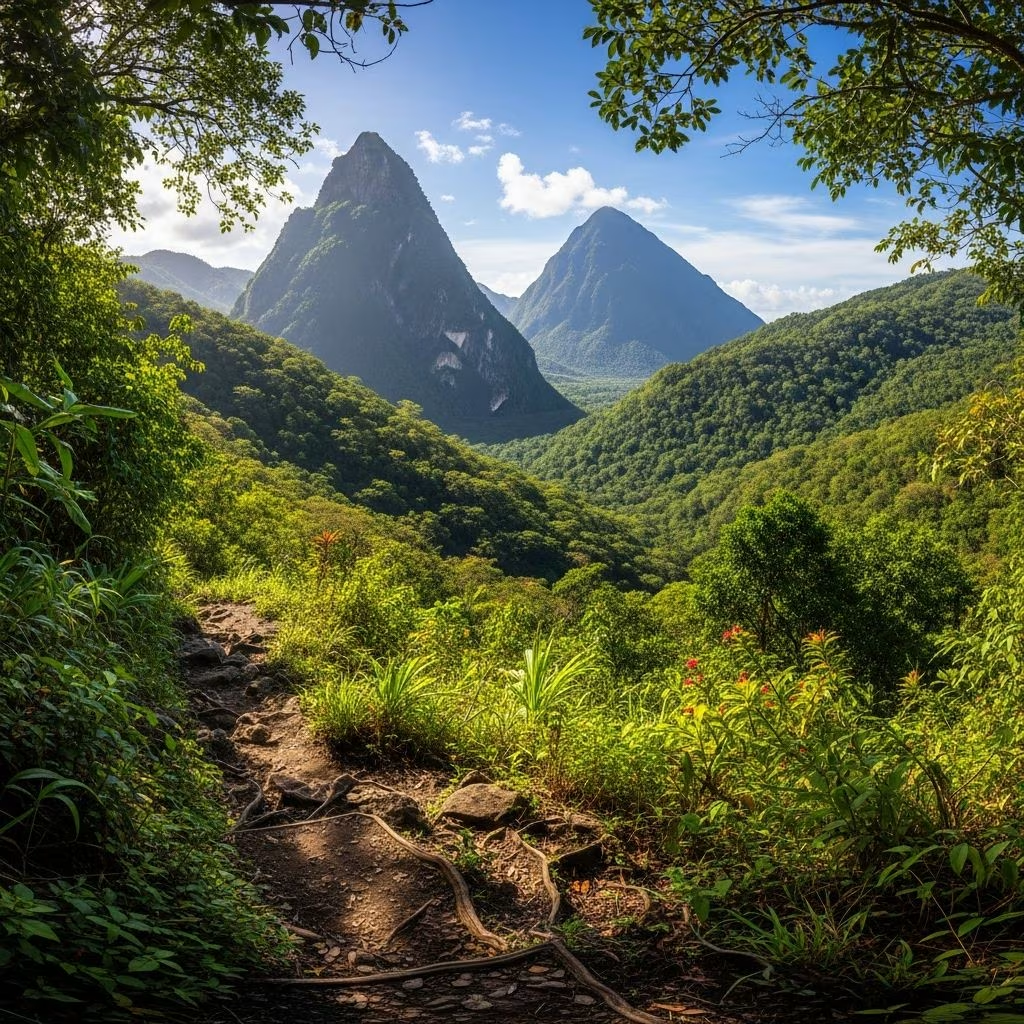
Best Hiking Trails in St. Lucia: Top Hikes, Pitons & Waterfalls

Explore the best hiking trails in St. Lucia, featuring the Pitons, nature walks, rainforest treks, and waterfalls for all skill levels.
Travel Essentials

St. Lucia, a gem in the Caribbean, captivates with its dramatic volcanic landscapes, lush rainforests, and turquoise waters. Hiking here offers unparalleled ways to immerse in this natural paradise, whether you’re seeking gentle strolls with ocean vistas or strenuous climbs to lofty summits. This guide details the island’s standout trails, drawing from reliable travel insights to help you plan your perfect trek.

Why Hike in St. Lucia?

The island’s terrain, shaped by ancient volcanoes, delivers diverse hiking experiences. Trails wind through UNESCO-protected sites, reveal hidden waterfalls, and showcase endemic wildlife like the St. Lucia parrot. With options for all fitness levels, these paths not only challenge the body but also reward with breathtaking panoramas of the Pitons—St. Lucia’s twin volcanic spires. Expect tropical humidity, so pack water, insect repellent, sturdy shoes, and always consider a local guide for safety and insights into flora and fauna.

Easy Trails for Beginners and Families

Perfect for those new to hiking or traveling with children, these short, well-maintained paths offer big rewards with minimal effort.

  • Tet Paul Nature Trail: This 45-minute loop south of Soufriere provides stunning views of the Pitons and Caribbean Sea. Accessible steps lead to interpretive signs about local ecology, making it educational and scenic.
  • Signal Hill Fort Rodney Loop: Starting in Gros Islet, this family-friendly trail explores historic forts with panoramic north coast views. It’s mostly flat and takes about an hour.
  • Vigie Beach Loop: A quick harbor-side walk reachable by public transport, ideal for a relaxed 30-45 minute outing amid greenery.
  • Morne Coubaril and Fond Doux Estate Trails: Brief estate walks feature zip-lining options and plantation history, blending culture with light hiking.

These trails emphasize accessibility, often with guided tours available from nearby communities.

Moderate Challenges: Rainforest and Waterfall Adventures

For intermediate hikers, St. Lucia’s interior trails plunge into verdant rainforests, revealing waterfalls and wildlife hotspots.

  • Enbas Saut Trail: A 2-hour descent into a valley uncovers twin waterfalls and swimmable pools. The path teems with tropical plants and birdlife, including rare parrots.
  • Edmund Forest Reserve (Millet Trail): This 3.5-hour rainforest hike offers reservoir views and Mount Gimie glimpses. Spot orchids, mushrooms, and mongooses amid dense foliage.
  • Piton Flore Trail: Ascend to a summit with valley overlooks, prime for parrot sightings and boa constrictors. It’s secluded and rewarding for nature lovers.
  • Sapphire and Toraille Waterfalls: Short paths to cascading falls, often combined with botanical gardens for a refreshing hike.
TrailDurationHighlightsDifficulty
Enbas Saut2 hoursWaterfalls, pools, biodiversityModerate
Edmund Forest (Millet)3.5 hoursRainforest, mountain viewsModerate
Piton Flore3-4 hoursWildlife, summit panoramasModerate

Expert Ascents: The Iconic Pitons and Peaks

St. Lucia’s signature hikes demand fitness and preparation, delivering epic achievements and views.

  • Gros Piton Nature Trail: The more accessible Piton, this 2.9-mile out-and-back (4-6 hours) climbs 2,619 feet via steep steps. Start from Fond Gens Libre; guides are mandatory. Summit rewards include 360-degree vistas.
  • Petit Piton Trail: Steeper and unofficial, this 3-4 hour scramble to 2,461 feet suits experienced climbers. Local guides navigate rocky terrain for unparalleled peak views.
  • Mount Gimie: At 3,117 feet, St. Lucia’s highest peak, this 6-9 hour guided trek through thick rainforest features waterfalls and rugged paths.
  • Mt. Pimard: A 1-mile family climb from Pebble Beach to sunset viewpoints, easier than the Pitons.

These require permits, guides (often SLNT-affiliated), and early starts to beat heat.

Historical and Coastal Gems

Beyond nature, trails rich in history add cultural depth.

  • Pigeon Island National Park: Explore 44 acres with forts from colonial wars. Trails vary from easy loops to moderate climbs with sea views.
  • Belle Vue: Tough trek to a waterfall sanctuary amid wildlife, blending adventure and serenity.

Essential Hiking Tips for St. Lucia

To maximize enjoyment:

  • Guides and Permits: Mandatory for Pitons and reserves; book via SLNT or locals for safety.
  • Gear: Hiking boots, rain gear, 2-3L water, snacks, hat, sunscreen.
  • Best Time: Dry season (Dec-Apr); start pre-dawn.
  • Wildlife: Respect parrots, boas; use DEET.
  • Transport: Taxis or tours from Soufriere/Rodney Bay.

Trail Comparison Table

Trail NameDifficultyLength/DurationElevation GainBest For
Tet PaulEasy0.5 miles / 45 minMinimalFamilies, views
Gros PitonHard2.9 miles / 4-6 hrs2,619 ftAdventure seekers
Petit PitonVery Hard2 miles / 3-4 hrs2,461 ftExperts
Enbas SautModerate~3 miles / 2 hrsModerateWaterfalls
Mount GimieHard~8 miles / 6-9 hrs3,117 ftPeak baggers

Frequently Asked Questions (FAQs)

Do I need a guide for Piton hikes?

Yes, mandatory for Gros Piton; recommended for Petit. Guides ensure safety and provide ecology insights.

What’s the easiest hike in St. Lucia?

Tet Paul Nature Trail—short, scenic, and wheelchair-accessible in parts.

Are there waterfalls on the trails?

Yes, Enbas Saut, Belle Vue, and Toraille offer swimmable falls.

Best season for hiking?

Dry months (December to April) for safer, drier paths.

Can kids hike the Pitons?

Not recommended; opt for Tet Paul or Signal Hill instead.

Preserving St. Lucia’s Trails

Follow Leave No Trace: stay on paths, pack out trash, support conservation via SLNT fees. These efforts protect biodiversity for future hikers.

References

  1. The Best Hiking in St Lucia – Balenbouche Estate — Balenbouche. Accessed 2026. https://www.balenbouche.com/st-lucia-hiking/
  2. Volcanoes, waterfalls and hiking in St Lucia — Heather on Her Travels. Accessed 2026. https://www.heatheronhertravels.com/waterfalls-volcanoes-and-hiking-in-st-lucia/
  3. Best Hiking Trails St Lucia — Vincent Vacations. Accessed 2026. https://www.vincentvacations.com/sandals/best-hiking-trails-st-lucia
  4. Ultimate Guide to the Best Hiking Trails in St. Lucia — Trailhead Traveler. Accessed 2026. https://trailheadtraveler.com/hiking-st-lucia/
  5. The Gros Piton Hike: The Ultimate Adventure in St. Lucia — The Scribs and Nibs. Accessed 2026. https://thescribsandnibs.com/caribbean/st-lucia/gros-piton-hike/
  6. THE 15 BEST St. Lucia Hiking Trails (2026) — TripAdvisor. 2026. https://www.tripadvisor.com/Attractions-g147342-Activities-c61-t87-St_Lucia.html
ME
medha deb
Medha Deb is an editor with…

Medha Deb is an editor with a master's degree in Applied Linguistics from the University of Hyderabad. She believes that her qualification has helped her develop a deep understanding of language and its application in various contexts. Medha specializes in the areas of beauty, health, sports, and wellness and is committed to ensuring that the content on the website is of the highest quality.Medha's passion for writing and editing began early in life when she joined a book writer's club with her mother. It was there that she discovered her love for the written word and the power it holds to inform, inspire, and transform lives. Since then, she has honed her skills as a writer and editor, working with a variety of clients and publications to produce compelling and informative content. Currently, she writes and edits for CultureTreker.She is also an ardent animal lover and dedicates her time and resources to the foster care of neonatal kittens, providing them with the love and attention they need to thrive. Her commitment to animal welfare is a testament to her compassion and empathy, and it underscores her belief in the importance of caring for the most vulnerable members of our society.

← Previous
Rotterdam’s Urban Reinvention: Architecture, Sustainability & Growth
‹›
