

 Travel Essentials
 Travel Essentials

Discover the must-see historic landmarks of Wales, from prehistoric tombs and Roman fortresses to Gothic castles and industrial heritage sites preserved for modern explorers.
 Travel Essentials
Wales boasts a remarkable tapestry of historical landmarks that span thousands of years, from Neolithic burial sites to Victorian Gothic masterpieces. These sites offer visitors a deep dive into the nation’s Celtic roots, Roman occupation, medieval conflicts, and industrial legacy. Whether you’re drawn to ancient mysteries or grand fortifications, Wales delivers unparalleled preservation and accessibility.
The earliest traces of human activity in Wales date back over 5,000 years, with megalithic structures that still stand as testaments to prehistoric ingenuity. These sites, often aligned with solstices or natural landscapes, provide insights into ritualistic practices and communal efforts of early inhabitants.
These monuments, maintained by organizations like Cadw, invite exploration of Wales’ mystical beginnings amid serene countryside settings.
During the 1st century CE, Roman legions established strongholds across Wales to subdue local tribes. These military outposts evolved into cultural hubs, blending imperial architecture with local stonework.
| Site | Location | Key Features |
|---|---|---|
| Caerleon Roman Fortress & Baths | Near Newport | Barracks, amphitheatre, and well-preserved baths; inspired Arthurian legends. |
| Caerwent Roman Town | Monmouthshire | Town walls, basilica, and forum remains from Venta Silurum. |
Caerleon, once home to the Second Augustan Legion, featured an amphitheatre that seated 6,000 spectators—evidence of Roman entertainment amid conquest. Excavations reveal daily life, from heated baths to soldier quarters, offering a vivid snapshot of occupation-era Wales.
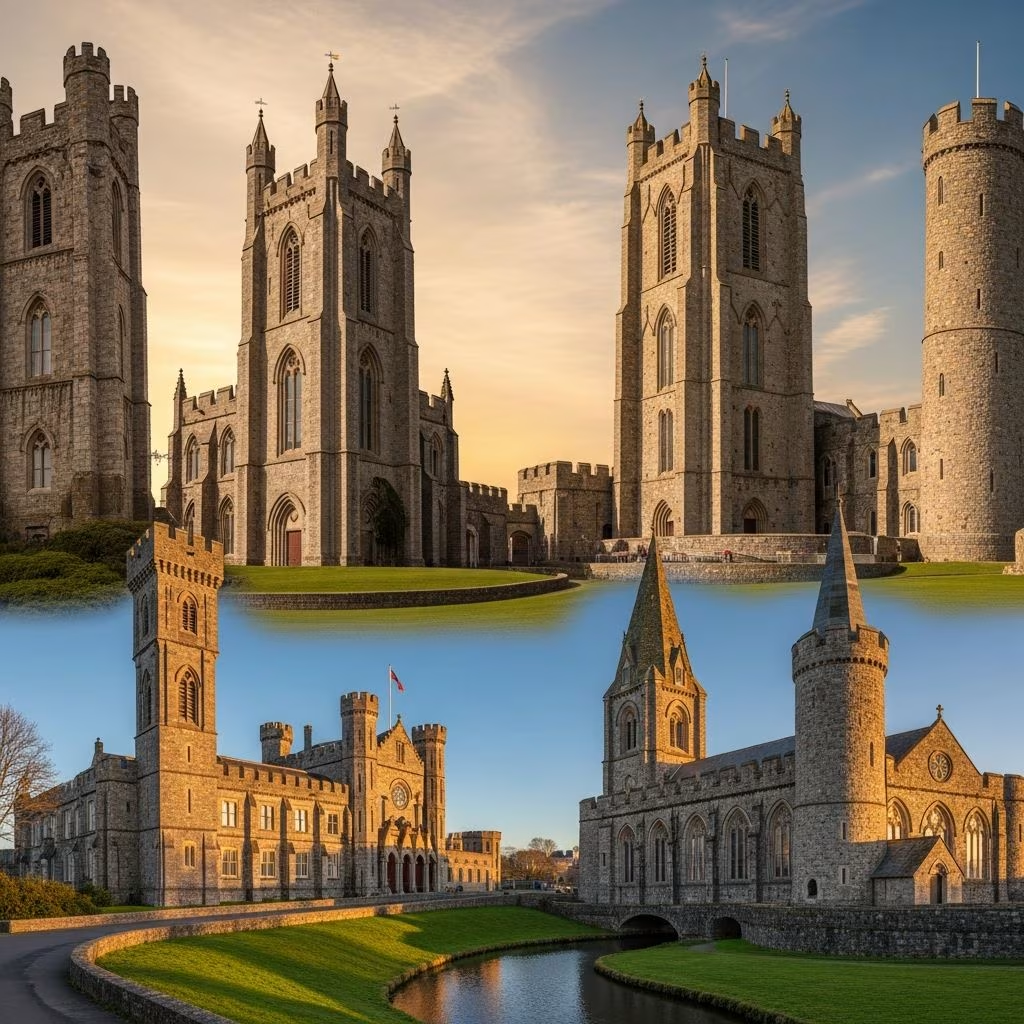
Wales is famed for its density of castles, over 600 in total, many built during the 13th century by Edward I to assert English dominance. These imposing structures dominate skylines and guard strategic positions.
The Castles and Town Walls of King Edward in Gwynedd form a UNESCO World Heritage Site, showcasing four exemplary fortresses:
Cardiff Castle, central to the capital, began as a Roman fort in 50 CE, transitioned to Norman motte-and-bailey, and reached opulence under Victorian architect William Burges. Its interiors dazzle with murals, stained glass, and ornate clocks.
Nearby, Castell Coch reimagines 13th-century ruins as a fairy-tale castle with drawbridges, portcullises, and lavish interiors funded by the Bute family.
Wales’ religious heritage shines through cathedrals and secluded chapels, blending Norman architecture with Celtic traditions.
These sites underscore Wales’ pilgrimage history, drawing devotees for centuries.
St Fagans National Museum of History stands out as Europe’s premier open-air museum, relocating over 40 authentic Welsh buildings from across the country. Visitors wander Iron Age roundhouses, Tudor homes, Victorian schools, and a medieval church, each staffed with interpreters in period attire.
Interactive elements like costume dress-up and craft demonstrations immerse families in Welsh domestic life from prehistory to the 20th century. Admission is free, making it an essential stop for cultural immersion.
Wales pioneered industrialization, leaving landmarks that trace coal, slate, and shipping booms.
Cardigan Castle, revived after centuries of ruin, hosts the Eisteddfod festival, linking medieval Welsh revival to modern culture.
To maximize visits, consider Cadw’s passes for castles and monuments, or National Trust memberships for sites like Powis Castle. South Wales offers urban accessibility via Cardiff, while North Wales rewards with rugged beauty around Snowdonia. Spring and autumn avoid crowds, enhancing atmospheric explorations.
Tinkinswood Burial Chamber dates to around 3,800 BCE, predating Stonehenge.
Yes, St Fagans National Museum and many Cadw sites offer free entry, with guided tours available.
Four: three castle groups and the Slate Landscape, plus Pontcysyllte Aqueduct.
Cardiff Castle, with its time tunnels and animal wall, engages all ages.
In Cardiff, combine Castle, Castell Coch, and St Fagans via public transport.
