

 Travel Essentials
 Travel Essentials

Explore Jordan's richest historical sites including Petra, Jerash, and medieval fortresses. Uncover UNESCO gems, practical tips, and hidden stories for an unforgettable journey through time.
 Travel Essentials
Jordan stands as a living museum where layers of civilizations from Nabataean traders to Roman engineers and Crusader knights have left indelible marks on the landscape. This guide delves into the country’s premier historical destinations, offering insights into their origins, architectural brilliance, and modern-day allure for travelers seeking profound cultural immersion.
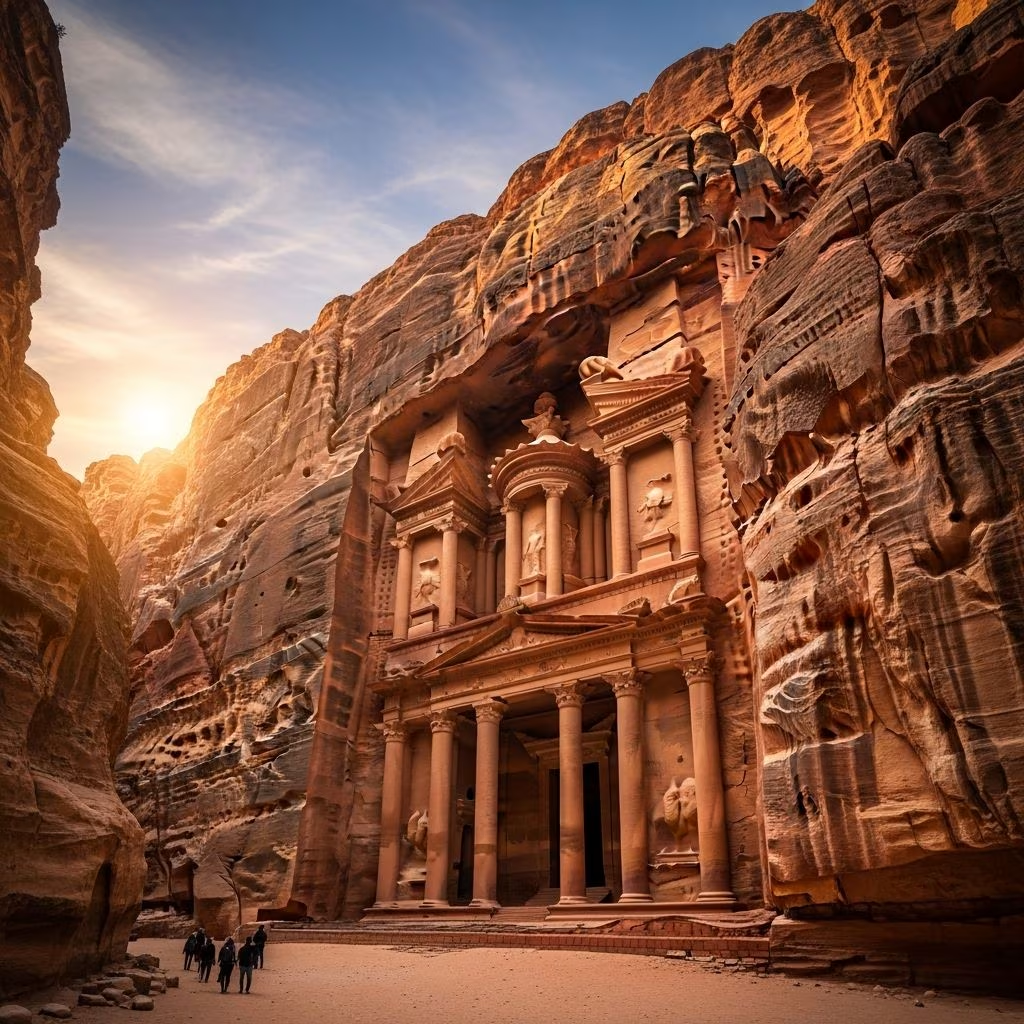
Nestled in southern Jordan’s rugged canyons, Petra emerges as the undisputed crown jewel of the nation’s heritage. Carved directly into rose-hued sandstone cliffs by the Nabataeans around the 4th century BCE, this city served as a pivotal hub on the Incense Route, facilitating trade in spices, silks, and precious goods between Arabia, Egypt, and distant lands like India and China.
Visitors first encounter the dramatic Siq, a narrow gorge over a kilometer long that dramatically parts to reveal the iconic Treasury (Al-Khazneh), a 40-meter facade blending Hellenistic, Egyptian, and local motifs. Beyond lies a sprawling complex of rock-hewn tombs, temples, and the majestic Monastery (Ad-Deir), accessible via steep hikes rewarding with breathtaking vistas. Ingenious water conduits carved into cliffs highlight Nabataean hydraulic genius, channeling scarce desert moisture to sustain a thriving metropolis.
Designated a UNESCO World Heritage Site in 1985 for its cultural criteria (i, iii, iv), Petra’s enduring mystery—rediscovered by Westerners in 1812—continues to captivate, drawing millions annually. Optimal visits occur early morning to evade crowds and heat; guided tours elucidate hidden inscriptions and engineering feats.
North of Amman, Jerash (ancient Gerasa) ranks among the globe’s best-preserved Roman provincial cities, inhabited since Neolithic times but peaking under imperial rule from the 1st to 3rd centuries CE. Its vast oval Forum, framed by towering Ionic columns, leads to the South Theater seating 3,000 and the North Theater, both still hosting performances like the annual Jerash Festival.
Key highlights include the colonnaded Cardo Maximus street, etched with chariot ruts and fed by an underground sewer system; the Temple of Artemis with its six Corinthian columns; and the Nymphaeum, a ornate fountain dedicated to water nymphs. These structures exemplify Roman urban planning, blending functionality with aesthetic splendor.
Jerash offers a tactile connection to antiquity—wander vaulted Hadrian’s Arch or explore the Hippodrome’s racing tracks. As Jordan’s second-most visited site after Petra, it pairs seamlessly with day trips from the capital.
Jordan’s hilltop castles narrate epic clashes between Crusaders, Ayyubids, and Mamluks. Ajloun Castle, perched 76 km northwest of Amman, was erected in 1184 CE by Saladin’s nephew Izz al-Din Usama to safeguard trade routes and counter Frankish incursions. Its seven massive towers, labyrinthine corridors, and commanding views over olive groves and the Jordan Valley evoke siege-era drama.
Southward, Kerak (Crac des Moabites) Castle dominates a triangular plateau 120 km from Amman. Constructed by Crusaders in the 1140s, it features seven-story halls, arrow slits, secret passages, and deep cisterns designed for prolonged sieges. Captured by Saladin in 1188, it later served Ottoman forces.
| Castle | Builder/Era | Key Features | Strategic Role |
|---|---|---|---|
| Ajloun | Ayyubid, 12th CE | Towers, gates, museum | Defend vs. Crusaders |
| Karak | Crusader, 12th CE | Tunnels, halls, battlements | Control trade routes |
These fortresses, now housing museums with pottery and arms, provide panoramic vistas ideal for photography.
Just 30 km southwest of Amman, Madaba preserves exquisite Byzantine mosaics from the 6th century CE, earning fame as the ‘City of Mosaics.’ The standout is St. George’s Church floor, featuring the Madaba Map—the oldest extant cartographic depiction of the Holy Land, spanning from Lebanon to the Nile Delta with over 150 labeled sites in Greek.
Archaeological parks reveal additional pavements from elite villas and churches, depicting hunting scenes, animals, and donors. Nearby Mount Nebo offers biblical views where Moses glimpsed the Promised Land. Madaba’s sites illuminate early Christian artistry and urban life.
The Eastern Desert Castles, built by Umayyad caliphs in the 8th century CE, blend pleasure palaces with caravan stops. Qasr Amra, a UNESCO site since 1985, boasts well-preserved frescoes of bathing scenes, hunting, and astral motifs across its hammam and audience hall—rare survivals of profane Islamic art.
Other gems like Qasr Bashir (Qasr al-Burj) showcase robust basalt construction amid arid expanses. These sites reveal caliphal opulence and engineering amid harsh terrains.
Umm Qais (Gadara), in Jordan’s northwest, merges Roman, Byzantine, and Ottoman layers. Overlooking the Sea of Galilee, it features a terraced theater, basilica with mosaics, baths, and aqueducts from its Decapolis heyday (1st century BCE–7th CE).
Nearby, Umm al-Jimal—UNESCO-listed in 2024—represents Byzantine-early Islamic agrarian villages with churches, irrigation channels, and multilingual inscriptions tracing religious shifts. Abila’s ongoing digs uncover Herakles temples and water tunnels.
Amman’s Citadel atop Jebel al-Qala’a spans Umayyad Palace, Roman Temple of Hercules, and Byzantine churches, offering city panoramas. Below, the 2nd-century Roman Theater, hewn into bedrock for 6,000 spectators, hosts cultural events.
Jordan boasts five UNESCO sites: Petra, Wadi Rum (natural/cultural fusion), Qasr Amra, Umm er-Rasas (mosaic-rich Byzantine church), and Baptism Site (Al-Maghtas), tied to Christ’s baptism. Recent additions like Umm al-Jimal highlight evolving recognitions.
Start in Amman (Citadel, Theater), head north to Jerash/Umm Qais, south via Madaba/Ajloun to Petra, looping through Kerak and Wadi Rum. Best seasons: spring (Mar-May) or fall (Sep-Nov). Entry fees: Petra JD50 (1-day), combos available. Hire licensed guides for depth; respect no-flash photography rules.
Sustainable tips: Use eco-tours, stay hydrated, wear sturdy shoes for hikes. Combine with Dead Sea floats or Wadi Rum safaris for balanced itineraries.
Spring and autumn offer mild weather (15-25°C), fewer crowds than summer peaks.
Recommended for historical context; self-guided maps available at the visitor center.
Petra and castles involve stairs/hikes; wheelchairs available at major sites like Jerash.
7-10 days: 2 for Petra, 1 each Jerash/Madaba/castles, rest travel.
Yes, with standard precautions; sites well-patrolled.
