

 Travel Essentials
 Travel Essentials

Explore Europe's top hot springs, featuring natural wonders like Iceland's Blue Lagoon and Italy's Saturnia, with tips on free sites, luxury spas, and health benefits.
 Travel Essentials
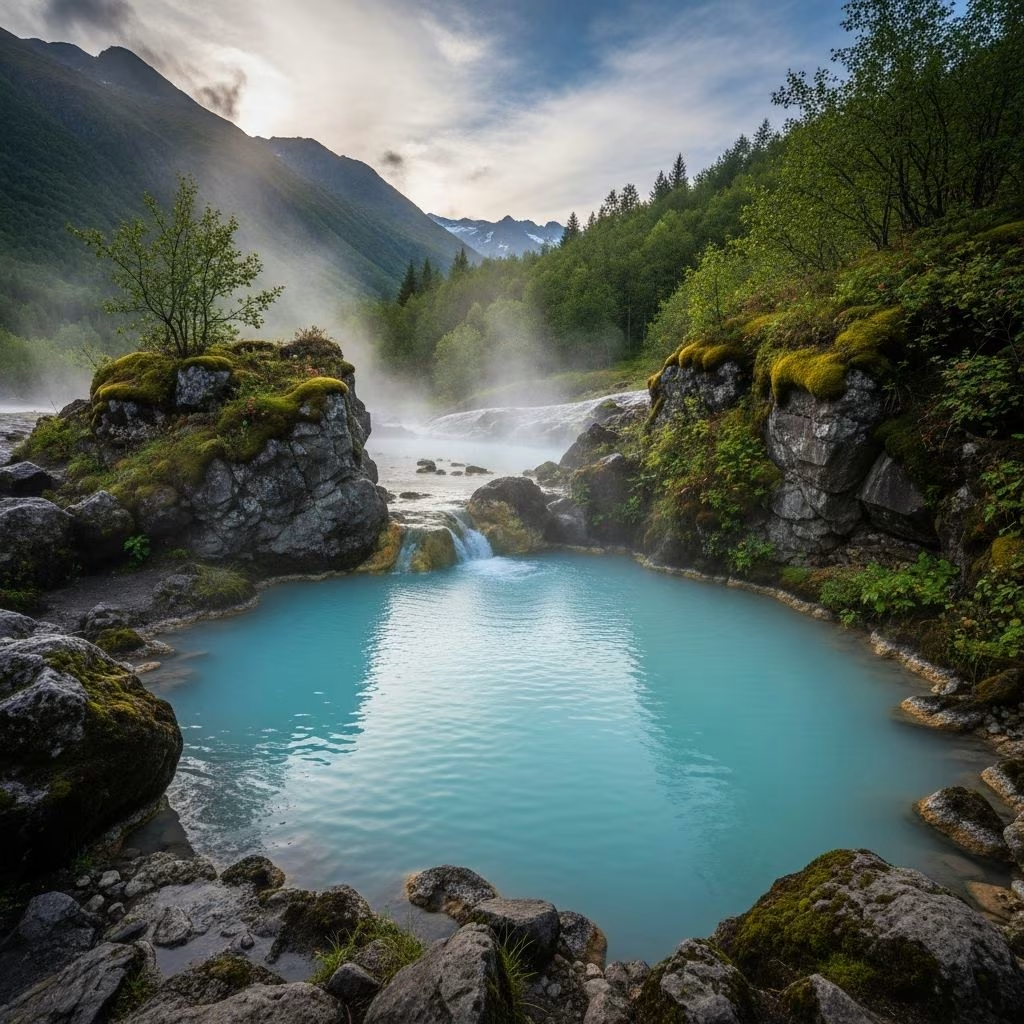
Europe boasts an extraordinary array of hot springs, harnessing geothermal energy from ancient volcanoes and tectonic activity to offer soothing, mineral-packed waters. These natural wonders provide therapeutic relief for muscles, skin, and stress, attracting travelers seeking both luxury and wild immersion. From Iceland’s steamy lagoons to Italy’s terraced cascades, this guide highlights standout destinations across the continent, blending free natural pools with upscale spa complexes.
Hot springs emerge where groundwater heats underground, rising rich in minerals like sulfur, calcium, and magnesium. These elements contribute to health benefits, including improved circulation, reduced inflammation, and skin rejuvenation. Many sites maintain temperatures between 30-40°C, ideal for year-round soaking even in winter. Europe’s volcanic hotspots, such as Iceland and Italy, host some of the purest sources, while Central European towns have cultivated spa traditions for centuries.
Visitors often combine soaks with hiking, history, and cuisine. Free wild springs appeal to adventurers, while paid facilities offer saunas, mud treatments, and gourmet dining. Always check water quality and access rules, as some sites prohibit bathing due to hazards.
The Nordic region leads with dramatic, silica-blue pools amid lava landscapes. Iceland’s geothermal activity powers much of the island, feeding public baths and natural streams.
Nestled in a lava field 40 minutes from Reykjavik, the Blue Lagoon draws from a power plant’s runoff, creating a milky turquoise expanse at 37-40°C. Silica mud masks enhance the skin-softening effects. Though man-made, its otherworldly setting feels primal; book ahead for crowds.
A moderate hike from Hveragerði leads to Reykjadalur’s free hot springs, where streams mix cold and hot waters for customizable temperatures. Bathers craft personal pools amid misty vapors—perfect for a post-trek reward.
Britain and France preserve Roman-era baths, evolving into modern wellness centers.
Bath’s natural hot springs, Britain’s only geothermal source, bubble at 46°C with 43 minerals. The Thermae Bath Spa rooftop pool offers city views; historic tours reveal Roman bathing rituals.
Near Liège, this spa taps Belgium’s hottest spring for outdoor pools, Turkish baths, and salt cabins treating skin issues. Attached to a hotel with French cuisine, it’s a refined day trip.
Hungary, Czechia, and Austria dominate with medicinal bath cultures, often state-regulated for health tourism.
| Destination | Temperature Range | Key Features | Cost Type |
|---|---|---|---|
| Széchenyi Baths, Budapest | 21-38°C | Outdoor pools, jets, saunas; largest in Europe | Paid entry |
| Hévíz Lake, Hungary | 24-38°C | World’s largest thermal lake; lily pads, spa complex | Free lake, paid spa |
| Karlovy Vary, Czechia | Varied | Colonades for drinking; hotel spas | Free springs, paid treatments |
Széchenyi in Budapest spans 18 pools with bubbles and rapids in City Park. Hévíz Lake, lily-dotted and biologically active, stays warm year-round. Karlovy Vary’s colonnades let visitors sip healing waters amid Art Nouveau architecture.
Mediterranean islands and Tuscan hills deliver free, scenic soaks alongside luxury resorts.
Cascading over limestone at 37.5°C, Saturnia’s free pools flow sulfur-rich waters year-round, even under moonlight. The eggy scent signals therapeutic minerals; nearby resorts offer mud therapies.
These white calcium terraces overlook Hierapolis ruins, with warm pools easing ailments. Ancient Greeks prized them; modern visitors tread carefully to preserve the formations.
Boat access leads to coppery volcanic springs in the caldera, rich in sulphuric mud for skin healing. Swim from moored vessels to seaside pools.
Budget travelers favor wild sites like Saturnia (free, natural) or San Casciano dei Bagni’s Bagno Grande in Italy, gushing 5.5 million liters daily from Monte Amiata. Paid spots like Blue Lagoon provide amenities but require reservations. Compare:
Thermal waters aid arthritis, respiratory issues, and stress via hydrostatic pressure and minerals. Consult doctors for conditions; pregnant visitors or those with heart issues should avoid extremes. Hydrate and limit sessions to 20-30 minutes.
Winter transforms springs into steamy sanctuaries against snow; summer suits outdoor complexes. Shoulder seasons minimize crowds. Iceland shines in midnight sun; Tuscany in wildflower blooms.
Getting There: Fly to hubs like Reykjavik, Budapest; rent cars for rural sites.
Packing: Swimsuit, flip-flops, water shoes, robe.
Costs: Free: €0; Spas: €20-60 entry.
Etiquette: Shower before/after, no glass, quiet zones.
Most are; check signs for bacteria or instability. Official spas test waters regularly.
Yes, many maintain 30°C+ naturally, ideal for cold dips.
Saturnia, Italy, for accessibility and constant flow.
Supported by minerals; benefits vary, not medical substitutes.
Peak summer: Very; go early or off-season.
Switzerland’s Vals offers stone pools with acoustic serenity. Portugal’s Furnas caldera bubbles in lush forests. Baden-Baden, Germany, features waterfalls and saunas.
