

 Travel Essentials
 Travel Essentials

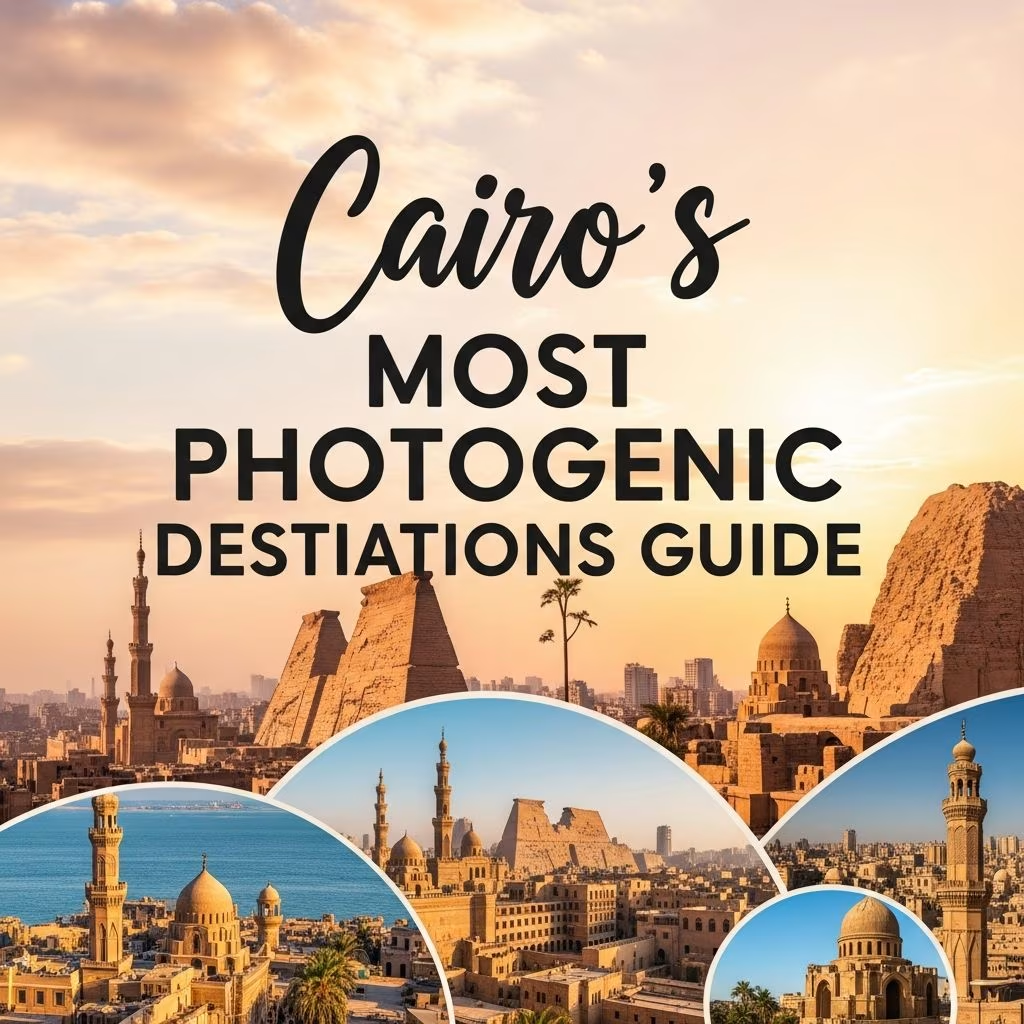
Explore Cairo's best photography locations from ancient monuments to bustling markets. Complete guide to Instagram-worthy spots with tips and visitor information.
 Travel Essentials
Cairo stands as one of the world’s most captivating cities for visual storytelling, blending ancient heritage with vibrant contemporary culture. Whether you’re a professional photographer or a casual traveler eager to document your journey, Egypt’s capital offers an extraordinary array of settings that transform ordinary snapshots into compelling visual narratives. From monumental architectural achievements to intimate cultural spaces, the city presents endless opportunities for creating memorable imagery that resonates across social media platforms and personal archives alike.
No destination in Cairo captures the imagination quite like the Pyramids of Giza and the Great Sphinx, which stand as testaments to ancient engineering prowess and enduring human ambition. These colossal structures have fascinated visitors for millennia, and their scale becomes even more apparent when experienced in person. The morning hours present the optimal window for photography, as the emerging sunlight casts a warm, golden luminescence across the sandy landscape while visitor crowds remain minimal.
To maximize your photographic opportunities at this location, plan your arrival for approximately 8:00 am when the gates open. The site operates from 8:00 am to 4:00 pm during standard seasons, extending to 5:00 pm during summer months. The panoramic vantage points throughout the complex allow photographers to capture multiple perspectives, from sweeping wide-angle compositions to intimate detail shots of carved stone surfaces and weathered hieroglyphics.
For visitors seeking alternative viewpoints beyond the main pyramid plateau, the Panoramic Point offers elevated perspectives of the complete complex. This location additionally provides opportunities to incorporate camels into compositions, adding distinctive cultural elements to your visual storytelling. Consider visiting nearby establishments like the 9 Pyramids Lounge for sustenance while enjoying continued views of these magnificent structures.
The Khan Al Khalili marketplace represents an entirely different photographic genre compared to monumental archaeological sites. This sprawling bazaar functions as a living museum of traditional commerce, where merchants display centuries-old trading practices alongside authentic craftsmanship. The market’s labyrinthine alleyways, intentionally unmarked and deliberately challenging to navigate, create natural conditions for photographic exploration and spontaneous discovery.
Within this marketplace, photographers encounter extraordinary visual variety: elaborately patterned textiles in jewel tones, intricate metalwork catching and reflecting light, aromatic spice displays creating chromatic gradients, and genuine human interaction between vendors and customers. The Bab Al-Ghuri architectural elements within the market deserve particular attention, showcasing elaborate tilework, geometric patterns, and ornamental details that encapsulate Islamic design traditions.
Visitors should embrace the disorienting nature of the market’s layout rather than resist it. Without predetermined routes, photographers naturally stumble upon unexpected compositions: narrow corridors framing distant activities, merchants arranged in candid moments of commerce, and architectural details revealing themselves at eye level. The authentic chaos of this environment provides authentic cultural documentation that polished tourist attractions cannot replicate.
Photography within Khan Al Khalili extends beyond static architectural elements. Capture the vibrancy of full-length traditional garments called galabeyas in saturated colors, the gleaming surfaces of silver jewelry and ornamental pieces, and the energetic movement of daily commercial activity. Early morning visits offer relatively calmer conditions for thoughtful composition, though the marketplace maintains its fundamental character throughout operating hours.
Perched majestically upon the Citadel of Cairo, the Mosque of Mohammed Ali commands attention from virtually every vantage point within the city. This Ottoman architectural masterpiece, once recognized as the world’s largest mosque, combines palatial grandeur with refined geometric precision. The structure’s prominence in Cairo’s skyline makes it simultaneously an architectural landmark and a navigational reference point for the entire city.
Approaching the mosque reveals monumental gateways that establish immediate visual gravitas and set expectations for the architectural drama to follow. Interior spaces display symmetrical arrangements of ornamental lamps, soaring domes stacked in receding perspective, and intricate carved embellishments that demonstrate exceptional craftsmanship. The interplay between shadow and illumination within these interior spaces creates dynamic photographic possibilities throughout the day.
Photographers equipped with wide-angle lenses or action cameras will find these tools particularly valuable for capturing the mosque’s expansive interior proportions and the dramatic interplay of architectural elements. The contrast between the ornate foreground details and the ethereal quality of light filtering through strategic openings creates compelling compositional opportunities. If intending to use tripod equipment, visitors should anticipate a modest photography fee of 20 Egyptian Pounds.
Spanning nearly two kilometers in length, the Qasr El Nil Bridge functions both as critical urban infrastructure and as a spectacular vantage point for capturing Cairo’s relationship with the Nile River. This architectural span connects the central hub of Tahrir Square to Gezira Island, serving as a symbolic conduit between distinct districts of the city.
The bridge’s aesthetic appeal extends beyond its functional elegance. Twin monumental lion sculptures, installed during the 1930s, stand sentinel at strategic positions, providing both historical context and imposing visual elements for composition. Ornamental railings and decorative street lamps establish rhythmic patterns that enhance photographic framing, particularly when capturing evening scenes as artificial illumination activates these design elements.
The primary photographic value emerges through the bridge’s central positioning relative to Cairo’s architectural landscape. From this vantage point, photographers capture reflections of buildings and palm trees mirrored upon the Nile’s surface, creating symmetrical compositions that emphasize geometric order amid the city’s organic development. The bridge’s role during the 2011 revolution adds historical resonance to images captured at this location, layering visual documentation with contemporary political significance.
Al Azhar Park represents Cairo’s singular example of integrated botanical landscaping combined with preserved Islamic architectural elements, creating a unique urban refuge that balances horticultural design with historical preservation. The park’s strategic positioning adjacent to Islamic Cairo and the Saladin Citadel makes it a natural waypoint for photographers exploring the city’s historic quarters.
The photographic appeal of Al Azhar Park emerges through deliberate contrasts inherent to its design. Vibrant greens and natural botanical colors provide striking visual counterpoints to the muted, earthy tones characterizing fountains, pathways, and surrounding urban structures. During golden hour periods—shortly after sunrise or preceding sunset—this park achieves its optimal photographic character, with angled light accentuating textures and enhancing color saturation.
Beyond landscape aesthetics, the park functions as a legitimate urban escape from downtown Cairo’s frenetic energy, offering photographers opportunities to capture moments of contemplation and cultural interaction. Visitors find comfortable seating arrangements throughout the park, enabling prolonged photographic sessions without time pressure. The layered visual composition of foreground botanical elements, mid-ground architectural features, and background cityscape creates natural depth that strengthens photographic impact.
Qahwet Fishawi operates as one of Cairo’s most established and traditionally authentic coffeehouses, maintaining Old World atmospheric qualities that newer establishments cannot replicate. Located within the Khan Al Khalili market complex, this venue functions simultaneously as a commercial establishment and as a genuine cultural institution where Cairenes and visitors converge.
The interior design elements—dark wooden furnishings, ochre-toned walls, and accumulated patina from generations of use—establish visual characteristics immediately recognizable in photographs. The atmosphere of controlled crowding, with customers seated in close proximity engaged in conversation or quiet observation, creates opportunities for candid documentary photography that captures authentic human interaction.
Visitors can participate in traditional mint tea service or shisha consumption while photographing fellow patrons and staff members conducting daily commerce. The coffeehouse’s market location means that exterior shots can incorporate the surrounding marketplace activity, creating layered compositions that situate the venue within its larger cultural context. Evening visits, when soft artificial lighting activates the wooden interiors, offer different photographic character than daytime sessions.
Successful photography in Cairo requires understanding how time influences visual conditions across different locations. Morning hours consistently provide optimal light quality and reduced pedestrian congestion at major archaeological sites. The golden hour immediately following sunrise creates warm color temperatures and dramatic shadow patterns that enhance dimensional depth in images.
Conversely, evening sessions at urban locations like the Qasr El Nil Bridge and the Mosque of Mohammed Ali benefit from artificial illumination that accentuates architectural details and creates atmospheric ambiance impossible to achieve under daylight conditions. Intermediate hours during peak sunlight often produce harsh shadows and reduced color saturation, particularly challenging for architectural photography.
Visitors should plan photography sessions strategically around anticipated crowd levels and operating hour constraints. Arriving at popular locations substantially before official opening times sometimes permits unobstructed photography, while late afternoon visits can capture fewer tourists in composition frames. Weather considerations also matter; Cairo’s climate typically provides clear conditions, though occasional dust storms can diminish visibility and create haze-affected images.
| Location | Primary Photography Style | Optimal Visiting Hours | Entry Requirements | Equipment Recommendations |
|---|---|---|---|---|
| Pyramids of Giza | Wide-angle landscape, architectural detail | 8:00-11:00 am | Paid admission | Wide-angle lens, tripod, ND filter |
| Khan Al Khalili | Candid documentary, cultural detail | Early morning or late afternoon | Free entrance | Standard lens, macro capability optional |
| Mosque of Mohammed Ali | Interior architectural, symmetry-focused | Mid-morning through early afternoon | Modest entry fee ($20 EGP for tripod use) | Wide-angle lens, tripod recommended |
| Qasr El Nil Bridge | Reflective composition, architectural framing | Evening hours for optimal lighting | Free access | Standard to moderate telephoto lens |
| Al Azhar Park | Layered landscape, architectural contrast | Golden hour periods | Paid admission | Standard lens with macro focus capability |
Temporal planning exceeds equipment considerations. Understanding how sunlight, crowds, and operating schedules intersect with your chosen locations determines photographic success more reliably than camera specifications or lens capabilities.
Generally yes, though some venues charge modest fees for tripod usage or commercial photography purposes. Check specific requirements at each location before arriving with professional equipment.
October through March provides moderate temperatures and generally clear atmospheric conditions, though any season can yield excellent results with appropriate timing and planning. Summer months introduce heat haze that can diminish image clarity.
Respectful observation of daily life, requesting permission before photographing people, and visiting locations during normal operating hours rather than tourist-centric timeframes yields more genuine cultural documentation.
Cairo’s traffic patterns and geographic dispersal mean traveling between major sites requires substantial time commitment. Plan routes efficiently, permit adequate duration at each location, and consider guided transportation services that understand optimal timing.
Cairo presents an exceptionally rich photographic environment where ancient monuments coexist with vibrant contemporary culture, architectural treasures share space with authentic human interaction, and timeless traditions intersect with modern urban development. The locations discussed throughout this guide represent starting points for visual exploration rather than definitive endpoints.
Successful photography in Cairo extends beyond technical proficiency or equipment sophistication; it demands genuine engagement with the city’s layered complexity, respect for cultural contexts, and patience to discover unexpected compositions beyond obvious tourist focal points. Whether your interest centers on monumental archaeology, cultural documentation, architectural aesthetics, or urban landscape studies, Cairo accommodates diverse photographic pursuits with remarkable generosity.
The city rewards photographers who venture beyond primary tourist locations, who arrive with flexibility rather than rigid shot lists, and who recognize that the most compelling images often emerge through patient observation and unexpected discovery rather than predetermined planning. Cairo’s photographic potential remains boundless for those willing to engage authentically with its distinctive character and complex beauty.
