

 Travel Essentials
 Travel Essentials

Explore multiple travel routes across Ireland, from coastal drives to historic towns, tailored to different trip lengths and travel styles.
 Travel Essentials
Ireland’s compact geography and exceptional diversity make it an ideal destination for travelers of all kinds. Whether you’re planning a rushed weekend escape or an extended exploration, the Emerald Isle offers carefully designed routes that showcase everything from dramatic coastal cliffs to charming medieval towns. This guide presents multiple pathway options through Ireland, each designed to maximize your experience while accommodating different timeframes and travel preferences.
Before selecting your route, understanding Ireland’s basic geography proves essential. The country’s circular road system, known as the Wild Atlantic Way and other coastal drives, makes navigation intuitive for road trippers. The west coast presents dramatic oceanic views, the south offers rolling countryside and historic settlements, and the north features volcanic landscapes and cultural crossroads. Dublin serves as both the capital and a natural starting point for most visitors, though Shannon Airport in the west provides an alternative entry for those prioritizing coastal exploration.
For travelers with limited time, a concentrated five-day itinerary captures Ireland’s most iconic features. This route typically begins in Dublin, allowing a full day to explore the capital’s Georgian architecture, literary heritage, and vibrant pub culture. From Dublin, travelers head south to Cork, home to the famous Blarney Stone—a tradition dating back centuries where visitors kiss the stone to receive the gift of eloquence.
The journey continues to Killarney, nestled in County Kerry and serving as gateway to spectacular natural wonders. Killarney National Park encompasses over 25,000 acres of mountains, lakes, and ancient forests. A bicycle tour of the Ross Castle circuit provides an accessible way to experience pristine landscapes while potentially spotting native red deer. The route concludes in Galway, a bohemian coastal town renowned for its colorful storefronts, traditional music sessions, and artistic community.
An extended week-plus itinerary permits deeper exploration and reduces driving fatigue. This timeframe allows visitors to incorporate the Dingle Peninsula, a scenic protrusion into the Atlantic offering some of Ireland’s most photogenic vistas. The Slea Head Drive, a loop through the peninsula, combines rolling pasturelands with dramatic cliffsides, ancient monastic sites, and turquoise waters.
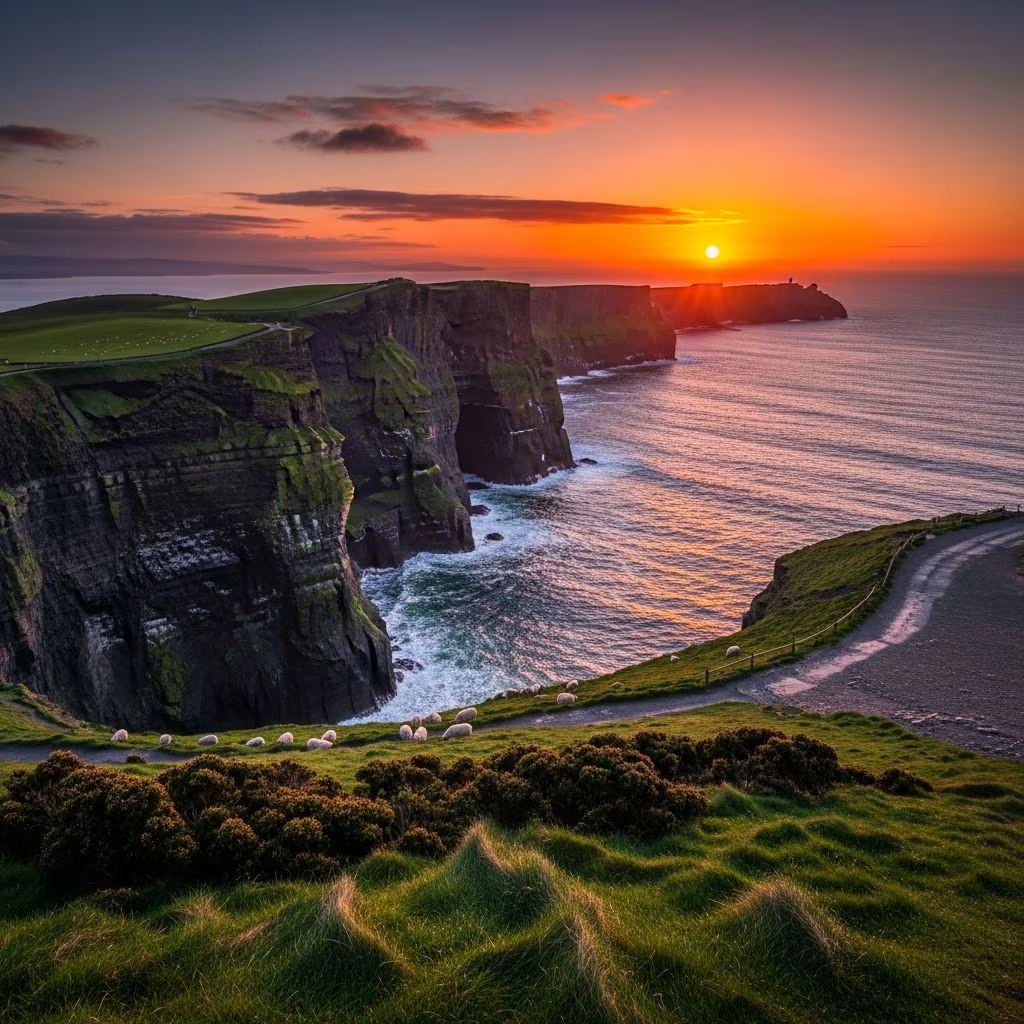
This duration also accommodates the Cliffs of Moher, towering 700 feet above the Atlantic with 8-kilometer stretches of breathtaking geology. Visitors typically access these cliffs from Galway or Doolin, small villages perfectly positioned for exploration. The Aran Islands, accessible by ferry or aircraft from Galway, offer a step back in time with traditional Irish-speaking communities and Iron Age forts.
The eight-to-ten-day route also permits exploration of the Burren, a unique limestone landscape in County Clare featuring craggy terrain, rare plant species, and historic sites like Kylemore Abbey. This expanded timeframe enables travelers to move slowly through regions rather than maintaining exhausting daily drives.
| Segment | Primary Destinations | Duration | Highlights |
|---|---|---|---|
| Southern Loop | Cork, Kinsale, Killarney | 3 days | Coastal charm, castle exploration, mountain parks |
| Western Coastal | Dingle Peninsula, Cliffs of Moher | 2-3 days | Scenic drives, monastic ruins, geological formations |
| Atlantic Route | Aran Islands, Galway, Connemara | 2-3 days | Island culture, bohemian towns, rugged coastline |
| Cultural Sites | Kylemore Abbey, Burren | 1-2 days | Historic architecture, natural landscapes |
Visitors with two weeks can experience comprehensive coverage of Irish regions, including areas often bypassed by rushed travelers. This extended timeframe permits visits to the Northern Irish experience, including the UNESCO World Heritage Giant’s Causeway with its distinctive hexagonal basalt columns. The dramatic coastline near Ballintoy, featured in popular television productions, showcases 18th-century beech tree lined paths and rope bridge adventures.
A two-week journey typically encompasses the Waterford region, home to Dunmore East and Hook Lighthouse, offering maritime history and picturesque coastal villages. Medieval towns like Kilkenny showcase authentic Irish craftsmanship, with narrow streets lined with artisan workshops and heritage sites like the 12th-century Kells Prior monastery.
This extended period also permits relaxation time—crucial for appreciating Irish hospitality culture. Travelers can linger in small towns, participate in traditional music sessions, engage in conversation with locals, and experience the slower pace that defines Irish life outside major tourist centers.
For history enthusiasts, Ireland offers a distinctive route focused on ancient sites and cultural landmarks. This journey prioritizes destinations like the Rock of Cashel in Tipperary, a hilltop monastery complex dating to the 4th century. The journey continues through regions emphasizing monastic heritage, such as Glenveagh National Park, featuring castle architecture set within mountainous terrain.
This specialized route incorporates visits to Augustinian monasteries, Celtic cross sites, and medieval town centers. The route can be completed in seven to ten days while maintaining focus on historical immersion rather than rapid geographic coverage.
Ireland’s climate significantly impacts route selection and experience quality. Spring months (April-May) offer wildflower displays and moderate temperatures, though rainfall remains frequent. Summer (June-August) provides longest daylight hours but attracts maximum tourist crowds, particularly at famous sites like the Cliffs of Moher. Autumn (September-October) delivers dramatic weather with fewer visitors, while winter (November-March) presents challenges including shorter daylight and occasional snow in elevated regions.
Route adjustments based on season include flexibility in activities—summer permits extended hiking and island ferries, while winter favors indoor attractions like museums and historic building tours. Coastal drives prove most spectacular during autumn and spring when weather creates dramatic atmospheric conditions.
Most visitors select self-drive itineraries, offering maximum flexibility and access to remote locations. However, alternative transportation exists for non-drivers. Public buses connect major towns but operate on limited schedules in rural areas. Organized tour groups provide structured itineraries with professional guides, valuable for understanding historical context.
The choice between driving Ireland’s left side roads or utilizing public transport impacts route design. Drivers can access villages impossible to reach via bus, while public transport users concentrate visits in connected towns accessible through bus networks.
Five-day itineraries minimize accommodation costs through concentrated travel but maximize daily driving expenses. Eight-to-ten-day routes distribute costs across more days, typically reducing daily expenses while requiring greater total investment. Two-week journeys permit stays in budget accommodations and self-catering options, significantly reducing overall costs compared to rushed itineraries requiring more expensive conveniences.
Ireland’s compact size enables creative route combinations. Travelers might select a three-day southern loop, two-day western coastal exploration, and three-day northern adventure within a week. This approach prevents repetitive driving while maximizing destination variety. Alternatively, specialists might spend entire trips exploring single regions deeply—the Connemara region alone offers weeks of potential exploration through hiking, cultural immersion, and coastal discovery.
A three-day minimum permits Dublin exploration plus one additional region (Cork or Galway). However, five days provides substantially more comprehensive experience while remaining manageable for busy travelers.
No. Bus tours, organized group travel, and train services connect major destinations. However, self-driving provides access to remote villages and flexibility that public transport cannot match.
Summer (June-August) requires booking 2-3 months ahead. Shoulder seasons (April-May, September-October) permit 4-6 weeks advance booking. Winter allows more flexibility with booking weeks ahead.
Not necessarily. Quality depends on personal interests and travel pace preference. Some travelers prefer rushed itineraries covering maximum destinations, while others value lingering in fewer places.
Creating your perfect Irish itinerary depends on personal priorities—landscape photography enthusiasts, cultural explorers, relaxation seekers, and adventure travelers will each find distinct routes serving their needs. Ireland’s excellent infrastructure, compact geography, and variety of attractions accommodate itineraries spanning from long weekends to month-long explorations. The key lies in honest assessment of your travel style, available time, and primary interests. Whether traversing the dramatic west coast, exploring medieval heartland, or discovering northern attractions, Ireland’s diverse routes ensure memorable experiences for every visitor.
