

 Travel Essentials
 Travel Essentials

Explore Singapore's remarkable green spaces, from primary rainforests to wetland reserves, offering authentic wildlife encounters in an urban setting.
 Travel Essentials
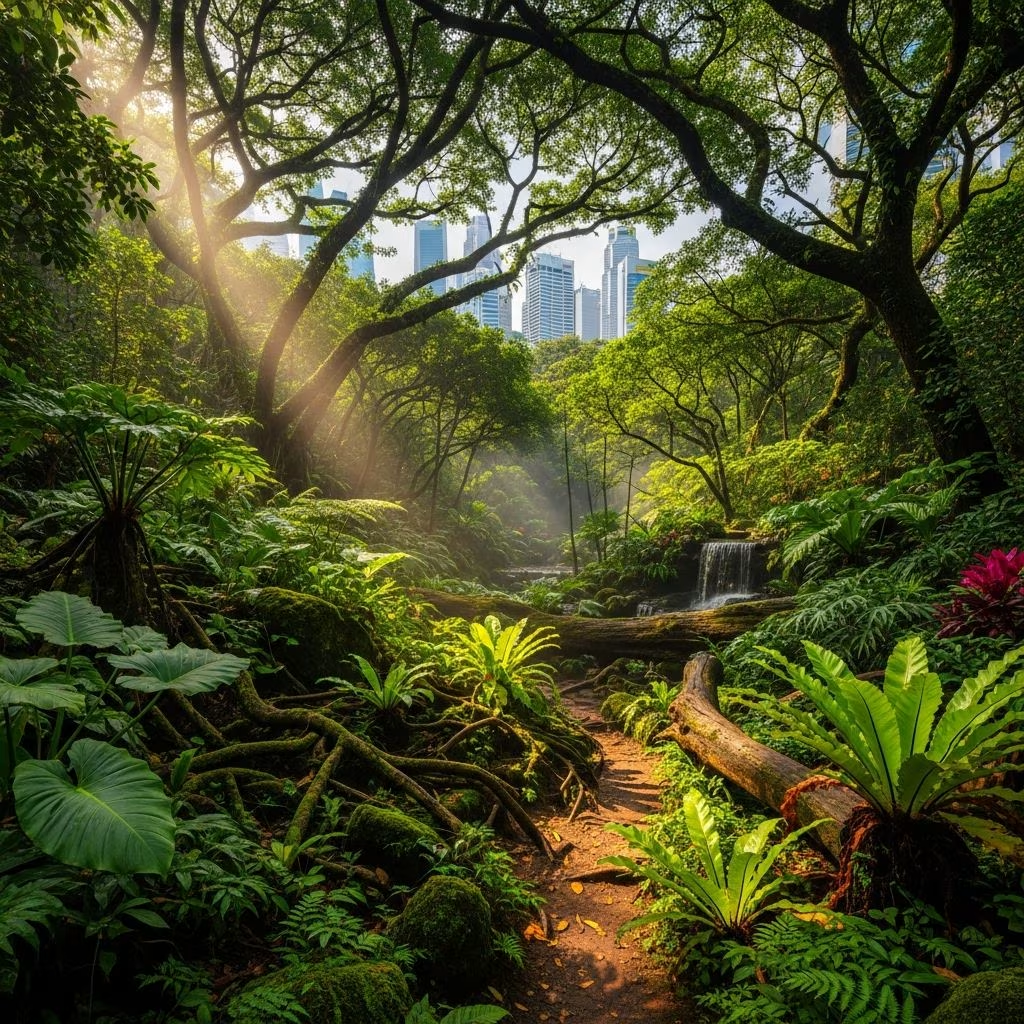
Singapore, despite its reputation as a gleaming metropolitan hub, harbors some of Asia’s most remarkable natural ecosystems. Within the confines of this densely populated island nation lies a network of pristine green spaces that showcase the resilience of tropical biodiversity in an urban environment. For travelers seeking to experience jungle landscapes without leaving the city, Singapore offers an extraordinary paradox: a modern metropolis interspersed with flourishing rainforests, wetlands, and nature reserves that rival far-flung tropical destinations.
The transformation of Singapore into a garden city has preserved critical habitats that continue to thrive amidst urban development. These protected areas serve as sanctuaries for hundreds of plant and animal species, creating unique opportunities for nature enthusiasts to witness tropical ecosystems in their relatively undisturbed state. Understanding these natural attractions requires a deeper exploration of each destination’s distinct characteristics, ecological importance, and the experiences they offer to visitors.
Standing at 163 meters above sea level, Bukit Timah represents the highest point on Singapore’s landscape and hosts one of only two remaining urban primary rainforests on Earth. The other comparable site exists in Rio de Janeiro, making this reserve exceptionally rare and scientifically significant. The reserve functions as a living laboratory for understanding tropical forest dynamics and serves as a critical refuge for countless endemic species.
The ecological value of Bukit Timah cannot be overstated. As a primary rainforest that has escaped large-scale clearing, it maintains the original forest structure and composition that characterized Singapore’s landscape centuries ago. Visitors traversing the reserve’s pathways encounter towering canopy layers, intricate understory vegetation, and forest floor ecosystems teeming with decomposers and soil organisms essential to forest health.
The accessibility of Bukit Timah through well-maintained trails accommodates both casual walkers and serious trekkers. Multiple entry points allow visitors to customize their experience based on fitness level and time availability. The reserve’s infrastructure balances visitor access with environmental protection, ensuring that increased foot traffic does not compromise the delicate ecological balance.
Connected to Bukit Timah through the broader Central Catchment Nature Reserve system, MacRitchie Reservoir encompasses an extensive network of hiking trails spanning dozens of kilometers. This interconnected pathway system transforms the reserve into an immersive jungle trekking destination where visitors can spend hours navigating through pristine forest environments.
The MacRitchie experience extends beyond traditional ground-level hiking through the inclusion of specialized features designed to showcase different perspectives of the rainforest ecosystem. The HSBS Treetop Walk suspension bridge provides visitors with an elevated vantage point, allowing them to observe canopy-dwelling species and understand the vertical stratification that characterizes tropical rainforests. Walking among the upper forest layers offers a fundamentally different experience from ground-level exploration.
Wildlife encounters at MacRitchie reveal the surprising biodiversity inhabiting this urban reserve:
Beyond terrestrial exploration, MacRitchie provides opportunities for water-based activities including canoeing and kayaking on the reservoir itself, offering a peaceful contrast to trail-based adventures while maintaining proximity to pristine natural surroundings.
Located in Singapore’s northern reaches overlooking the Strait of Johor, Sungei Buloh Wetland Reserve functions as a critical habitat for approximately 140 bird species. This wetland ecosystem represents a distinctly different environmental niche compared to the rainforest reserves, showcasing Singapore’s ecological diversity through specialized habitats that support unique communities of organisms.
The reserve’s effectiveness for wildlife observation follows specific temporal patterns that maximize visitor experiences. Visiting before 10 in the morning provides optimal conditions for birdwatching, as avian activity peaks during early daylight hours. Weekday visits offer enhanced serenity compared to weekends, reducing crowds and increasing the likelihood of peaceful encounters with wildlife. This scheduling guidance allows visitors to plan expeditions that align with natural behavioral patterns of resident species.
Beyond ornithological opportunities, Sungei Buloh presents encounters with unexpected megafauna. Monitor lizards of impressive proportions inhabit the wetland margins, while playful otter families demonstrate hunting behaviors along waterways. For exceptionally fortunate visitors, saltwater crocodile sightings provide glimpses of apex predators that have survived in these protected waters. These encounters remind visitors of the reserve’s role in preserving dangerous predator populations that have vanished from most urban environments globally.
The Singapore Botanic Gardens represent a different approach to engaging with tropical vegetation and botanical diversity. Operating as a managed landscape where horticultural expertise shapes the environment, the gardens showcase thousands of plant species arranged in thematic collections that educate while inspiring aesthetic appreciation.
The distinction between the Botanic Gardens and wilder reserves lies in their philosophical approach to human-nature interaction. While the gardens emphasize order, classification, and human intervention in landscape design, they maintain genuine ecological value through habitat provision and species conservation. The gardens serve dual purposes as recreational spaces for urban residents seeking respite and as scientific institutions dedicated to botanical preservation and research.
Hidden within the Botanic Gardens lies the Learning Forest, a 100-year-old forest preserve that maintains relatively undisturbed conditions. This feature demonstrates how cultivated spaces can incorporate and protect primary forest ecosystems, offering visitors a unique juxtaposition of formal gardens and ancient forest environments within the same institution.
The Southern Ridges constitute a distinctive network of interconnected elevated pathways linking three separate parks: Mount Faber, Telok Blangah Hill Park, and Kent Ridge Park. These ridge-top trails create a unique trekking experience by following the island’s topographic high points, offering expansive views while traversing through forest habitats that benefit from their elevated positions.
The ecological significance of ridge habitats differs from valley and wetland environments. These elevated areas experience different wind patterns, moisture regimes, and temperature conditions compared to lower elevations, supporting specialized plant communities adapted to ridge-specific environmental conditions. Walking the Southern Ridges thus provides exposure to distinct ecological zones within a compact geographic area.
The integration of three separate parks into a cohesive trail system demonstrates strategic conservation planning that creates larger habitat corridors benefiting wildlife movement and genetic diversity maintenance across fragmented urban landscapes. This connectivity allows species populations to maintain healthier genetic diversity through occasional interbreeding between populations that would otherwise remain isolated.
Beyond traditional nature reserves, Singapore has developed innovative wildlife experiences that complement natural habitat preservation. Rainforest Wild ASIA represents a groundbreaking 13-hectare adventure-based wildlife park featuring 36 species including critically endangered François’ langur and Philippine spotted deer. These newer attractions offer curated experiences while maintaining conservation missions focused on species preservation and education.
Accessibility and Transportation: Most reserves are readily accessible via Singapore’s comprehensive MRT (Mass Rapid Transit) system, with taxi services providing alternatives for those preferring direct transportation to specific trailheads. This accessibility democratizes nature experiences, allowing visitors without private vehicles to engage with natural areas.
Seasonal and Temporal Patterns: Wildlife activity fluctuates throughout daily and seasonal cycles. Early morning visits maximize wildlife encounters as most tropical species are crepuscular or diurnal, exhibiting peak activity during dawn hours. Weekday visits reduce crowds compared to weekends, potentially enhancing the sense of wilderness immersion.
Safety and Preparedness: While these reserves maintain well-marked trails and basic infrastructure, visitors should respect wildlife from appropriate distances and follow designated pathways. The presence of large monitor lizards, pythons, and crocodiles necessitates awareness rather than fear, as these species typically avoid human confrontation when undisturbed.
Singapore’s natural reserves serve functions extending far beyond recreational value. These protected areas maintain critical ecosystem services including water filtration through wetland processes, carbon sequestration through forest biomass accumulation, and urban temperature regulation through vegetation cover. The biodiversity harbored within these reserves contributes to medical and pharmaceutical research, with tropical species providing unique biochemical compounds currently being investigated for therapeutic applications.
The preservation of these natural areas within a highly developed urban context demonstrates commitment to biodiversity conservation despite competing pressures for land development. This commitment influences urban planning decisions across Asia, potentially inspiring comparable conservation efforts in other rapidly urbanizing regions.
Singapore’s network of nature reserves and protected spaces creates genuine opportunities to experience tropical jungle ecosystems without sacrificing urban accessibility. From the primordial rainforests of Bukit Timah to the wetland habitats of Sungei Buloh, these destinations showcase the remarkable resilience of tropical biodiversity when provided adequate protection and management. Whether seeking intensive wilderness trekking, leisurely nature walks, or specialized wildlife observation, Singapore’s natural attractions accommodate diverse visitor preferences while maintaining ecological integrity. The convergence of modern urban infrastructure with pristine natural environments creates a distinctive travel experience unavailable in most global destinations, positioning Singapore as a unique nexus where jungle experiences and metropolitan convenience coexist.
