

 Travel Essentials
 Travel Essentials

A comprehensive guide to Morocco's most remarkable kasbahs, from UNESCO heritage sites to mountain retreats, showcasing centuries of Berber and Islamic architecture.
 Travel Essentials
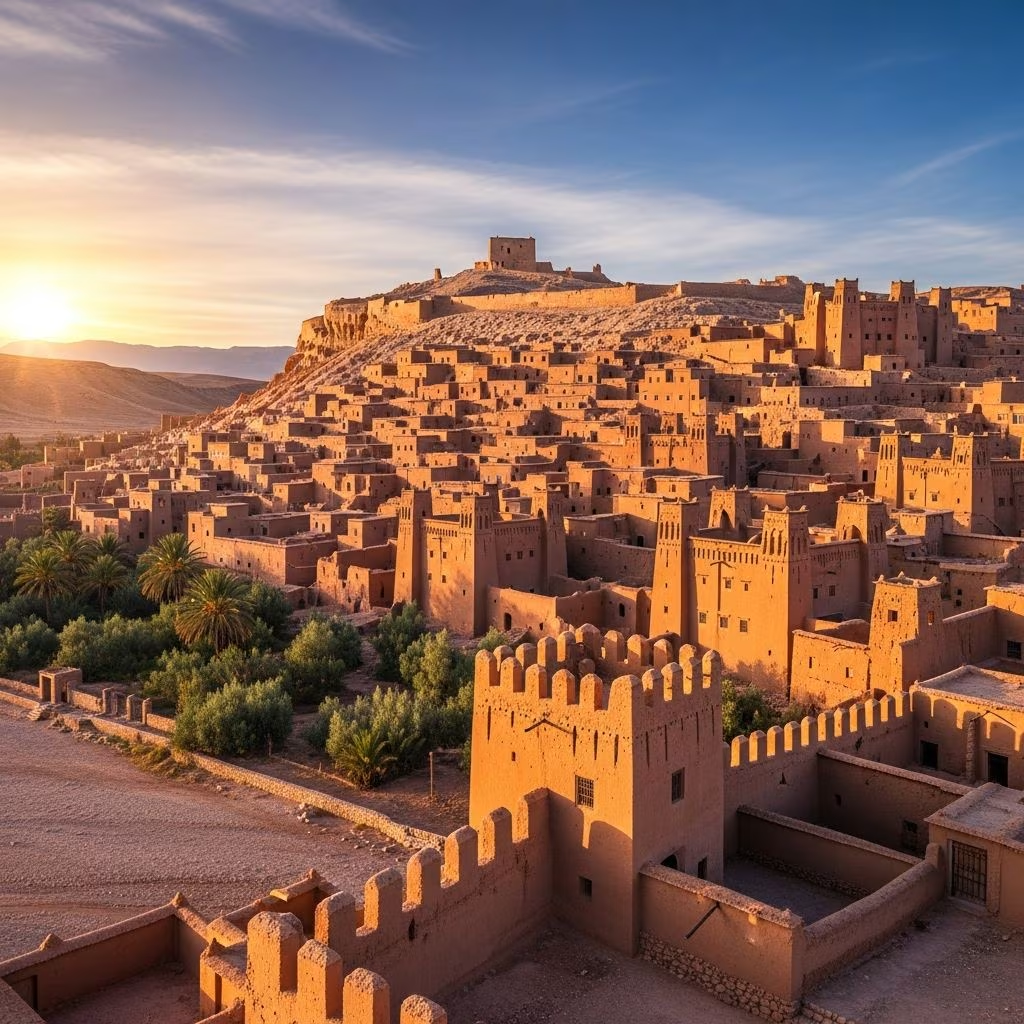
Morocco’s landscape is adorned with remarkable fortified structures that stand as testament to centuries of architectural innovation and cultural evolution. These fortress cities, known locally as kasbahs, stretch across diverse terrain—from the snow-capped peaks of the Atlas Mountains to the windswept Saharan desert and the temperate coastlines along the Atlantic and Mediterranean. Each kasbah tells a unique story of the communities that built and inhabited them, representing layers of Berber, Arab, and Islamic influences that have shaped North African civilization.
Kasbahs represent far more than crumbling relics of the past. These fortified compounds served multiple purposes throughout history: as administrative centers for regional governors, as military strongholds protecting trade routes, as residential quarters for wealthy families, and as communal spaces for surrounding villages. The term “kasbah” itself refers to a fortified citadel or medina, typically enclosed by defensive walls and featuring intricate internal networks of passages, courtyards, and residential chambers.
The architectural significance of kasbahs lies in their adaptation to local geography and climate. Structures built in the Atlas Mountains feature sturdy stone foundations and sloped roofing to withstand heavy winter precipitation, while desert kasbahs employ mud-brick and earth construction that provides natural insulation against extreme temperature fluctuations. Coastal kasbahs incorporate defensive features designed to repel maritime attacks and piracy.
What distinguishes contemporary kasbahs from mere archaeological sites is their continued habitation and cultural relevance. Many remain active communities where families maintain traditional crafts, agricultural practices, and social customs passed down through generations. This living heritage transforms kasbahs into dynamic cultural laboratories rather than static museum pieces.
Aït Ben Haddou stands as Morocco’s most internationally recognized kasbah and holds UNESCO World Heritage status. This sprawling fortress complex features an intricate labyrinth of earthen structures, elevated granaries built upon stone foundations, and strategic lookout towers positioned to survey the surrounding valleys. The kasbah’s architectural design reflects sophisticated urban planning, with narrow alleyways designed for climate control and defense, connected by steep staircases and hidden passages.
The construction materials—compressed earth and mud brick—demonstrate remarkable durability despite centuries of exposure to Morocco’s harsh climate. The site’s preservation showcases the structural integrity of traditional earth-based architecture when properly maintained. Visitors navigating the maze-like alleyways encounter workshops where artisans continue producing traditional crafts, bakeries operating much as they did centuries ago, and residential spaces that reveal domestic life within the fortress walls.
Nestled within the foothills of the High Atlas range, Kasbah Tamadot represents a contemporary reimagining of traditional kasbah hospitality. Originally constructed as a governor’s residence during the early twentieth century, this property underwent comprehensive restoration following the September 2023 earthquake that devastated the surrounding region. The restoration maintained authentic architectural elements—mud-brick walls, locally handcrafted textiles, and traditional design principles—while introducing luxury amenities including infinity pools, spa facilities, and modern accommodation standards.
The kasbah’s strategic location near the village of Asni provides accessibility from Marrakech while maintaining proximity to authentic mountain communities. Recent expansion included the addition of three-bedroom riads, enhanced dining facilities, recreational spaces for families, and luxury tent accommodations that extend the property’s capacity while respecting the natural mountain environment.
The southern regions of Morocco, particularly along the Draa Valley and extending toward M’Hamid and Zagora, feature an extraordinary concentration of kasbahs often referenced collectively as the “Route of 1000 Kasbahs.” This designation reflects not merely numerical abundance but the density and diversity of fortress settlements distributed throughout desert oasis communities. These fortifications historically controlled critical water resources and served as gatekeepers for trans-Saharan trade networks.
Kasbah Amridil, positioned within the Skoura oasis region, preserves authentic indicators of daily life through displays of traditional implements, weaving equipment, and domestic furnishings. The structure reveals how residents adapted fortress architecture to desert conditions, incorporating ventilation systems, water storage facilities, and multi-level design that maximized shade and minimized heat exposure.
Kasbah Taourirt dominates the central Ouarzazate region, presenting one of Morocco’s largest and most complex fortress structures. The seemingly endless succession of interconnected chambers, courtyards, and passageways creates a three-dimensional puzzle that rewards patient exploration, with each room revealing architectural details and decorative elements that reflect periods of construction and renovation spanning centuries.
Tangier’s oceanfront kasbah commands dramatic vistas across the Strait of Gibraltar toward the Spanish coast. Elevated position provides defensive advantages while offering contemporary visitors spectacular views across the Mediterranean and Atlantic convergence point. The structure represents a fascinating blend of Mediterranean and North African architectural traditions, influenced by centuries of maritime commerce and cultural exchange.
Chefchaouen’s kasbah, positioned within the Rif Mountains approximately thirty kilometers from the Mediterranean coast, creates an atmospheric sanctuary within the city’s renowned blue-painted medina. The fortress commands views across the Rif region’s forested landscape, providing a visual counterpoint to the serene mountain environment surrounding the city. The kasbah’s ramparts enclose traditional architecture while offering respite from the medina’s crowded streets and narrow passages.
| Kasbah | Primary Construction Material | Distinctive Features | Historical Period |
|---|---|---|---|
| Aït Ben Haddou | Mud-brick and earth | Granaries, lookout towers, labyrinthine passageways | 16th century origins |
| Kasbah Telouet | Stone and mud-brick | Palatial chambers, zellige tilework, elaborate courtyards | 19th-20th century |
| Kasbah Taourirt | Mud-brick | Multi-chamber complex, interconnected courtyards | 19th century |
| Kasbah Amridil | Earth and stone | Preserved domestic spaces, traditional craft displays | 17th-18th century |
| Kasbah Tifoultoute | Mud-brick | Panoramic positioning, valley perspectives | 19th century |
Kasbahs incorporate design elements responding to their specific geographical contexts. Mountain fortresses feature reinforced structural supports capable of withstanding seismic activity and precipitation. Desert kasbahs employ thermal mass principles through thick earthen walls that stabilize interior temperatures. Coastal fortifications include crenellated walls, arrow slits, and defensive bastions designed to repel historical threats from maritime raiders and competing powers.
The internal organization of kasbahs reflects hierarchical social structures and specialized functional zones. Upper levels traditionally housed administrative officials and military commanders, middle sections contained residential quarters for families and servants, while lower levels and integrated structures provided storage, workshops, and market spaces. This vertical arrangement maximized defensive capabilities while organizing daily life efficiently.
Kasbahs embody the complex historical narrative of Morocco, serving as physical repositories of political power dynamics, economic transformations, and cultural synthesis. The Kasbah of Telouet, once the residence of the influential El Glaoui family who wielded substantial regional authority during the colonial period, exemplifies this historical complexity. The fortress’s ornate chambers decorated with zellige tilework and intricate stucco work demonstrate the wealth and aesthetic sophistication available to powerful families, while its partial abandonment reflects broader political changes that diminished the family’s authority.
These structures document architectural evolution across centuries, revealing how construction techniques, design principles, and aesthetic preferences transformed in response to technological advancement, external influences, and shifting cultural values. The preservation of different kasbahs at varying stages of renovation and decay provides comparative evidence of construction methodologies, material durability, and maintenance requirements for earth-based architecture.
Contemporary kasbahs accommodate visitors through diverse access models. Some function as museums with guided interpretive programs, others operate as luxury hotel properties offering immersive cultural experiences, while traditional communities continue inhabiting kasbahs as primary residences. This diversity provides visitors with varied engagement opportunities—from archaeological observation to active participation in living cultural spaces.
The High Atlas Mountain kasbahs typically require transportation from Marrakech or regional centers, with travel times ranging from forty-five minutes to several hours depending on specific destinations. Desert kasbahs along the Route of 1000 Kasbahs are most efficiently accessed via organized tours incorporating multiple properties, valley drives, and oasis settlements. Coastal kasbahs in Tangier and Chefchaouen provide more straightforward access, situated within established tourist infrastructure.
Earth-based kasbahs face ongoing conservation challenges from weather exposure, seismic activity, and insufficient maintenance resources. The September 2023 earthquake demonstrated both the vulnerability of these structures and the commitment to their restoration. Kasbah Tamadot’s recovery and modernization exemplifies comprehensive restoration approaches that maintain architectural authenticity while introducing structural reinforcements and contemporary amenities.
Preservation initiatives balance conservation of historical authenticity with practical livability requirements for communities who inhabit these spaces. Organizations focused on Moroccan heritage work with local authorities and property owners to develop sustainable restoration methodologies, training programs for traditional craftspeople, and financial mechanisms supporting long-term maintenance.
Autumn months (September through November) and spring months (March through May) provide optimal climate conditions. Winter brings heavy precipitation to mountain kasbahs, while summer temperatures in desert regions exceed comfortable touring conditions.
Aït Ben Haddou offers established visitor infrastructure with parking, guided tours, and accommodations in nearby settlements. Kasbah Tamadot provides luxury hospitality services. Tangier and Chefchaouen kasbahs are situated within established tourist cities.
Yes, Kasbah Tamadot operates as a luxury hotel property. Various desert kasbahs have been converted to guesthouses and riads offering overnight accommodation. Traditional communities in some kasbahs occasionally welcome visitors through organized cultural tourism programs.
Photography policies vary by location. UNESCO sites like Aït Ben Haddou permit personal photography but may restrict commercial or drone photography. Private properties and residential spaces require permission before photographing. Always inquire locally.
Aït Ben Haddou warrants 2-3 hours for thorough exploration. Kasbah Tamadot benefits from multi-day stays. Desert kasbahs are efficiently visited during organized multi-day tours covering several properties. Coastal kasbahs require 1-2 hours.
