
 Stays
StaysStays
Best Lisbon Neighborhoods: Where to Stay, Explore, and Go Out
A comprehensive guide to Lisbon's most distinctive neighborhoods, helping travelers understand each area's character, attractions, and ideal visitor types.
 Stays
StaysLisbon captivates visitors with its intricate tapestry of neighborhoods, each possessing its own distinct personality, historical significance, and appeal. Understanding these varied districts empowers travelers to make informed decisions about where to base themselves and which areas to explore during their visit. Rather than treating the city as a monolithic destination, recognizing the character of each neighborhood transforms the experience into a more intentional and rewarding journey.
The Historic Heart: Ancient Districts with Timeless Character
The oldest sections of Lisbon reveal the city’s medieval past through winding cobblestone streets and centuries-old architecture. These neighborhoods transport visitors back in time, offering authentic glimpses into traditional Portuguese urban life that has persisted for generations.
Mouraria: The Spice Market District
Nestled in the historic core, Mouraria presents an entirely different experience from modern tourist areas. The narrow passages here overflow with independent shops selling everything from contemporary electronics to bulk spices, creating a sensory-rich environment that reflects genuine local commerce rather than curated tourism. During lunch hours, traditional restaurants fill with residents conversing in multiple languages, emphasizing this neighborhood’s cultural diversity and working-class character. Visitors who venture into Mouraria discover the authentic rhythm of daily Lisbon life, where neighborhood residents conduct business and socialize in ways unchanged for decades.
Alfama: Where Postcard Views Come to Life
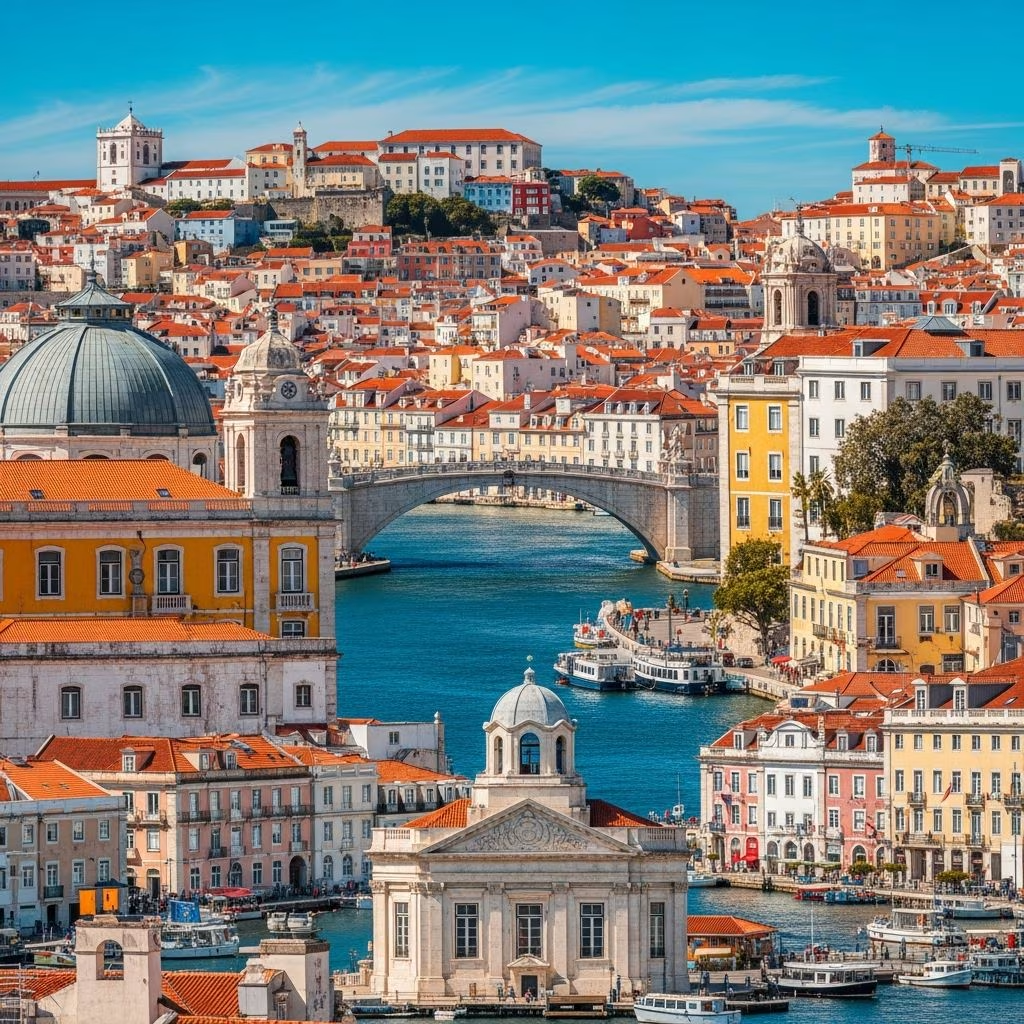
Alfama stands as one of Lisbon’s most photographed and visited neighborhoods, and the reputation is well-earned. The district’s sun-drenched terraces, distinctive terracotta roof tiles, and iconic viewpoints create the visual identity most travelers recognize from postcards and travel photography. Beyond the scenic beauty, Alfama serves as a museum of medieval architecture, with the Cathedral (Sé de Lisboa), the National Pantheon, and Castle of São Jorge providing cultural anchors within the neighborhood’s boundaries. The true magic emerges when wandering purposelessly through the labyrinthine streets, discovering tiled building facades, hidden interior courtyards, and fragments of medieval fortifications that tell stories of Lisbon’s centuries-old development. Melancholic Fado music drifts from venues throughout the neighborhood, offering an auditory dimension to the visual splendor.
Central Neighborhoods: Commerce, Transport, and Urban Vitality
The central districts function as Lisbon’s organizational backbone, offering the highest concentration of hotels, restaurants, and transportation connections. These areas appeal most to first-time visitors seeking convenient access to major attractions and essential services.
Baixa: The Reconstructed Downtown Grid
Following the devastating 1755 earthquake that destroyed much of Lisbon, urban planners redesigned Baixa according to rational geometric principles, creating the neat grid of streets visible today. This organized layout contrasts sharply with the chaotic medieval patterns found in older neighborhoods. Major attractions including Praça do Comércio, Praça da Figueira, and the monumental Santa Justa Lift provide gathering spaces and architectural landmarks throughout the neighborhood. The dense concentration of hotels, hostels, cafes, and shops makes Baixa the default choice for many first-time visitors, particularly those prioritizing convenient access to metro lines and major transit hubs.
Chiado and Rossio: Layered Urban History
These interconnected neighborhoods showcase multiple historical periods compressed into compact spaces. Chiado enchants with picturesque squares featuring viewpoint terraces (called miradouros) that overlook the city’s undulating topography, while the famous Café A Brasileira offers a legendary spot for people-watching and espresso. The elegant São Carlos Theater, with its opulent interior design, stands as a cultural centerpiece for the neighborhood. Rossio encompasses the area surrounding Praça Dom Pedro IV, where the distinctive Portuguese cobblestone pavement (calçada portuguesa) creates mesmerizing geometric patterns. The Church of São Roque provides historical perspective, having survived the 1755 earthquake with minimal structural damage despite its ornate interior decoration. Together, these neighborhoods combine shopping, dining, cultural venues, and transportation efficiency in walkable proximity to historical landmarks.
Dynamic Nightlife and Entertainment Districts
For visitors seeking vibrant evening culture, Lisbon offers several neighborhoods that transform as darkness falls, attracting crowds of locals and travelers in search of bars, clubs, and late-night dining.
Bairro Alto: The Traditional Party Hub
Bairro Alto has earned its reputation as Lisbon’s premier nightlife destination through decades of consistent energy and diverse entertainment options. Residential by day, the neighborhood becomes a focal point for weekend social activity, with streets partially closed to traffic to accommodate pedestrian crowds. The neighborhood specializes in traditional tascas—casual taverns where live Fado music creates an intimate atmosphere for experiencing this melancholic Portuguese musical tradition. Beyond music venues, the area offers an exhaustive selection of bars ranging from sophisticated cocktail lounges to casual beer halls, ensuring visitors find their preferred social setting. The cobbled streets and hillside location create a picturesque backdrop for nighttime exploration, attracting both locals and tourists who navigate the narrow passages discovering new venues and meeting points. Notable cultural institutions including the Igreja do Carmo, Igreja de São Roque, and the Solar do Vinho do Porto add daytime interest to the neighborhood’s evening popularity.
Príncipe Real: Upscale Sophistication
North of Bairro Alto, Príncipe Real represents a more refined approach to Lisbon nightlife and dining culture. This leafy, affluent neighborhood hosts restaurants featuring innovative cuisine, trendy cafes catering to design-conscious clientele, and sophisticated bars emphasizing cocktail craftsmanship. In recent years, Príncipe Real has cultivated an identity around concept stores and specialized design shops, appealing to visitors interested in contemporary art and high-end retail. The neighborhood contains Lisbon’s botanical garden and the romantic Jardim do Príncipe Real, providing green spaces and peaceful retreats from the urban bustle. The demographic composition tends toward professionals and affluent residents, creating a more polished atmosphere compared to the bohemian character of nearby Bairro Alto.
Cais do Sodré: Waterfront Energy
Located near major metro stops and ferry terminals, Cais do Sodré maintains constant activity from both tourism and local transit traffic. The neighborhood earned notoriety for the infamous Pink Street, a pedestrianized lane famous for its bold aesthetic and lively bar scene. Beyond the concentrated nightlife district, Cais do Sodré offers practical amenities including the Time Out Market, a gathering space featuring diverse food vendors and welcoming social atmosphere that functions as a community hub. During major sporting events, large screens in bars and restaurants make the neighborhood a popular gathering point for fans, emphasizing its role as a social gathering space beyond traditional tourism. The bohemian character mirrors aspects of Bairro Alto while maintaining its own waterfront identity and maritime heritage.
Residential and Local-Focused Neighborhoods
These districts offer travelers authentic glimpses into how typical Lisbon residents live, work, and socialize without the concentrated tourism focus of central areas.
Madragoa and Santos: The Neighborhood Paradox
Asking locals to precisely define where Santos ends and Madragoa begins yields inconsistent answers, which is precisely why these districts are usually discussed as a unified entity. By day, the neighborhoods function as bustling business areas filled with offices, schools, and professional activity. After working hours, however, they transform into quiet residential zones where locals conduct daily life. Modest cafes offering free wireless internet provide social gathering spaces, while restaurants ranging from traditional Portuguese establishments to contemporary venues reflect the neighborhood’s evolutionary character. This duality makes Santos/Madragoa particularly appealing to travelers seeking to experience Lisbon through the lens of residential daily life rather than through tourism infrastructure. The neighborhoods offer practical amenities without the tourist inflation present in central areas, though they lack the historical significance or entertainment density of more famous districts.
Day Trip Destinations and Extended Exploration
Beyond the compact central core, certain neighborhoods function more as day-trip destinations, featuring extensive grounds and monumental architecture requiring several hours for proper exploration.
Belém: Monuments and Maritime Heritage
The expansive Belém district honors Lisbon’s seafaring history through elaborate Manueline architectural style, reflecting the city’s golden age of maritime exploration. Visitors can efficiently experience the neighborhood’s highlights—including the Mosteiro dos Jerónimos monastery, Padrão dos Descobrimentos monument, and Torre de Belém tower—within a single morning. The essential cultural experience culminates at Pastéis de Belém, where the famous custard tarts are best consumed immediately from the oven and dusted with cinnamon. Sprawling manicured gardens and expansive riverside squares provide peaceful settings for reflection between monument visits. Most travelers approach Belém as a focused day-trip destination rather than as a multi-day base, given the neighborhood’s geographic distance from central districts and its specialized focus on historical monuments rather than diverse daily-life experiences.
Modern Urban Developments: Contemporary Lisbon
Beyond the traditional historic neighborhoods, Lisbon has developed modern districts representing contemporary urban planning and architecture.
The Marquês de Pombal Square and surrounding area showcase twentieth-century urban development, featuring wide avenues, contemporary buildings, and modern commercial establishments. This zone appeals to visitors seeking contemporary Lisbon culture and comfortable modern amenities. The Park of Nations (Parque das Nações), originally constructed for the 1998 Lisbon World Exposition, represents ambitious urban regeneration through distinctive contemporary architecture and recreational facilities. These modern districts provide contrast to historic areas, demonstrating how Lisbon continues evolving as a living city rather than remaining frozen as a heritage artifact.
Choosing Your Ideal Neighborhood Base
Neighborhood Selection Matrix
| Neighborhood Focus | Best For | Primary Characteristics |
|---|---|---|
| History and Atmosphere | Cultural exploration, photography, traditional experiences | Medieval streets, historic monuments, authentic local commerce |
| Central Convenience | First-time visitors, multi-destination travelers, transport access | Hotels, restaurants, shops, metro connections, landmark proximity |
| Nightlife and Entertainment | Social travelers, music enthusiasts, evening culture seekers | Bars, restaurants, live music venues, walkable entertainment districts |
| Local Living | Extended stays, cultural immersion, residential perspective | Neighborhood cafes, working-class commerce, authentic daily rhythms |
| Day Trips and Monuments | Historical focus, specific landmark visits, concentrated exploration | Major attractions, gardens, monuments, specialized experiences |
Frequently Asked Questions About Lisbon Neighborhoods
Which neighborhood suits first-time visitors best?
Baixa, Chiado, and Rossio offer optimal combinations of transport connectivity, restaurant density, and landmark proximity. These central neighborhoods provide practical advantages while remaining within walking distance of historic areas like Alfama. However, visitors prioritizing authentic cultural experience might prefer basing themselves in Alfama despite reduced hotel availability.
Where should I stay to experience authentic Lisbon?
Alfama and Mouraria provide the most genuine perspectives on traditional Portuguese urban living, with winding medieval streets and local-oriented commerce. Santos and Madragoa offer residential authenticity with fewer tourists, though reduced entertainment options.
Which neighborhoods offer the best nightlife?
Bairro Alto dominates for traditional Lisbon nightlife with Fado music and casual bars, while Príncipe Real caters to more sophisticated tastes. Cais do Sodré provides waterfront energy and contemporary venue options.
Can I walk between neighborhoods?
Lisbon’s hilly topography creates challenging walking between districts, particularly involving elevation changes. Central neighborhoods connect relatively easily, while reaching Belém or distant areas requires metro, tram, or taxi transportation.
What transportation options connect neighborhoods?
Metro lines, trams (particularly the famous Tram 28), buses, and ferry services provide comprehensive neighborhood connectivity. Central areas benefit from direct metro access on multiple lines.
Practical Consideration for Neighborhood Selection
Selecting a neighborhood base depends on balancing multiple factors including visit duration, personal interests, budget constraints, and desired experiences. First-time visitors with limited time typically benefit from central locations offering maximum convenience and landmark access. Extended stays allow exploration of residential neighborhoods providing deeper cultural understanding. The diversity of Lisbon’s districts means no single “best” neighborhood exists—only choices optimally matching individual traveler preferences and travel styles.
References
- Neighborhoods to Stay in Lisbon: A First-Timer’s Guide — Hayley on Hiatus. https://www.hayleyonhiatus.com/neighborhoods-to-stay-in-lisbon-a-first-timers-guide/
- A Guide to Lisbon’s Neighborhoods — Lonely Planet. https://www.lonelyplanet.com/articles/best-neighborhoods-in-lisbon
- Where to Stay in Lisbon: Best Areas for First-Timers — Bon Traveler. https://www.bontraveler.com/where-to-stay-lisbon-portugal/
- Lisbon’s Neighborhoods – Best Districts to Visit in Lisbon — Lisbon.net. https://www.lisbon.net/neighborhoods
- A Guide to Lisbon Neighborhoods — Travel Dudes. https://traveldudes.com/a-guide-to-lisbon-neighborhoods/
- Where To Stay In Lisbon: A Complete Guide (for First Timers) — Wheatless Wanderlust. https://wheatlesswanderlust.com/where-to-stay-lisbon/
On This Page
The Historic Heart: Ancient Districts with Timeless Character Central Neighborhoods: Commerce, Transport, and Urban Vitality Dynamic Nightlife and Entertainment Districts Residential and Local-Focused Neighborhoods Day Trip Destinations and Extended Exploration Modern Urban Developments: Contemporary Lisbon Choosing Your Ideal Neighborhood Base Frequently Asked Questions About Lisbon Neighborhoods Practical Consideration for Neighborhood Selection← Previous
Lisbon Cultural Guide: History, Fado, Street Art & Belém
Next →
3-Day Seattle Itinerary: Best Sights, Food & Neighborhoods
Related Reading