


 Food & Culture
Food & Culture
Best Local Pubs in Dublin for Authentic Guinness and Irish Music
Explore Dublin's most authentic pubs where locals go to enjoy traditional atmosphere, live music, and genuine Irish hospitality away from tourist crowds.
 Food & Culture
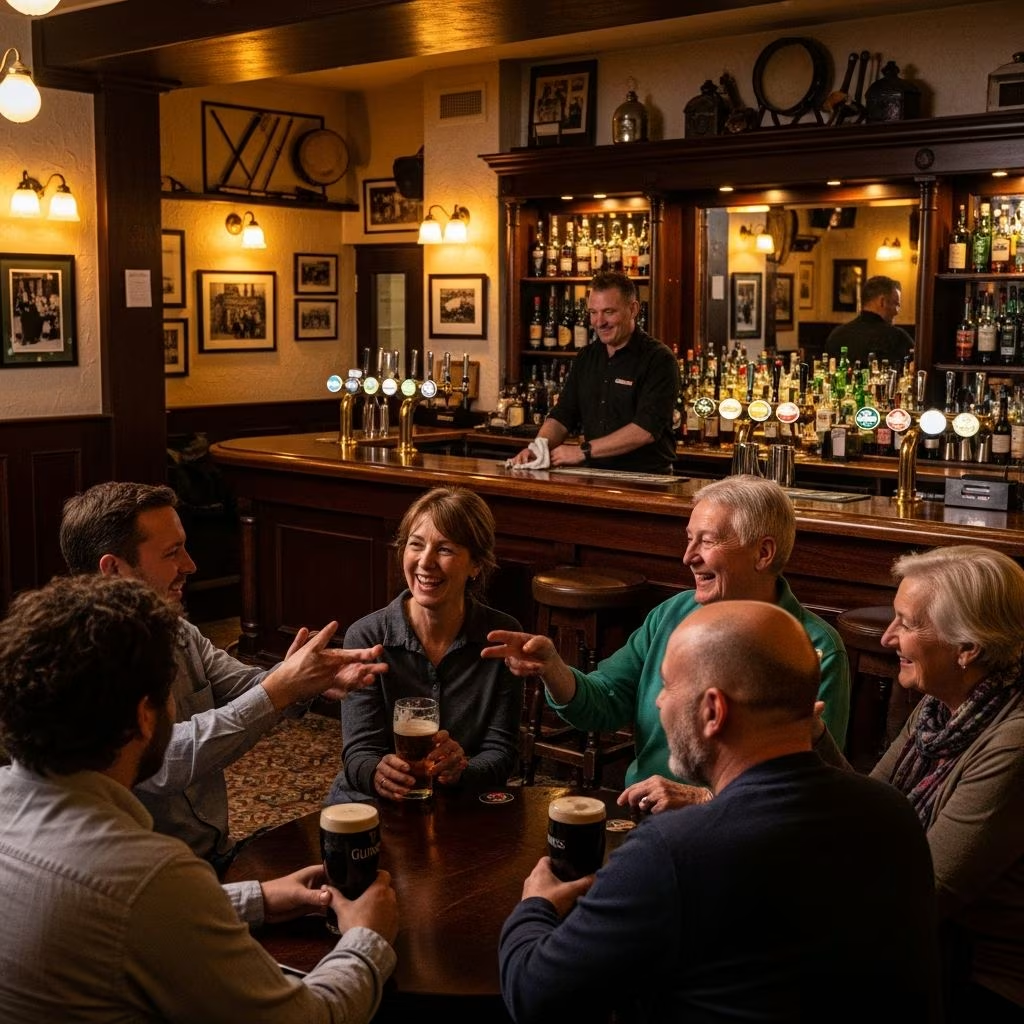
Dublin’s pub culture represents far more than simply grabbing a drink; it embodies centuries of Irish tradition, community gathering, and cultural storytelling. While the city attracts millions of visitors annually seeking the quintessential Irish pub experience, the true heart of Dublin’s drinking establishments lies in those frequented primarily by locals—places where the atmosphere remains unfiltered, the conversations genuine, and the sense of belonging palpable. These establishments serve as cultural institutions where residents celebrate milestones, conduct business, enjoy live entertainment, and maintain the social fabric that defines Irish urban life.
The distinction between tourist-oriented establishments and genuinely local pubs has become increasingly pronounced in recent years. Many visitors unknowingly find themselves in venues specifically designed and marketed for international tourists, complete with orchestrated entertainment and inflated prices. Conversely, the pubs that locals cherish often remain tucked away on side streets or in neighborhoods far removed from the city center’s main attractions. Understanding where to find these authentic venues and what makes them special requires local knowledge and an appreciation for Dublin’s diverse pub landscape.
The Historic Foundation of Dublin’s Pub Heritage
Dublin’s pub tradition stretches back centuries, with some establishments maintaining continuous operation for more than two hundred years. These historic venues function as living museums, their physical spaces preserving architectural styles and design elements from different eras. The oldest pubs in the city tell stories of Irish independence, literary movements, musical innovation, and everyday life across generations. Beyond mere age, what distinguishes these historic establishments is their ability to maintain authenticity while serving contemporary patrons, refusing to sanitize their environments for commercial purposes.
Certain pubs hold particular significance in Irish historical narratives. The Brazen Head, established in 1198, claims status as Dublin’s oldest continuously operating pub and has witnessed centuries of political discourse and social change. The Stag’s Head, first documented as a tavern in the 1770s and formally established as a pub in 1895, represents Victorian-era architecture and design sensibility. These venues maintain original features including stained glass windows, wood-paneled walls, and ornate bar fixtures that transport visitors to earlier periods while accommodating modern patrons.
The Long Hall, operating since 1766, exemplifies how historic pubs maintain their appeal across generations. Its preserved Victorian interior creates an enchanting atmosphere that appeals equally to history enthusiasts and those seeking escape from contemporary life. Similarly, establishments like Toners and The Palace Bar have earned reputations for balancing historical preservation with contemporary functionality, ensuring that architectural heritage enhances rather than constrains the patron experience.
Beyond the Tourist Trail: Finding Authentic Local Venues
The most authentically local pubs often exist geographically or culturally beyond the main tourist corridors. North of the River Liffey, establishments like The Celt offer genuine neighborhood atmospheres where visitors may comprise a small minority of patrons on any given evening. These venues feature modest exteriors that belie surprisingly spacious interiors, comfortable seating arrangements, and decor reflecting the interests of regular clientele rather than thematic tourist appeal. The lack of external marketing or strategic positioning near major attractions contributes to their preserved authenticity.
Camden Street represents another neighborhood where Dubliners congregate for genuine social experiences. Devitt’s Pub exemplifies the neighborhood pub ideal, combining excellent Guinness preparation with consistent live traditional music programming and a robust whiskey selection. The welcoming atmosphere extends across age groups, from longtime regulars to younger patrons, creating intergenerational community spaces where strangers quickly become temporary social companions through shared experience.
Geographic location proves less important than operational philosophy when identifying truly local establishments. Family-owned venues operated for decades, pubs featuring consistent live music programming, and establishments maintaining traditional Irish food offerings tend to retain local patronage regardless of proximity to tourist attractions. These venues prioritize community engagement over maximizing transient visitor spending, resulting in atmospheres that reflect genuine Irish social patterns.
Traditional Irish Music: The Soul of Local Pubs
Live traditional Irish music represents perhaps the most distinctive feature differentiating authentic local pubs from tourist-oriented venues. The authenticity of musical programming varies dramatically; some establishments feature carefully scheduled performances by professional musicians, while others host spontaneous sessions where local musicians gather informally with traditional instruments. The Cobblestone self-identifies as “a drinking pub with a music problem,” capturing the philosophy that live music serves patrons rather than constituting the primary commercial draw.
O’Donoghue’s on Baggot Street has achieved legendary status for consistent traditional music programming, featuring players on fiddles, tin whistles, bodhráns, and uilleann pipes during most afternoons and evenings. This venue’s historical connection to The Dubliners, the renowned Irish folk band that originated there, established its cultural credibility. However, numerous neighborhood pubs throughout Dublin offer authentic traditional music experiences without such historical celebrity, their value residing in genuine community musical engagement.
The instrumentation featured in authentic traditional music sessions differs markedly from commercially arranged performances. Acoustic instruments including traditional fiddles, bodhráns (Irish frame drums), tin whistles, and uilleann pipes create distinctive sounds fundamentally different from amplified contemporary music. Sessions occurring in smaller pub spaces often feel intimate despite crowded conditions, with music bringing strangers together in shared aesthetic experience.
Architectural Heritage and Interior Design
Dublin’s most cherished local pubs showcase distinctive architectural characteristics reflecting their historical periods and design sensibilities. Victorian-era pubs feature high ceilings, wood-paneled walls, ornate stained glass windows, and bar fixtures crafted from quality materials built to last generations. The Stag’s Head exemplifies Victorian design philosophy, featuring architectural elements that depict pub life rather than religious or pious imagery, including depictions of social gatherings and convivial scenes.
The Palace Bar’s famous “jewel-box” back room complete with gorgeous stained glass ceiling represents the specialized design approach of earlier establishments, where distinct interior spaces served different social functions. Back rooms provided privacy for business discussions or intimate gatherings, while front bars accommodated casual socializing and standing-room-only crowds during busy periods.
Beyond specific decorative elements, the physical organization of authentic pubs facilitates particular social patterns. Snug tables encourage small group intimacy, bar stools enable casual interactions with bartenders and neighboring patrons, and varied room sizes accommodate different party compositions. These spatial arrangements emerge from decades of social use rather than design theorizing, creating naturally functional environments.
Food, Drink, and the Complete Pub Experience
While beverages constitute the primary pub offering, authentic local establishments increasingly provide substantial food service. Traditional Irish pub food—stews, sausages, and hearty comfort fare—reflects working-class heritage and agricultural traditions. Devitt’s Pub’s highly regarded Guinness stew represents the standard toward which many establishments aspire, combining quality ingredients with preparation techniques that complement rather than overshadow the main beverage offerings.
Beyond generic pub fare, many local establishments feature specialized drinks preparations reflecting regional traditions. Hot whiskey or hot toddy—combining whiskey, lemon, cloves, sugar, and hot water—represents particularly valued winter preparation, creating warming beverages that transcend simple alcohol consumption and function as social rituals during cold months.
Whiskey selection varies dramatically between establishment types, with genuinely local pubs often maintaining extensive collections curated for patron education rather than impressive appearances. The prominent display of whiskey collections behind bars at venues like Devitt’s represents both commercial invitation and community cultural resource, encouraging patrons toward exploration and learning about Irish and international distilling traditions.
Notable Local Establishments and Their Characteristics
Grogan’s operates as perhaps Dublin’s most classically iconic local pub, occupying a prominent South William Street corner position with its distinctive bright red facade. Since 1899, Grogan’s has served as a year-round gathering place, with summer months transforming the exterior seating area into a vibrant extension of Dublin’s street social scene. The packed outdoor atmosphere represents genuine neighborhood activity rather than manufactured tourist experience.
Mulligan’s ranks among establishments where creamy Guinness pints inspire nostalgic contemplation among Dublin residents, representing the standard of quality and consistency that distinguishes truly valued venues. These establishments earn their reputations through uncompromising attention to beverage preparation and patron experience rather than marketing initiatives.
Kehoe’s similarly maintains status as a destination where locals specifically journey to enjoy superior beverage preparation and uncomplicated social experiences. Such venues typically avoid novelty offerings or trendy marketing approaches, instead focusing on fundamental pub functions that have remained largely unchanged for decades.
O’Neill’s, conveniently positioned near Trinity College, attracts both student populations and genuine local patrons. Its three-story configuration accommodates various crowd sizes while maintaining consistent atmosphere across spaces. The venue’s popularity derives from competent pub food offerings, live music programming, and a welcoming attitude toward both familiar faces and newcomers.
The Social Function of Local Pubs
Beyond recreational beverage consumption, authentic local pubs serve fundamental social functions within Dublin communities. They provide accessible gathering spaces where residents conduct business, celebrate personal milestones, process difficult emotions, and maintain social bonds across life stages. The democratic nature of pub access—where financial barriers remain minimal and social hierarchies flatten within established house norms—contributes to their cultural significance.
Regular patronage creates communities of practice where newcomers gradually become familiar faces, and familiar faces develop into genuine friendships. Bartenders often serve quasi-counselor roles, remembering patron preferences, inquiring about family situations, and facilitating social introductions. This informal social infrastructure creates belonging experiences increasingly rare in contemporary urban environments.
During historically significant periods, pubs functioned as sites of political organizing and intellectual discourse. Michael Collins favored The Stag’s Head partly due to its proximity to Dublin Castle and partly for the convivial atmosphere that facilitated serious conversation. The Palace Bar’s history as a twentieth-century hotspot for Irish literary figures demonstrates how pubs function as cultural incubators where ideas develop through conversation and debate.
Distinguishing Authentic Venues from Tourist Attractions
Several reliable indicators help visitors identify genuinely local establishments versus venues designed primarily for international tourists. The ratio of Irish accents to other languages provides immediate cultural assessment; local pubs consistently feature predominantly Irish-speaking patrons engaged in conversation, while tourist venues often sound multilingual. Pricing represents another clear distinction, with local pubs maintaining beverages at rates reflecting local purchasing power rather than tourist market expectations.
Decor philosophy offers additional clues. Authentic local pubs typically feature accumulated memorabilia reflecting patron interests, historical events, and community identity rather than themed decoration implemented for aesthetic consistency. Photographs of regular patrons, local sports team memorabilia, and personal touches contributed by regulars create lived-in atmospheres fundamentally different from intentionally curated tourist environments.
Operating schedules provide further distinction. Genuinely local pubs often maintain conservative hours reflecting actual demand patterns rather than maximizing operating hours for tourist accommodation. Similarly, service approaches differ markedly; establishments prioritizing local patronage typically discourage rushed consumption, accommodate lingering conversations, and resist high-volume transaction processing that characterizes tourist venues.
Experiencing Dublin’s Pub Culture Respectfully
Visitors seeking genuine pub experiences benefit from understanding behavioral expectations within local establishments. Conversation with strangers at bars or in snugs represents normal social practice rather than intrusion; however, group dynamics shift when visitors congregate exclusively among themselves rather than engaging with local patrons. Respect for ongoing conversations, deference to established social patterns, and genuine curiosity about local perspectives facilitate acceptance within community spaces.
Timing influences authenticity of experience significantly. Early evening visits often feature more casual atmospheres with mixed tourist and local populations, while late evening hours increasingly attract local populations engaged in serious socializing. Weekday visits similarly attract different crowds than weekend evenings, with some local pubs functioning as workday refuges before transforming into evening social hubs.
Photography and social media documentation create complications within genuinely local spaces. While casual photography remains generally acceptable, extensive documentation or strategic positioning for photographs suggests tourist rather than participant orientation, potentially disrupting the authentic social environments that create value for both locals and appreciative visitors.
The Evolution and Future of Dublin’s Local Pub Culture
Contemporary pressures challenge traditional pub viability throughout Dublin and Ireland broadly. Rising commercial rents, changing drinking patterns among younger demographics, and increased entertainment options compete for leisure spending. Yet local pubs demonstrate remarkable resilience through community loyalty and cultural significance that transcends simple commercial transactions.
Family-owned establishments like The Cobblestone, maintained for more than thirty-five years, represent commitment to maintaining authentic community functions despite economic pressures. Their continued success despite commercial challenges demonstrates that genuine local orientation generates sufficient patronage loyalty to sustain operations.
The preservation of Dublin’s authentic pub culture depends partly on visitor choices that respect and support genuinely local establishments rather than concentrating exclusively within tourist-oriented venues. Supporting neighborhood pubs through regular patronage, encouraging friends toward authentic experiences, and valuing these spaces as cultural institutions rather than merely commercial transaction points strengthens their viability.
Planning Your Dublin Pub Adventure
Discovering Dublin’s most authentic pubs requires curiosity and willingness to venture beyond established tourist corridors. Neighborhoods including Camden Street, areas north of the River Liffey, and the Stoneybatter district offer particularly rich concentrations of genuinely local establishments. The Irish Roadtrip resource provides locally-informed guides highlighting pubs selected for historical significance, quality beverage preparation, and consistent traditional music programming.
Conversation with Dublin residents provides perhaps the most reliable venue recommendations, as locals enthusiastically share favorite establishments and can contextualize recommendations based on specific interests. Whether seeking superior Guinness preparation, traditional music experiences, excellent whiskey selection, or simply authentic social atmospheres, Dublin residents maintain strong opinions about which venues best serve particular preferences.
Evening visits during weekdays or early-week periods offer superior opportunities for genuine social engagement compared to crowded weekend evenings when local-tourist ratios shift dramatically. Sessions featuring traditional Irish music occur most reliably during evening hours, particularly in neighborhood establishments rather than city-center venues.
References
- 8 of The Best Pubs in Dublin — The Wanderbug. 2024. https://thewanderbug.com/8-of-the-best-pubs-in-dublin/
- Best Pubs in Dublin: Where to Drink Like a Local — Eating Europe. 2024. https://www.eatingeurope.com/blog/best-pubs-in-dublin/
- 19 Best Pubs in Dublin For History, Guinness + Music — The Irish Road Trip. 2025. https://www.theirishroadtrip.com/best-pubs-in-dublin-with-history/
- Ultimate Guide to the Best Pubs and Bars in Dublin — Traverse Blog. 2024. https://www.traverse-blog.com/ultimate-dublin-pub-guide/
- The Best Pubs in Dublin: From 30 Years of ‘Research’ — Ireland by Locals. 2025. https://www.irelandbylocals.com/dublin-the-best-pubs/
On This Page
The Historic Foundation of Dublin's Pub Heritage Beyond the Tourist Trail: Finding Authentic Local Venues Traditional Irish Music: The Soul of Local Pubs Architectural Heritage and Interior Design Food, Drink, and the Complete Pub Experience Notable Local Establishments and Their Characteristics The Social Function of Local Pubs Distinguishing Authentic Venues from Tourist Attractions Experiencing Dublin's Pub Culture Respectfully The Evolution and Future of Dublin's Local Pub Culture Planning Your Dublin Pub Adventure← Previous
Orlando Travel Guide 2026: Top Attractions, Dining & Itineraries
Next →
Italy on a Budget: How to Travel for €65 a Day
Related Reading
More in Food & Culture
Food & Culture Food & Culture
 Food & Culture
Best Places to Eat in Rome: Neighborhood Dining Guide
 Food & Culture
 Food & Culture