
 Stays
StaysStays
Best Lodge-to-Lodge Hiking Trips in the U.S.
Discover premier multi-day hiking expeditions across the US where hikers progress between established lodges, combining outdoor adventure with comfortable overnight stays.
 Stays
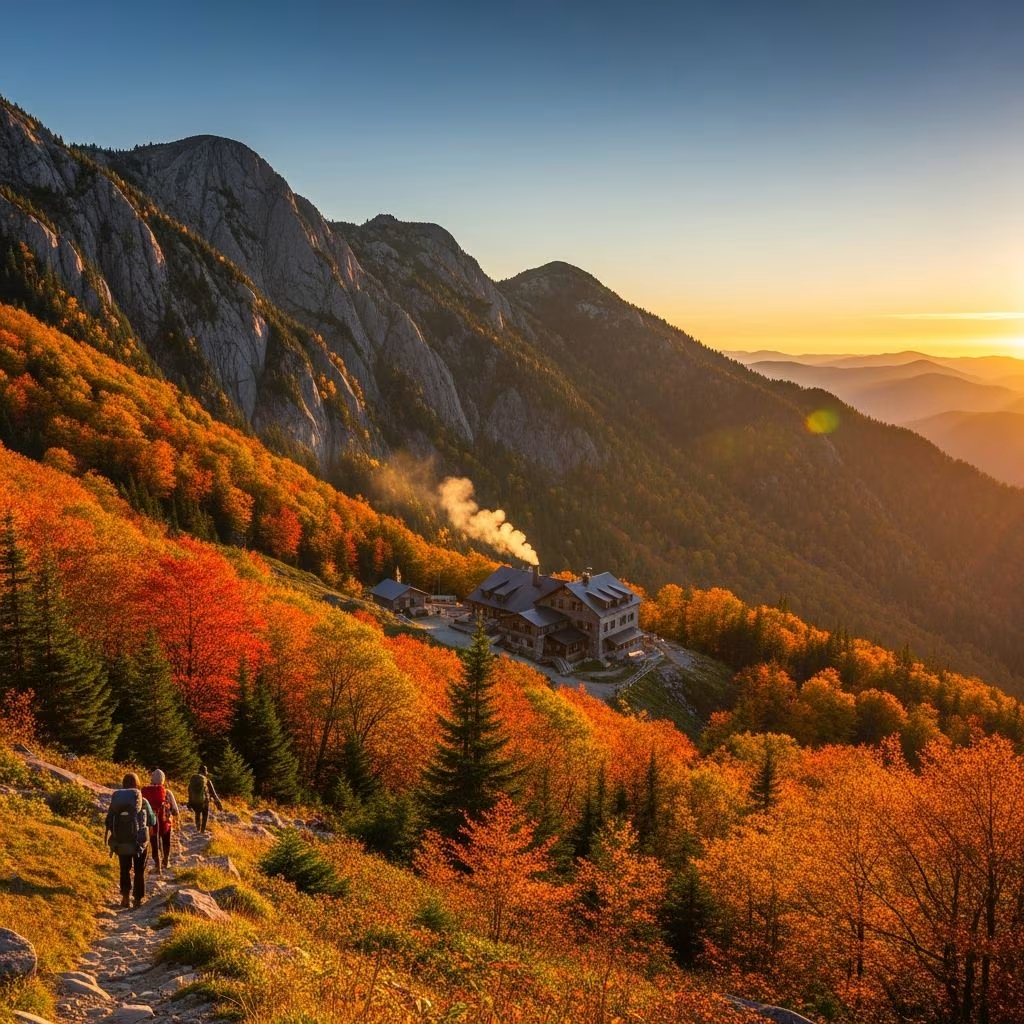
StaysFor outdoor enthusiasts seeking a balance between wilderness exploration and creature comforts, multi-day hiking expeditions that connect established lodges offer an ideal solution. This travel approach eliminates the need for carrying heavy camping gear while allowing hikers to traverse extensive trail networks across America’s most scenic regions. Whether traversing the peaks of New England or exploring Colorado’s high-altitude terrain, lodge-to-lodge hiking represents a growing segment of adventure travel that appeals to a broad demographic of fitness levels and experience backgrounds.
Understanding the Lodge-to-Lodge Hiking Experience
The concept of moving between established accommodations while hiking represents a distinctive outdoor travel model that differs significantly from traditional backpacking or resort-based vacations. Participants wake at their lodging facility, hike to the next destination during daylight hours, and arrive at another comfortable establishment for the evening. This arrangement allows hikers to enjoy multi-day wilderness experiences without the logistical burden of transporting camping equipment or navigating complex site-finding decisions.
The accommodations themselves vary considerably based on location and operator. Some facilities provide rustic mountain huts with basic amenities, while others offer full-service inns with dining establishments and modern conveniences. Most operations handle meal preparation, though some require guests to bring their own provisions. This flexibility accommodates different preferences and budgets within the adventure travel market.
Northeast Mountain Routes and Their Characteristics
The northeastern United States contains some of the country’s most established lodge-to-lodge hiking infrastructure, particularly throughout New Hampshire and the surrounding mountain regions. The White Mountains region maintains an extensive network of overnight accommodations specifically designed to serve multi-day hikers traversing the landscape’s distinctive terrain.
The Appalachian Mountain Club operates a series of strategically positioned overnight facilities throughout New Hampshire’s White Mountains, allowing hikers to explore the broader Appalachian Trail corridor with guaranteed lodging at each evening’s destination. These establishments enable a three-day journey covering approximately 25 miles, though various route combinations and extensions provide options for hikers with different time availability and physical conditioning.
Adjacent regions offer comparable experiences. The Berkshires of Massachusetts present another significant hiking destination where mountain paths connect lodging facilities positioned at notable scenic overlooks and summit locations. Mount Greylock, the state’s highest peak, anchors a popular three-day hiking route where the terminus lodge sits atop the mountain itself, providing hikers with elevated accommodation experiences that reward their climbing efforts with distinctive sunrise and sunset viewing opportunities.
Virginia’s Shenandoah National Park coordinates with various lodging partners to offer multi-day hiking experiences within one of the eastern United States’ most visited protected areas. The park’s extensive trail network connects multiple lodging options, with certain facilities located at particularly significant viewpoints. Big Meadows Lodge, for example, serves as a central hub approximately 105 miles from Washington, DC, placing world-class hiking within day-trip distance from the nation’s capital.
Western High-Country Hiking Networks
Colorado’s mountainous terrain hosts several premium hiking networks designed around lodge-based accommodation systems. The Sneffels Range near Telluride and Ouray represents a particularly acclaimed destination where four huts are positioned along a 34-mile circuit that traverses national forest lands at high elevations.
This Colorado route spans five days of hiking and operates seasonally from June through October, when snow conditions permit safe passage at altitude. The San Juan Huts system manages these facilities, providing cooking supplies at each location while expecting guests to bring their own food provisions. The route design creates a logical progression from Telluride through the mountain terrain to Ouray, where shuttle service returns hikers to their starting point. This circular routing eliminates the logistical complexity of arranging point-to-point transportation while maximizing scenic exposure to Colorado’s dramatic alpine landscape.
California’s Sierra Nevada mountains offer a distinct high-elevation hiking experience centered on the Tuolumne Meadows region north of Yosemite Valley. This area provides a multi-day hiking circuit connecting five established camps within the Yosemite ecosystem, allowing visitors to explore granite peaks, alpine meadows, and pristine water features while maintaining reliable lodging at each night’s destination.
Comparing Different Hiking Route Options
| Geographic Region | Primary Peaks/Features | Typical Duration | Distance Range | Season Availability |
|---|---|---|---|---|
| New Hampshire White Mountains | Multiple summits via Appalachian Trail | 3 days | ~25 miles | Year-round with seasonal limitations |
| Massachusetts Berkshires | Mount Greylock | 3 days | Varies | Late spring through early fall |
| Virginia Shenandoah | Skyline Drive corridor | Multiple options | Varies | Spring through fall |
| Colorado San Juan Range | Sneffels Range peaks | 5 days | 34 miles | June–October |
| California Sierra Nevada | Tuolumne Meadows area | Multiple options | Varies | Summer season |
Planning and Preparation Considerations
Successfully completing a multi-day lodge-based hiking journey requires different preparation than traditional backpacking expeditions. Since hikers carry only day-packs rather than full camping loads, physical training should emphasize endurance for sustained daily hiking rather than load-carrying capacity. Most routes operate on elevation gains of 1,000 to 2,500 feet daily, making cardiovascular fitness and leg strength primary conditioning concerns.
Footwear and clothing merit particular attention since hikers will wear the same gear daily without opportunity for thorough drying. Moisture-wicking fabrics and well-fitted hiking boots prevent blister formation and discomfort that accumulates across multiple consecutive hiking days. Layering systems allow temperature adjustment as conditions change throughout the day, particularly important in mountainous terrain where weather shifts rapidly.
Each lodge-based hiking network maintains specific requirements regarding what provisions guests should bring and what accommodations provide. Some facilities offer complete meal service with dinner and breakfast included in package pricing, while others provide kitchen access where hikers prepare their own meals. Understanding these distinctions prevents dietary disappointments and ensures adequate nutrition for sustained physical activity.
Transportation and Access Logistics
Most established lodge-based hiking networks include transportation as part of the organized package. Shuttle services deliver hikers to trailhead locations and retrieve them upon completion, eliminating the complexity of coordinating private vehicles or arranging point-to-point transfers. In some cases, operators position parking facilities at convenient central locations where hikers leave vehicles for the duration of their hiking experience.
Regional accessibility varies considerably based on the hiking network selected. Northeastern routes benefit from proximity to major metropolitan areas and well-developed transportation infrastructure, allowing hikers to arrange trips with minimal advance planning. Western routes, while equally accessible via commercial aviation to nearby regional airports, may require more extensive travel arrangements to reach trailheads in remote mountain terrain.
Guided Versus Self-Guided Experiences
Hiking companies across America offer both guided and self-guided variations of lodge-based hiking experiences. Guided trips feature knowledgeable leaders who provide ecological information, identify wildlife and plant species, navigate route selection, and manage group logistics. These services appeal to hikers who value expert knowledge or feel uncertain about backcountry navigation even when following established trails.
Self-guided options provide greater independence and flexibility, allowing hikers to progress at personal pace and choose rest break timing. These experiences typically include detailed route maps, marked trails, and pre-arranged accommodations, eliminating navigation stress while preserving the solitude and personal achievement of independent travel. Both approaches maintain the central advantage of avoiding camping equipment while accessing genuine wilderness experiences.
Seasonal Considerations and Weather Patterns
Different regions present optimal hiking seasons based on weather patterns and trail accessibility. Eastern routes generally accommodate hiking from spring through fall, with summer providing the most comfortable conditions but also the highest crowding. Western high-elevation routes operate primarily during summer months when snowmelt clears trails and temperatures moderate to hikeable levels. Spring and autumn offer distinctive advantages including fewer fellow hikers and dramatic landscape changes, though weather becomes less predictable.
Elevation significantly influences weather exposure and temperature conditions. Colorado’s high-altitude routes may encounter snow or frost during shoulder season months, requiring appropriate layered clothing and preparation for rapid weather changes. Eastern routes at lower elevations present different challenges, with humidity and heat concerns during midsummer months and potential precipitation throughout the hiking season.
Cost Considerations and Value Assessment
Lodge-based hiking packages typically range considerably in pricing based on accommodation quality, included meals, guide services, and route location. Premium experiences with full meal service, expert guides, and high-end lodge facilities may exceed $3,000 for multi-day trips, while more modest operations offering basic lodging and self-catering options may cost substantially less. Most packages include shuttle transportation and lodging at all intermediate points, providing transparent all-inclusive pricing that simplifies budgeting.
Assessing value requires comparing what services are included, accommodation quality, meal provisions, and guide expertise. Trips serving hikers seeking maximum comfort and culinary quality justify premium pricing, while budget-conscious travelers may prefer basic facilities and self-prepared meals. The elimination of camping equipment requirements and associated overnight setup tasks adds value that appeals to hikers prioritizing efficiency and comfort.
Frequently Asked Questions
What fitness level is required for lodge-based hiking?
Most routes accommodate hikers with moderate fitness levels. Daily distances typically range from 10 to 15 miles with elevation gains of 1,500 feet or less. Prior hiking experience helps but isn’t essential if participants engage in regular cardiovascular exercise and leg strengthening.
Can solo hikers participate, or are these tours group-oriented?
Both guided group tours and solo-friendly self-guided options exist. Many operators welcome single participants into organized groups or provide completely independent itineraries with pre-arranged accommodations.
What should hikers bring on daily treks?
Day-packs typically contain water bottles, snacks, sunscreen, weather-appropriate layers, and personal medications. Most hikers carry 15 to 25 pounds compared to 40+ pound loads required for traditional backpacking.
Are these routes suitable for families with children?
Certain routes welcome families and offer child-appropriate distances and pacing. Parents should verify specific route specifications and operator experience with younger hikers before booking.
What happens if weather becomes hazardous during a hiking day?
Established operators have contingency protocols including shelter provisions, route modifications, or transportation alternatives. Hikers should review weather policies before committing to trips during variable season months.
References
- Appalachian Mountain Club Hut System — Appalachian Mountain Club. 2024. https://www.outdoors.org/lodging-camping/huts
- San Juan Huts Backcountry Lodging System — San Juan Huts. 2024. https://www.sanjuanhuts.com
- Shenandoah National Park Lodging and Accommodations — National Park Service. 2024. https://www.nps.gov/shen/planyourvisit/lodging.htm
- Yosemite National Park High Sierra Camps — National Park Service. 2024. https://www.nps.gov/yose/planyourvisit/high-sierra-camps.htm
- Appalachian Trail Conservancy Guide to Inn-to-Inn Hiking — Appalachian Trail Conservancy. 2023. https://www.appalachiantrail.org/explore-the-trail/hiking
On This Page
Understanding the Lodge-to-Lodge Hiking Experience Northeast Mountain Routes and Their Characteristics Western High-Country Hiking Networks Comparing Different Hiking Route Options Planning and Preparation Considerations Transportation and Access Logistics Guided Versus Self-Guided Experiences Seasonal Considerations and Weather Patterns Cost Considerations and Value Assessment Frequently Asked Questions← Previous
Cape Town Travel Guide: Safety, Top Sights, Transport & Tips
Next →
Best Museums in Milan: Art, Design, Science & History
Related Reading