

 Travel Essentials
 Travel Essentials

Explore Maui's best driving routes, from lush windward coasts to volcanic peaks and secluded beaches. Plan your perfect island road adventure.
 Travel Essentials
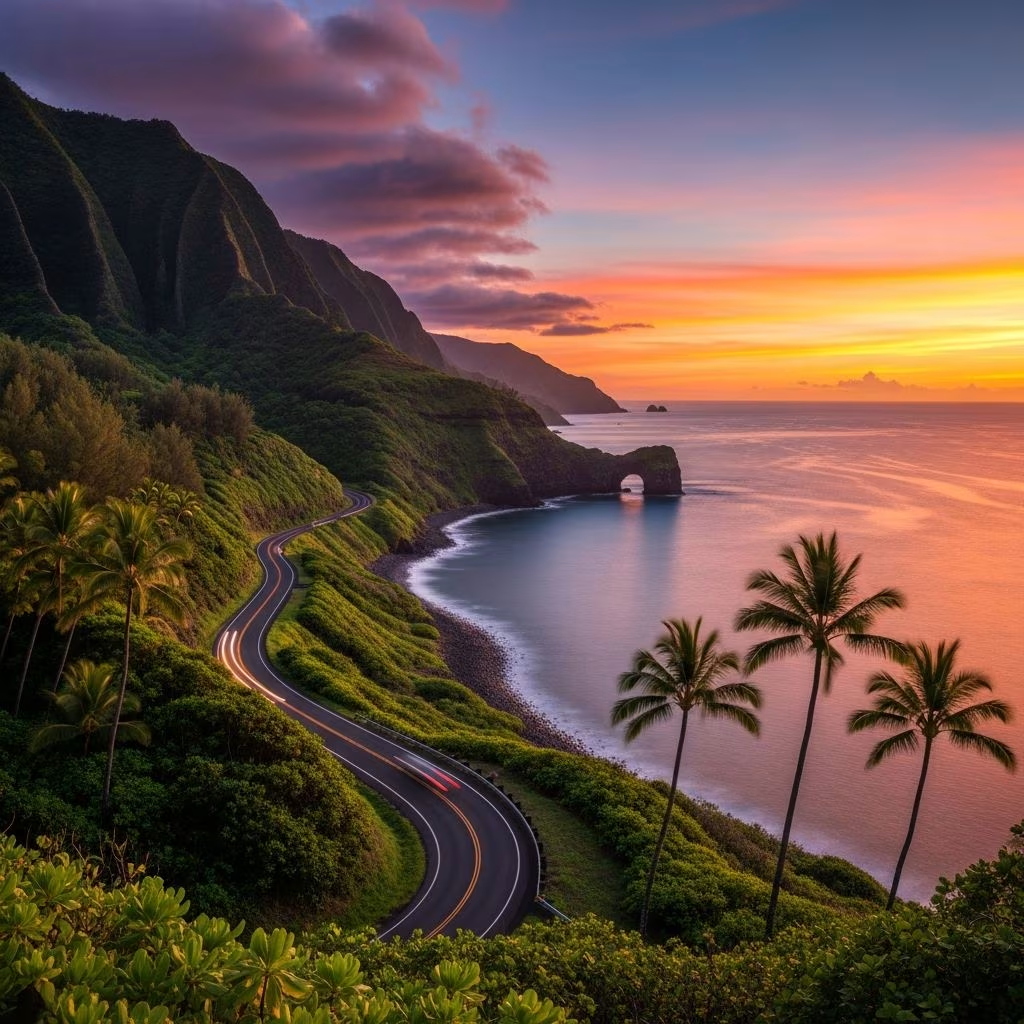
Maui stands as one of Hawaii’s most captivating islands, and the best way to experience its diverse landscapes is behind the wheel. The Valley Isle offers several exceptional driving routes that showcase everything from cascading waterfalls and ancient lava formations to panoramic ocean vistas and volcanic craters. Whether you’re seeking an adrenaline-fueled adventure or a leisurely coastal exploration, Maui’s road network provides unforgettable experiences for every type of traveler.
The journey along Maui’s windward coast represents one of the island’s most iconic driving experiences. This route traces the northeastern edge of the island, beginning in the charming town of Paia and winding through lush tropical vegetation toward the remote community of Hana. The approximately 52-mile journey takes travelers through some of Hawaii’s most pristine natural landscapes.
Starting your adventure in Paia, you’ll immediately notice the transition from developed areas to increasingly remote terrain. The road becomes progressively windier as you venture deeper into the windward side, with numerous hairpin turns and narrow sections that demand careful driving. The construction of this historic route reflects the challenging topography of Maui’s terrain, with elevations that climb and descend dramatically.
Along this coastal drive, you’ll encounter numerous opportunities to stop at waterfalls and natural swimming holes. Twin Falls presents one of the first accessible stops, featuring multiple cascades and inviting pools for swimming. As you continue, the road passes several state waysides and informal pull-offs where additional waterfalls and scenic vistas appear around nearly every bend.
The vegetation becomes increasingly lush as you progress, with banana plants, ginger flowers, and native Hawaiian plants creating a verdant canopy overhead. The frequency of rainfall in this windward region supports the dense tropical growth that makes this route so visually striking. The contrast between the arid leeward side and this emerald landscape highlights Maui’s remarkable microclimates.
A distinctive feature of this drive includes encounters with volcanic geology. Ancient lava tubes—caves created when flowing lava drained and left hollow passages—dot the landscape. These formations offer fascinating glimpses into Maui’s volcanic past and provide cool refuges from the tropical heat. Some accessible lava tubes allow visitors to walk through these underground caverns, experiencing the raw geological history of the island.
The volcanic landscape also manifests in the terrain’s overall character, with darker soil and rock formations visible throughout the region. These elements remind travelers of the geological forces that shaped Maui millions of years ago.
A distinctly different driving experience awaits those who venture to Haleakala Volcano. This route climbs from sea level to over 10,000 feet elevation, passing through multiple ecological zones within a relatively short distance. The drive itself offers one of the most dramatic elevation changes accessible by car in the United States.
Beginning from the central valley near Pukalani, the Haleakala Highway steadily ascends through progressively changing terrain. The lower elevations feature agricultural lands and small communities, while mid-elevation zones transition to pine and native forests. As elevation increases, the landscape becomes increasingly sparse, with volcanic cinder cones becoming more prominent.
The temperature drops noticeably with each thousand feet of elevation gained. Visitors often experience a temperature differential of 30 degrees Fahrenheit or more between the base and summit areas. This dramatic change makes it advisable to bring layered clothing, even when departing from warm coastal regions.
The summit area provides access to the Haleakala Crater, one of the world’s largest volcanic craters. Multiple viewpoints along the rim offer stunning perspectives of the crater’s interior, which resembles a Martian landscape with its reddish-toned cinder cones. During clear weather, the views extend across the island and, on exceptional days, toward neighboring islands.
Many visitors time their arrival for sunrise, when the sun emerges above the surrounding landscape and illuminates the crater below. The phenomenon, known locally as watching the sun rise from above the clouds, creates an ethereal experience. The drive itself becomes part of this adventure, as visitors navigate dark roads in pre-dawn hours to reach optimal viewing positions.
The western portion of Maui offers an alternative driving circuit that emphasizes coastal scenery and water-based attractions. This route generally begins near the resort areas of Kaanapali or Lahaina and extends along the island’s windward shores before potentially connecting inland.
Highway 340 traverses the northern reaches of West Maui, hugging the coastline with dramatic ocean views. This route features rolling hills that ascend hundreds of feet above sea level, creating perspectives where the Pacific Ocean stretches endlessly toward the horizon. The narrow, winding character of this road demands attentive driving, but the scenic rewards justify the careful navigation.
Kahakuloa Head, a natural landmark rising 636 feet above the surrounding terrain, marks a distinctive point along this northern section. The vicinity features steep cliffs and remote beaches, representing some of Maui’s least developed coastline. The isolation and rugged beauty of this area appeal to travelers seeking authentic Hawaiian landscapes rather than heavily touristed destinations.
Western Maui’s driving routes provide access to significant marine habitats. Honolua Bay represents a protected marine conservation area where snorkelers encounter diverse coral formations and tropical fish species. The access road, while rough and requiring careful navigation, leads to one of Maui’s premier snorkeling locations where visibility often exceeds 100 feet.
For non-snorkelers, the areas around these marine conservation zones still offer remarkable beauty, with pristine beaches and coastal trails providing alternative ways to experience the ocean environment.
West Maui’s western coast features distinctive geological formations created by the interaction of lava, ocean waves, and wind. Blowholes—sea caves where wave pressure creates dramatic water spouts—provide dramatic natural displays, particularly during high-energy ocean conditions. The most famous examples require short hikes to reach, with paths that can be treacherous during adverse weather.
Dragon’s Teeth represents another unique geological feature, where the westward lava flow from Makaluapuna Point created distinctive formations. Walking through this landscape feels like exploring the interior of an ancient dragon’s mouth, with sharp, dramatic rock formations creating an otherworldly terrain.
| Route | Distance | Minimum Duration | Recommended Duration |
|---|---|---|---|
| Windward Coastal Drive | 52 miles (one-way) | 4-5 hours | Full day or overnight |
| Haleakala Summit Drive | 36 miles (round-trip) | 3-4 hours | 4-6 hours with activities |
| West Maui Loop | 43 miles | 5-6 hours | Full day |
Most of Maui’s primary tourist routes are accessible with standard rental vehicles. However, certain secondary roads and alternative routes may benefit from four-wheel-drive capability, particularly during rainy periods. The windward coastal route, while paved, features numerous curves and narrow sections that demand careful driving and moderate speeds.
Checking weather conditions before departure proves essential, particularly for the Haleakala route where summit weather can change rapidly and fog frequently obscures views. The windward side experiences significantly more rainfall than leeward areas, so afternoon thunderstorms are common during certain seasons.
Morning departures generally provide advantages across all Maui routes. For the Haleakala summit experience, pre-dawn starts enable witnessing sunrise above the clouds. For coastal drives, morning light creates superior photographic conditions and typically features calmer traffic conditions.
The windward coastal route attracts substantial tourist traffic, particularly midday through mid-afternoon. Early morning starts allow visitors to experience prime attractions with reduced crowds and better opportunities for peaceful observation.
Before embarking on any Maui road trip, ensure your rental vehicle has adequate fuel and that you’re familiar with its handling characteristics. Many roads feature narrow sections where oversized vehicles create navigation challenges. Confirm that your insurance coverage applies to all intended roads, as some rental companies restrict use on certain unmaintained routes.
Download offline maps or ensure reliable GPS function, as cellular coverage can be spotty in remote areas. Bring plenty of water, particularly for outdoor activities involving hiking or swimming. Sun protection including sunscreen, hats, and sunglasses proves essential given Hawaii’s intense solar radiation.
Maui’s driving routes pass through culturally significant areas that hold deep meaning for Native Hawaiians. Exercise respect when visiting archaeological sites, sacred areas, and cultural landmarks. Stay on designated trails, pack out all trash, and avoid disturbing natural formations or wildlife.
Some areas may have restricted access or require permission for entry. Research any specific requirements before your visit to ensure you’re following current regulations and respecting cultural protocols.
While Maui’s roads are generally well-maintained, they require careful driving due to frequent curves and elevation changes. The windward coastal route features numerous hairpin turns that demand attention and moderate speeds. The Haleakala road, while steep, features straightforward navigation. Most drivers with basic experience can safely navigate these routes with appropriate caution.
Maui’s roads are generally accessible year-round, though windward areas receive more rain during winter months (November-March). The Haleakala summit may occasionally close due to weather. Summer months (June-September) typically provide clearer conditions, though they also coincide with peak tourist season.
Yes, but visitors must prioritize efficiently. The Haleakala drive can be completed in 4-6 hours with adequate time for viewpoints. The windward coastal route requires a full day to enjoy main attractions without rushing. West Maui’s loop takes 5-6 hours of driving time. Attempting multiple routes in one day sacrifices the leisurely exploration that makes these drives memorable.
Most routes accommodate families well, though the winding roads may cause motion sickness in some children. The Haleakala drive features gentler curves than the windward coastal route. Bring snacks and entertainment for vehicle time, and plan frequent stops at attractions.
