

 Travel Essentials
 Travel Essentials

Explore breathtaking medieval castles across Europe and beyond, featuring architectural marvels, dramatic histories, and must-see destinations for history lovers.
 Travel Essentials
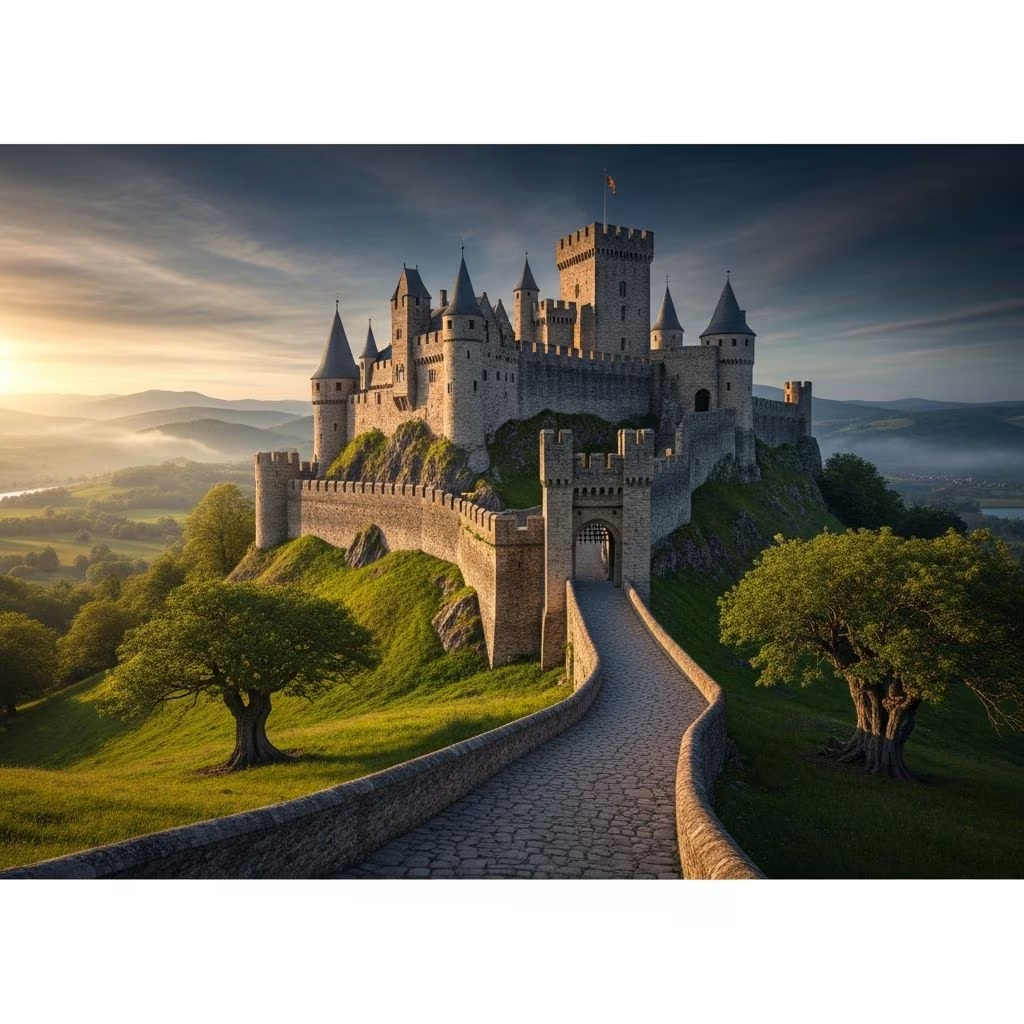
Medieval castles stand as timeless symbols of power, defense, and architectural ingenuity. Built primarily between the 5th and 15th centuries, these stone behemoths served as royal residences, military strongholds, and refuges during turbulent times. Today, they draw millions of visitors eager to step back into an era of knights, kings, and epic battles. This guide highlights some of the most captivating medieval castles, offering insights into their histories, standout features, and practical travel tips. Whether you’re a history buff or simply seeking photogenic landmarks, these sites promise unforgettable experiences.
These structures aren’t just ruins; they’re living museums of human ambition. Constructed amid feudal conflicts, they feature innovative designs like moats, drawbridges, and murder holes for defense. Many have evolved into luxury hotels, event venues, or UNESCO World Heritage sites, blending preservation with accessibility. Visiting one allows immersion in legends—from ghostly apparitions to royal scandals—while enjoying panoramic views and intricate interiors.
The British Isles boast some of Europe’s densest concentrations of medieval fortifications, thanks to centuries of invasions and civil wars.
Over 1,000 years old, Windsor is the world’s oldest and largest inhabited castle. Originally built by William the Conqueror in 1070, it spans 13 acres and serves as a royal residence. Key highlights include the State Apartments with opulent furnishings, St. George’s Chapel housing royal tombs, and the immense Round Tower offering Thames Valley vistas. Queen Elizabeth II spent weekends here, adding personal royal lore.
Practical tip: Book tickets online to skip lines; changing of the guard happens select days.
Perched atop an extinct volcano, this 12th-century fortress dominates Edinburgh’s skyline. It houses the Scottish Crown Jewels, the Stone of Destiny, and hosts the annual Military Tattoo. Explore the Great Hall’s hammerbeam roof and the cramped prisons where POWs languished. Its strategic location repelled numerous sieges.
Don’t miss the one o’clock gun firing daily—a tradition since 1861.
Overlooking Belfast Lough, this Norman castle from 1177 withstood Viking raids and the 1778 Battle of Carrickfergus. Its four massive corner towers and intact gatehouse exemplify early bailey designs. Interactive exhibits detail its naval history.
France and Spain’s castles reflect chivalric ideals and Reconquista fervor, often more palace-like than purely defensive.
Restored in the 19th century by Viollet-le-Duc, this 12th-century ruin now gleams as a fairy-tale vision. Massive walls, conical towers, and a grand courtyard evoke medieval might. Featured in films like The Man in the Iron Mask, it’s a short drive from Paris.
This tidal island abbey, fortified from the 8th century, blends monastic and military architecture. Narrow streets wind up to Gothic cloisters and the knightly Salle des Chevaliers. Tides isolate it dramatically twice daily.
| Castle | Built | Key Feature | Visitor Rating |
|---|---|---|---|
| Pierrefonds | 1393 | Fairy-tale restoration | 4.7/5 |
| Mont-Saint-Michel | 708 | Tidal island access | 4.8/5 |
Resembling a ship’s prow, this 12th-century stronghold was Isabella I’s coronation site. Isabelline Gothic rooms and cannon-scarred walls recount its role in the War of the Castilian Succession. Jousting events revive medieval pageantry.
Germany’s Rhine Valley and Eastern Europe’s rugged terrains host brooding castles synonymous with Romanticism.
Nestled in a misty valley, this 12th-century gem remains family-owned. Turrets, half-timbered houses, and armories inside its walls feel untouched by time. No storm damage or war destruction preserved its pristine state.
Neo-Romantic atop Mount Zollern, it honors Prussian heritage with gilded interiors and panoramic Swabian Alps views. Prussian Crown Jewels replicas shine in its treasury.
Embedded in a 400-foot cliff cave, this 1274 fortress was home to rebel knight Erazem Lueger, who used hidden tunnels for supplies during a siege. Knight’s hall and torture chamber exhibits thrill visitors.
Medieval influences spread to Portugal, Wales, and even Japan-inspired hybrids.
Edward I’s 1283 masterpiece features eight towering drum towers and preserved barbicans. Its walls stretch nearly a mile, enclosing a medieval town still thriving.
The world’s largest brick castle complex, built by Teutonic Knights in 1274. Three interconnected castles cover 52 acres; Gothic brickwork and knightly chapter house impress. UNESCO-listed for its scale.
The “birthplace of Portugal,” this 10th-century tower was Afonso I’s launchpad for independence. Turmoil-filled chapel and kitchens evoke daily medieval life.
To maximize your trip:
Many offer family-friendly activities, falconry demos, and ghost tours after dark.
Portchester Castle in England dates to Roman times but gained medieval fortifications around 1100.
Yes, like Windsor and some Scottish lairds’ homes.
Edinburgh with its interactive crown jewels exhibit and spacious grounds.
Many, including Ireland’s Ashford and France’s Les Remparts, operate as boutique hotels.
Neuschwanstein in Germany, though 19th-century, inspires with medieval aesthetics.
Restoration efforts by bodies like English Heritage and UNESCO ensure these icons endure. Climate change poses threats like rising damp, but sustainable tourism funds upkeep. Support by visiting responsibly—no touching artifacts, follow paths.
