

 Travel Essentials
 Travel Essentials

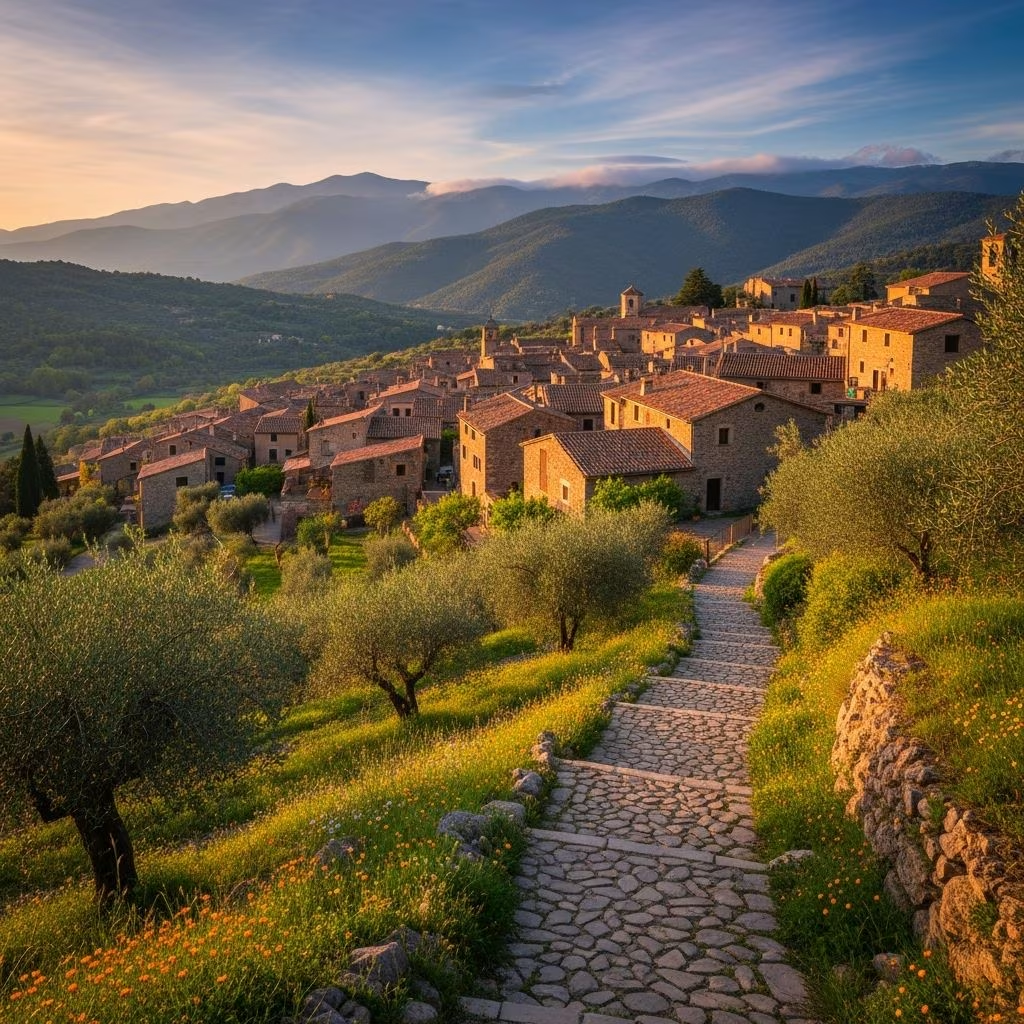
Explore authentic Catalan villages with medieval architecture, cobblestone streets, and local culture just hours from Barcelona for an authentic Spanish escape.
 Travel Essentials
Barcelona thrums with energy—bustling avenues, crowded plazas, and streams of tourists navigating the Gothic Quarter. Yet just beyond the city’s metropolitan sprawl lies a different Catalonia entirely, one where life unfolds at a gentler pace amid stone architecture and mountain vistas. The region surrounding Barcelona holds numerous communities that have preserved their medieval character and traditional ways, offering travelers an authentic glimpse into how Catalan culture developed and persists today.
These villages, many dating to the 11th through 14th centuries, provide an essential counterpoint to urban tourism. They showcase how people lived when the landscape was more dangerous, when defensive positions mattered, and when community centered around the church and marketplace rather than entertainment venues and hotel lobbies. For those seeking respite from city life, these settlements deliver genuine cultural immersion, gastronomic discovery, and visual beauty that photographs struggle to capture.
Understanding Catalonia requires more than walking Barcelona’s famous streets. The region’s identity formed in its smaller communities, where residents maintained traditions through centuries of political changes, invasions, and cultural shifts. These villages represent continuity—the same families may occupy homes their ancestors built, the same stone bridges carry modern residents across streams that medieval traders once forded, and the same community rhythms organize daily life.
Visiting these settlements provides travelers with context unavailable in guidebooks. You witness how narrow medieval streets functioned defensively, how geographic positioning protected communities from medieval threats, and how limited resources shaped architectural choices. The experience becomes educational without feeling like a history lesson—understanding emerges through observation rather than instruction.
For first-time visitors to Catalan villages, certain communities serve as excellent introduction points. These settlements balance authentic character with sufficient visitor infrastructure, ensuring comfortable explorations without overwhelming crowds.
Besalú functions as an ideal entry point, located approximately 140 kilometers north of Barcelona. The village draws visitors through its remarkable 11th-century bridge, a romanticized structure that has inspired countless photographs and paintings. Crossing this bridge feels ceremonial—you’re literally transitioning between the modern world and a medieval space. The village itself contains cobblestone streets that wind between stone buildings, creating natural photography moments at nearly every corner.
Beyond aesthetics, Besalú offers cultural depth. The village contains a historic synagogue and Jewish ritual baths, remnants of a once-vibrant Sephardic Jewish community. These sites provide historical perspective often missing from village tourism. Local restaurants serve traditional Catalan cuisine, and artisan shops sell handmade crafts, allowing visitors to support local economies directly.
Rupit presents a dramatically different landscape within Catalonia’s diverse topography. Located roughly 90 kilometers from Barcelona, this village clings to mountainous terrain, with stone cottages featuring distinctive terracotta roofs appearing to float amid green hillsides. The settlement sits adjacent to a stream, creating a picturesque quality that seems almost theatrical—the environment appears designed specifically to evoke medieval charm.
Rupit rewards exploration on foot. The village contains approximately 340 residents, making it intimate enough to feel like genuine community rather than tourist attraction, yet substantial enough to support basic services. A prominent hanging wooden bridge spans the stream; local signage notes it safely supports ten people simultaneously, adding an element of playful adventure to village walks. The nearby Romanesque church of St. Joan de Fàbregues sits elevated on surrounding hills, accessible via hiking trails that reward effort with sweeping views across the valley and village below.
The architectural uniformity across these villages reflects both practical constraints and aesthetic preferences of medieval construction. Stone represents the primary building material throughout Catalonia’s villages, selected for durability and local availability rather than aesthetic preference. Yet this necessity produced beauty—weathered stone develops patina that modern construction cannot replicate, creating visual depth and character.
Medieval streets follow logic now underappreciated. Narrow pathways restricted sunlight and heat, crucial considerations before air conditioning existed. Winding routes made navigation challenging for invaders while remaining familiar to residents. Architecture clustered around defensive positions—many villages center on elevated locations or near fortified structures. These practical considerations produced the charming disorientation modern visitors experience navigating medieval street patterns.
Buildings themselves tell stories through their construction. Doorways feature weathered wooden doors that may have served families for centuries. Windows, often small in lower levels for defensive purposes, enlarge as building height increases. Archways display various construction techniques, reflecting different historical periods and community prosperity levels during various eras.
Food tourism in these villages differs fundamentally from Barcelona’s restaurant scene. Village establishments typically source ingredients locally, often producing items themselves. Charcuterie shops display cured meats made according to recipes passed through generations. Cheese vendors know their suppliers personally. Bread arrives fresh daily, baked by families who have operated ovens for decades.
This direct connection between producer and consumer characterizes village dining. Visitors purchasing items from artisan shops directly support families dependent on these businesses. Restaurants in villages typically feature seasonal menus reflecting current harvests rather than year-round standardized offerings. A menu emphasizing autumn mushrooms in September differs from spring vegetable-focused offerings in May, maintaining connection between eating patterns and natural rhythms.
Catalan cuisine emphasizes simplicity and quality ingredients. Escalivada—roasted vegetables—appears frequently, prepared by individual cooks using personal technique variations. Botifarra, a local sausage, features across menus in different preparations. Pa amb tomàquet (bread with tomato and olive oil) represents the culinary philosophy—transforming basic elements into satisfying meals through quality ingredients and proper technique.
Many Catalan villages sit within dramatic natural environments, offering hiking and outdoor exploration alongside cultural tourism. This combination appeals to diverse travelers—those primarily interested in history can focus on architectural exploration, while nature enthusiasts can experience villages as basepoints for mountain activities.
Geographic Positioning
Villages throughout Catalonia were deliberately positioned near resources—water sources, defensible locations, trade routes. These same characteristics make modern villages appealing to outdoor enthusiasts. Proximity to streams and springs provided medieval residents with essential resources; today these same waterways create scenic hiking routes. Elevated locations offering defensive advantages deliver panoramic views valuable for contemporary leisure.
Seasonal Variations
Village experiences vary dramatically across seasons. Spring brings wildflowers to surrounding meadows and softer light to stone architecture. Summer creates crowded conditions during peak tourism but produces warm evenings ideal for outdoor dining. Autumn delivers crisp air, fewer tourists, and harvest activities visible throughout villages. Winter can bring challenging weather but offers intimate experiences with authentic community life uncrowded by tourists.
| Aspect | Considerations |
|---|---|
| Transportation | Renting vehicles provides flexibility; public transit connects major villages but requires advance planning |
| Duration | Half-day visits work for single villages; exploring multiple communities requires 2-3 day trips |
| Accommodation | Villages offer modest lodging; some travelers prefer staying in larger towns and day-tripping |
| Language | Catalan and Spanish spoken; basic English available in tourist areas but preparation helps |
| Crowds | Summer and holiday periods bring peak tourism; off-season visits provide more authentic experiences |
While certain villages attract majority tourism, numerous communities offer equally compelling experiences with fewer visitors. Exploration-minded travelers should venture beyond primary recommendations to discover authentic settlements many tourists never encounter.
Talamanca exemplifies this lesser-known potential. The village offers medieval character comparable to famous destinations but attracts modest tourism, allowing genuine community observation. Stone houses cluster around a modest plaza, and hiking trails radiate through surrounding forests.
Bagà appeals to travelers combining cultural interest with outdoor recreation. The village features medieval architecture, including a Romanesque bridge and Sant Esteve church blending architectural styles across centuries. Proximity to Cadí-Moixeró Natural Park makes it ideal for those wanting cultural exploration combined with hiking.
Castellar de N’Hug sits among mountain terrain offering dramatic landscape photography opportunities. The village’s isolated positioning historically made it strategically important; today this same geography creates stunning natural surroundings.
Most villages reveal their primary attractions within 2-4 hours of walking and exploration. Spending overnight in a village allows fuller integration—dining at local restaurants, experiencing evening ambiance, and reducing schedule pressure.
Medieval cobblestone streets present challenges for those using mobility aids. Villages vary in accessibility—some have paved alternative routes, others do not. Advance research specific to individual villages helps in planning.
Villages themselves remain open year-round, though individual shops and restaurants may have seasonal hours or closures. Winter visits require more advance planning to confirm amenities availability.
Larger or more-visited villages offer English speakers, particularly in tourism-related businesses. Smaller communities may have limited English. Learning basic Spanish or Catalan phrases enhances experiences and demonstrates respect for local culture.
Authentic village experiences emerge through intention rather than accident. Travelers seeking genuine connection should move beyond photography pursuits, allowing time for casual observation and spontaneous interaction. Sitting in a plaza watching community members conduct daily routines provides insights impossible through rushed touring.
Supporting local businesses directly benefits communities dependent on tourism income. Purchasing items from small shops, eating at family-operated restaurants, and hiring local guides channels tourism revenue directly to residents rather than distant corporations.
Traveling during shoulder seasons—spring and autumn—balances acceptable weather with manageable crowds. These periods allow fuller village participation, as communities operate with normal routines rather than peak tourism mode.
Photography should serve as memory aid rather than primary focus. Placing cameras aside periodically allows full sensory engagement—noticing scents of baking bread from local ovens, hearing church bells marking time, feeling stone’s texture worn smooth by centuries of passage.
These villages represent Catalonia at its most authentic—communities rooted in land and tradition, where change occurs gradually and continuity matters more than novelty. For travelers exhausted by Barcelona’s relentless modernism, these settlements offer genuine respite and cultural depth that money alone cannot purchase.
The experience of wandering medieval streets, sharing meals prepared from local ingredients, and witnessing how people organize life around community rather than consumption provides perspective unavailable elsewhere. These villages remind visitors that travel can deliver more than attractions checked from lists—it can provide genuine transformation through exposure to different ways of living.
