

 Travel Essentials
 Travel Essentials

Comprehensive guide to Mongolia's premier self-driving routes, covering diverse landscapes from desert plains to mountain passes and pristine lakes.
 Travel Essentials
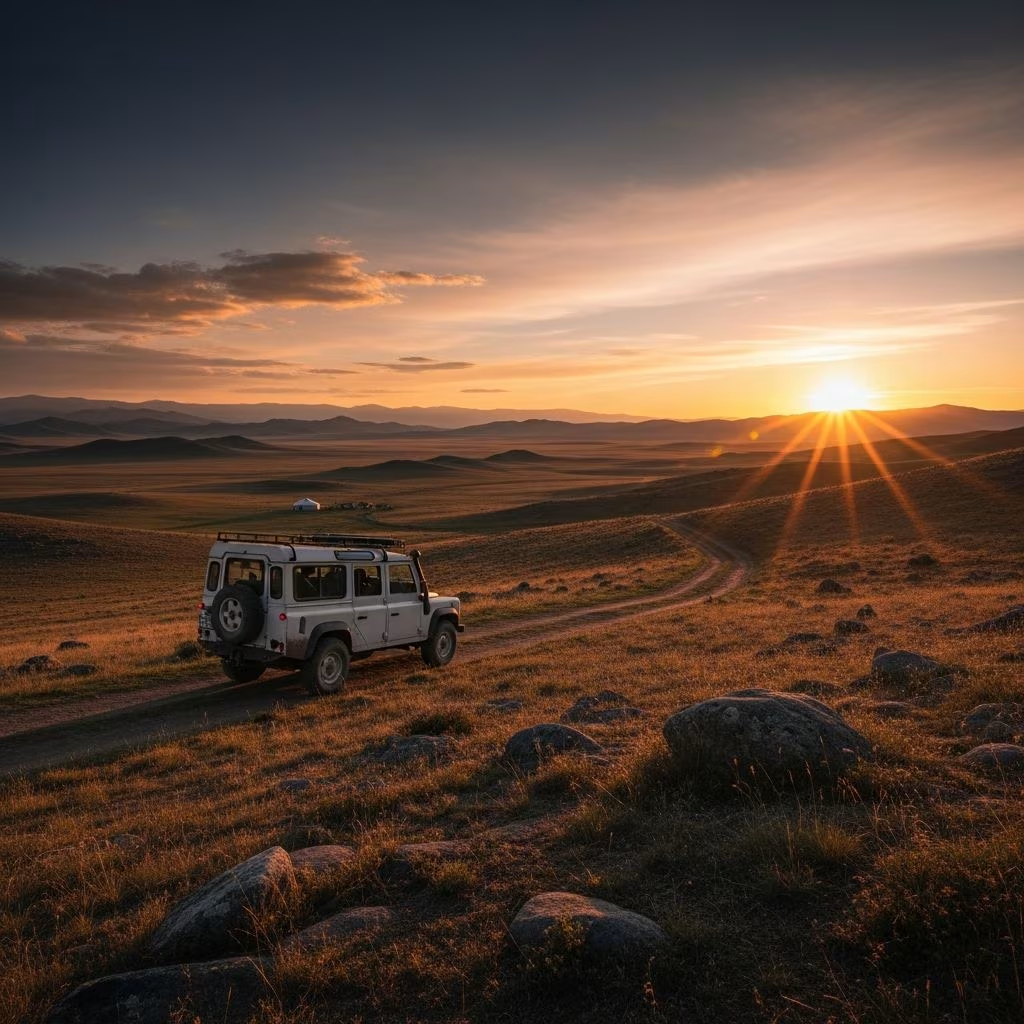
Mongolia presents one of Asia’s most compelling driving destinations, offering vast landscapes that range from arid deserts to pristine alpine lakes and volcanic terrain. The country’s relatively sparse infrastructure and minimal traffic create an ideal environment for independent travelers seeking authentic wilderness experiences. Self-driving through Mongolia allows visitors to control their pace, discover remote communities, and immerse themselves in one of Earth’s least crowded regions.
The Mongolian driving experience differs significantly from typical Western road trips. While major routes connecting cities feature paved surfaces, ventures into rural areas require navigation across unpaved tracks that demand patience, preparation, and reliable vehicles. Most successful expeditions combine well-maintained highways with carefully planned off-road segments, creating a balanced experience that showcases Mongolia’s remarkable diversity without requiring extreme off-roading expertise.
One of Mongolia’s most rewarding driving circuits begins in Ulaanbaatar and extends westward toward historically significant locations. This approximately 1,700-kilometer journey incorporates cultural landmarks, monastic sites, and access to traditional Mongolian settlements. The route typically requires five to seven days of driving, allowing adequate time for exploration and acclimatization.
The western segment features the remarkable Erdene Zuu Monastery, situated in Kharkhorin approximately 360 kilometers from the capital. This historically significant Buddhist complex, established in 1586, was constructed using stones and materials salvaged from Karakorum, the medieval capital founded by successors of Chinggis Khan. The monastery represents Mongolia’s most important Buddhist site and provides crucial context for understanding Mongolian spiritual and political history.
The journey continues southward into the Gobi region, where travelers encounter dramatically different ecosystems. The southern province of South Gobi contains the provincial capital Dalanzadgad, which serves as a logistics hub for desert exploration. From this point, the route returns northward via paved highways, creating a satisfying loop that encompasses multiple landscape types and cultural zones.
Mongolia’s second-largest and deepest lake, Khövsgöl Nuur, represents a distinctly different driving experience compared to southern routes. Located approximately 900 kilometers north of Ulaanbaatar, this alpine lake region features lush taiga forests, mountainous terrain, and cooler climate conditions. While the direct driving route can be completed in ten to twelve hours, the most rewarding expeditions distribute travel across multiple days, incorporating stops at interesting intermediate locations.
The journey northward passes through several provincial regions (aimags), each offering distinct cultural and geographical characteristics. The paved road infrastructure connecting Ulaanbaatar to Khövsgöl Nuur’s primary settlements facilitates easier driving compared to southern routes, making this expedition accessible to drivers with varying experience levels. However, the length of the drive and varying road conditions necessitate careful planning and realistic scheduling.
Khövsgöl Nuur itself presents remarkable ecological significance. The region supports unique wildlife species and maintains traditional reindeer herding communities, particularly in the northern territories. The lake’s pristine waters reflect the surrounding forested mountains, creating one of Mongolia’s most photographically compelling destinations. Travelers can camp along the shoreline, participate in local community activities, or explore nearby valleys and mountain passes.
Mongolia’s southeastern mountain region offers the most challenging and rewarding driving experiences for adventurous travelers. The Altai Mountains constitute a substantial geographical feature spanning multiple countries, with Mongolian territory encompassing dramatic peaks, high-altitude valleys, and remote plateaus. This region represents the frontier of Mongolian self-driving tourism, requiring advanced preparation, specialized equipment, and genuine off-road capability.
The Altai expedition typically requires three to four weeks of dedicated travel, incorporating substantial distances across unpaved terrain. The journey ventures into areas where paved infrastructure becomes increasingly scarce, and navigation depends on GPS technology and detailed regional knowledge. These conditions demand vehicles with appropriate clearance, durable suspensions, and mechanical reliability. Most experienced overlanders recommend four-wheel-drive vehicles with reinforced chassis and professional-grade navigation systems.
The landscape transitions dramatically as travelers progress eastward. Initial stages pass through relatively accessible steppe regions with occasional off-road sections, gradually ascending into more challenging terrain. Higher elevations present terrain featuring exposed rock, steep grade changes, and river crossings. Wildlife encounters become increasingly probable, with opportunities to observe wild horses, Argali sheep, and Siberian ibex. Remote settlements appear sporadically, offering cultural interactions with herding communities living traditional lifestyles.
The Gobi Desert represents Mongolia’s most iconic landscape and offers multiple driving route options accommodating different skill levels and timeframes. The desert ecosystem encompasses vast areas of sparse vegetation, sand dunes, rocky plateaus, and seasonal water sources. While some Gobi routes can be completed in five to seven days, more comprehensive explorations require ten to fourteen days of driving and camping.
Desert driving presents specific challenges and opportunities. The combination of sandy terrain, rocky outcrops, and minimal signage requires careful navigation. However, the sparse population and limited vehicular traffic create an intense sense of isolation and wilderness authenticity. Desert driving demands preparation including adequate water supplies, fuel reserves, navigation equipment, and mechanical repair capabilities. Many overlanders consider Gobi driving the definitive Mongolian road trip experience, combining natural beauty with genuine adventure elements.
The Gobi circuit typically incorporates several key destinations representing different desert characteristics. Sand dune formations create dramatic sculptural elements against surrounding rocky landscapes. Dramatic geological formations showcase ancient erosion patterns and rock coloring. Canyons provide relief from monotonous plains, offering hiking opportunities and wildlife viewing potential. Multiple nomadic camps operate seasonally throughout the desert, providing opportunities for cultural exchange and hospitality experiences.
Travelers planning extended Mongolia expeditions frequently organize four-week itineraries combining multiple route segments. These comprehensive journeys integrate northern lake regions, western cultural sites, southern desert zones, and eastern mountain areas, creating well-rounded experiences encompassing Mongolia’s geographical and cultural diversity. A typical four-week structure distributes travel days strategically, balancing driving distances with exploration time at significant destinations.
Extended expeditions introduce greater complexity regarding vehicle maintenance, fuel supply logistics, and cultural adaptation. However, the extended timeframe permits deeper engagement with local communities, improved acclimatization to landscape variations, and flexibility to respond to unexpected opportunities or challenging weather conditions. Many overlanders report that extended expeditions generate more memorable experiences than compressed itineraries, despite requiring greater planning effort.
A representative four-week structure might incorporate the following components: initial days near Ulaanbaatar utilizing Terelj National Park and transitional landscapes; western progression toward monastic sites and Gobi access points; two weeks dedicated to southern desert zones; northeastern movement toward Khövsgöl; and potential extension toward Altai regions or Tsaatan reindeer communities depending on time and vehicle capability.
Successfully completing Mongolian road trips depends significantly on vehicle selection and mechanical readiness. While some routes utilize standard sedans, most self-drive experiences benefit from vehicles offering increased ground clearance, all-wheel or four-wheel drive capability, and durable suspension systems. Popular vehicle choices include Toyota Land Cruisers, Mitsubishi Pajeros, and purpose-built expedition vehicles.
Essential mechanical preparations include comprehensive pre-departure inspections addressing transmission fluids, engine oils, brake systems, suspension components, and tire integrity. Spare tire kits, comprehensive tool collections, and emergency repair materials should accompany every expedition. Many overlanders carry duplicate fuel filters, engine belts, radiator hose segments, and additional spare tires given limited roadside assistance availability throughout remote regions.
Mongolian driving conditions vary dramatically based on route selection, seasonal timing, and precipitation patterns. Paved highways connecting major cities provide relatively straightforward driving, though livestock crossing hazards and occasional maintenance gaps require attentive navigation. Unpaved routes present greater challenges including navigation ambiguity, washboard surfaces, rocky obstacles, and potential river crossings during wet seasons.
Safety practices include carrying comprehensive emergency supplies, maintaining regular communication check-ins via satellite messaging devices, and filing detailed trip plans with trusted contacts. Winter expeditions (November through March) present extreme conditions with frozen terrain and reduced visibility, typically suitable only for experienced cold-weather drivers. Spring and autumn seasons offer optimal conditions balancing weather predictability with landscape accessibility.
Most Mongolian self-drive expeditions incorporate camping as the primary accommodation method. The vast majority of Mongolian landscape remains unpopulated, permitting wild camping throughout most regions. Established ger camps provide occasional opportunities for comfortable accommodation and hot meal preparation, particularly near popular tourist destinations. Many travelers combine camping flexibility with strategic ger camp visits, creating balanced itineraries incorporating both wilderness immersion and creature comfort.
International driving permits and passport validity (minimum six months beyond return date) constitute essential documentation. Vehicle rental typically requires credit card deposits and valid driver’s licenses from your country of origin. Certain restricted regions may require additional permits obtainable through Mongolian tourism authorities or rental agencies.
Late May through early September offers the most favorable conditions, with reliable weather, accessible terrain, and fully operational tourist infrastructure. June through August peak season brings warmer temperatures and longer daylight hours, though increased tourist activity congests popular sites. Shoulder seasons (May and September) offer comparable conditions with fewer crowds.
GPS technology proves invaluable throughout Mongolia, though satellite mapping coverage varies in remote areas. Experienced overlanders recommend detailed topographic maps and offline navigation applications as supplementary tools. Local guidance from tourism operators or experienced travelers familiarizes drivers with route-specific navigation challenges and seasonal access variations.
Major towns and Ulaanbaatar provide comprehensive supply access including fresh provisions, fuel, and mechanical services. Remote regions feature extremely limited commercial services, necessitating advance provisioning for extended backcountry driving. Travelers should carry sufficient fuel reserves, water supplies, and non-perishable food to accommodate multi-day segments between resupply opportunities.
