

 Travel Essentials
 Travel Essentials

Discover Munich's seven must-visit neighborhoods, each offering unique attractions, cultural experiences, and distinct atmospheres for every type of traveler.
 Travel Essentials
Munich, the capital of Bavaria, attracts millions of visitors annually seeking authentic German culture, architectural splendor, and world-class cuisine. While many tourists confine themselves to the historic city center, the true character of Munich reveals itself in its diverse neighborhoods, each presenting distinct personalities, attractions, and experiences. Whether you’re a culture enthusiast, nightlife seeker, family traveler, or history buff, understanding Munich’s various districts is essential for crafting a memorable visit.
The city’s neighborhoods serve as microcosms of Munich’s evolution—from artistic havens to modern cultural centers—each contributing to the city’s reputation as one of Europe’s most livable and vibrant metropolises. This guide examines seven of Munich’s most compelling districts, helping travelers identify the neighborhood that best aligns with their interests and travel style.
Munich’s neighborhoods radiate outward from the historic Altstadt, each developing its own character through centuries of evolution. The city’s structure reflects its transformation from a medieval market town to a modern European capital, with different districts representing various chapters in this narrative. Understanding this geographical and cultural layout enables visitors to navigate the city with greater intention and discover authentic experiences beyond the typical tourist circuit.
The neighborhoods discussed here represent a cross-section of what Munich offers, from intellectually stimulating cultural quarters to vibrant entertainment hubs, peaceful residential areas to historic commercial zones. Each district is connected by an efficient public transportation system, making neighborhood exploration accessible and convenient.
Located northeast of the city center, Schwabing represents Munich’s artistic legacy and intellectual heritage. Once a center for creative expression where renowned figures gathered in cafes to discuss art, literature, and philosophy, this neighborhood maintains its cultural significance despite substantial changes over the past decades.
The neighborhood’s architecture showcases stunning Art Nouveau structures, with elegant facades and decorative elements characteristic of early 20th-century design. Tree-lined streets provide a pleasant atmosphere for wandering, and the concentration of boutique shops, galleries, and independent restaurants creates an upscale yet approachable environment.
A primary attraction for Schwabing visitors is proximity to the Englischer Garten, one of the world’s largest urban parks. This expansive green space, extending through the northern reaches of the city, offers opportunities for peaceful walks, picnics, and recreation. The park’s immensity and well-maintained pathways make it a favorite destination for locals and tourists alike.
Best suited for: Art enthusiasts, history lovers, travelers seeking upscale accommodations and dining, those preferring quieter neighborhoods with cultural depth
Situated east of the Isar River, the Au-Haidhausen district has evolved into one of Munich’s most family-oriented neighborhoods. The area’s village-like character persists despite its location within the metropolitan area, creating a domestic atmosphere attractive to families with young children.
The neighborhood’s infrastructure reflects its demographic composition, with abundant playgrounds, child-friendly parks, and educational facilities. A strong presence of specialty coffee shops and cafes caters to the needs of parents seeking respite during family outings. Local markets and shops provide convenient access to daily necessities, reducing the need for frequent trips to distant commercial centers.
Beyond its family amenities, Haidhausen maintains cultural appeal through local restaurants serving regional cuisine and community events that foster neighborhood identity. The combination of residential comfort with cultural vitality makes it an increasingly popular choice for extended stays.
Best suited for: Families with children, travelers seeking residential atmosphere, those prioritizing safety and community feel, parents requiring practical amenities
Just south of the city center, nestled between the Isar River and the Altstadt, Glockenbachviertel pulses with contemporary creative energy. This neighborhood has transformed from a historical working-class and artisan district into Munich’s epicenter for contemporary culture, nightlife, and artistic expression.
The district’s modern identity centers on independent businesses, designer boutiques, third-wave coffee establishments, and craft beer venues. The concentration of these independent enterprises creates an authentically creative atmosphere distinct from more commercialized areas. Street art, vintage shops, and artisanal bakeries contribute to the neighborhood’s distinctive character.
Beyond its daytime appeal, Glockenbachviertel earns recognition as Munich’s premier nightlife destination. The density of bars, clubs, and late-night establishments makes weekend evenings particularly vibrant. The following morning, the same streets transform, with numerous brunch venues serving cosmopolitan fare to recovery-minded diners.
The neighborhood maintains historical significance as a central hub for the LGBTQ+ community, with numerous establishments catering to this demographic and contributing to the area’s progressive, inclusive atmosphere.
Best suited for: Night owls seeking entertainment venues, young professionals, LGBTQ+ travelers, creative professionals, solo travelers, those desiring walkability to major sights
No comprehensive Munich experience excludes time in the Altstadt, the city’s historic old town. This district represents Munich’s medieval and Renaissance heritage, concentrated in architecturally significant squares and along charming cobblestone streets.
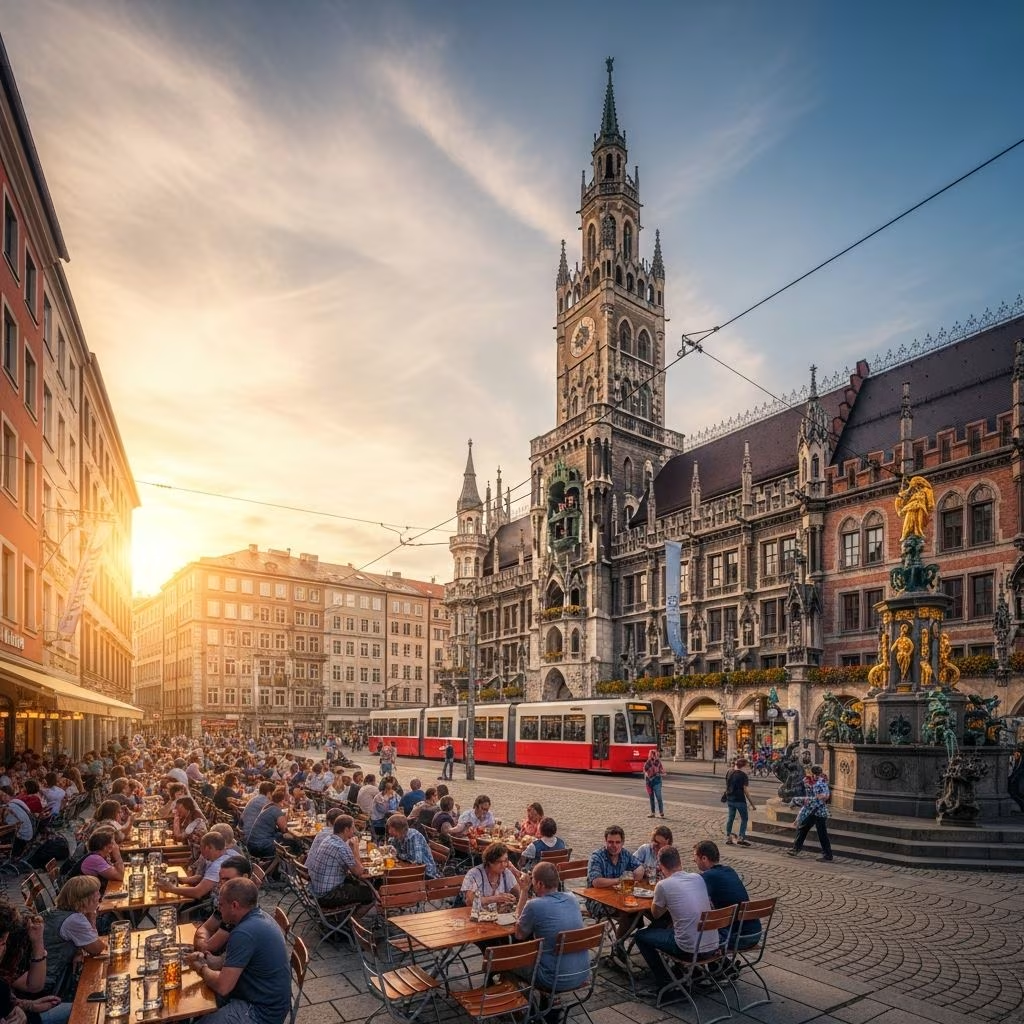
Primary attractions include the Frauenkirche, an iconic late-Gothic cathedral and Munich’s most recognizable landmark, and Marienplatz, the historic central square where public celebrations and gatherings continue to occur. The district also houses the Hofbräuhaus, the legendary beer hall where tradition and tourism intersect.
While the Altstadt maintains undeniable historical charm, it represents the most tourist-saturated area of Munich. Crowds, elevated prices, and commercialization characterize the neighborhood, particularly in peak season. However, wandering quieter side streets reveals authentic architecture, local cafes, and galleries away from main thoroughfares.
Best suited for: First-time visitors, history enthusiasts, those prioritizing iconic sights, travelers seeking walkability to major attractions, heritage lovers
Westend, also known as Schwanthalerhöhe, borders the grounds of the famous Oktoberfest fairgrounds and hosts the Augustiner Brauerei, Munich’s oldest continuously operating brewery. Despite these Bavarian associations, the neighborhood contradicts stereotypical expectations by embracing modern diversity.
The district showcases an eclectic mix of establishments, juxtaposing traditional taverns and Bavarian restaurants with contemporary cafes serving eggs benedict and specialty coffee. International cuisines, from kebab shops to fusion restaurants, reflect the neighborhood’s increasingly cosmopolitan character. This blend of heritage and modernity creates a distinctive dynamic unavailable in more homogeneous districts.
For visitors seeking to experience Oktoberfest, proximity to the festival grounds makes Westend a logical accommodation choice, offering convenient access without requiring extensive commuting. Beyond festival season, the neighborhood functions as an evolving urban area reflecting Munich’s transformation into a genuinely international city.
Best suited for: Oktoberfest attendees, beer enthusiasts, travelers seeking neighborhood diversity, those interested in brewery heritage, visitors wanting authentic Bavarian atmosphere without excessive tourism
Referred to colloquially as “the brain of Munich,” Maxvorstadt central district south of Schwabing functions as the city’s intellectual and cultural nerve center. The neighborhood’s identity centers on universities, libraries, museums, and educational institutions that establish it as a hub for learning and artistic engagement.
The Kunstareal, Munich’s museum quarter, constitutes the neighborhood’s cultural anchor. This cluster of world-renowned institutions includes the Pinakothek museums, which house extensive art collections spanning from medieval to contemporary periods, and the Museum Brandhorst, specializing in modern and contemporary art.
The presence of multiple universities creates an energetic atmosphere characterized by vibrant dining establishments, bookstores, independent shops, and affordable accommodation options relative to other central neighborhoods. Many young professionals and students select Maxvorstadt due to its balance of cultural opportunities, accessibility, and relatively moderate housing costs.
Best suited for: Art and museum enthusiasts, students and young professionals, intellectual travelers, those seeking cultural depth, visitors planning extended museum visits
Positioned slightly removed from primary tourist routes, Giesing represents Munich’s more local, less commercialized character. The neighborhood maintains strong connections to Munich’s sporting culture, serving as home to the city’s second football club and numerous pre-match gathering venues.
Central to Giesing’s identity is the Giesinger Bräu brewery and its connected pub, where local residents congregate to enjoy fresh beers and traditional Bavarian dishes such as roasted pork with gravy and bread dumplings. This combination of authentic brewery culture and neighborhood community creates an experience unavailable in more tourist-oriented areas.
Giesing appeals particularly to travelers seeking genuine local experiences and willing to venture beyond established tourist circuits. The neighborhood’s laid-back atmosphere, lower prices compared to central districts, and authentic cultural offerings make it increasingly popular among experienced travelers familiar with Munich.
Best suited for: Sports enthusiasts, beer culture aficionados, travelers seeking local authenticity, those avoiding typical tourist areas, budget-conscious visitors, experienced travelers with neighborhood knowledge
| Neighborhood | Primary Appeal | Best For | Atmosphere | Price Range |
|---|---|---|---|---|
| Schwabing | Art, architecture, Englischer Garten | Culture enthusiasts, upscale seekers | Elegant, artistic, bohemian heritage | Higher |
| Haidhausen | Family amenities, residential charm | Families, long-term residents | Village-like, domestic, peaceful | Moderate |
| Glockenbachviertel | Nightlife, creative scene, LGBTQ+ culture | Young professionals, night owls, creatives | Vibrant, contemporary, progressive | Moderate to higher |
| Altstadt-Lehel | Historic sights, iconic landmarks | First-time visitors, heritage lovers | Historic, touristy, charming | Higher (tourism-driven) |
| Westend | Oktoberfest access, brewery heritage | Festival attendees, beer enthusiasts | Evolving, diverse, traditional-modern blend | Moderate |
| Maxvorstadt | Museums, universities, cultural institutions | Art lovers, students, intellectuals | Energetic, youthful, educational | Lower to moderate |
| Giesing | Local culture, authentic brewery scene | Local experience seekers, sports fans | Laid-back, authentic, community-focused | Lower |
Glockenbachviertel provides an optimal balance. The neighborhood is walkable to the Altstadt and major sights while maintaining distinct identity and local character. Alternatively, Maxvorstadt offers cultural depth and intellectual atmosphere while remaining centrally located and accessible to primary attractions.
Westend (Schwanthalerhöhe) borders the Oktoberfest grounds directly, making it the most practical choice for festival attendees. However, central neighborhoods like the Altstadt and Glockenbachviertel are also accessible via public transportation.
Maxvorstadt’s concentration of museums, universities, and cultural institutions makes it ideal for travelers prioritizing extended museum visits and intellectual engagement. The Kunstareal alone justifies an entire day or more of exploration.
Maxvorstadt and Giesing offer relatively affordable accommodation and dining compared to the Altstadt and Schwabing. Both neighborhoods provide convenient public transportation access to primary attractions while maintaining lower price points.
Glockenbachviertel maintains Munich’s historic LGBTQ+ community center, with numerous bars, restaurants, and establishments catering to this demographic. The neighborhood’s progressive atmosphere extends beyond LGBTQ+ venues to create genuinely inclusive community culture.
Munich’s excellent public transportation system connects all neighborhoods efficiently. The U-Bahn (subway) and S-Bahn (commuter rail) networks provide rapid transit, while trams and buses offer supplementary coverage. Day passes permit unlimited travel across the entire city, facilitating neighborhood exploration.
Walking represents an excellent way to experience neighborhood character. Most districts are pedestrian-friendly, with distinct streetscapes, local markets, and hidden cafes revealing themselves through slower exploration. Bike rentals through public systems like Call a Bike provide another accessible transportation option.
For extended visits, living temporarily in a non-central neighborhood provides genuine insight into local life while reducing accommodation costs. Short-term rental apartments available through various platforms enable this deeper engagement with community culture.
Munich’s diverse neighborhoods collectively represent a city of layers, complexity, and evolving identity. Whether seeking artistic heritage in Schwabing, family comfort in Haidhausen, contemporary culture in Glockenbachviertel, historical immersion in the Altstadt, festival access in Westend, intellectual stimulation in Maxvorstadt, or authentic local experience in Giesing, Munich accommodates varied travel preferences and interests.
The most memorable Munich experiences often extend beyond primary tourist sites into neighborhood streets, local markets, neighborhood cafes, and community spaces. By selecting accommodations thoughtfully and exploring beyond guidebook recommendations, visitors unlock the authentic Munich that residents experience daily—a city simultaneously honoring its heritage while embracing contemporary vibrancy.
