

 Travel Essentials
 Travel Essentials

Explore Auckland's top museums featuring Māori treasures, maritime history, transportation exhibits, and contemporary Pacific art in stunning venues.
 Travel Essentials
Auckland, New Zealand’s largest metropolitan area, serves as a vital cultural hub for the South Pacific region. The city’s museums represent centuries of human achievement, natural history, and artistic expression. Whether you’re interested in engineering marvels, Indigenous heritage, or contemporary visual arts, Auckland’s cultural institutions offer comprehensive exhibitions that appeal to visitors of all ages and interests.
The city maintains a diverse collection of museums that reflect New Zealand’s unique history and multicultural identity. From waterfront heritage facilities to volcanic crater-top structures, these institutions preserve and present stories that span from ancient Polynesian voyaging traditions to modern technological innovation. Many museums offer free or discounted admission for residents and visitors, making cultural exploration accessible to everyone.
Auckland’s museum sector has evolved significantly over recent decades, with several facilities undergoing renovations and expansions to better serve contemporary audiences. The institutions collectively house one of the world’s most significant assemblies of Pacific and Māori cultural artifacts, making the city an essential destination for anyone seeking to understand the indigenous heritage of Oceania.
The Museum of Transport and Technology (MOTAT) attracts thousands of visitors annually through its dual-location format and hands-on approach to industrial heritage. Located with one section adjacent to the city’s prominent zoo, MOTAT provides immersive experiences that chronicle New Zealand’s relationship with transportation technologies spanning more than a century.
The Great North Road location houses an impressive assembly of early fire-fighting equipment alongside vintage promotional materials that advertise rail travel throughout New Zealand. These artifacts tell stories of how transportation infrastructure transformed daily life and commerce across the nation. Complementing this section, the Aviation Hall on Meola Road showcases decommissioned aircraft from the Royal New Zealand Air Force, including a particularly rare flying boat that exists nowhere else globally.
A heritage tram connects the two locations, offering visitors a scenic journey across Western Springs Lake. This operational transportation link serves as both a practical visitor amenity and a living museum piece itself. The facility has become particularly popular with educational groups seeking hands-on learning experiences about mechanical systems, historical engineering, and the evolution of transportation technology.
Positioned prominently in Auckland’s Viaduct Harbour precinct, the New Zealand Maritime Museum occupies a waterfront location that enhances its narrative about humanity’s relationship with the ocean. The museum’s exhibitions commence with the arrival of Polynesian voyaging canoes over one thousand years ago, representing the maritime achievement that ultimately led to New Zealand’s settlement by Māori peoples.
The museum documents this origin story as an ocean-spanning accomplishment, illustrating how ancient navigators traversed vast distances using sophisticated knowledge of celestial navigation, ocean currents, and traditional seafaring techniques. This historical context provides visitors with understanding of the remarkable maritime heritage embedded within Māori culture and identity.
The exhibitions progress chronologically through European contact periods, colonial maritime activities, and contemporary yachting accomplishments. Notably, the museum extensively covers New Zealand’s success in the America’s Cup sailing competition, which has generated significant national pride and international recognition. The combination of ancient voyaging traditions and modern sporting achievement creates a compelling narrative about continuity and innovation within maritime culture.
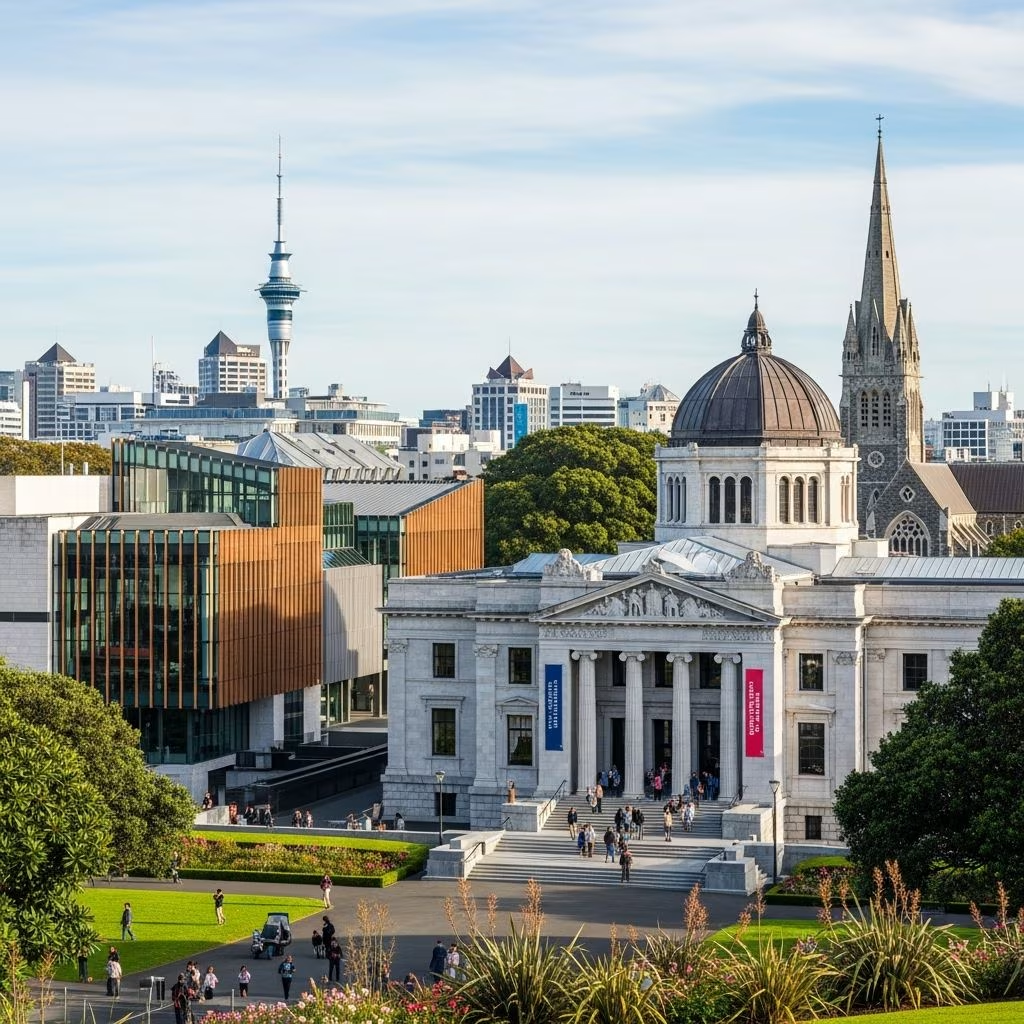
Crowning Pukekawa, an extinct volcanic crater within Auckland Domain, stands the Auckland War Memorial Museum—an architectural landmark completed in 1929. This neo-classical structure transcends its commemorative function as a World War I memorial to encompass comprehensive collections representing New Zealand’s cultural and natural heritage.
The museum’s most internationally significant holdings comprise Māori cultural treasures and artifacts, commonly referred to as taonga in Māori language. Among these treasures stands a 25-meter-long war canoe (waka taua), representing the pinnacle of traditional Māori craftsmanship and maritime engineering. These collections attract scholarly attention from researchers and cultural institutions worldwide.
Beyond Indigenous heritage, the museum maintains extensive exhibits addressing Auckland’s distinctive volcanic landscape. Interactive presentations guide visitors through understanding the geological processes that created the city’s numerous volcanic cones and craters, many of which remain visible within the urban environment today. This geological context proves essential for comprehending how natural features have shaped settlement patterns, urban development, and Aucklanders’ relationship with their physical surroundings.
The museum also maintains substantial collections related to natural history, including dinosaur remains and artifacts from ancient civilizations, alongside exhibits exploring New Zealand’s military history across multiple conflicts and time periods.
The Auckland Art Gallery Toi o Tamaki functions as the premier repository for New Zealand’s artistic heritage, housing approximately 20,000 artworks spanning roughly seven centuries. The gallery curates an extensive survey of New Zealand and Pacific Island artists, positioning itself as the authoritative institution for understanding visual culture across the region.
The gallery’s name translates from Māori to mean “our treasure house,” reflecting its role as custodian (kaitiaki) of artistic heritage. Among the 20,000 pieces in collection, approximately 800 artworks remain on public display at any given time, allowing the institution to rotate exhibitions and maintain visitor interest through recurring visits.
Featured artists include nationally significant figures such as Charles Goldie, Ralph Hotere, and Colin McCahon, whose works appear in public galleries rather than remaining isolated in private collections or institutional vaults. The gallery offers complimentary one-hour guided tours several afternoons weekly, providing visitors with curatorial insights and contextual understanding of displayed artworks.
Free admission policies make the institution accessible to all community members, supporting the gallery’s mission as a democratic cultural resource rather than an exclusive venue for wealthy patrons or specialists.
Tautai represents a newer cultural institution focused specifically on contemporary Pasifika artistic traditions and cross-cultural exchange. Opened in 2020, this venue positions Auckland as the cultural capital of the South Pacific through programming that emphasizes diverse Pacific Island perspectives.
The gallery’s 500-square-meter exhibition space hosts rotating exhibitions and cultural events celebrating Pasifika-influenced art forms, musical traditions, film productions, and live performances. This programming reflects the substantial Pacific Islander populations resident in Auckland and acknowledges the city’s geographic and cultural positioning within the Pacific region.
Tautai’s establishment demonstrates contemporary recognition of previously underrepresented artistic traditions, allowing Pacific Island artists increased visibility and institutional support within New Zealand’s cultural landscape.
Admission and Access
Many Auckland museums offer free or reduced admission for residents, while visitor rates typically range from moderate to affordable compared with international cultural institutions. Some venues provide free or discounted periods during specific hours, and several museums offer combination tickets or passes for multi-location visits.
Location and Transportation
The museums distribute across Auckland’s geography, with some clustered near the city center while others require additional travel time. Public transportation connections, parking availability, and walking distances vary significantly by venue. Planning itineraries that group geographically proximate institutions can optimize visitor time and transportation efficiency.
Visitor Experience Considerations
MOTAT particularly appeals to families with children through interactive exhibitions encouraging hands-on engagement with historical technologies and engineering systems. The Maritime Museum attracts history enthusiasts and those interested in Polynesian culture. Art galleries serve audiences ranging from casual visitors to serious collectors and artists. The War Memorial Museum accommodates diverse interests through its multifaceted collections spanning military history, natural science, and cultural artifacts.
| Institution | Primary Focus | Key Highlights | Best For |
|---|---|---|---|
| MOTAT | Transportation & Technology | Fire engines, aircraft, heritage tram | Families, engineering enthusiasts |
| Maritime Museum | Ocean Heritage | Polynesian voyaging, America’s Cup | History buffs, maritime culture |
| War Memorial Museum | Multidisciplinary | Māori taonga, volcanoes, natural history | Culture seekers, comprehensive visitors |
| Art Gallery Toi o Tamaki | Visual Arts | New Zealand and Pacific artists | Art enthusiasts, cultural explorers |
| Tautai | Contemporary Pacific Art | Pasifika exhibitions, performances | Contemporary art audiences |
No. Several museums offer free admission, while others charge modest fees. Many provide free entry for Auckland residents and may offer discount periods during specific hours. It’s advisable to check individual institution websites for current pricing and resident benefits.
Yes. MOTAT particularly emphasizes interactive, child-friendly experiences. The War Memorial Museum and Maritime Museum also include family-oriented exhibits, though specific amenities vary by venue. Some institutions provide educational programming specifically designed for younger visitors.
The War Memorial Museum houses one of the world’s most important assemblies of Māori and Pacific Island artifacts, including the 25-meter war canoe. The Art Gallery maintains New Zealand’s largest collection of national artistic heritage. The Maritime Museum preserves comprehensive documentation of Polynesian voyaging traditions.
Visit duration varies significantly based on personal interests and museum size. MOTAT typically requires 3-4 hours, while the Art Gallery and War Memorial Museum each deserve 2-3 hours minimum. The Maritime Museum can be explored in 1.5-2 hours, depending on depth of engagement.
Most venues accept walk-in visitors, though some special exhibitions or group visits may benefit from advance notification. Guided tours sometimes require reservations. Checking institution websites before visiting ensures awareness of any current requirements or recommended booking practices.
Auckland’s museum sector represents a comprehensive cultural resource presenting New Zealand’s multifaceted heritage to both residents and international visitors. These institutions collectively chronicle transportation innovation, maritime achievement, artistic expression, and Indigenous cultural preservation. Whether pursuing specialized interests in specific domains or seeking broad cultural understanding, visitors discover substantial collections and expertly curated exhibitions throughout the city’s major institutions. The accessibility of many venues through free admission and convenient locations ensures that comprehensive cultural exploration remains available to all community members, reinforcing museums’ roles as democratic cultural resources essential to Auckland’s identity as a regional Pacific cultural capital.
