

 Travel Essentials
 Travel Essentials

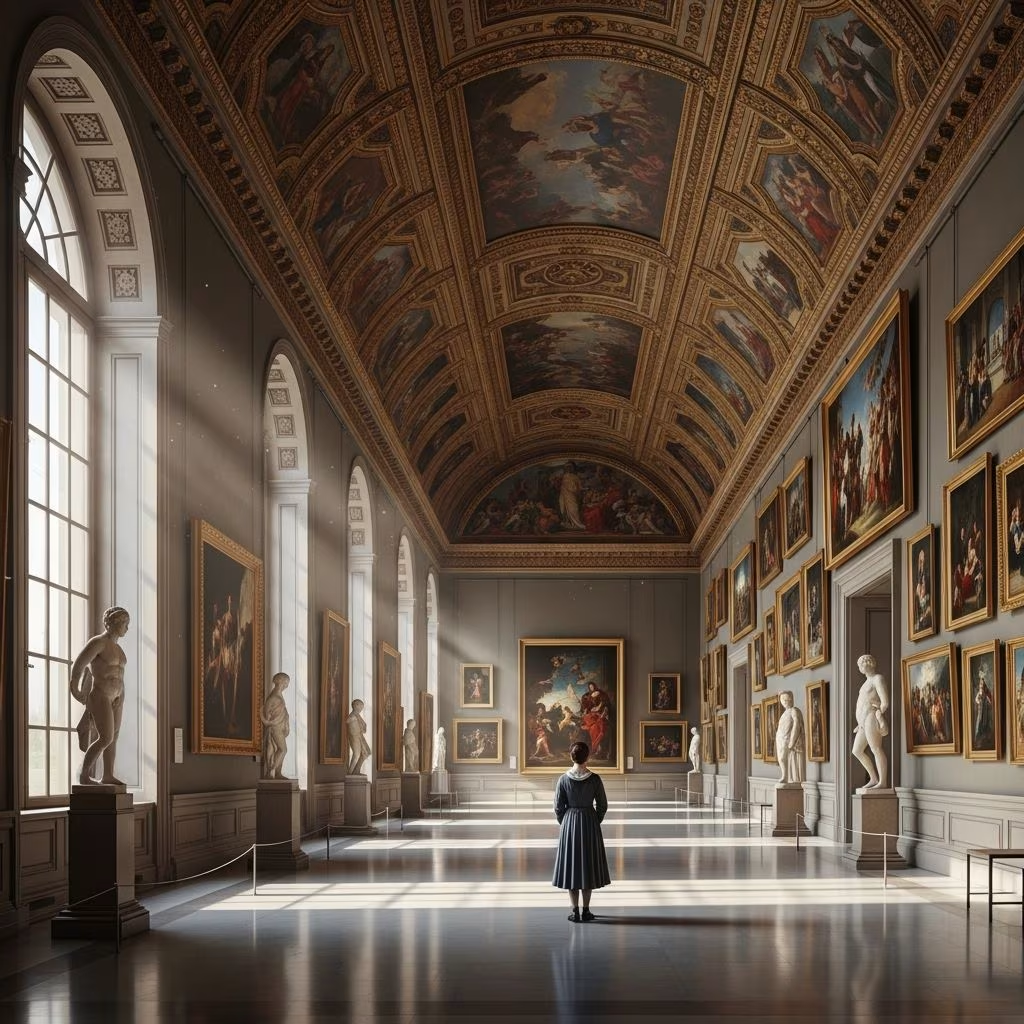
Explore Europe's finest museums showcasing everything from Renaissance masterworks to contemporary installations across diverse cities and collections.
 Travel Essentials
Europe stands as a global center for artistic expression and cultural heritage, housing some of the world’s most significant museums and galleries. Whether you’re drawn to classical masterpieces, modernist movements, or contemporary installations, the continent offers an extraordinary range of cultural institutions. This guide explores the most compelling destinations for art enthusiasts and cultural travelers seeking transformative museum experiences.
The evolution of impressionism transformed Western art, and Europe’s museums preserve this pivotal movement with exceptional collections. The Musée d’Orsay in Paris stands as a premier destination for anyone passionate about 19th-century French art. Housed in a beautifully restored Beaux-Arts railway station, the museum creates an immersive atmosphere that captures the golden age of Parisian artistic innovation. The building itself becomes part of the artistic experience, with galleries flowing through what was once a functioning train terminus.
The museum’s strength lies in its comprehensive presentation of impressionist paintings, featuring works by Monet, Renoir, and Degas alongside sculptures and decorative arts from the period. Visitors often find the Orsay’s collection more intimate and focused than the Louvre’s broader holdings, allowing for deeper engagement with individual works and artistic movements.
Beyond Paris, the Musée Marmottan-Claude Monet offers specialized exploration of one artist’s prolific career, while regional galleries throughout Europe maintain important impressionist holdings that warrant discovery during broader European travels.
Several European museums achieve distinction not only through their collections but through their architectural innovation and design. The Guggenheim Museum in Bilbao, Spain represents contemporary museum architecture at its finest, with its titanium-clad exterior and revolutionary interior spaces creating an environment where architecture and art dialogue continuously.
The museum’s modern art collection complements Frank Gehry’s iconic building design, making a visit equally rewarding for architecture enthusiasts and art collectors. The stunning exterior has become one of Spain’s most recognizable landmarks, while interior galleries showcase contemporary works in spaces specifically designed to enhance the viewing experience.
In Paris, the Centre Pompidou presents another architectural triumph, though visitors should note that the museum underwent renovation with planned reopening in 2030. The building’s inside-out design—with structural elements and mechanical systems visible on the exterior—revolutionized museum architecture and continues to influence cultural institutions worldwide.
Vienna’s The Secession building combines architectural distinction with important Gustav Klimt paintings, featuring the museum’s signature “golden cabbage” dome as an instantly recognizable landmark.
Several institutions maintain expansive collections that chronicle artistic development across multiple centuries and civilizations. The Hermitage Museum in St. Petersburg, Russia houses more than three million works ranging from the Stone Age through the 20th century. This extraordinary collection encompasses treasures from Da Vinci, Picasso, Rembrandt, and Van Gogh, occupying six buildings positioned along the Winter Palace and Neva River. The Knight’s Hall and Da Vinci Room represent particularly remarkable sections, while jewelry from Ancient Greek and Scythian periods showcase the museum’s archaeological depth.
The Louvre in Paris remains the world’s largest art museum by floor area, presenting collections that span from ancient civilizations through the Renaissance. The Cour Marly section in the Richelieu wing particularly impresses visitors seeking classical sculpture and architectural elements.
The Uffizi Galleries in Florence specializes in Renaissance art, offering unparalleled access to works from the Italian artistic Renaissance that fundamentally shaped Western artistic tradition.
Museums dedicated to modern and contemporary art provide insight into 20th and 21st-century artistic movements. Tate Modern in London stands among Europe’s premier modern art institutions, offering extensive collections of post-impressionist, modernist, and contemporary works. The museum’s location in a converted power station provides distinctive industrial architecture that frames contemporary artistic expression.
Additional modern art destinations include:
Beyond comprehensive art museums, Europe offers institutions with specialized focus areas. The Deutsches Museum in Munich functions as Europe’s answer to the Smithsonian Institution, presenting science, technology, and natural history through interactive displays and engaging exhibitions. Visitors consistently rate this museum among Europe’s most rewarding cultural experiences, regardless of personal interest in technical subjects.
The Kröller-Müller Museum near Otterlo in the Netherlands focuses specifically on modern art while offering stunning outdoor installations within natural surroundings. This combination of curated indoor galleries and landscape-integrated artworks creates a distinctive visitor experience.
Historical and biographical museums provide intimate connections to significant cultural figures:
Several institutions concentrate on particular art forms or historical periods. The Musée Rodin in Paris provides comprehensive access to Rodin’s sculptural works within a beautiful garden setting that enhances the viewing experience.
The Natural History Museum in London combines scientific and cultural significance, presenting natural world collections alongside significant archaeological findings. The museum’s interactive displays engage visitors of varying ages and backgrounds.
Regional and local museums serve important functions in understanding place-specific history and identity. Museums in Zagreb, Croatia; Lausanne, Switzerland; Liverpool and Bristol, England; and Glasgow, Scotland help visitors comprehend local cultural contributions to broader European narratives. The Bryggen Museum in Bergen, Norway illuminates maritime history and local heritage, while the Musée Basque in Bayonne and Riverside Museum in Glasgow similarly ground visitors in regional context.
While major cities dominate museum tourism, smaller institutions offer distinctive experiences. The Gutenberg Museum in Mainz, Germany celebrates printing history and the revolutionary impact of movable type technology. Visitors experience hands-on demonstrations of traditional printing processes and encounter one of only 42 surviving copies of the original Gutenberg Bible within a secure vault.
The Nobel Peace Center in Oslo, Norway and Churchill War Rooms in London, England present historical narrative through specialized focus, offering depth unavailable in broader historical surveys.
Strategic planning enhances museum experiences significantly. Consider these practical approaches:
The Musée d’Orsay in Paris offers concentrated impressionist holdings in a beautiful setting, making it ideal for focused time investment. Alternatively, the Guggenheim in Bilbao combines architectural significance with modern art in a more manageable size than massive institutions like the Louvre.
Ticketing varies significantly. Some institutions like Tate Modern in London have offered free general admission, while others require paid entry. Check individual museum websites for current pricing and free admission policies.
Research the location and hours of museums beforehand, identify those most aligned with your interests, and plan routes to minimize travel time. Consider purchasing city museum passes where available. Allocate realistic time for each institution rather than attempting to see everything.
Spring and fall offer favorable weather and slightly smaller crowds than summer peak season. Consider researching renovation schedules before booking, as major institutions may have temporary closures affecting your plans.
| Museum | Location | Specialty | Key Highlight |
|---|---|---|---|
| Musée d’Orsay | Paris, France | Impressionist Art | Railway station conversion; comprehensive 19th-century holdings |
| Guggenheim Museum | Bilbao, Spain | Modern Art & Architecture | Iconic Gehry design; contemporary collections |
| Tate Modern | London, England | Modern & Contemporary Art | Power station conversion; free admission |
| Hermitage Museum | St. Petersburg, Russia | Comprehensive Collections | 3+ million works; Stone Age to 20th century |
| Deutsches Museum | Munich, Germany | Science & Technology | Interactive displays; diverse appeal |
Europe’s museums transcend mere repositories of historical objects, functioning instead as dynamic spaces where artistic vision connects across centuries and continents. Whether you seek impressionist tranquility, modernist innovation, or technological enlightenment, the continent’s institutions provide pathways toward deeper cultural understanding and aesthetic appreciation. The most rewarding approach involves selecting museums that resonate with your particular interests, allowing sufficient time for contemplative engagement rather than rushed tourist circuits. Each institution holds potential for those transformative museum moments that travelers remember and reflect upon long after their European journeys conclude.
