

 Travel Essentials
 Travel Essentials

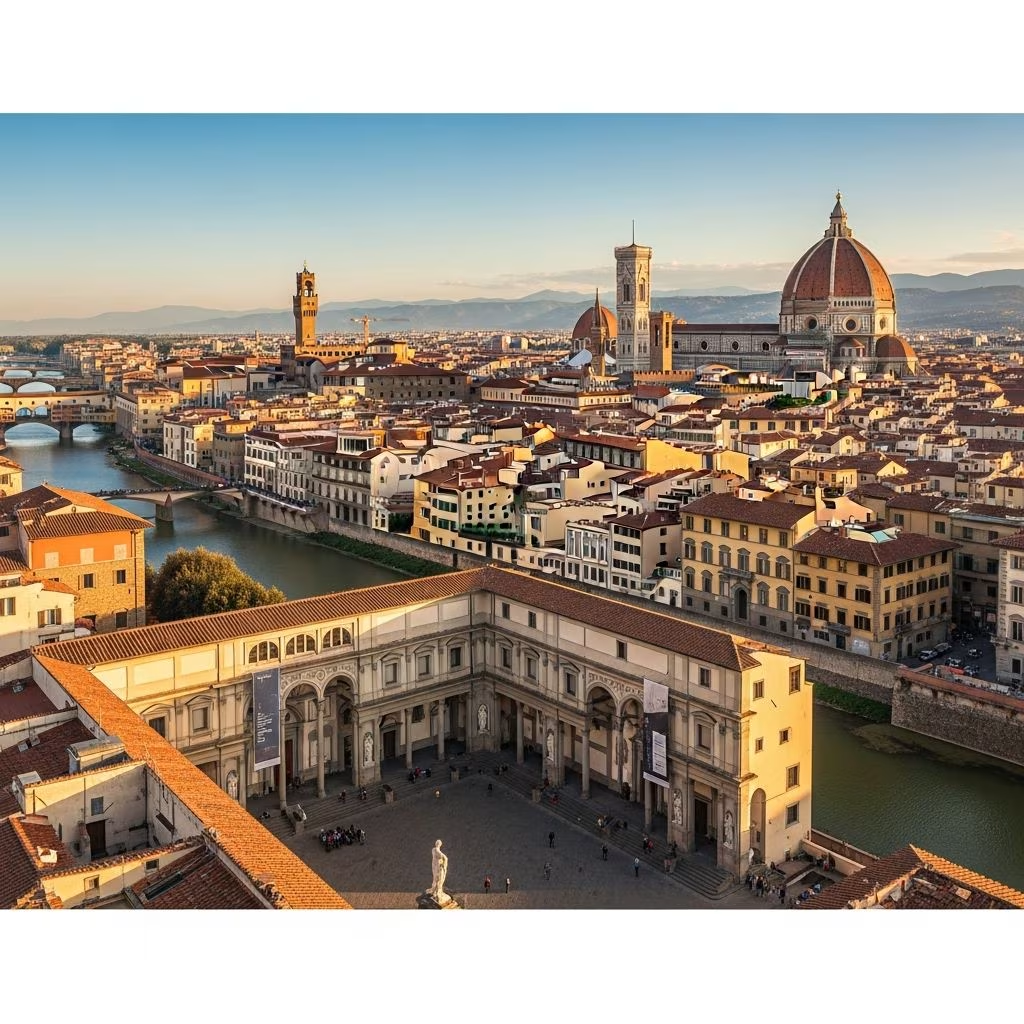
Explore the best museums in Florence, featuring iconic art collections, historic palaces, and must-see sculptures like Michelangelo's David.
 Travel Essentials
Florence stands as a timeless cradle of art and history, where every corner whispers tales of the Renaissance. This guide delves into the city’s most captivating museums, offering a roadmap for visitors eager to immerse themselves in world-class collections. From monumental sculptures to intricate frescoes, these institutions preserve the legacy of masters like Michelangelo, Botticelli, and Donatello. Whether you’re a seasoned art enthusiast or a first-time explorer, planning your itinerary around these highlights ensures a profound connection to Italy’s cultural heart.
The Renaissance bloomed vibrantly in Florence, birthing artworks that redefined human expression. Museums here house dense troves of paintings, sculptures, and artifacts from this golden era, drawing millions annually. Key venues showcase works spanning centuries, with a focus on the 14th to 17th centuries, when Florence was Europe’s artistic epicenter.
Central to this legacy is the concentration of pieces by Giotto, Leonardo da Vinci, Raphael, and others. These collections not only display technical brilliance but also narrate the evolution of artistic techniques, from linear perspective to emotional depth in portraiture.
Sculpture reaches its zenith in Florentine museums, where marble comes alive under the chisels of geniuses. Michelangelo’s influence dominates, with multiple works illustrating his mastery of anatomy and emotion. Visitors often prioritize these for their sheer scale and realism, which continue to inspire awe.
Many museums occupy grand palazzos originally built by powerful families like the Medici and Strozzi. These structures blend architecture with art, providing a holistic experience. Frescoed halls, opulent apartments, and courtyards enhance the collections, transporting guests to the era of dukes and patrons.
Political history intertwines with aesthetics in venues that served as town halls and residences, featuring maps, tapestries, and ceremonial rooms.
The Duomo ensemble, including its museum, preserves tools and models from the 15th-century construction. This site reveals the engineering feats behind Brunelleschi’s dome and Ghiberti’s doors, blending sacred art with architectural innovation.
Original panels and reliquaries offer insights into medieval craftsmanship, making it essential for understanding Florence’s skyline-defining landmarks.
Beyond classics, Florence pulses with contemporary energy. Rotating shows in stately palaces feature global artists, from ancient sculptures to installations by Ai Weiwei or Jeff Koons. These exhibitions contrast sharply with Renaissance works, highlighting the city’s evolving art scene.
Navigating Florence’s museums requires strategy due to high demand. Advance booking is crucial, especially for peak seasons. Many offer timed entries to manage crowds.
| Museum | Key Attraction | Booking Tip | Visit Duration |
|---|---|---|---|
| Uffizi Gallery | Botticelli’s Birth of Venus | Reserve skip-the-line tickets | 2-3 hours |
| Accademia Gallery | Michelangelo’s David | Book early for morning slots | 1-2 hours |
| Palazzo Vecchio | Salone dei Cinquecento frescoes | Check monthly ticket releases | 1.5 hours |
| Bargello Museum | Donatello’s David | Less crowded afternoons | 1 hour |
| Pitti Palace Complex | Palatine Gallery paintings | Combine with Boboli Gardens | 3+ hours |
This table outlines efficient routing, prioritizing high-impact sites. Civic museums like Palazzo Vecchio release tickets sporadically, so monitor official sites.
While icons dominate, smaller museums reward the curious. The Bargello, Italy’s first national museum since 1865, excels in Renaissance sculpture amid Islamic artifacts and arms collections.
Museo dell’Opera del Duomo focuses on cathedral restoration, displaying original baptistery doors. Palazzo Strozzi’s temporary exhibits often steal the spotlight with innovative curation.
Civic sites under Musei Civici Fiorentini include the Brancacci Chapel’s groundbreaking frescoes and Stefano Bardini Museum’s eclectic antiquities. These vary in hours and require flexible planning.
Florence’s museums extend outdoors. The Boboli Gardens behind Pitti Palace form an open-air gallery of statues, fountains, and grottos, perfect for contemplative strolls amid Renaissance landscaping.
These verdant expanses complement indoor visits, offering respite and panoramic city views.
Start with Accademia for David in the morning, proceed to Uffizi post-lunch, and end at Palazzo Vecchio. This minimizes backtracking.
Yes, for Uffizi and Accademia; book 1-3 months ahead. Civic museums release tickets monthly.
Uffizi warrants 2-3 hours for its vast collection; Accademia suffices with 1 hour focused on sculptures.
Accademia and interactive sites like Museo Leonardo da Vinci engage younger visitors with models and replicas.
Possible for smaller ones like Bargello and Duomo Opera, but prioritize to avoid fatigue.
These museums safeguard Florence’s contributions to global culture, from pioneering humanism in art to technical innovations. Ongoing restorations ensure future generations witness this splendor. Plan thoughtfully to savor each masterpiece without haste.
