

 Travel Essentials
 Travel Essentials

Discover Havana's top museums featuring Cuban art collections, revolutionary history, colonial heritage, and iconic cultural treasures that define the Caribbean capital.
 Travel Essentials
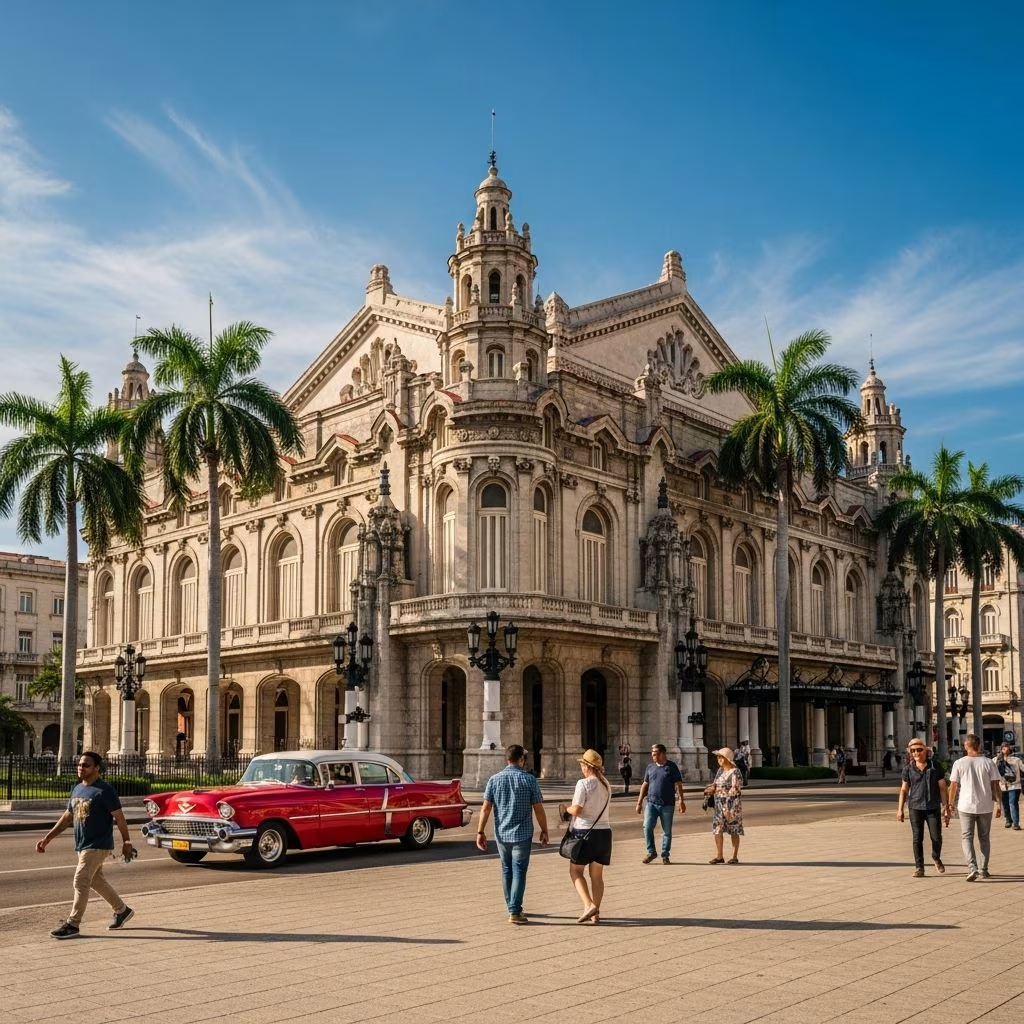
Havana stands as a vibrant cultural epicenter in the Caribbean, offering visitors an extraordinary array of museums that chronicle the island’s complex history, artistic achievements, and revolutionary transformation. The city’s museum landscape provides intimate access to centuries of Cuban heritage, from pre-Columbian times through contemporary artistic expressions. Whether you’re drawn to visual arts, historical narratives, or specialized collections, Havana’s cultural institutions present compelling opportunities to understand Cuba’s identity and creative spirit.
The Museo Nacional de Bellas Artes represents the cornerstone of Havana’s cultural infrastructure, establishing itself as a world-class institution comparable to major international museums. This expansive complex operates across two distinct architectural locations positioned at the boundary between Habana Vieja and Centro Habana, each serving a specialized curatorial purpose.
The institution is organized into complementary divisions that present different artistic perspectives. One building concentrates on Cuban artistic development, showcasing works spanning from the 16th century to contemporary installations. This collection traces the evolution of Cuban artistic expression through paintings, sculptures, drawings, prints, and modern installation art, with particular emphasis on 20th-century revolutionary artistic movements. The parallel gallery space dedicates itself to universal art traditions, presenting Asian artworks from the 16th through 21st centuries alongside European and international pieces.
The museum’s architectural environment enhances the viewing experience, featuring carefully curated exhibition spaces that contextualize artistic works within their historical periods. Visitors encounter intricate rococo furniture, refined Chinese screens, art deco design elements, and impressive collections of glassware and ceramics that demonstrate cross-cultural aesthetic influences.
Housed within the Museo de la Revolución, Cuba’s transformation undergoes detailed examination through artifacts, documents, and visual presentations. The museum occupies the former Presidential Palace, an architectural masterpiece constructed between 1913 and 1920 that previously sheltered Cuban presidents within its elegant chambers.
The building itself functions as a historical artifact, featuring interiors designed by Tiffany’s of New York and the spectacular Salón de Los Espejos, architecturally modeled after the Palace of Versailles’ famous Hall of Mirrors. This stunning backdrop provides an appropriate setting for the museum’s curatorial mission. The institution’s primary responsibility involves visually documenting Cuba’s historical trajectory from indigenous societies through contemporary times, with particular emphasis on events from 1953 onward.
The exhibition spaces maintain the palatial residence’s original function as living quarters in certain galleries, preserving period furnishings and decorative elements. A highly decorated throne room demonstrates the historical power dynamics embedded within Spanish colonial administration. The museum thoughtfully balances revolutionary narrative with pre-revolutionary Cuban history, acknowledging the island’s complete historical complexity rather than presenting a single perspective.
The Museo de la Ciudad provides comprehensive insight into Havana’s urban development and transformation, chronicling the metropolis from its founding through its revolutionary involvement. Positioned on a central plaza in Habana Vieja, occupying an entire side of Plaza de Armas, the museum inhabits a building originally constructed as the palatial residence of Cuba’s Viceroys—representatives of Spanish royal authority on the island.
The museum’s architectural setting provides more than an attractive background; the building itself embodies the colonial power structure that shaped Havana’s development. The grandiose courtyard, adorned with a white-marble rendering of Christopher Columbus, represents over 40 interconnecting rooms that blend important chapters of Havana’s history with surviving material culture. This arrangement allows visitors to navigate layered historical narratives while observing authentic colonial furnishings, domestic objects, and artifacts that illuminate aristocratic lifestyles during Cuba’s Spanish colonial period.
Within the Cabaña fort on Havana harbor’s eastern side, visitors encounter the museum dedicated to Che Guevara, containing extensive artifact collections and photographic documentation. This institution examines the life and historical significance of one of the revolution’s most mythologized figures, attempting to distinguish biographical reality from popular legend through carefully selected material evidence.
The Museo de la Farmacia Taquechel offers a distinctive specialized experience, presenting a pharmacy founded in 1898 that was restored in 1996. The museum preserves the aesthetic of 19th-century pharmaceutical practice, with wooden shelves displaying ceramic jars, flasks, and herbal preparations that illustrate pre-modern medicine and botanical knowledge. Remarkably, the facility continues operating as a working pharmacy, blending museum function with practical healthcare provision.
The Museo del Ron Havana Club, situated within an 18th-century palace in Habana Vieja’s historic core, narrates the complete history of rum production and cultural significance. The museum presents traditional rum-making processes through interactive displays and historical documentation, while an integrated store provides access to aged rum selections representing different production eras.
The Museo de Arte Colonial frequently receives less attention than major institutions despite offering invaluable insights into colonial Cuban society. Housed within a distinctive two-story yellow structure that opens onto a capacious courtyard, the museum displays the material culture of wealthy colonials. The exhibition spaces contain period furniture, clothing, china, and antique objects that illustrate aristocratic lifestyles and social hierarchies during Spanish colonial administration.
The Wifredo Lam Center, named for the renowned Cuban surrealist painter often described as the Cuban Picasso, operates within the beautiful 18th-century Casa del Obispo Penalver, positioned immediately behind Havana’s Cathedral. Established in 1983, the institution dedicates itself to studying, researching, and promoting contemporary visual arts from developing regions including Africa, Latin America, Asia, and the Caribbean. The permanent exhibition features Lam’s lithographs and etchings, providing historical context for contemporary artistic practice.
| Institution | Location | Primary Focus | Notable Features |
|---|---|---|---|
| National Museum of Fine Arts | Habana Vieja/Centro Habana | Cuban & International Art | Two-campus facility, 16th-21st century works |
| Museum of the Revolution | Centro Habana | Revolutionary History | Former Presidential Palace, Hall of Mirrors |
| Museum of the City | Plaza de Armas | Urban Development | Former Viceroy residence, 40+ rooms |
| Pharmacy Museum | Historic Center | Medical Heritage | Operating pharmacy, 1898 founding |
| Rum Museum | Habana Vieja | Rum Production | 18th-century palace, retail store |
Most museum information is presented in Spanish, with varying levels of English translation depending on the institution. Visitors without Spanish proficiency should consider hiring guides or interpreters, particularly for specialized collections where detailed historical context proves essential for complete understanding.
The National Museum of Fine Arts and Museum of the Revolution represent optimal starting points for newcomers, as they provide comprehensive overviews of Cuban artistic achievement and historical development. These institutions offer sufficient breadth to establish foundational understanding before exploring specialized collections.
Historic colonial buildings housing many museums present architectural limitations for visitors with mobility challenges. The modern exhibition spaces within the National Museum of Fine Arts generally provide better accessibility than 18th and 19th-century structures. Contact individual institutions for specific accessibility information.
The National Museum of Fine Arts requires minimum 3-4 hours for comprehensive exploration, while smaller specialized museums can be visited in 1-2 hours. The Museum of the Revolution typically demands 2-3 hours depending on individual interest levels and reading capacity.
Havana’s museums function interconnectedly rather than as isolated institutions. Artistic traditions examined in the National Museum find historical context within revolutionary narratives presented at the Museum of the Revolution. Colonial period furniture and decorative arts displayed at the Museum of the City connect to pharmaceutical practices preserved at the Taquechel collection. Rum production technology represents industrial development choices shaped by colonial and later revolutionary economic systems. This interconnected approach enriches visitor understanding when museums are approached as complementary rather than competing attractions.
Havana’s museum institutions collectively demonstrate Cuba’s remarkable artistic resilience through periods of political transformation, external pressure, and economic constraint. The artistic legacy preserved within these spaces represents more than historical documentation; these collections embody Cuban society’s commitment to cultural preservation and creative expression as forms of national identity. Contemporary installations alongside centuries-old works create temporal dialogue, suggesting artistic practice as continuous rather than historical process. Visitors engaging with these collections participate in Cuba’s ongoing cultural conversation, encountering the island’s complexity through carefully curated physical evidence and interpretive frameworks.
