

 Travel Essentials
 Travel Essentials

Explore Marrakesh's diverse museum landscape, from contemporary African art to Berber craftsmanship and culinary heritage.
 Travel Essentials
Marrakesh stands as one of Morocco’s most vibrant cultural hubs, offering visitors an extraordinary collection of museums that reflect the region’s multifaceted heritage. From cutting-edge contemporary art spaces to meticulously preserved historical palaces, the city’s museums provide windows into centuries of African, Islamic, and Amazigh traditions. Whether you’re an art enthusiast, history buff, or cultural explorer, Marrakesh’s museum scene delivers immersive experiences that chronicle the city’s evolution and its role as a crossroads of cultures.
The Museum of African Contemporary Art Al Maaden (MACAAL) represents one of North Africa’s most significant platforms for modern artistic voices from across the continent. Following substantial renovations after seismic activity, the institution reopened its doors in February 2025 with renewed architectural integrity. The museum occupies distinctive earth-toned structures that complement rather than overshadow the artworks within, creating an intimate environment for engaging with avant-garde pieces and provocative installations.
MACAAL houses the Lazraq family’s meticulously assembled private collection, spanning multiple generations of African artistic innovation. The curatorial approach emphasizes dialogue between traditional and contemporary expressions, allowing visitors to trace the evolution of African creative consciousness. Eight dedicated exhibition spaces distributed across two floors accommodate rotating exhibitions, thematic showcases, and special presentations that evolve throughout the year.
Practical considerations: The museum operates Wednesday through Sunday, 10am to 6pm. Its location approximately 5 kilometers outside central Marrakesh necessitates taxi transportation. Visitors should allow 2-3 hours for a comprehensive experience, particularly when special exhibitions are featured.
Housed within a meticulously restored eighteenth-century palatial residence in the historic Kasbah district, the Moroccan Culinary Arts Museum celebrates the nation’s gastronomic legacy through curated exhibitions and immersive displays. The institution functions as both a repository of culinary knowledge and an experiential space where visitors encounter the philosophical underpinnings of Moroccan cooking traditions.
The permanent exhibition navigates through interconnected themes exploring Morocco’s distinctive ingredients, preparation methodologies, and the social rituals surrounding communal dining. Displays examine the influence of geographical diversity on regional cuisines, the medicinal properties of traditional spices, and the evolution of recipes across generations. Interactive elements enable visitors to engage with archival cookbooks, documentary photography, and cultural narratives that contextualize Morocco’s position within Mediterranean and North African culinary networks.
The Musée du Parfum acknowledges Morocco’s historical significance as a center for perfumery and aromatic traditions dating back millennia. The museum explores the olfactory dimensions of Moroccan culture, examining how indigenous plants, resins, and essential oils shaped commercial networks and artistic expression. Collections include historical distillation equipment, vintage fragrance bottles, and documentation of traditional perfume-making methodologies employed by Moroccan artisans.
Within the enchanting Jardin Majorelle, the Pierre Bergé Museum of Berber Arts provides unprecedented access to one of the world’s most comprehensive collections documenting Amazigh (Berber) cultural expression. Assembled through decades of dedicated collecting by Pierre Bergé, Yves Saint Laurent’s longtime business and life partner, the collection encompasses textiles, adornments, household implements, and ceremonial objects spanning multiple regions and historical periods.
The exhibition articulates the profound aesthetic sophistication and technical virtuosity embedded within Amazigh artistic traditions. Intricate textiles demonstrate complex weaving patterns passed through maternal lineages, while jewelry collections illustrate the metalworking expertise and symbolic systems underlying adornment practices. Everyday objects—vessels, tools, architectural elements—reveal how functionality intersected with decorative intention in pre-industrial Amazigh societies.
Important access information: The Berber Museum operates exclusively through Jardin Majorelle admission; combined tickets are mandatory. Online pre-booking of timed entry slots is strongly recommended to manage visitor flow and enhance the viewing experience. Most interpretive signage appears in French or Arabic; request downloadable guides in alternative languages at the entrance.
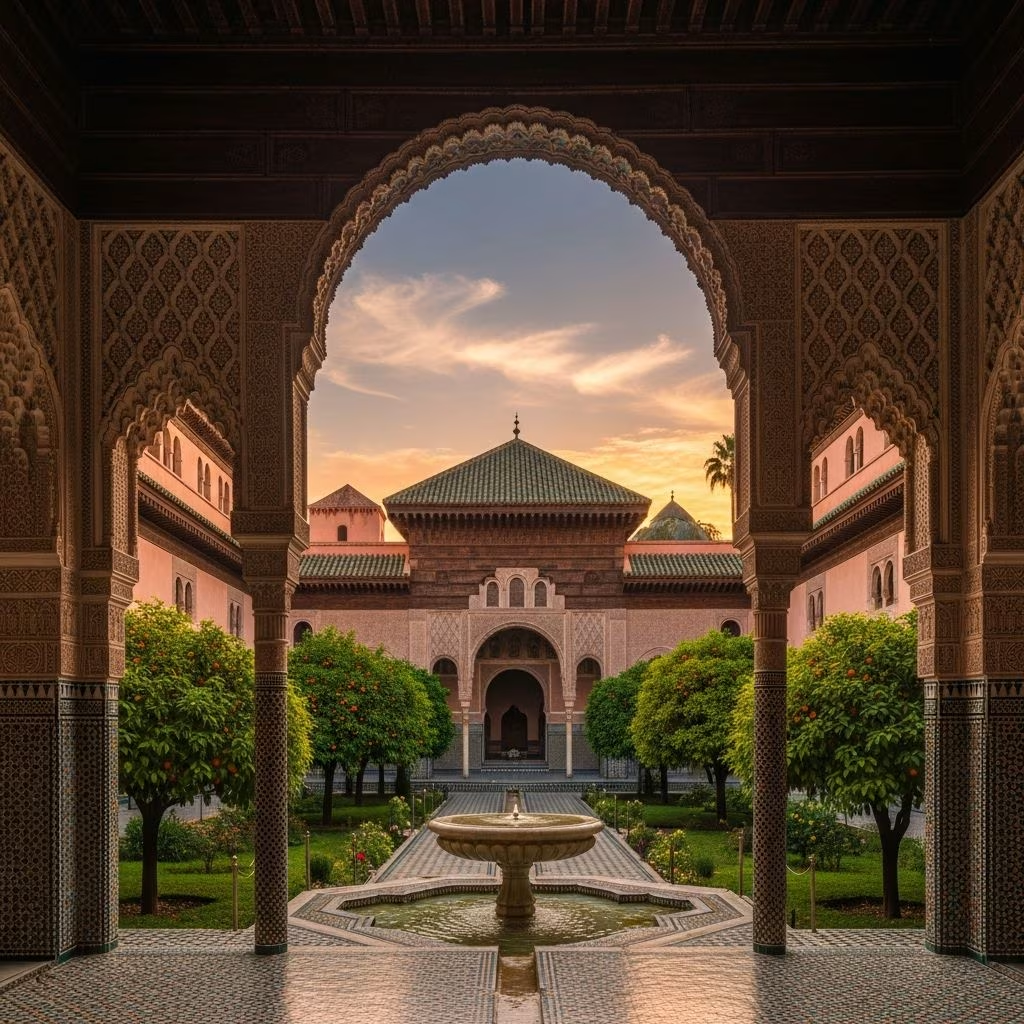
The Dar El Bacha Museum occupies the former residence of the Pasha of Marrakesh, an influential administrative figure during the early twentieth century. The palace exemplifies sophisticated Islamic architectural principles, featuring elaborate tilework, carved wooden screens, and fountain-centered courtyards that organized domestic life around water and shade. The museum’s collections encompass beautifully preserved garments, ornamental jewelry, traditional musical instruments, and artistic objects representative of Morocco’s material culture.
The spatial organization of the palace itself constitutes part of the exhibition experience, as visitors navigate historically significant rooms and encounter objects within contextually relevant settings. This approach enhances understanding of how aesthetic principles and functional requirements shaped domestic and ceremonial spaces.
The Musée Yves Saint Laurent honors the transformative relationship between the renowned French fashion designer and Marrakesh, a city that profoundly influenced his creative vision throughout his career. The museum preserves approximately 2,000 garments and accessories, representing only a portion of YSL’s prolific output, as exhibition constraints prevent simultaneous display of the entire collection.
Thematic exhibitions rotate regularly, allowing the museum to explore different dimensions of Saint Laurent’s design philosophy, his engagement with Moroccan aesthetics, and his influence on global fashion trajectories. The presentations trace how the designer synthesized European tailoring traditions with North African textile patterns, creating hybrid forms that revolutionized haute couture silhouettes and established new standards for luxury fashion.
Meydene, located on M Avenue within the city’s expanding western neighborhoods, represents a forward-thinking approach to cultural institutional practice through integration of virtual reality and digital interactive technologies. The center functions simultaneously as exhibition space, performance venue, and educational facility, accommodating diverse programming throughout the year.
The “Hall of Wonders” utilizes cutting-edge sensory technologies to reconstruct the phenomenological experience of navigating Marrakesh’s medina—visitors encounter digital recreations of bustling souks, architectural landmarks, and street-level social interactions through immersive visualization. The approach proves particularly engaging for younger audiences, enabling exploration of urban environments and cultural encounters within controlled, accessible settings.
Complementary facilities including gallery spaces, theatrical venues, and a rooftop café transform Meydene into a comprehensive cultural destination rather than a single-purpose institution. This multifunctional model reflects contemporary museum philosophy emphasizing community engagement and social connection.
The House of Photography preserves over 10,000 photographs, vintage photographic plates, and archival documents chronicling Morocco during the late nineteenth and early twentieth centuries. The collection functions as a temporal gateway, offering visual evidence of societal transformation, urban development, and cultural continuity across generations.
Rather than functioning as a conventional photography museum emphasizing aesthetic considerations, the institution prioritizes historical documentation and social memory. Collections reveal fashion practices, architectural details, street commerce, ceremonial occasions, and landscapes that illuminate daily life during periods of colonial encounter and subsequent modernization.
The Mohammed VI Museum for the Civilisation of Water, established in 2017, approaches museum practice through innovative interdisciplinary frameworks combining historical narrative, anthropological analysis, and scientific inquiry. The institution examines Morocco’s sophisticated historical approaches to water management, exploring irrigation systems, hydraulic technologies, and cultural practices developed across arid landscape zones.
Beyond technical documentation, the museum articulates water’s symbolic significance within Islamic theology, Moroccan poetry, and spiritual practices. The exhibition demonstrates how environmental constraints shaped architectural design, settlement patterns, and social organization throughout Moroccan history.
| Institution | Location | Primary Focus | Best For |
|---|---|---|---|
| MACAAL | 5km outside city | Contemporary African art | Modern art enthusiasts |
| Moroccan Culinary Arts Museum | Kasbah district | Gastronomy and food heritage | Culinary historians |
| Pierre Bergé Museum | Jardin Majorelle | Amazigh cultural expression | Textile and craft admirers |
| Dar El Bacha Museum | Medina center | Islamic architecture and objects | Architectural enthusiasts |
| Musée Yves Saint Laurent | City center | Fashion and design | Fashion historians |
| Meydene | Western medina | Virtual reality experiences | Families and youth |
October through April offers optimal climate conditions with temperatures between 15-25°C (59-77°F), making extended museum visits comfortable. Summer months (June-August) bring intense heat that may limit outdoor navigation between institutions. Most museums maintain consistent hours throughout the year, though some reduce operations during Ramadan.
Photography policies vary considerably between institutions. Some museums permit personal photography without flash for non-commercial purposes, while others enforce strict prohibitions. Always consult signage upon entry or inquire with staff regarding specific restrictions.
Major institutions provide materials in French, Arabic, and English. Smaller or more specialized museums may limit availability to French and Arabic. Several museums offer downloadable multilingual guides through their websites or upon visitor request at entry points.
MACAAL and the Yves Saint Laurent Museum warrant 2-3 hours each for thorough engagement. Smaller specialized institutions typically require 1-1.5 hours. Planning itineraries around opening hours and transportation logistics is essential for efficient scheduling.
The Jardin Majorelle/Pierre Bergé Museum requires combined ticketing. Individual museum admission fees range from 70-150 Moroccan Dirham. Some institutions offer reduced rates for students, seniors, and children; verification with each venue is recommended.
Marrakesh’s museum sector reflects Morocco’s broader engagement with cultural preservation, international artistic dialogue, and tourism development. The diversity of institutional approaches—from traditional palace museums to avant-garde technology centers—demonstrates how the city navigates between heritage conservation and contemporary creative expression.
Museums serve as crucial repositories for endangered cultural knowledge, particularly regarding Amazigh traditions, traditional craft techniques, and pre-modern social practices. By maintaining these collections and facilitating public access, institutions ensure intergenerational transmission of cultural memory and artistic innovation.
For travelers seeking substantive cultural engagement beyond superficial sightseeing, Marrakesh’s museums offer profound insights into North African history, Islamic artistic traditions, African contemporary creativity, and Moroccan identity formation. Strategic museum visits transform travel experiences into opportunities for meaningful cross-cultural learning and aesthetic appreciation.
